

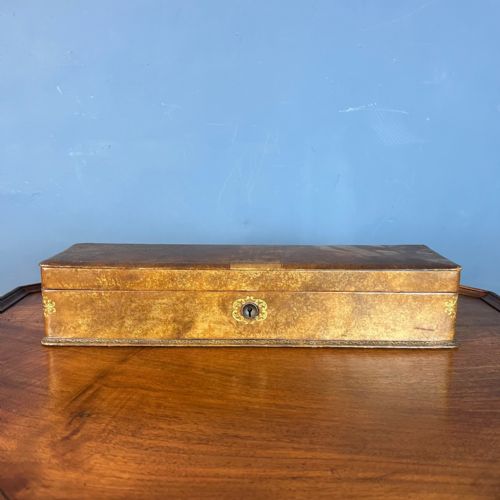


Victorian Document Casket
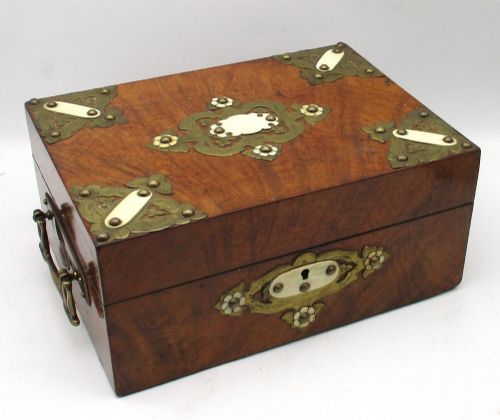
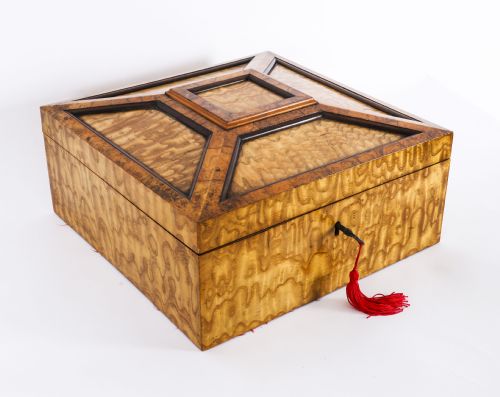
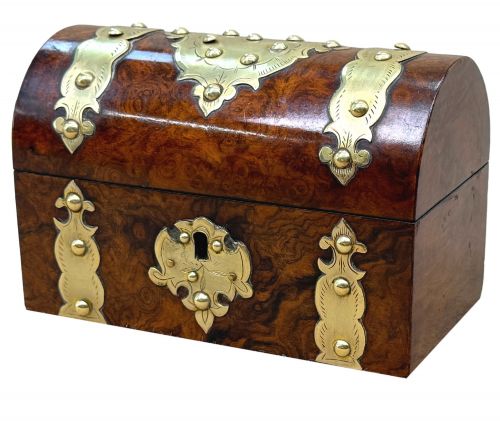
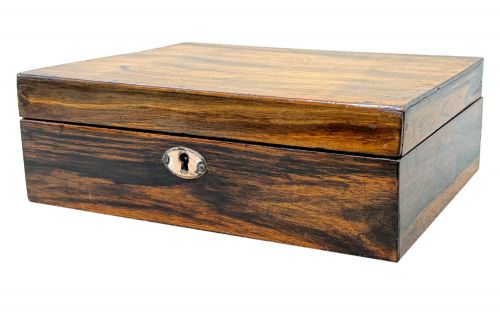
A victorian document casket organises correspondence and papers on a desk, built from dense timber and mounted in brass.

Victorian Document Casket
A victorian document casket serves as a secure desktop repository for letters, stationery, and valuable papers. These pieces appear in various forms, including dedicated stationery boxes, slope-front letter caskets, and flat-topped despatch boxes.
The selections available here lean heavily toward mid to late nineteenth-century examples, predominantly fashioned from figured woods like burr walnut and coromandel. Buyers frequently encounter fitted interiors designed to hold envelopes, inkwells, and stamps alongside the primary storage compartment.
How they were made
Cabinet makers built these caskets using a foundation of solid oak or mahogany, subsequently veneered in decorative timbers such as burr walnut, coromandel, and olive wood. Surface enrichment relied on precision techniques like Tunbridge Ware mosaic work, marquetry inlay, and carved bone or porcupine quill detailing.
Structural integrity depended upon substantial brass mounts, hinges, and escutcheons, often secured with flush-fitting campaign handles and working spring-lock mechanisms. Interiors utilised leather linings, velvet, and watered silk to protect the paper contents.
Design influences range from Gothic Revival and Arts and Crafts to Anglo-Indian colonial traditions.
What varies in quality
Quality rests upon the selection of timber veneers, where highly figured burr walnut or dense coromandel commands greater admiration than plain mahogany or basic pine. The complexity of surface decoration, from intricate Pietra Dura panels and Sorrento Ware to fine brass banding, dictates the standing of an individual piece.
Internal complexity further separates standard items from superior works, particularly those featuring spring-release mechanisms, fitted compartments, and original brass hardware. The precision of the joinery and the survival of intact interior linings define the upper tier of these caskets.
C G Hope Hastings·Pugin
The Victorian Document Casket Glossary
- Coromandel wood
- A dense, heavily figured southeast Asian timber displaying dark brown stripes, utilised on high-end nineteenth-century desktop pieces.
- Pietra Dura
- An inlay technique employing cut and fitted polished coloured stones to create pictorial designs on stone plaques set into timber.
- Tunbridge Ware
- A form of woodworking characterised by mosaic patterns assembled from thousands of tiny tinted wood blocks to create geometric or pictorial motifs.
- Despatch box
- A secure, portable container specifically designed for carrying and storing official documents and correspondence.
- Sorrento Ware
- Decorative wooden boxes and caskets featuring intricate marquetry and micro-mosaic inlay, originating from the Italian coastal town.
Victorian Document Casket: Frequently Asked Questions
What is a victorian document casket used for?
These boxes served primarily to store letters, envelopes, and important writing papers on a desk or library table. They kept correspondence private and organised before the widespread adoption of modern filing systems.
Many examples include internal dividers for stationery and slots for stamps or pens. Some incorporate secure locks to safeguard sensitive documents.
How do I identify a genuine period piece?
Examine the construction methods, materials, and secondary timbers used on the interior and base. Nineteenth-century pieces typically feature hand-cut dovetails, heavy brass hardware, and dense veneers over solid mahogany or oak.
Look for signs of age in the timber shrinkage, the patina of the brass mounts, and the wear on internal velvet or leather linings. Machine-cut screws or modern adhesives point towards later reproductions.
What wood was most commonly used?
Walnut, particularly burr walnut, appears frequently in nineteenth-century desk accessories alongside exotic imported timbers like coromandel and ebony. Cabinet makers also utilised oak, mahogany, and rosewood for structural strength and decorative contrast.
Regional styles often dictated the timber choice, such as olive wood for Italian Sorrento pieces or carved boxwood and bone for Anglo-Indian works.
How should I care for a wooden box?
Keep the box away from direct sunlight and steady heat sources to prevent the delicate wood veneers from drying and lifting. Maintain a stable room temperature to protect the antique polish and internal fabric linings.
Apply a microcrystalline wax sparingly to nourish the timber surface when necessary, buffing gently with a soft cloth. Avoid using liquid cleaners or modern polishes that can damage the antique finish.