



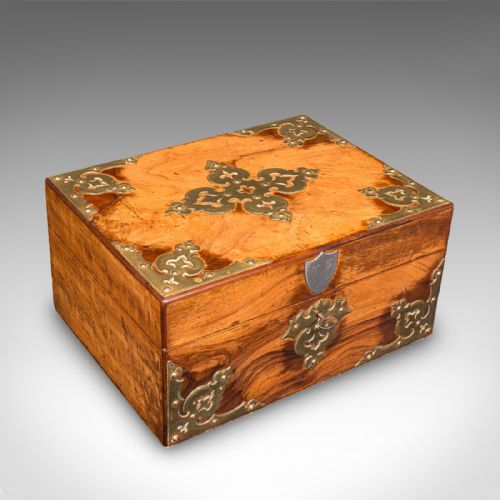


Gothic Wooden Chest
A gothic wooden chest brings medieval line and heavy timber into a room, offering robust storage rooted in centuries of vernacular joinery.

Gothic Wooden Chest
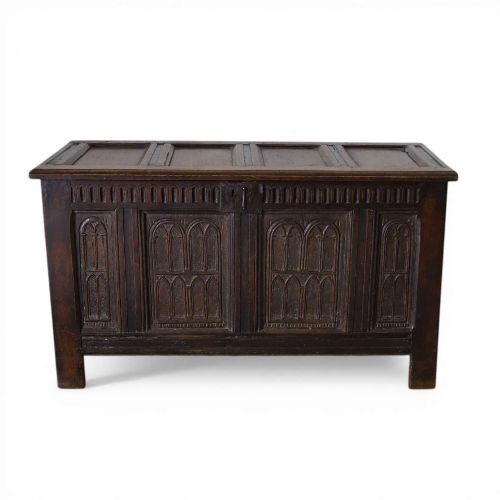
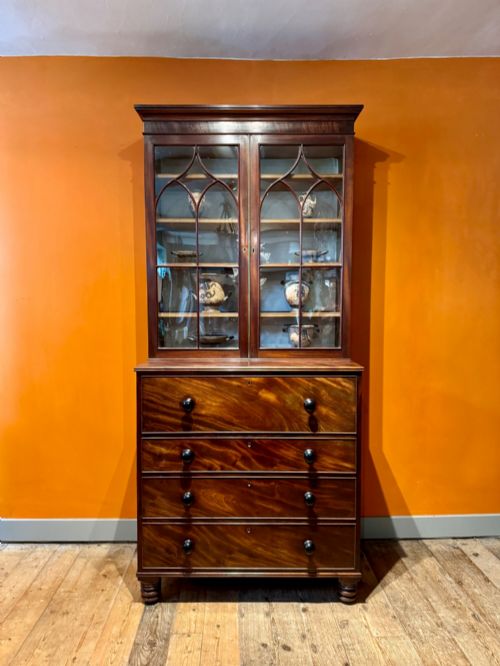
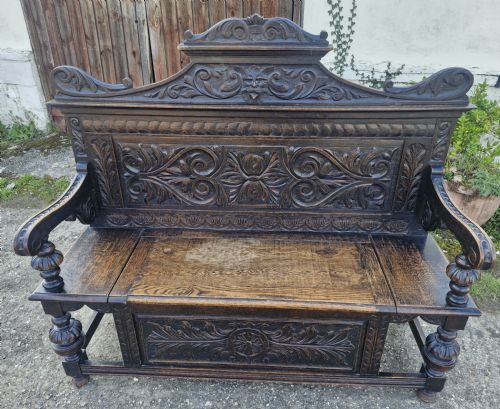
A gothic wooden chest is a heavy storage piece defined by plank construction, panel work, and architectural ornament inherited from medieval ecclesiastical and domestic buildings. These items appear across centuries, running from pre-sixteenth century examples up to nineteenth century revivals, alongside related forms like coffers and hall benches.
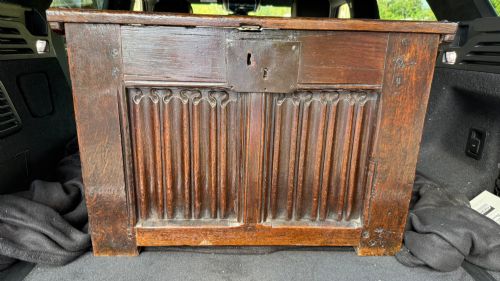
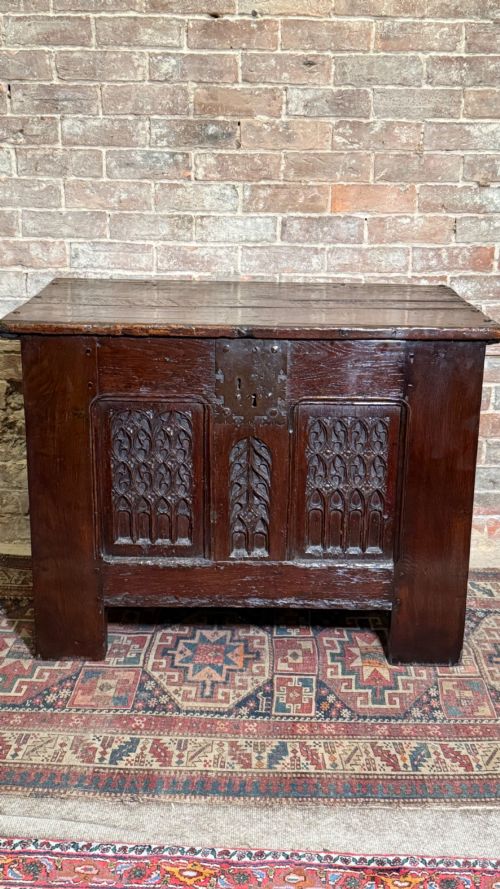
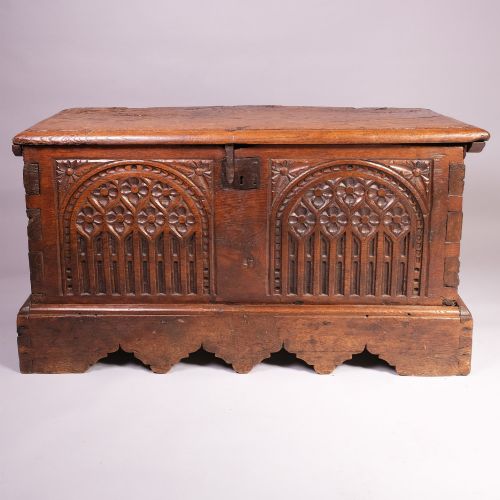
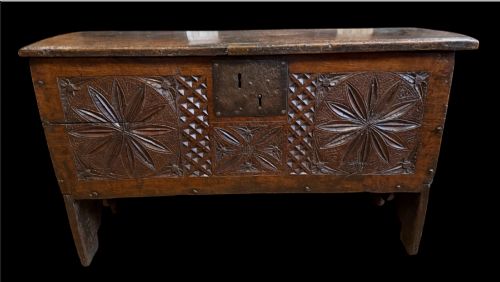
The version most commonly met on this page is the solid oak coffer, often displaying linenfold carving, tracery, or iron mounts. Pieces range from early monastic and domestic strongboxes to later Gothic Revival interpretations produced in Victorian workshops.
Origins stretch across English, Spanish, French, and German regions, each workshop applying regional timber choices and local carving idioms to the basic box form. Buyers encounter everything from rough plank constructions to sophisticated panelled chests bearing deep linenfold or geometric motifs.
Materials and construction
Oak dominates the material record, selected for its density, durability, and availability, while supporting timbers like elm, chestnut, and walnut appear in regional variants. Master joiners employed heavy pegged mortise and tenon joints for panelled frames, or simple joined planks secured with forged iron straps for earlier coffers.
Iron and brass hardware played both structural and decorative roles, with wrought iron strapwork, hinges, and bindings reinforcing the timber sides and heavy lids. Carving was executed directly into the solid wood ground using gouges and chisels, producing crisp tracery, linenfold panels, and stylized foliage.
Early ironbound coffers were built so heavily that moving one required a small village and several flagons of ale.
Judging quality in early storage
Quality rests upon the integrity of the original timber and the survival of early surfaces against centuries of drying, shrinkage, and domestic use. Untouched boards with deep patination and minimal structural replacement command the highest regard among purists.
The crispness and depth of the hand-carved ornament distinguish masterwork joinery from provincial or later revival work. Well-proportioned framing, original forged ironwork, and untouched hinges elevate a piece beyond standard utilitarian boxes.
Jack Grimble·Pugin
The Gothic Wooden Chest Glossary
- Coffer
- A heavy wooden box with a lid, used originally for storing valuables, documents, or vestments. These sturdy receptacles form the direct ancestor of the modern chest.
- Linenfold
- A style of woodcarving representing folded cloth, popular on sixteenth century panels. This motif creates a textile illusion across rigid oak boards.
- Tracery
- Openwork or patterned stonework ornament translated into woodwork designs. This architectural feature identifies Gothic styling on panels and friezes.
- Ironbound
- Secured and reinforced with heavy wrought iron bands and straps. Such reinforcement provided vital security for early domestic and ecclesiastical chests.
Gothic Wooden Chest: Frequently Asked Questions
What is the difference between a coffer and a chest?
A coffer typically denotes an older, heavily constructed storage box with a flat lid, often associated with valuables and travel. A chest covers a broader range of lidded storage forms designed for domestic interiors.
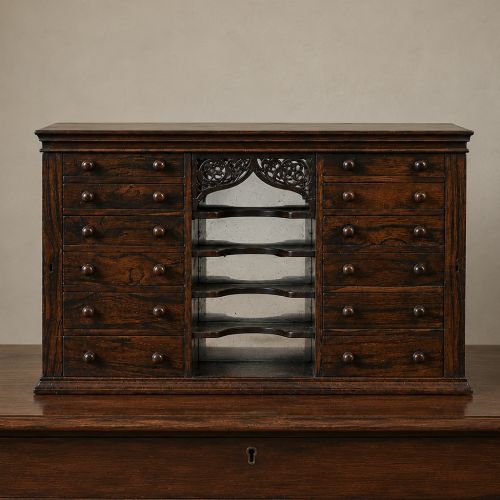
Early coffers rely heavily on simple plank construction or primitive framing, whereas later chests incorporate sophisticated drawer arrangements and panelled joinery.
How can I date an early wooden chest?
Dating relies on examining the construction methods, tool marks left by hand adzes and saws, and the evolution of decorative motifs. Examining the hinges, nails, and lock mechanisms provides further clues to the period of manufacture.
Original surfaces, timber shrinkage patterns, and peg construction help separate sixteenth century examples from nineteenth century revival pieces.
Where were these chests originally used?
These pieces served primary storage functions in churches, monastic houses, great halls, and domestic chambers across Europe. They held vestments, legal documents, silver, and textiles.
Heavier ironbound versions functioned as strongboxes for securing community funds and high-status valuables against theft.
How do I care for antique oak timber?
Maintain stable relative humidity and keep antique oak away from direct heat sources and strong sunlight to prevent warping and splitting. Feeding the timber with appropriate wax polish preserves the surface sheen.
Avoid modern liquid cleaners and heavy silicone polishes, which can penetrate porous historic finishes and attract dust.