




Gothic Revival Chest
A gothic revival chest brings architectural mass and solemn mediaeval lineage straight into domestic rooms.

Gothic Revival Chest
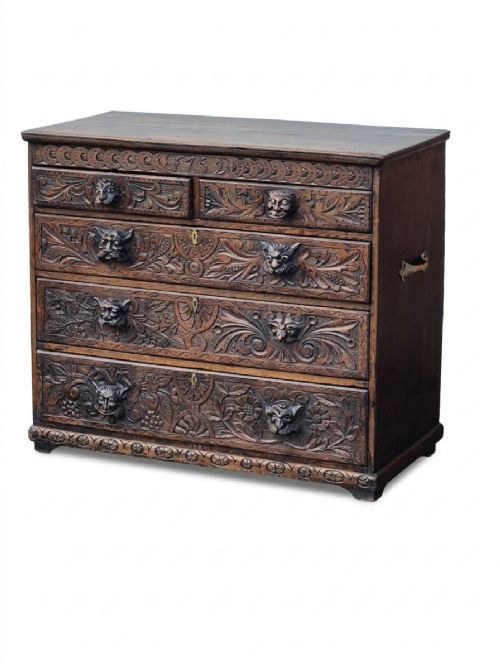
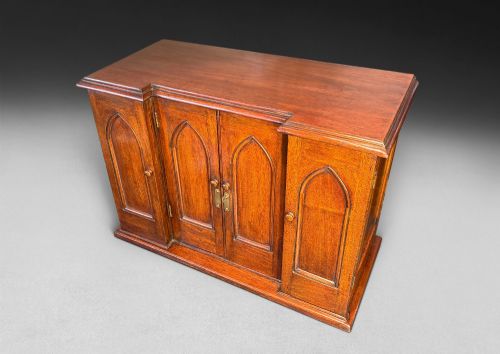
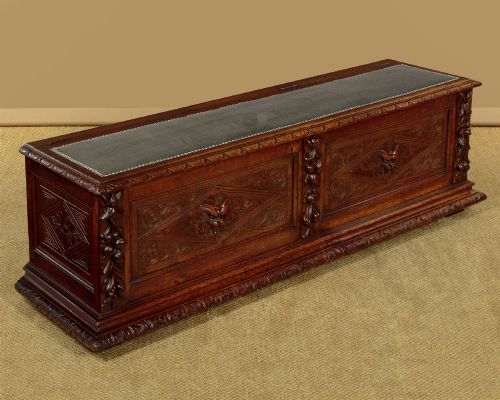
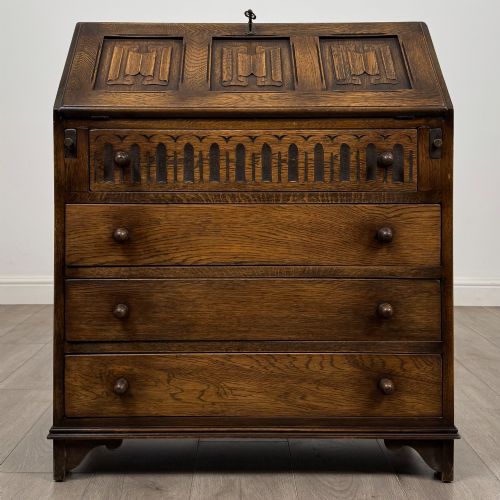
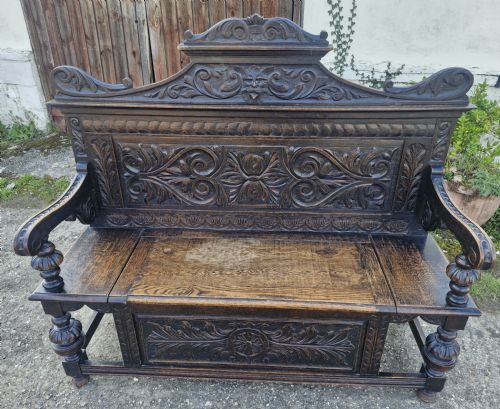
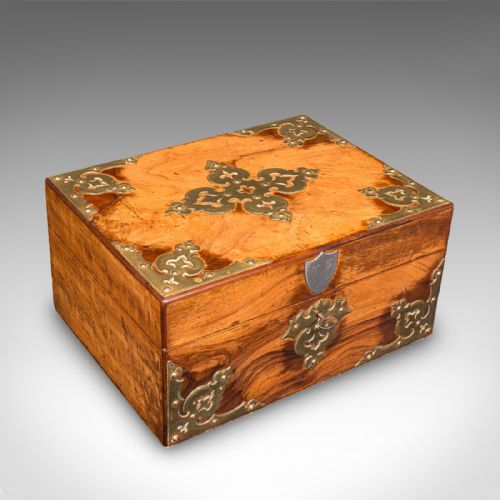
A gothic revival chest draws upon historical mediaeval architecture, translating stone tracery, pointed arches, and heavy timber construction into domestic furniture. When searching for a gothic revival chest, buyers encounter a diverse selection ranging from massive carved oak coffers and monks benches to smaller tabletop cabinets, tea caddies, and dressing pieces.
The material record spans solid oak, burr walnut, mahogany, coromandel, and pollard oak, often accented with brass mounts, iron straps, or steel work. Pieces emerge predominantly from the nineteenth century, including Victorian manifestations, alongside related Arts and Crafts interpretations and occasional Regency examples.
Forms vary considerably from substantial hall seats and chests of drawers down to compact decorative boxes and stationery caddies. This dual scale means the category serves both those seeking prominent architectural storage and those hunting for small desk accessories touched by the same mediaevalist aesthetic.
What varies in quality
Quality rests primarily on the crispness and depth of the timber carving, distinguishing flat, mechanical work from deep, expressive relief work featuring intricate tracery or detailed grotesque figures. The choice of primary timber and secondary wood selection also dictates value, with highly figured burr walnut, pollard oak, and coromandel sitting at the more decorative end compared to standard domestic woods.
The standard of metalwork creates a clear division, where hand-finished brass mounts, heavy iron straps, and integrated locking mechanisms elevate a piece above standard factory production. Furthermore, the fidelity of the architectural proportion and the integrity of the original construction dictate whether a piece maintains its character over generations.
Periods represented stretch from Regency and Victorian eras through Edwardian workshops into twentieth-century Arts and Crafts revivals.
Jack Grimble·Lamb of Manchester·Pugin
The Gothic Revival Chest Glossary
- Coffer
- A heavy wooden chest traditionally used for storing valuables, often featuring plank construction and iron bands.
- Linenfold
- A style of wood carving that imitates folded linen, frequently seen on panels of chests and cabinets.
- Tracery
- Openwork ornamentation resembling the stone ribs of gothic window openings, carved into panels or doors.
- Teapoy
- A small stand or box on legs, designed to hold multiple varieties of tea in internal caddies.
- Green Man
- A sculptural motif showing a human face emerging from or entwined with foliage, popular in grotesque carving.
Gothic Revival Chest: Frequently Asked Questions
What is a gothic revival chest?
A gothic revival chest is a storage piece or box designed in the nineteenth century or later using architectural motifs borrowed from mediaeval gothic buildings. These pieces channel the romanticism of the Middle Ages into domestic interiors.
They appear in various scales, from large oak coffers and hall benches to small tea caddies and tabletop collectors cabinets, all united by pointed arches, tracery, and heavy carving.
How were these chests used?
Larger coffers and chests served practical storage needs for linens, garments, and household valuables in hallways and bedchambers, while monks benches doubled as seating.
Smaller boxes, such as tea caddies, despatch boxes, and cigar humidors, protected precious commodities, documents, and personal items on desks and tables.
Are these pieces strictly from the Victorian period?
While the vast majority date from the nineteenth century and the reign of Queen Victoria, the grouping also encompasses Regency examples, Edwardian interpretations, and later Arts and Crafts pieces.
Stylistic revivals persisted across generations, meaning cabinetmakers continued producing gothic-inspired furniture into the twentieth century.
What woods were used for gothic revival chests?
Oak remains the dominant timber due to its historical association with mediaeval architecture and its robust structural qualities. Cabinetmakers also utilised mahogany, rosewood, and hardwood for substantial furniture.
For smaller decorative boxes and caddies, makers frequently employed exotic and highly figured woods such as burr walnut, pollard oak, coromandel, and amboyna.
How do I identify a Green Man carving?
A Green Man carving depicts a human face surrounded by, or sprouting from, leaves, vines, and foliage. This ancient decorative motif symbolised rebirth and spring.
In this category, you will find these expressive grotesque faces peering out from oak panels on drawers, bench backs, and cabinet doors.