




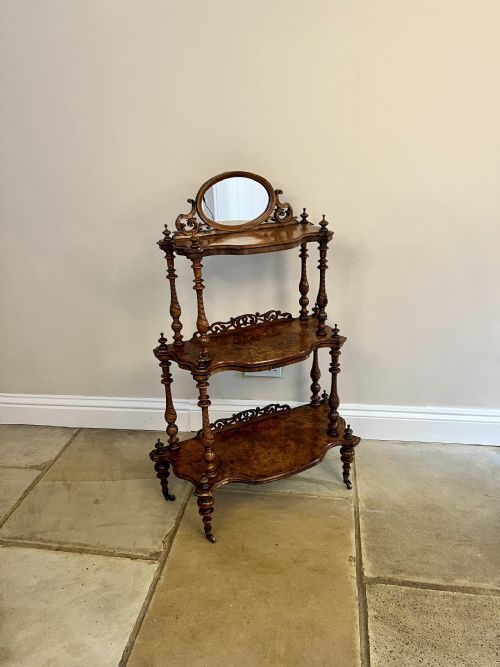
Victorian Display Whatnot
A Victorian display whatnot offers tiered open shelving designed to showcase prized objects while anchoring a room with polished timber.
Victorian Display Whatnot
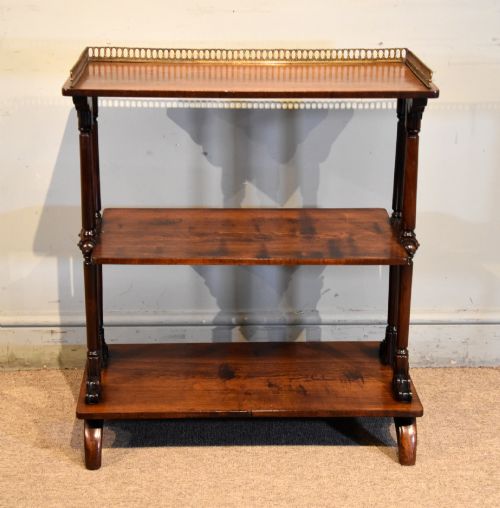
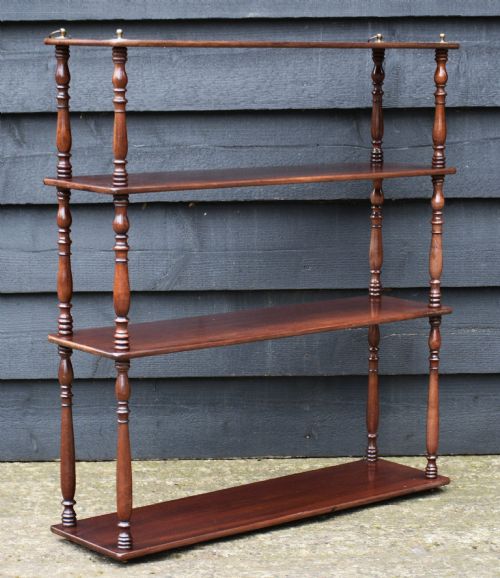
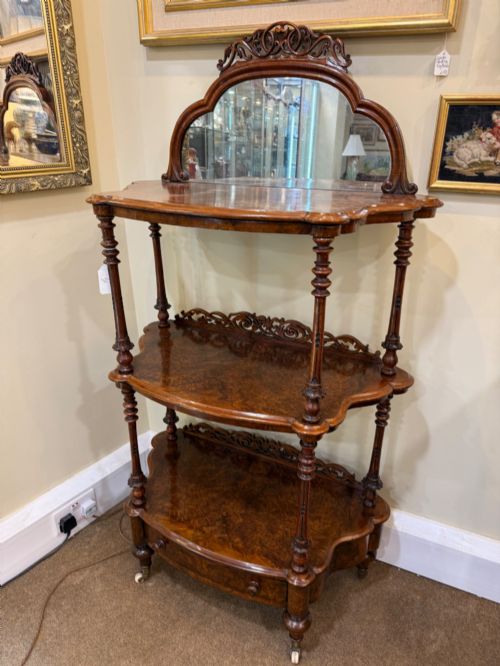
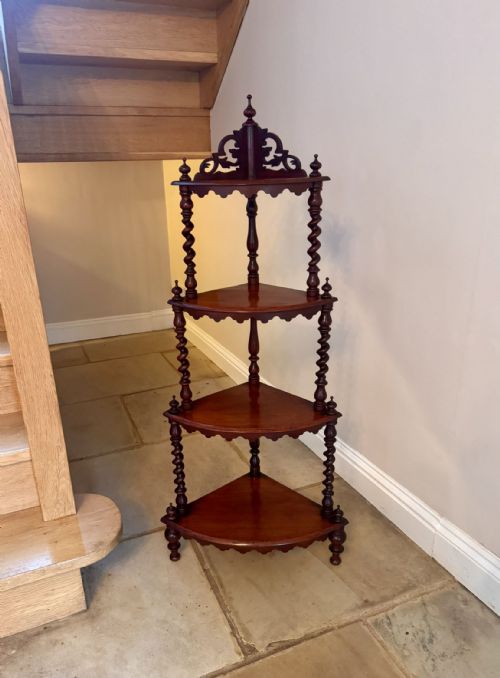
A Victorian display whatnot provides tiered open shelves intended for the orderly arrangement of ornaments, books, and curiosities. These functional pieces range from compact corner units designed to utilise awkward angles to freestanding multi-tier étagères meant to command the centre of a room.
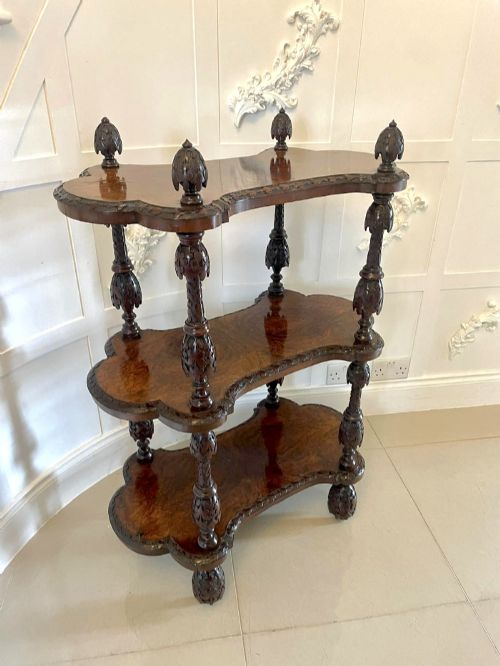
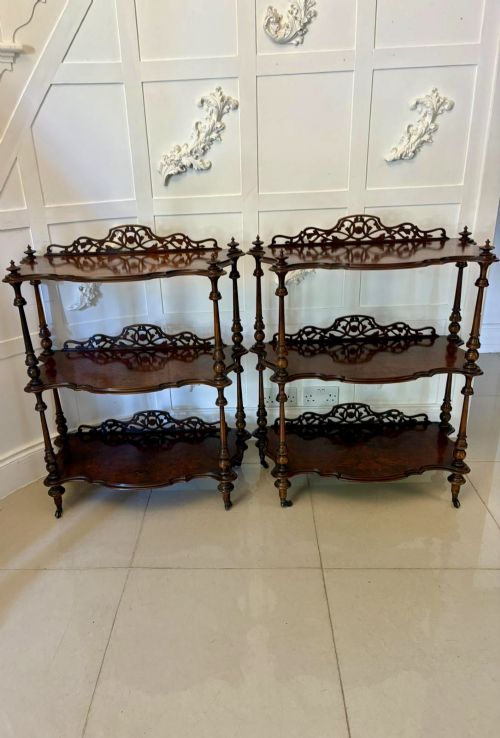
Makers utilised these multi-level stands in various room settings, leading to diverse configurations like serpentine shapes, bamboo frames, and revolving book tiers. Buyers searching for a Victorian display whatnot will find pieces that balance utilitarian display capacity with decorative presence.
Materials and Construction
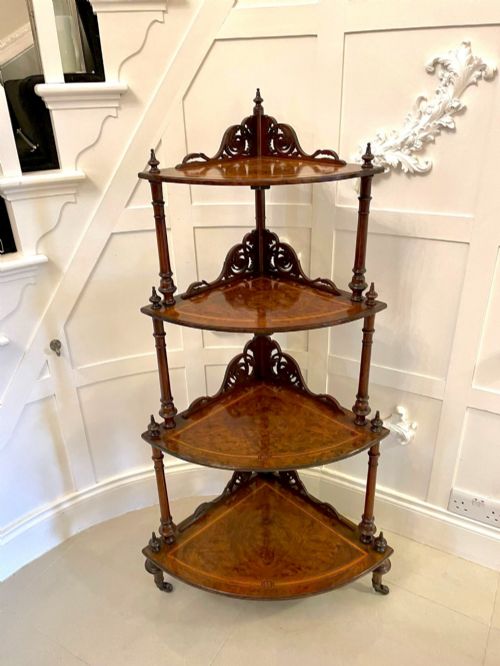
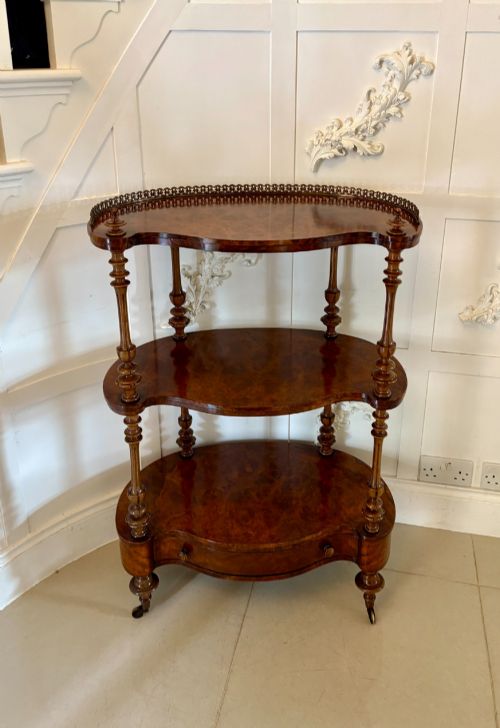
Cabinetmakers constructed these tiered pieces primarily using dense hardwoods such as mahogany, walnut, and rosewood, frequently selecting figured burr veneers to create richly patterned surfaces on shelves and friezes. Ebonised wood and padauk also appear, providing deep, dark tones or exotic grain patterns suited to nineteenth-century tastes.
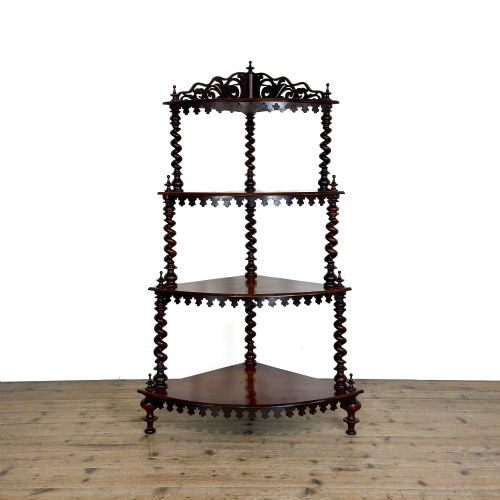
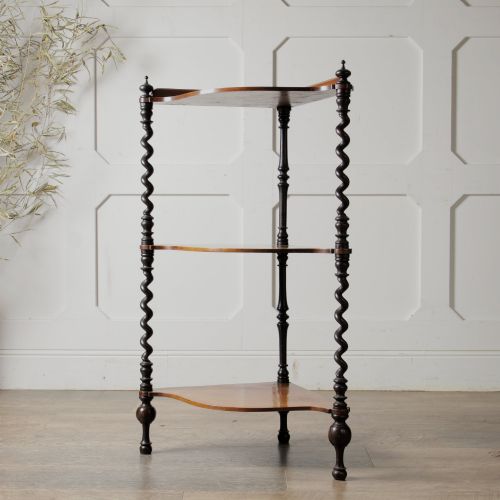
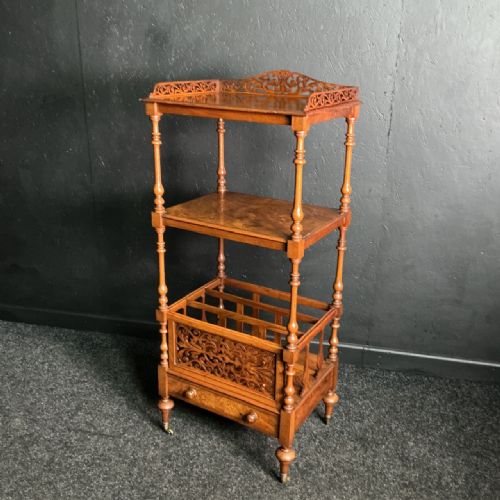
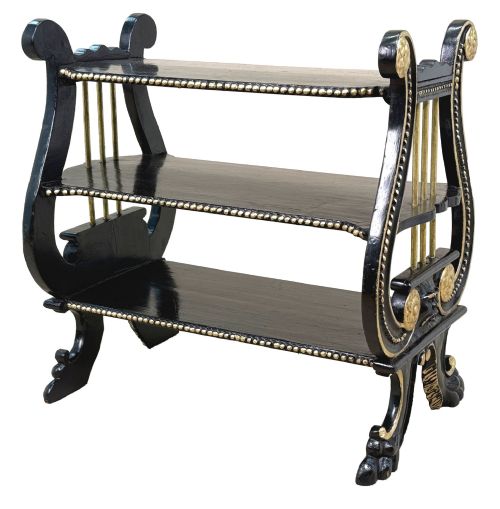
Structural support relied upon turned uprights, barley twist columns, and brass fittings, which held the graduated tiers securely in place. Finer iterations incorporated intricate marquetry inlay, parcel gilding, and glazed panels to elevate the visual weight of the display furniture.
Victorian Display Whatnot Retail Price Guide 2026
Typical asking prices for victorian display whatnot among the pieces listed under this phrase on Sellingantiques today, from the lower quarter to the upper quarter. They describe what is for sale here now, not the wider market.
Listings feature woods including walnut, mahogany, rosewood, burr walnut, and ebonised wood alongside bamboo frames.
Determinants of Quality
Excellence in these tiered stands lies in the selection of timber veneers and the crispness of carved elements like barley twist columns or applied mouldings. Superior examples exhibit tightly figured burr walnut or rich rosewood grains that wrap cleanly around serpentine edges without splitting or lifting.
The overall rigidity of the tiered framework and the neatness of joinery dictate the tier of craftsmanship. Pieces built with substantial secondary timbers, well-fitted drawers, and refined brass mounts represent the upper echelon of nineteenth-century production.
Liberty and Co·Leonard Wyburd·Samson and Son
The Victorian Display Whatnot Glossary
- Étagère
- A piece of furniture with a set of open shelves for displaying ornaments. The term is frequently used interchangeably with whatnot in nineteenth-century contexts.
- Burr Walnut
- A wood obtained from the burl growths of walnut trees, prized for its swirling, highly figured grain patterns. Cabinetmakers applied it as a veneer on prominent surfaces.
- Barley Twist
- A type of turning shaped like a spiral or screw thread. It was widely utilised for the vertical supports on nineteenth-century stands.
- Serpentine
- A shape characterised by a line of alternating convex and concave curves. It adds fluid movement to the front edges of shelves and cabinets.
Victorian Display Whatnot: Frequently Asked Questions
What is a whatnot used for?
These tiered stands were originally designed to hold ornaments, books, and small decorative items in nineteenth-century reception rooms. They provided an accessible surface to display collections while keeping objects organised and visible.
Over time, owners adapted them for various domestic uses, including bedside storage, side tables, and corner display units. Their open shelving format makes them suited to modern interiors for exhibiting ceramics, glass, and plants.
How do I tell a whatnot from an étagère?
In historical records and trade descriptions, the terms whatnot and étagère largely overlap to describe multi-tiered shelving units. Both forms serve the primary function of displaying objects upon stacked horizontal surfaces.
Etymologically, étagère derives from the French word for stage or shelf, while whatnot emerged as an English term for a piece holding whatever you put on it. Stylistic origin rather than function usually separates the labels, with étagère occasionally leaning towards lighter, French-inspired decorative frameworks.
Were these pieces made for corners?
Makers produced both freestanding rectangular units and dedicated corner models to fit diverse room layouts. Corner variants feature triangular shelves designed to slot neatly into ninety-degree wall junctions.
These space-saving iterations allowed households to utilise neglected architectural angles for display without obstructing floor traffic. They share the same tiered construction and turned supports as their freestanding counterparts.
How do I date a Victorian display piece?
Dating relies on observing changes in timber preferences, construction techniques, and stylistic movements across the nineteenth century. Early examples often display William IV influences with heavy rosewood or mahogany builds, while pieces from the 1850s and 1860s frequently showcase burr walnut veneers and serpentine fronts.
Later Victorian items from the 1880s and 1890s introduce ebonised finishes, parcel gilding, bamboo frames, and Aesthetic Movement details. Examining the secondary timbers and hardware fastenings helps anchor the piece within this chronological span.