

Victorian Display Furniture
Victorian display furniture brings together glazed cabinets, open étagères and multi-tiered whatnots designed to hold treasured objects in domestic rooms.
Victorian Display Furniture
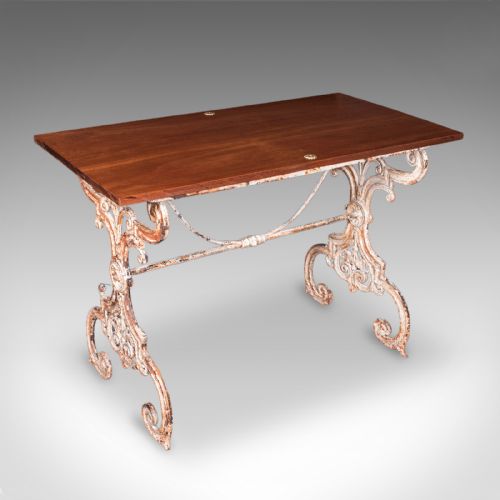
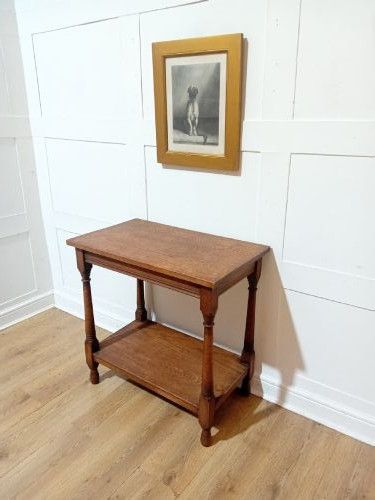
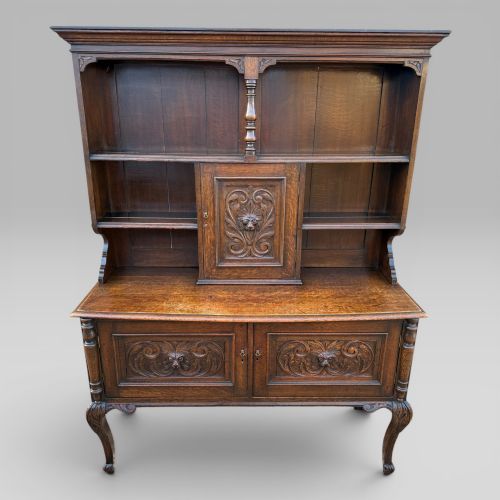
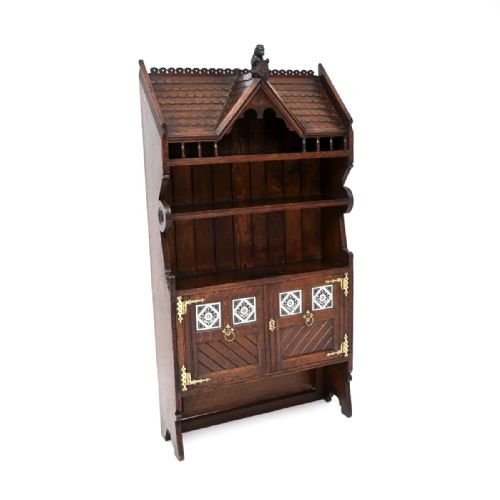
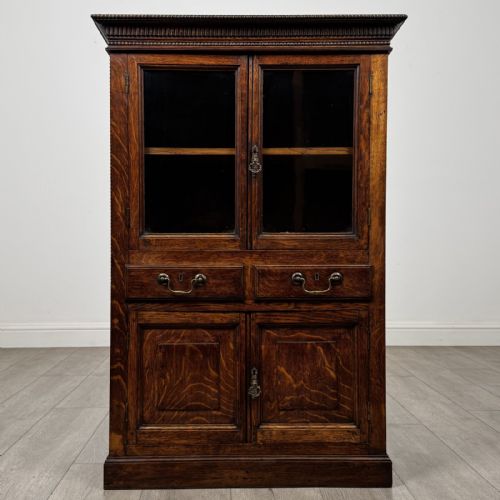
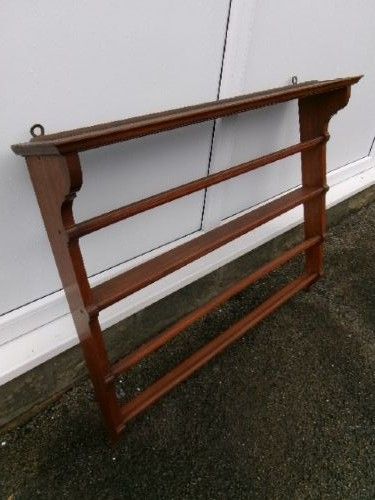
Victorian display furniture encompasses a variety of timber pieces built to showcase books, curiosities and decorative items in nineteenth-century interiors. These items range from wall-hanging shelves and corner cupboards to large breakfront bookcases and freestanding pier cabinets.
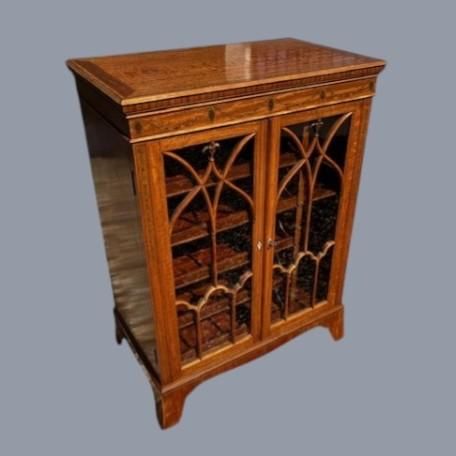
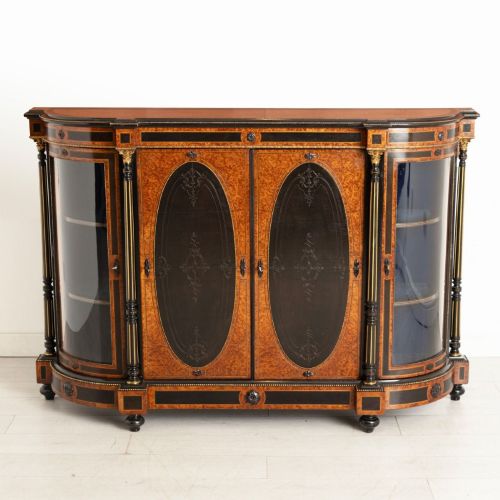
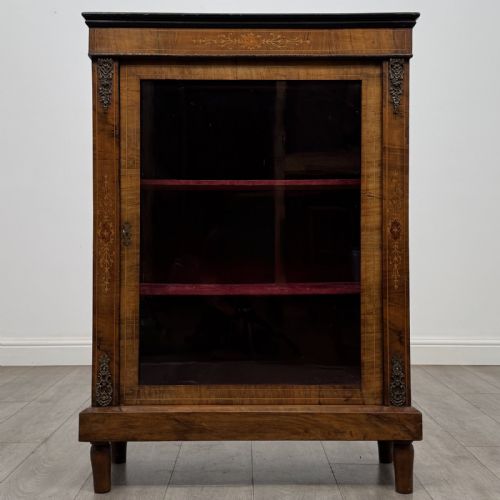
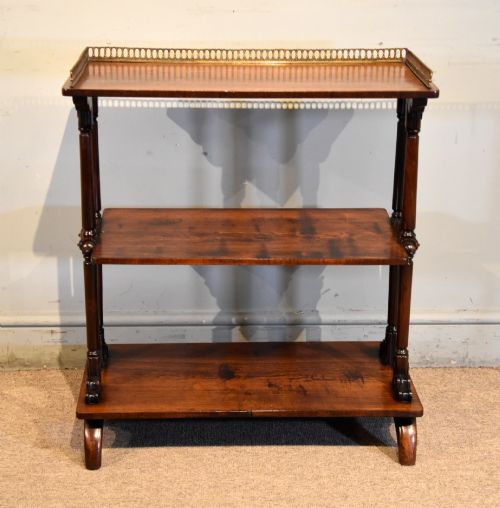
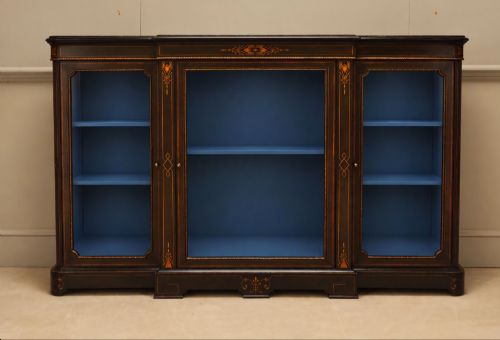
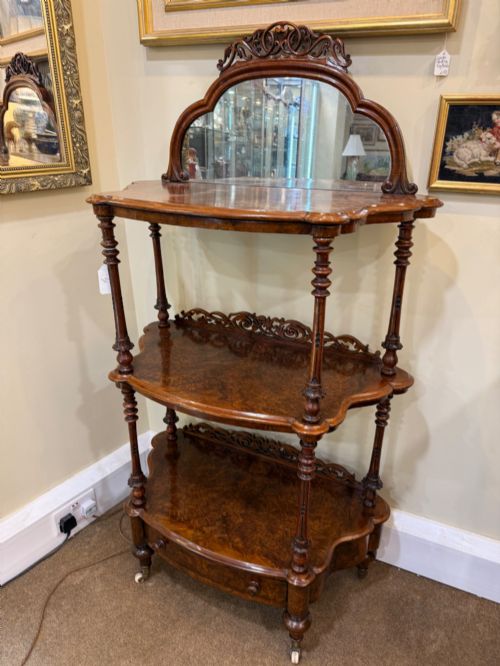
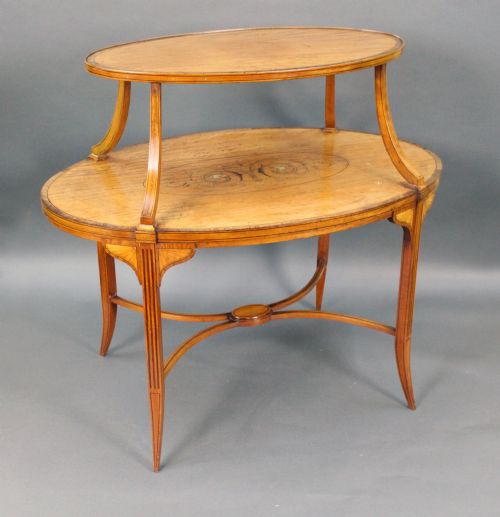
The version most commonly encountered on this page is the walnut or mahogany whatnot and glazed display cabinet, frequently ornamented with marquetry inlay or brass galleries. Examples span from mid nineteenth-century burr walnut pieces to later aesthetic movement and Sheraton revival designs.
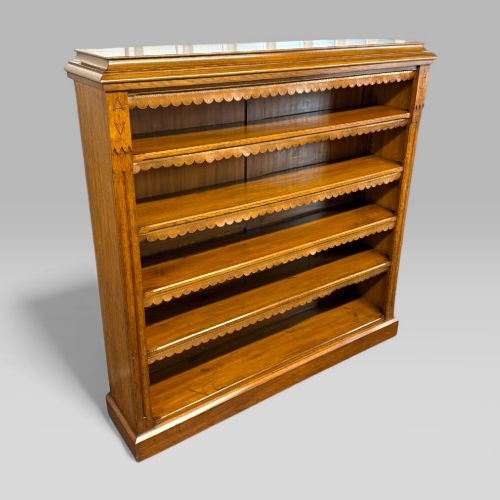
Makers and workshops of the period utilised diverse global influences, resulting in Anglo-Indian cabinets, French vitrines and Japanese-inspired shodonas alongside traditional British forms. Open bookcases, sideboards and tiered etageres complete the domestic repertoire found in these listings.
Materials and construction
Makers utilised dense timbers such as mahogany, walnut and burr walnut as the primary structural woods, often applying ebonised finishes or contrasting satinwood and marquetry inlay for decorative effect. Secondary woods like oak and pine appear in carcass construction and internal shelving.
Glass is integrated extensively through glazed doors and vitrine panels, paired with brass galleries, hinges and mounts that secure shelves and protect vulnerable edges. Hand-carved details, pierced fretwork and barley twist supports demonstrate the cabinetmaker's technical repertoire.
Victorian Display Furniture Retail Price Guide 2026
Typical asking prices for victorian display furniture among the pieces listed under this phrase on Sellingantiques today, from the lower quarter to the upper quarter. They describe what is for sale here now, not the wider market.
Some Victorian whatnots were built with removable tiers so owners could reconfigure their display height for stubborn tea sets.
Judging quality
Quality reveals itself in the selection of veneer, where matched burr walnut or figured mahogany displays deliberate grain alignment across the facade. Superior pieces exhibit refined marquetry inlay, crisp carved mouldings and substantial brass hardware rather than stamped metal replacements.
Construction integrity distinguishes workshop output, seen in tight joints, dovetailed drawer construction and stable tiered frames that bear weight without deflection. The ambition of the design, from simple pine cupboards to breakfront exhibition cabinets with intricate fretwork, dictates the tier of craftsmanship.
John Moyr Smith·Gillows·Gabriel Viardot
The Victorian Display Furniture Glossary
- Pier Cabinet
- A narrow display cabinet designed to fit against the wall space between windows. These pieces usually feature a single glazed door protecting interior shelves.
- Etagere
- A piece of furniture consisting of a set of open shelves for displaying ornaments. Originating in France, it often incorporates multiple tiers and delicate supports.
- Credenza
- A sideboard or cabinet for displaying plate and china. Victorian examples frequently combine central cupboards with curved glazed side compartments.
- Marquetry
- Decorative woodwork where pieces of veneer are fitted into a ground material to form geometric or floral designs. It requires high precision from the artisan.
- Vitrine
- A glass-fronted cabinet specifically designed for displaying fine porcelain and curiosities. The sides and door are glazed to maximise visibility.
Victorian Display Furniture: Frequently Asked Questions
What is the difference between a whatnot and an etagere?
A whatnot is traditionally a British tiered shelving unit designed for books and ornaments, often standing in a corner or against a wall.
An etagere stems from French furniture traditions and frequently exhibits lighter, more decorative framing intended for drawing rooms.
How were glazed display cabinets used in Victorian homes?
Victorian households utilised glazed cabinets and vitrines to protect delicate porcelain, glassware and curiosities from household dust.
These pieces acted as domestic museums where families curated and exhibited their travel souvenirs and prized possessions to visitors.
Where should I place a corner whatnot?
Corner whatnots were specifically engineered to utilise neglected domestic angles without obstructing room traffic. They sit flush against adjoining walls to display small porcelain figures or framed photographs.
In modern rooms, they provide vertical storage in tighter spaces while maintaining an open feel.
How do I identify Aesthetic Movement display furniture?
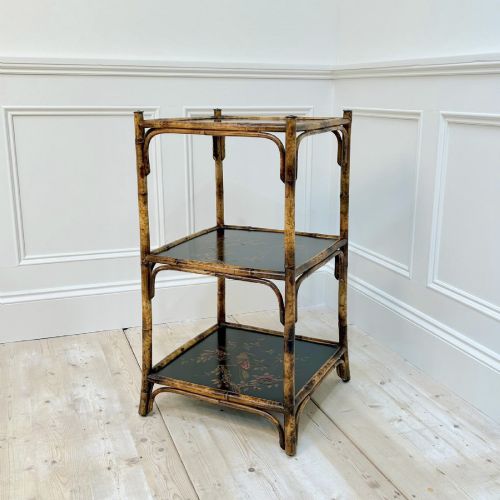
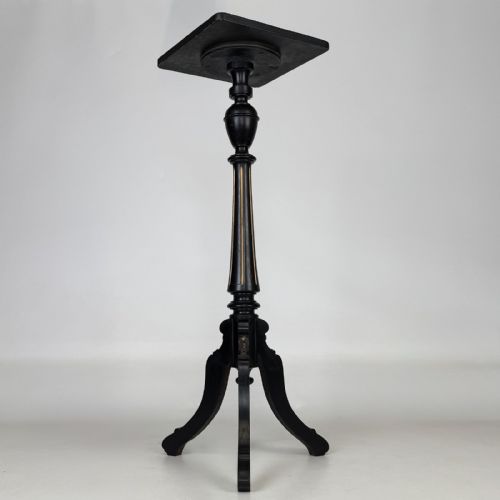
Aesthetic Movement pieces often display ebonised wood surfaces, Japanese-inspired motifs and geometric lines that break from heavy Victorian convention.
They frequently incorporate bamboo detailing, open asymmetry and contrasting gilt or inlaid highlights reflecting late nineteenth-century taste.