



Victorian Desktop Book Rack
A victorian desktop book rack keeps working reference volumes upright on a surface, offering a practical accessory that organises the study.
Victorian Desktop Book Rack
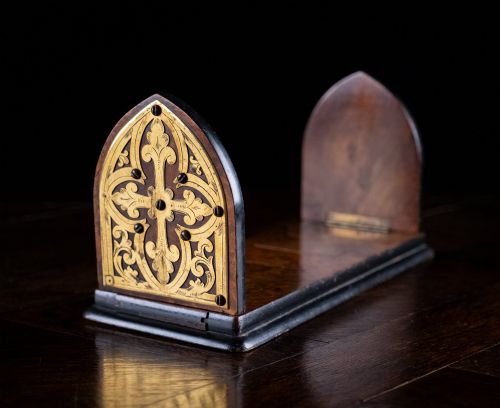
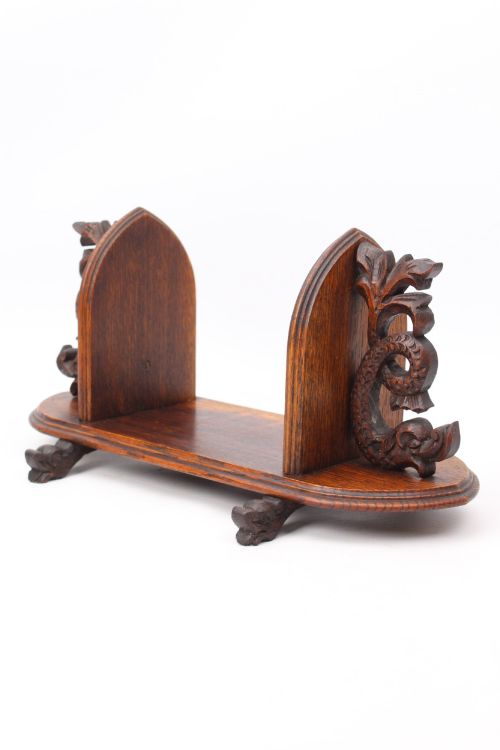
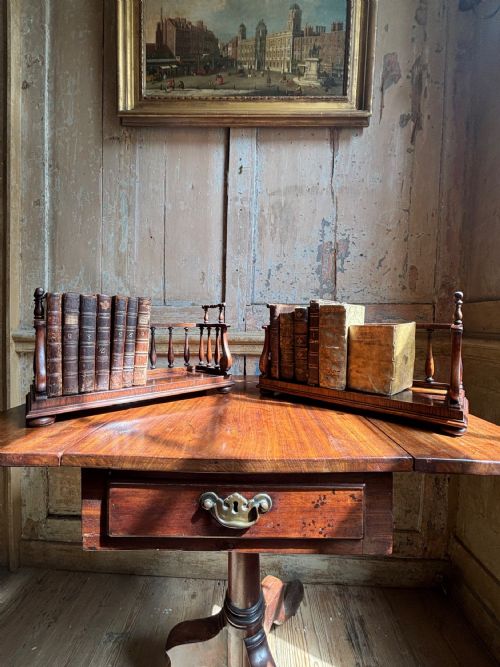
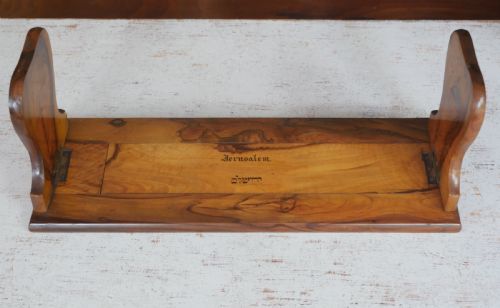
A victorian desktop book rack is primarily found as an extending book slide or trough designed to sit upon a library table or writing desk. These desk accessories hold working volumes upright between two upright ends, often utilising a folding or sliding mechanism to adjust length.
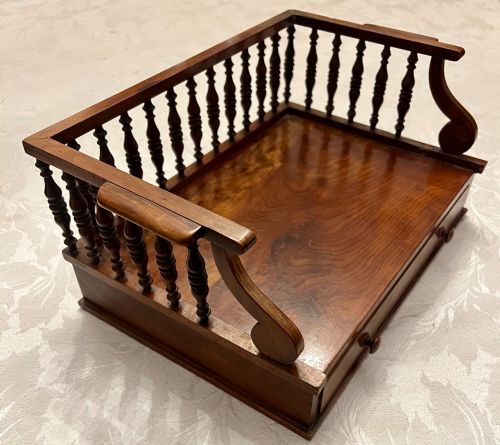
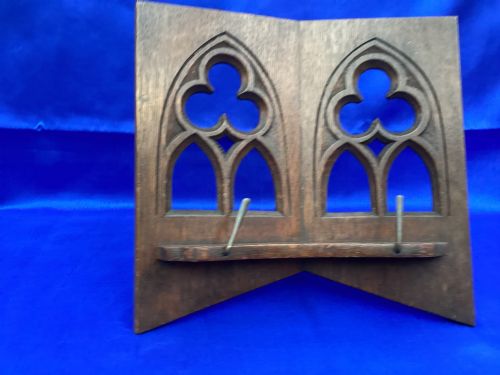
The versions most commonly met on this page date from the nineteenth century, including walnut, oak, and rosewood examples alongside more elaborate gothic revival or brass-mounted forms. Simpler fixed book stands and revolving tabletop bookcases also appear, reflecting the varied writing furniture of the period.
How they were made
Cabinetmakers constructed these pieces from dense hardwoods like walnut, mahogany, oak, and exotic timbers such as coromandel and rosewood. These durable woods provided the structural stability required to support heavy rows of bound volumes under daily use.
Brass mountings, hinges, and extending scissor actions reinforce the wooden frames, whilst specialist decorative techniques like Tunbridge Ware, pietra dura inlay, and painted porcelain plaques adorn the finer surfaces.
Listings feature nineteen-century periods alongside Edwardian and Regency examples, constructed in walnut, oak, rosewood, and mahogany.
What varies in quality
The distinction between standard items and superior examples lies in the selection of timber and the sophistication of the decorative work. Finely figured burr walnut, intricate carved teak, and precise Tunbridge Ware mosaics indicate higher tiers of craftsmanship.
Mechanical execution also separates simpler items from patented designs, where smooth sliding actions, heavy gauge brass mounts, and integrated patent mechanisms demonstrate superior workshop production.
Gillows·Betjemanns
The Victorian Desktop Book Rack Glossary
- Book slide
- A desk accessory with two upright ends and a central base that lengthens or shortens to accommodate varying quantities of volumes. These pieces typically rest upon a library table or bureau.
- Tunbridge Ware
- A form of wooden mosaic woodwork produced in Kent, featuring geometric or pictorial designs built from thousands of tiny coloured wood blocks. This meticulous technique creates intricate surface decoration on desk items.
- Pietra dura
- An Italian technique of inlaying polished, cut coloured stones to form pictorial images on a dark stone background. These hardstone plaques are occasionally set into the wooden panels of library accessories.
- Gothic Revival
- An architectural and decorative style drawing inspiration from medieval forms, featuring pointed arches, trefoils, and heavy structural brasswork. This aesthetic strongly influenced nineteenth-century library furnishings.
Victorian Desktop Book Rack: Frequently Asked Questions
How do extending book slides work?
Extending book slides feature overlapping wooden bases or hidden scissor actions that allow the ends to pull apart or close together. This adjustable mechanism adapts the holding capacity to match the exact number of volumes placed between the supports.
Most nineteenth-century examples rely on smooth wooden channels or brass hinges to maintain stability at any chosen length. This design ensures books remain upright whether the rack holds two volumes or a full shelf.
Where were these pieces used?
These accessories were placed on writing desks, library tables, and bureau surfaces in Victorian homes and offices. They kept current reference books, ledgers, and favourite reading materials within arm's reach of the user.
Because study spaces were central to middle and upper-class life, desk tidies and book rests were both functional tools and decorative furnishings. They helped maintain order in rooms dedicated to correspondence and study.
How should I clean a wooden book rack?
Cleaning requires a soft, dry cloth to remove dust from carved details, brass mounts, and wooden surfaces. Avoid using wet cloths or modern chemical polishes that can damage antique finishes and delicate inlays.
Applying a traditional beeswax polish occasionally will nourish the hardwood and preserve the natural grain. Buff gently after application to maintain a soft, historical sheen on the timber.
What is the difference between a book slide and a bookend?
A book slide incorporates a built-in base platform upon which the volumes rest, providing an integrated frame with two upright ends. Bookends are two separate, heavy objects placed at either end of a row of books without an underlying base.
Desktop book racks on this page almost exclusively use the integrated slide or trough format. This self-contained design protects desk surfaces from friction and keeps the row rigidly aligned.