




Victorian Desk Stationery Rack
These Victorian desk stationery racks are practical writing accessories designed to keep letters and papers organised, bringing period character to a working desk.
Victorian Desk Stationery Rack
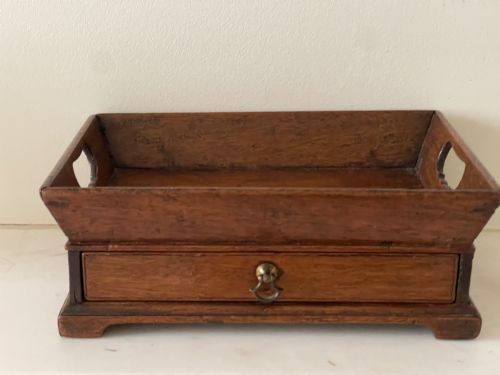
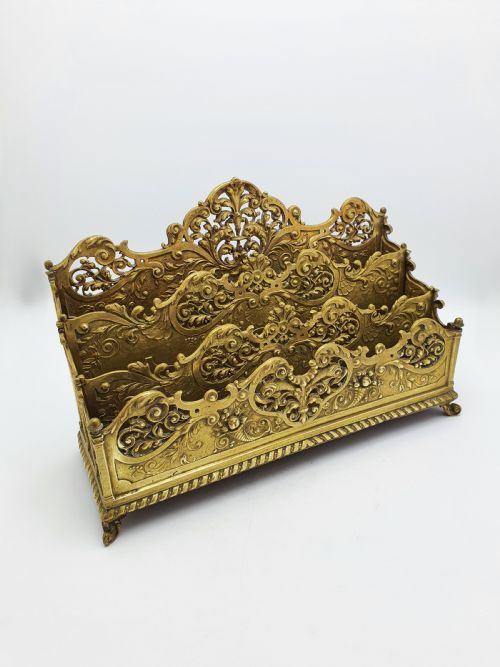
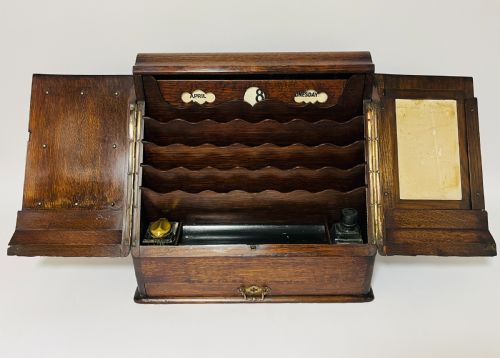
A victorian desk stationery rack organises letters and correspondence upon a writing surface, appearing in various forms throughout the nineteenth century. The selection includes upright letter stands, correspondence boxes, drop-front stationery cabinets, and open desk tidies.
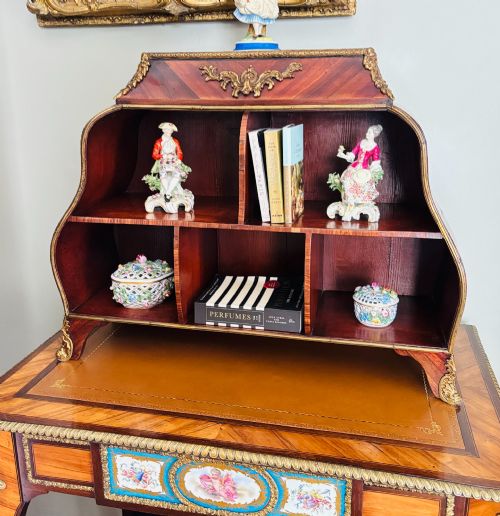
Oak and mahogany dominate the offerings, often constructed as sturdy desktop boxes or compartmentalised racks for daily use. Examples span simple country house letter boxes to more ornate Louis XV style cartonnuiers and inlaid cabinets.
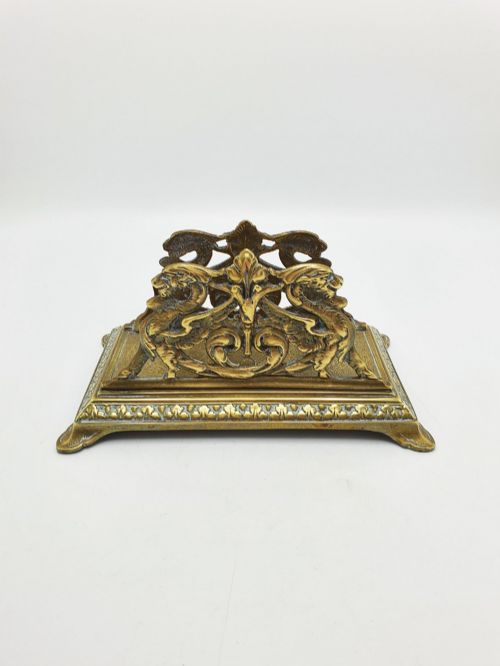
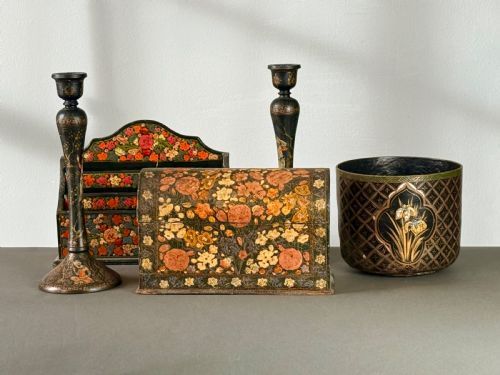
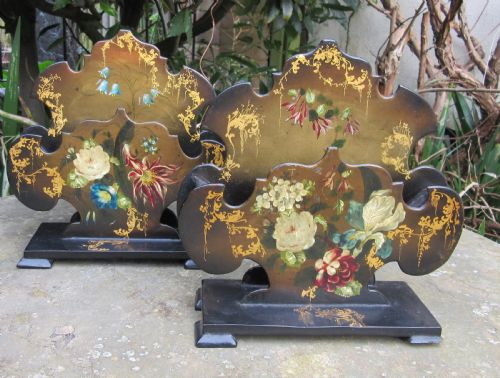
Period variations reach from mid-nineteenth-century gothic oak stands to later Edwardian arts and crafts interpretations. Brass letter holders and papier-mâché letter stands also feature among the items encountered on the desk.
Materials and construction
Cabinet makers utilised dense hardwoods such as oak, mahogany, rosewood, and walnut to build durable stationery boxes and cabinets. Selected pieces incorporate brass mounts, applied carving, and glass ink bottles alongside painted lacquer surfaces.
Joinery methods reflect traditional cabinet-making standards, accommodating hinged drop-fronts, tiered letter divisions, and bun feet. Lacquered papier-mâché and Chinoiserie finishes demonstrate decorative surface techniques applied to desk accessories.
Victorian Desk Stationery Rack Retail Price Guide 2026
Typical asking prices for victorian desk stationery rack among the pieces listed under this phrase on Sellingantiques today, from the lower quarter to the upper quarter. They describe what is for sale here now, not the wider market.
Listings feature oak, mahogany, rosewood, brass, and papier-mâché across Victorian, Edwardian, and Regency periods.
Quality and craftsmanship
Distinction lies in the choice of timber and the precision of the cabinet work, from plain oak boxes to inlaid mahogany and ormolu-mounted rosewood. Superior examples display thoughtful detailing such as integrated inkwells, panelled doors, and balanced proportions.
Decorative embellishments range from simple carved mouldings to elaborate rococo revival brass work and hand-painted motifs. The integration of functional compartments with refined exterior finishes separates standard desk tidies from exceptional pieces.
The Victorian Desk Stationery Rack Glossary
- Stationery cabinet
- A desktop box or cabinet fitted with internal partitions specifically designed for storing writing paper, envelopes, and correspondence. These pieces often feature sloping or drop fronts to access contents easily.
- Letter rack
- An open desk accessory featuring upright divisions to hold letters and incoming mail upright. They appear in brass, wood, and papier-mâché.
- Cartonnier
- A desktop cabinet containing multiple horizontal pull-out drawers or compartments for sorting papers and documents. Originating in France, they often display elaborate mounts.
- Standish
- An inkstand or desk tidy incorporating inkwells, pen trays, and sometimes a letter holder in a single portable base. They formed the central writing equipment on nineteenth-century desks.
- Papier-mâché
- A composite material made from paper pulp or layers of paper mixed with glue, moulded and painted or lacquered. It provided a smooth surface for decorative finishes on nineteenth-century desk accessories.
Victorian Desk Stationery Rack: Frequently Asked Questions
What is a stationery cabinet used for?
These cabinets were designed to hold writing paper, envelopes, and unanswered letters in an orderly fashion on a desk. Internal dividers kept different sizes of stationery separated and ready for use.
They helped maintain a tidy workspace in nineteenth-century offices and homes where daily correspondence was written by hand.
How do I date a desk stationery rack?
Dating relies on observing the prevailing styles, timber choices, and construction methods associated with specific decades. For instance, gothic revival oak pieces point towards the mid-nineteenth century, while arts and crafts influences suggest the Edwardian era.
Hardware such as hinges, brass mounts, and locks also provide helpful clues regarding the period of manufacture.
Where should I place a letter rack?
A letter rack sits comfortably on a writing desk, bureau, or console table where correspondence is handled. It keeps daily post and notepaper visible and close to hand.
Keeping wooden and lacquer racks away from direct heat sources helps protect the polished surfaces and prevents timber from drying out.