

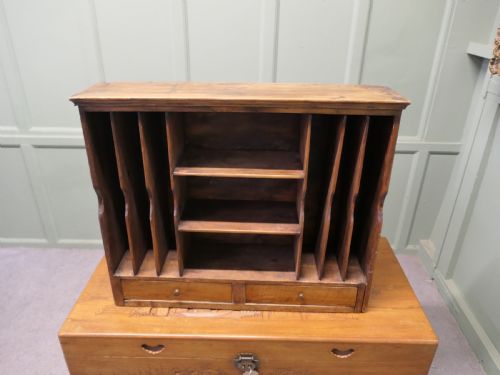


Antique Pigeonhole Cabinet
An antique pigeonhole cabinet brings order to a desk, offering segmented storage built from mahogany, pine, and oak across Georgian to Victorian periods.
Antique Pigeonhole Cabinet
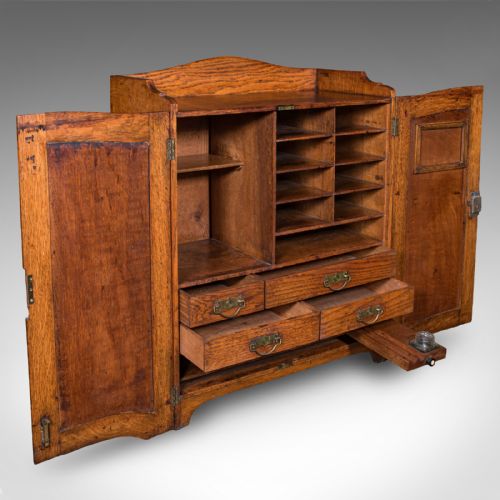
An antique pigeonhole cabinet provides dedicated compartments for sorting papers, letters, and documents, taking forms such as desk organisers, wall cabinets, and bureau cabinets. These pieces serve as functional storage for paperwork while anchoring a room with period character.
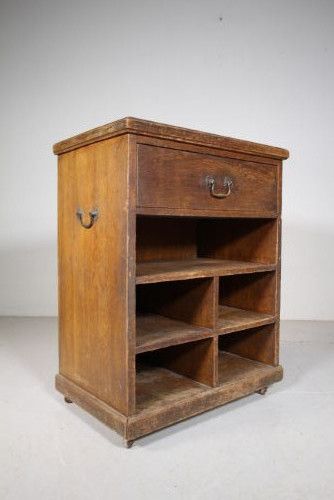
The pieces appearing on this page span from the Georgian period through the Victorian era up to the early twentieth century, encompassing oak, pine, and mahogany. Buyers most frequently meet wooden pigeon hole cabinets alongside related office and writing furniture like secretaire chests and clerks cupboards.
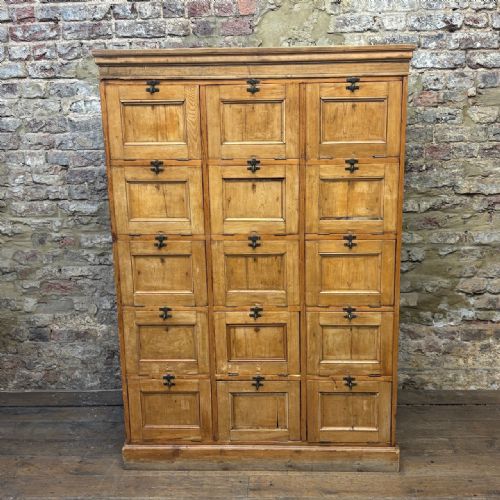
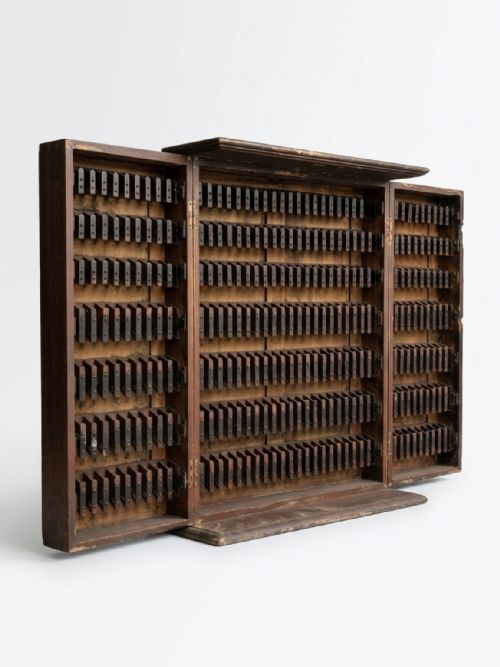
Makers and craftsmen designed these storage solutions for practical use in offices, stations, and country estates. Their forms range from compact bedside cupboards and desk organisers to large fifteen-door lockers and French post office filing shelves.
How they were made
Cabinet makers utilised solid timbers like mahogany, oak, and pine to construct the framework and internal compartments of these cabinets. Joinery methods varied according to the period, supporting heavy use in offices and domestic settings.
Metal fixtures such as brass handles, iron fittings, and brass binding added structural reinforcement and security to transportable or high-use pieces. Details like bone labels or baize linings occasionally complemented the primary wooden construction.
The furniture spans several stylistic traditions, encompassing Georgian, Regency, Victorian Industrial, Edwardian, and French Country designs.
What varies in quality
The distinction between standard utility items and finer pieces lies in the choice of timber and the precision of the pigeonhole assembly. Selected mahogany with tight grain marks a higher tier than utilitarian pine built strictly for workplace function.
Hardware integration separates ordinary storage from superior examples, particularly where brass bound edges, robust iron details, or integrated locking mechanisms survive intact. The sophistication of the overall cabinet form, from simple wall boxes to elaborate bureau stands, dictates the hierarchy of quality.
The Antique Pigeonhole Cabinet Glossary
- Pigeonhole
- A small compartment intended for storing letters, documents, or papers. These sections form the core storage feature of desk organisers and cabinet interiors.
- Secretaire
- A piece of furniture containing a built-in writing drawer or fold-down writing flap concealing pigeonholes and small drawers. This form combines writing surfaces with structured document storage.
- Escritoire
- A writing cabinet or desk featuring a fall-front flap and internal compartments. It provides a private, enclosed space for correspondence.
- Baize
- A coarse woolen material resembling felt, frequently used to line writing surfaces and interior compartments within desks and cabinets. It protects paper and writing instruments during use.
Antique Pigeonhole Cabinet: Frequently Asked Questions
What is a pigeonhole cabinet used for?
These cabinets were designed for sorting correspondence, documents, and office paperwork into accessible compartments. They keep desks tidy and organise letters in both domestic and workplace settings.
Today, they function well in home offices or studies for storing stationery, mail, and small collections. Their divided interiors make them practical display and storage units.
How do I date an antique cabinet?
Dating relies on examining the timber species, construction techniques, and hardware style. Georgian and Regency pieces often feature fine mahogany and refined proportions, while Victorian items frequently utilise heavier oak or pine.
Stylistic cues from Chippendale influence or industrial workplace designs further help narrow down the period of manufacture. Comparing internal joinery and secondary woods provides additional context for the era.
Are these cabinets suitable for small spaces?
Many variations, including wall cabinets, desk organisers, and compact bedside cupboards, occupy minimal floor space. Their vertical compartmentalisation maximises storage capacity without requiring a large footprint.
Desk cabinets and small writing boxes sit easily on top of existing tables or sideboards. This makes them adaptable storage choices for modern rooms with limited space.
How do I care for antique wood?
Maintain the timber by keeping the cabinet away from direct heat sources and strong sunlight, which can dry out mahogany, oak, and pine. Regular dusting with a dry cloth prevents dirt accumulation.
Applying a traditional beeswax polish occasionally nourishes the grain and preserves the finish. Avoid using modern liquid cleaners that may damage historic surfaces.