



Antique Rosewood Desk Shelf
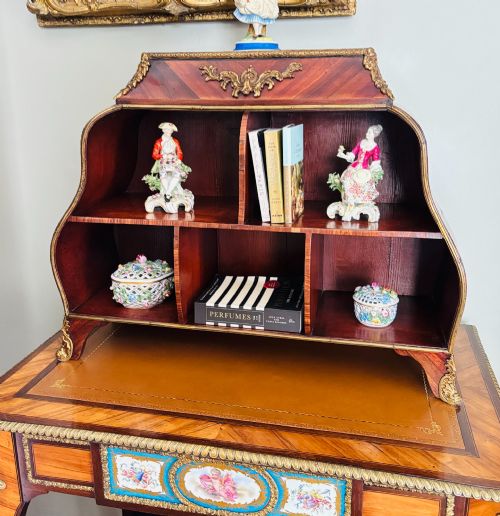
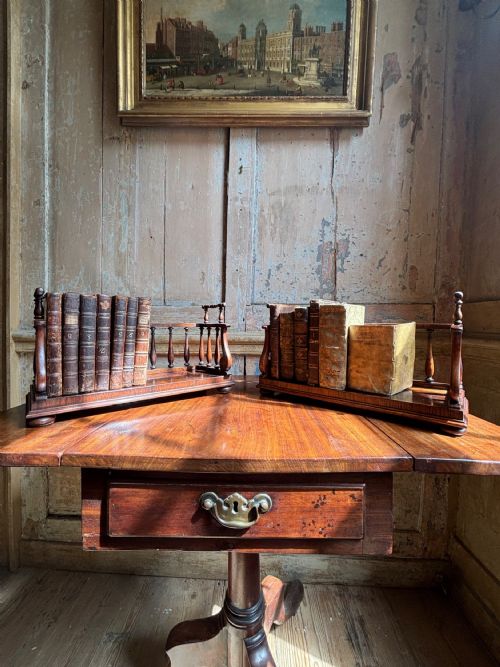
An antique rosewood desk shelf brings rich grain and practical surface organisation to a study, taking the form of library tables, book stands and tabletop étagères.
Antique Rosewood Desk Shelf
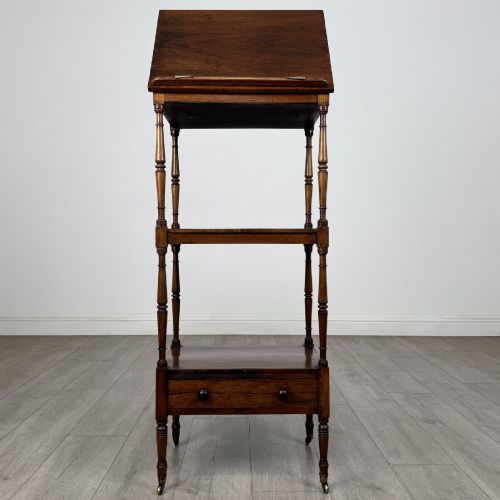
When searching for an antique rosewood desk shelf, a buyer encounters a diverse selection of nineteenth century writing accessories and tabletop storage forms. These range from adjustable reading slopes and book racks to tiered étagères and cartonnieres designed to sit neatly upon a surface.
The objects listed span the Regency, Victorian, and Napoleon III periods, alongside specific stylistic revivals such as Louis XV and French Empire. While some pieces are compact tabletop fittings, others expand into larger library tables and chiffoniers incorporating rosewood construction.
Origins vary between British workshops and French makers, bringing distinct decorative vocabularies to the timber. A buyer is most likely to meet refined nineteenth century examples featuring thoughtful compartments for books, papers, or timepieces.
How they were made
The primary material across these pieces is dense rosewood, chosen for its deep colour and pronounced grain pattern. Craftsmen frequently enhanced the timber with contrasting stringing and geometric details using fruitwood and boxwood inlay.
Metal elements play a functional and decorative role, with cast or chased ormolu and brass mounts securing joints and framing compartments. Finer examples integrate marquetry patterns alongside glazed panels or gilded bronze accents.
Antique Rosewood Desk Shelf Retail Price Guide 2026
Typical asking prices for rosewood desk shelf among the pieces listed under this phrase on Sellingantiques today, from the lower quarter to the upper quarter. They describe what is for sale here now, not the wider market.
Officers needed time kept even in transit, explaining why brass-trimmed travelling clocks ended up sharing space with stationary writing slopes.
What varies in quality
Quality reveals itself in the precision of the joinery and the selection of the rosewood veneers. Superior pieces display continuous grain matching across drawers and panels, whereas simpler versions rely on standard timber arrangements.
The refinement of the metal mounts distinguishes workshop output, with crisp ormolu and hand-chased brass elevating a piece far above standard commercial production. Attribution to notable makers like Gillows or John McLean also elevates the standing of an item.
Gillows·Henry Marc·Walker and Hall·Malecot of Paris·John McLean
The Antique Rosewood Desk Shelf Glossary
- Ormolu
- Gilded bronze used for decorative mounts and feet on nineteenth century furniture. It provides a bright metallic contrast against dark rosewood surfaces.
- Marquetry
- Decorative veneer patterns assembled from various tinted woods to form pictorial or geometric designs. Craftsmen applied this technique to tabletops and clock cases.
- Étagère
- A set of open shelves designed for displaying small objects or holding books. Tabletop versions sit directly upon a desk or sideboard.
- Cartonnier
- A desktop cabinet specifically fitted with compartments or drawers for holding papers and documents. These French accessories often feature elaborate mounts.
- Reading slope
- An adjustable inclined desk surface designed to hold books or writing material at a comfortable angle. Many include a small ledge to prevent volumes from sliding off.
Antique Rosewood Desk Shelf: Frequently Asked Questions
What is a rosewood desk shelf used for?
These pieces serve to organise correspondence, display small volumes, or provide an inclined surface for reading and writing upon a larger piece of furniture.
They sit directly on desks, tables, or sideboards, bringing both functional compartment storage and decorative timber grain to a study or library.
How do I identify a Regency period piece?
Regency pieces often display restrained classical lines, dark rosewood timber, and precise brass or boxwood stringing inlay.
Proportions tend to be architectural and balanced, reflecting early nineteenth century English taste before the more exuberant Victorian revivals took hold.
How do I care for antique rosewood furniture?
Rosewood benefits from stable indoor humidity and protection from direct sunlight to prevent the deep timber grain from fading. Regular dusting with a soft, dry cloth maintains the finish without requiring heavy polishes.
Avoid placing damp items directly onto the unsealed wood surfaces to protect the historical polish and inlay.