
Victorian Deep Seated Chair
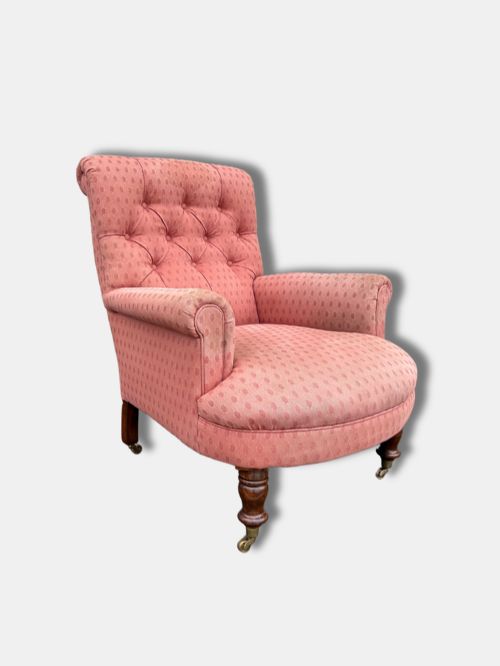
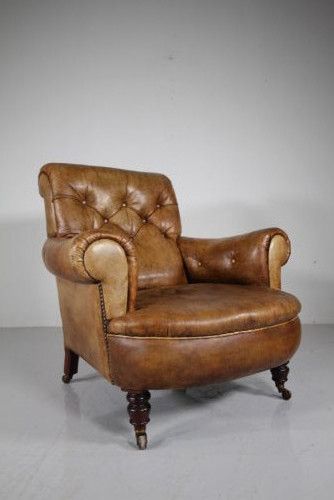
A victorian deep seated chair offers low, generous proportions designed for long hours of reading or fireside rest.
Victorian Deep Seated Chair
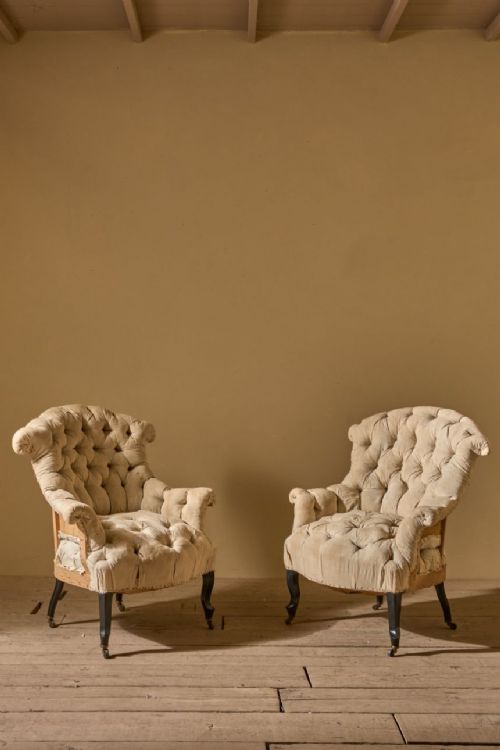
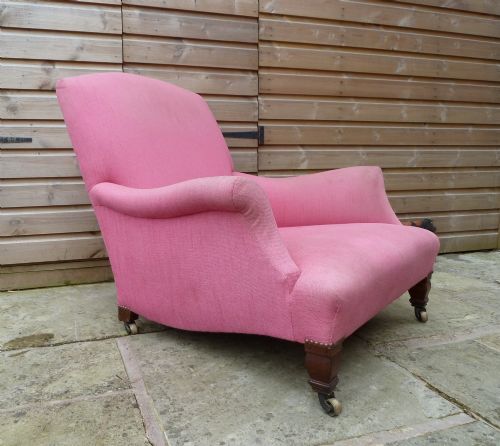
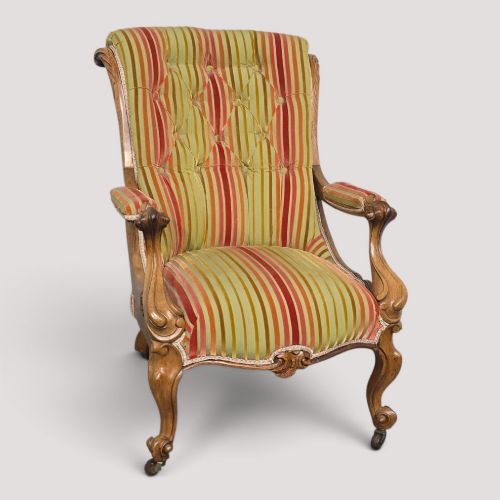
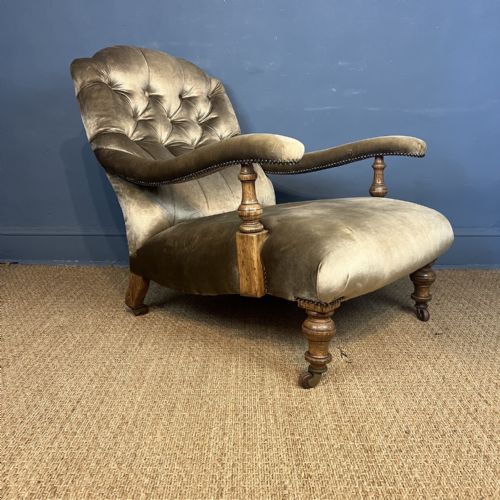
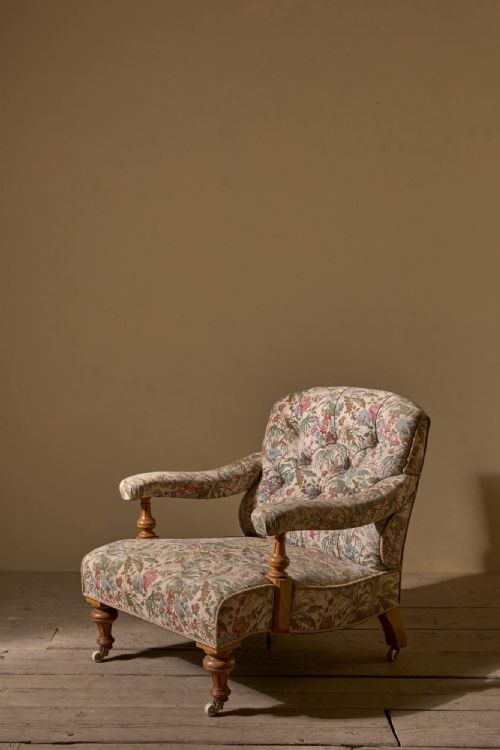
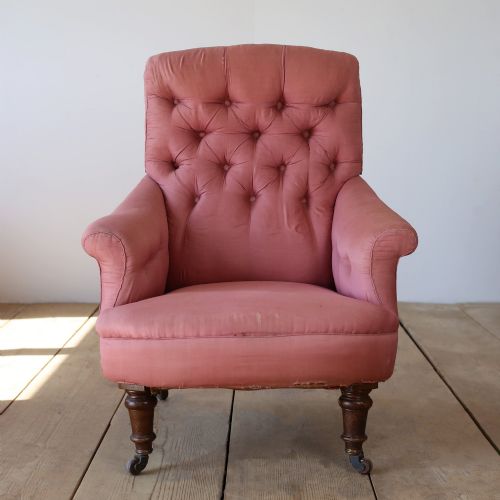
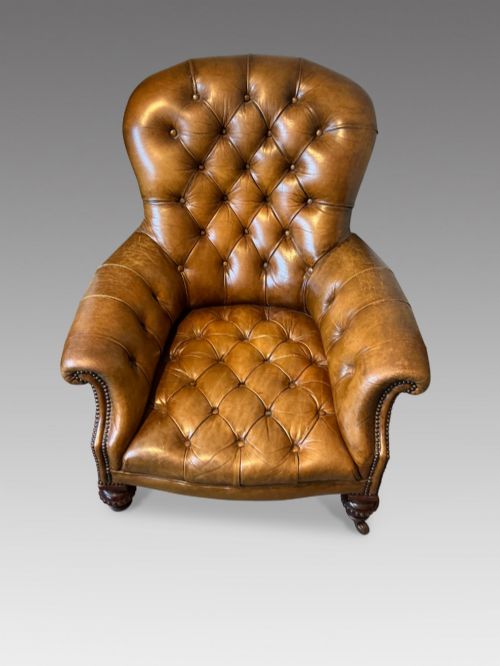
A buyer investigating a victorian deep seated chair finds low-slung, heavily padded armchairs and library seats built for relaxation, predominantly originating from the nineteenth century. These forms span English country house armchairs, button-backed library chairs, and distinct styles influenced by makers like Howard and Sons.
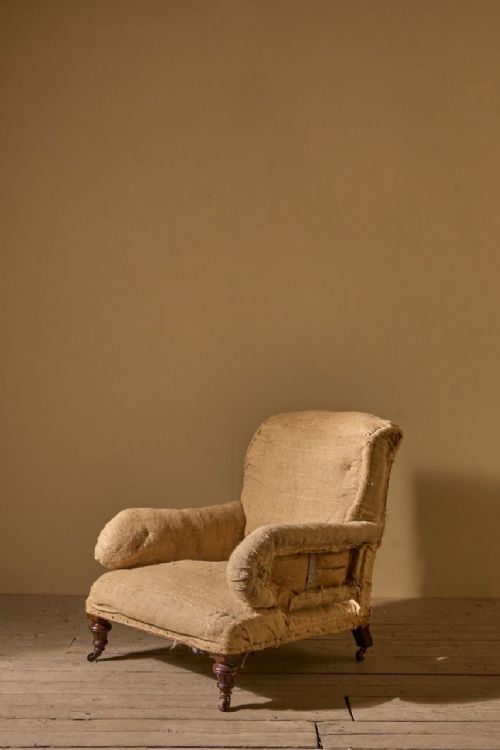
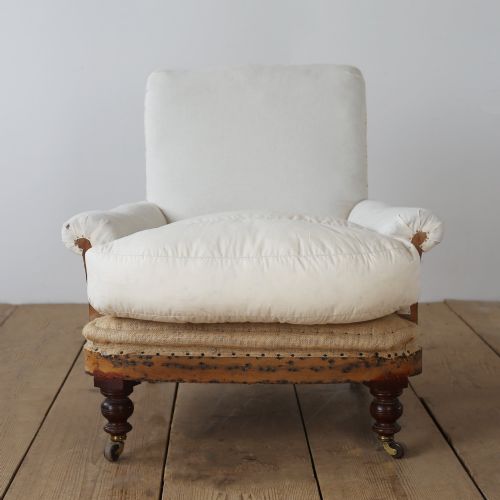
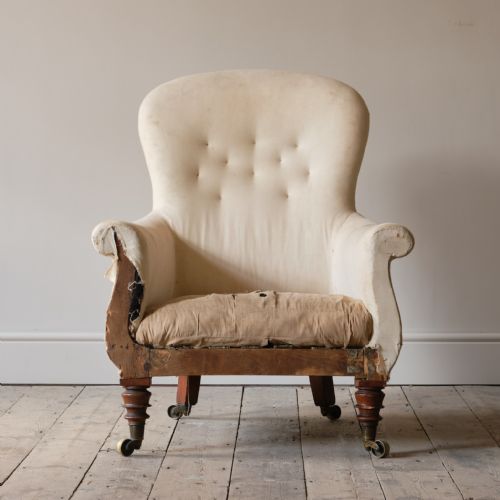
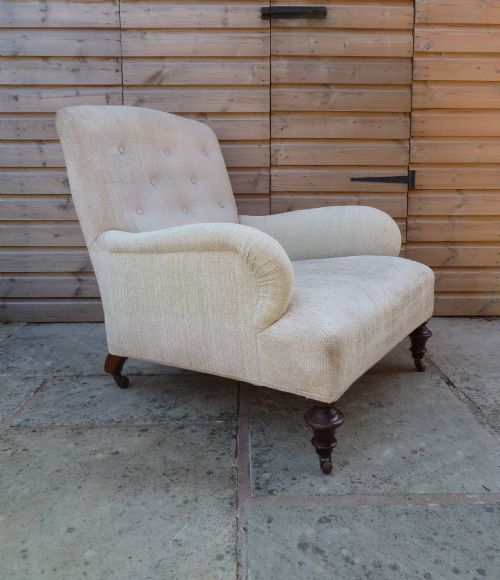
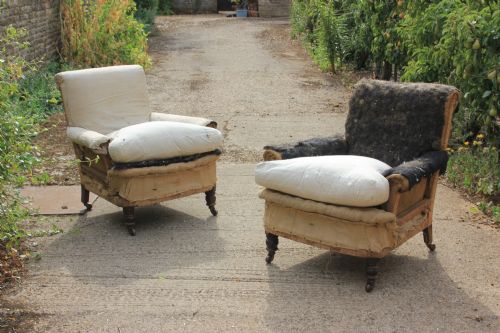
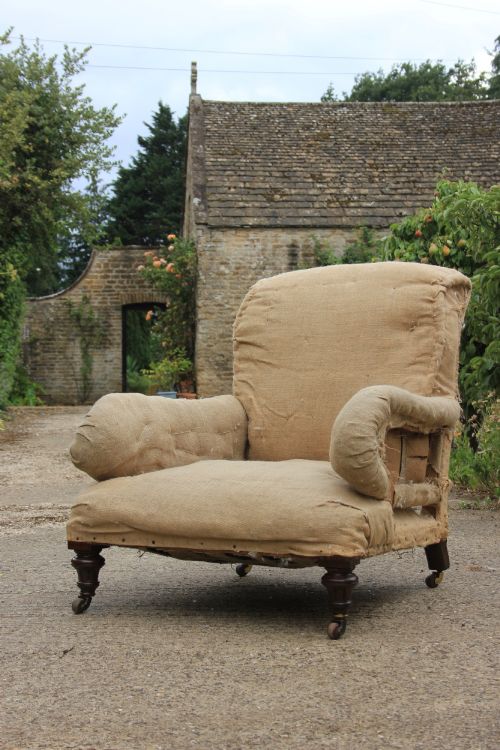
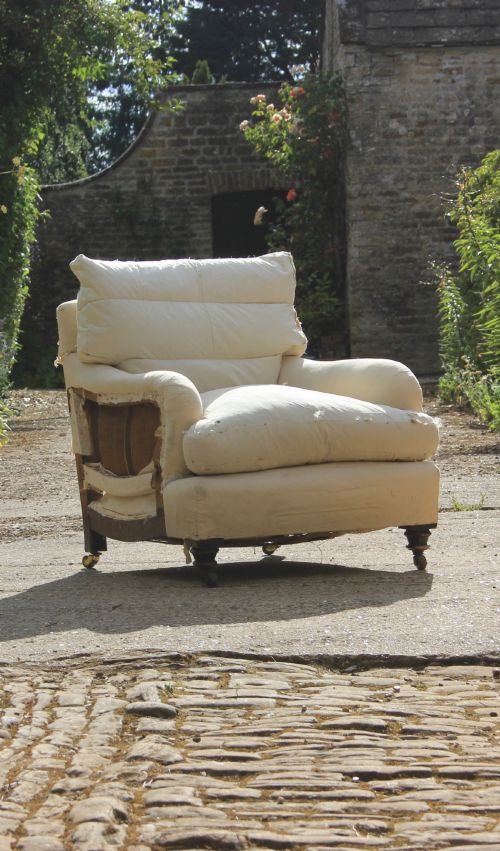
The most common examples on this page date from the Victorian and Edwardian periods, frequently appearing in robust hardwoods like mahogany or oak. Many of these seating options arrive covered in working calico or Hessian, ready for final upholstery.
Broader variations include Regency library armchairs, occasional chairs, and occasional desk or office seating. They share a low centre of gravity and an emphasis on comfortable, sprung upholstery.
Materials and construction
Frames are constructed from solid hardwoods such as mahogany, oak, and rosewood, providing a heavy, stable skeleton that supports complex internal spring systems. Exposed wooden elements show turned legs, carved mahogany details, or aesthetic movement legs.
Traditional upholstery techniques utilise coiled metal springs, horsehair stuffing, and heavy webbing beneath layers of Hessian, calico, and top fabrics like leather or damask. Brass castors frequently finish the feet to allow movement across heavy carpets.
Many nineteenth-century armchairs hide sturdy brass castors beneath their skirts, built quietly to roll across grand drawing-room carpets.
Distinctions in standard
The standard of a victorian deep seated chair depends heavily on the integrity of the internal webbed frame and the original joinery, which determines whether the piece retains its structural rigidity under weight. Untouched frames bearing maker stamps or specific workshop attribution command greater interest.
Finer examples display harmonious proportions, deep buttoning executed with precision, and high-grade secondary timbers used in the internal frame rather than cheaper utility woods.
Howard and Sons·Gillows·SF Cullen
The Victorian Deep Seated Chair Glossary
- Calico
- A plain-woven cotton fabric used as an inner lining or base cover beneath decorative upholstery.
- Hessian
- A dense, coarse woven fabric made from jute fibres, utilised for traditional webbing and stuffing containment.
- Button back
- An upholstery method where deep buttons are pulled through the padding to create a tufted, geometric pattern.
- Castor
- A small wheel fitted to the base of furniture legs to assist mobility, frequently cast in brass.
- Sprung
- Incorporating metal coil springs within the seat deck and back to provide resilient support.
Victorian Deep Seated Chair: Frequently Asked Questions
Are these chairs comfortable for daily use?
These chairs utilise traditional coil springs and horsehair padding designed precisely for extended periods of sitting. Their generous dimensions provide substantial physical support.
Modern comfort depends on the condition of the internal webbing and whether the cushioning has been recently restored.
How do I identify a Victorian period piece?
Nineteenth-century pieces typically display dense hardwood frames, hand-turned wooden legs, and traditional materials like Hessian and horsehair beneath the surface. Details such as ceramic or brass castors also indicate the era.
Construction methods rely on traditional joinery techniques rather than modern metal brackets or chipboard.
Why are some chairs sold in calico?
Many antique armchairs are sold in plain calico or Hessian because the original top fabric has worn out over time. This leaves the internal construction visible and allows the next owner to choose their own upholstery fabric.
Buying a piece in calico ensures the internal frame and springs can be inspected easily before final covering.