

Victorian Deep Armchair
A victorian deep armchair offers low-slung, generous comfort built for long hours of reading and repose.
Victorian Deep Armchair
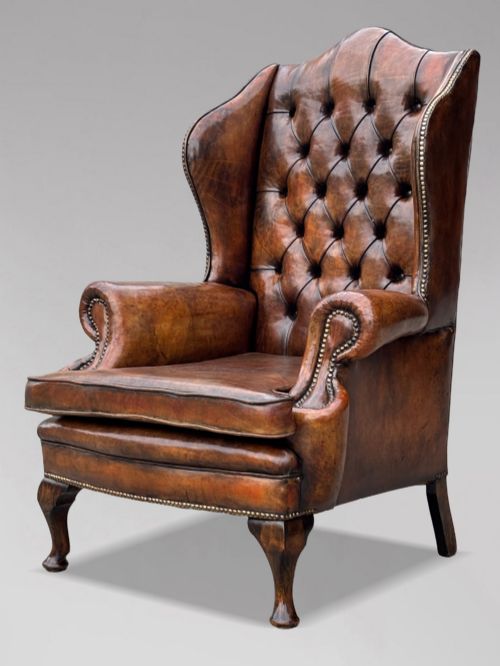
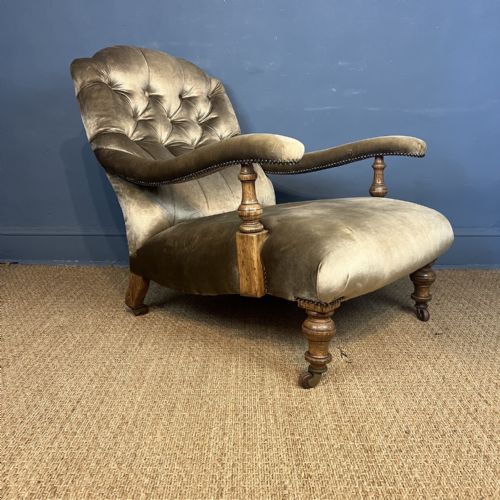
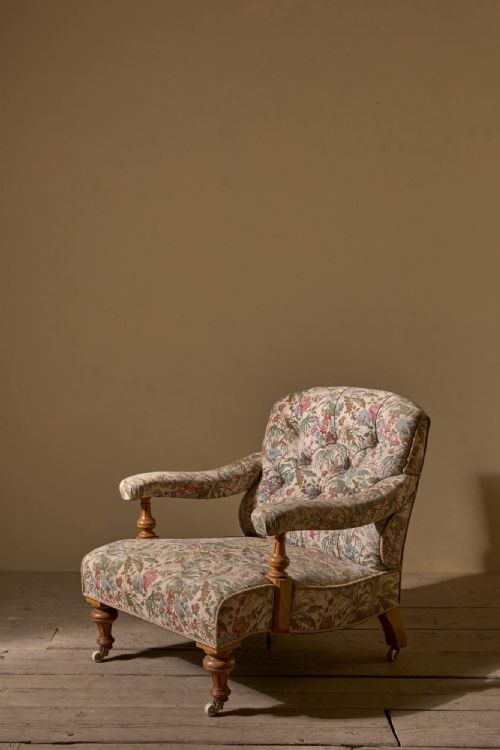
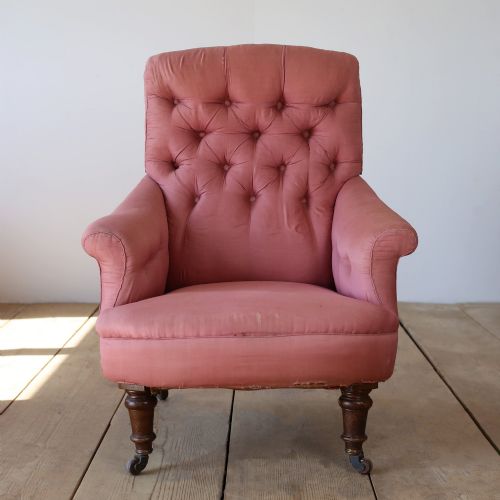
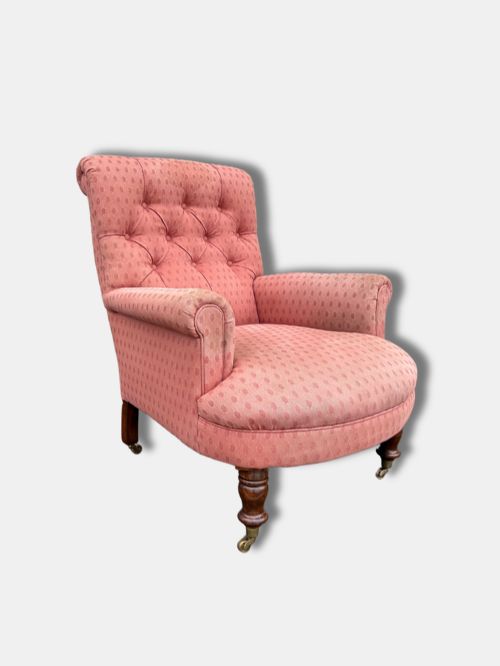
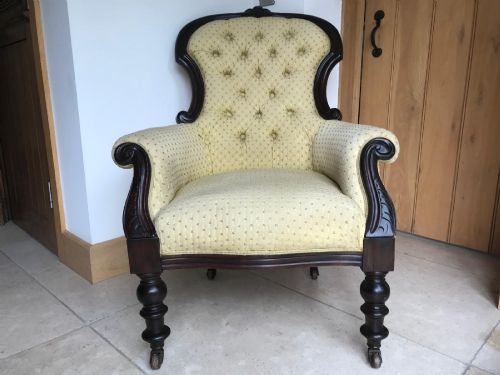
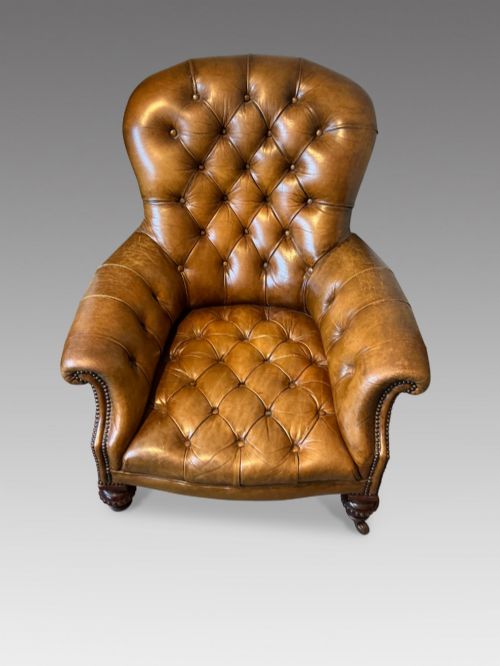
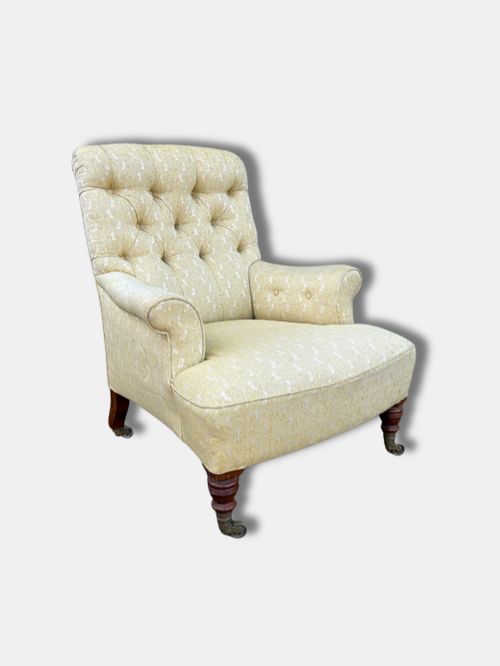
A victorian deep armchair is a substantial low-built seat designed for relaxation, emerging from nineteenth-century domestic interiors where comfort ruled. These pieces span sturdy country house models to buttoned library chairs, frequently appearing with generous proportions and low backs.
The versions most common here trace back to the Victorian era and the years around eighteen-eighty, often featuring sprung seats and upholstered frames. Makers working in the manner of Howard and Sons dominate the selection alongside plain mahogany and oak framed reading chairs.
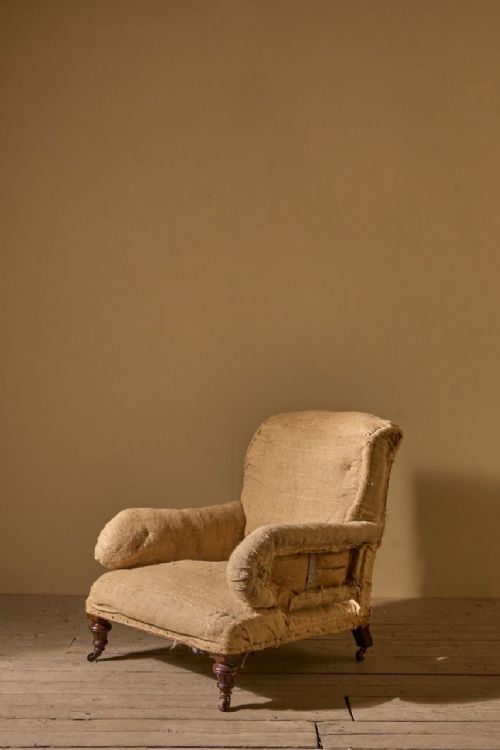
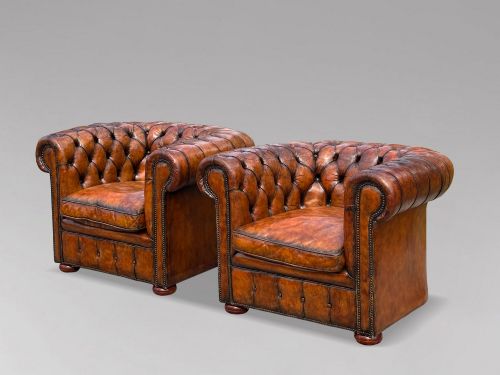
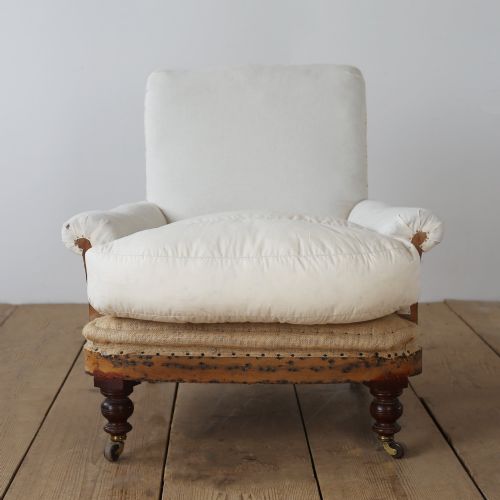
Makers such as Howard and Sons, Holland and Sons, and Mellier and Co produced notable examples, while many pieces remain unmarked country house furnishings. Buyers encounter variations ranging from low club chairs in brown leather to sprung armchairs in calico and hessian ready for final fabric.
How They Were Made
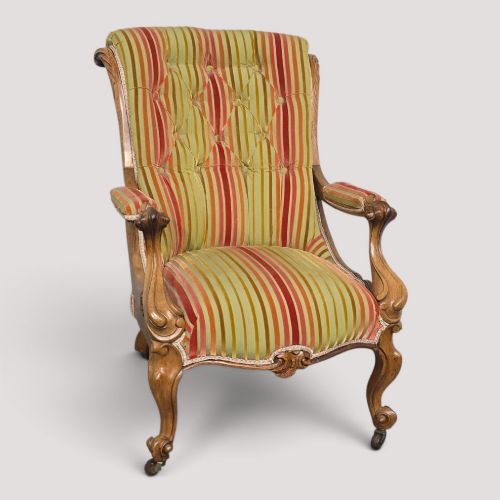
Frames rely on sturdy hardwoods like mahogany, oak, walnut, and rosewood, joined to support deep coil springs and horsehair stuffing. Exposed woodwork is hand-carved or turned, carrying brass castors on the feet to ease movement across heavy carpets.
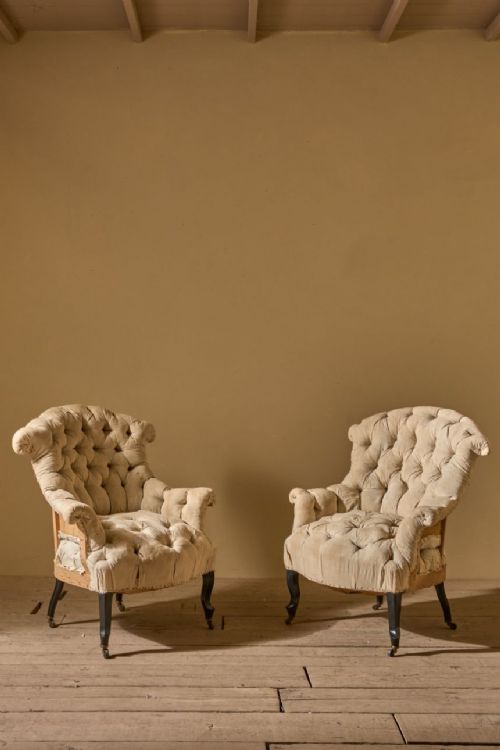
Upholstery techniques combined hessian webbing, linen squab foundations, and horsehair stuffing, finished in buttoned leather, damask, or plain calico. Frames often received secondary linings of hessian before the top fabric was tacked into place.
Several armchairs come paired with matching footstools, acknowledging that nineteenth-century relaxation required proper leg elevation.
What Varies in Quality
The integrity of the internal springing and webbed foundation dictates the comfort and durability of the seat. Superior examples retain original deep coil springs that distribute weight evenly without sagging.
Timber selection and the crispness of carved details on the mahogany or oak legs set finer workshop pieces apart from standard utility seating. Maker stamps on the rear castors or frame woodwork elevate the standing of a piece considerably.
Howard and Sons·Holland and Sons·Mellier and Co·SF Cullen
The Victorian Deep Armchair Glossary
- Button back
- An upholstery style where depressions are formed in the padding by pulling twine tightly through the fabric and securing it to the frame. This creates a diamond pattern that keeps internal stuffing from shifting over time.
- Howard style
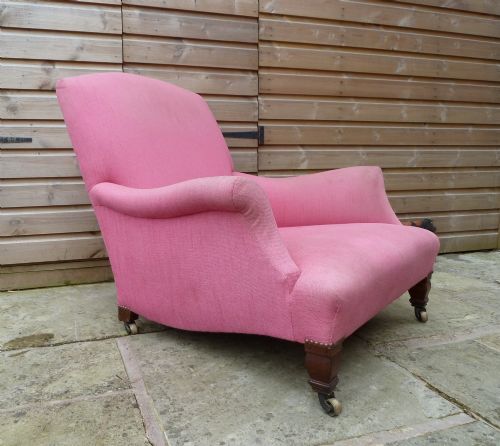
- A generous upholstered armchair design characterised by low rolled arms and deep sprung seating. The style originated with the nineteenth-century maker Howard and Sons.
- Library armchair
- A sturdy reading chair featuring padded arms and a supportive back, historically placed in studies or libraries. These typically utilise leather upholstery for durability.
- Club chair
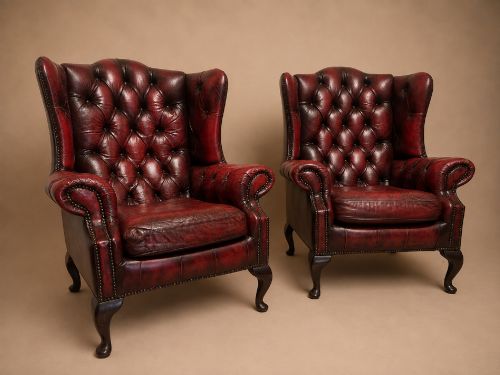
- A deep, heavy lounging armchair upholstered in dark leather. The form prioritises relaxed seating over formal posture.
- Spoon back
- A padded chair back shaped like the bowl of a spoon, popular in mid-nineteenth-century parlour seating. The wooden frame follows the curved outline of the upholstery.
Victorian Deep Armchair: Frequently Asked Questions
What is a victorian deep armchair?
A victorian deep armchair is a low-slung, heavily padded seat designed during the nineteenth century for maximum lounging comfort. These pieces feature generous dimensions and deep coil springing.
They appear in various forms, from library chairs in brown leather to country house models upholstered in fabric or calico.
How do I identify a Howard style chair?
Howard style chairs are recognised by their low rolled arms, deep sprung seats, and substantial overall proportions. They often stand on short mahogany legs with brass castors.
Many bear stamps on the wood or castors, though numerous unlabelled workshop pieces follow the same comfortable design.
Were these chairs used in libraries?
Library armchairs were built for reading rooms and studies, frequently upholstered in durable brown leather to withstand heavy daily use. Their supportive backs suited long hours of sitting.
These pieces often feature mahogany frames and deep buttoning for added firmness.
What does deconstructed mean on these chairs?
Deconstructed chairs have had their outer fabric removed down to the original hessian webbing, stuffing, and stitching. This exposes the internal craftsmanship of the piece.
Collectors appreciate this state for historical study or as a neutral base for bespoke re-upholstery.