


Victorian Decanter Stand
A victorian decanter stand holds fine glass bottles securely for after-dinner service, bringing nineteenth-century hospitality directly to the sideboard.

Victorian Decanter Stand
When searching for a victorian decanter stand, buyers encounter a variety of serving pieces designed to hold wine bottles, spirit decanters and cordial sets securely during the nineteenth century. These objects range from silver-plated frames and locking tantalus boxes to revolving wooden tables and decorative bottle coasters.
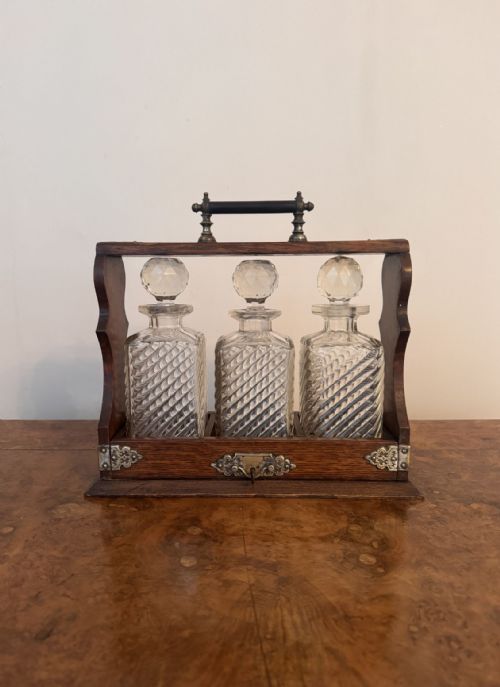
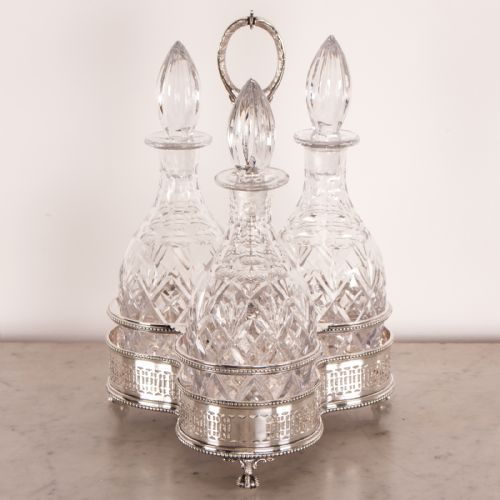
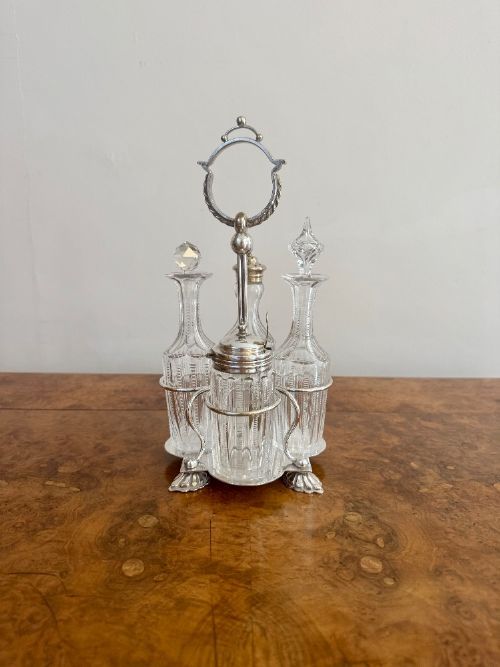
The most common version met on this page is the silver-plated metal stand holding three cut crystal or glass decanters. Many examples feature fitted wooden bases in oak, walnut or coromandel, often enhanced with brass mounts, marquetry stringing or mirrored surfaces.
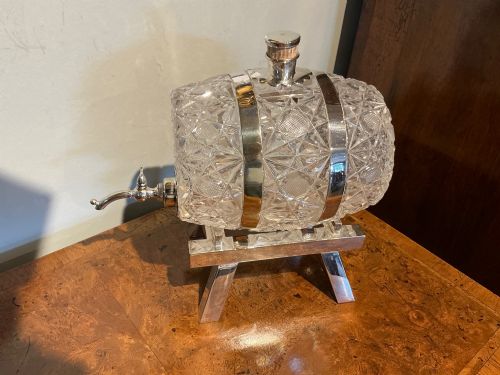
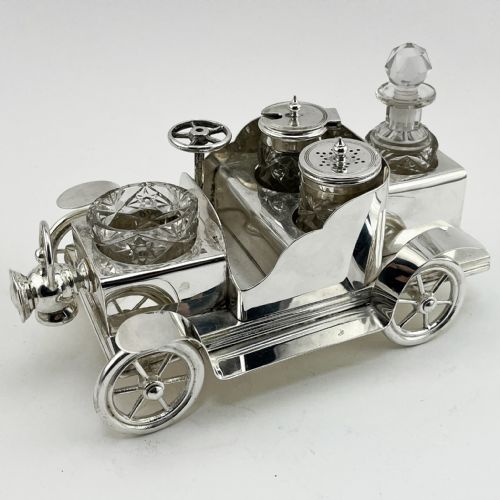
Beyond standard bottle frames, the category encompasses specialised drinking equipment such as liqueur sets, spirit barrels, cruet sets and games compendiums combined with storage compartments. These items reflect the elaborate dining and entertaining customs of the Victorian and Edwardian eras.
Materials and construction
Makers utilised a combination of durable hardwoods and plated metals to construct these serving pieces. Oak, walnut, coromandel and rosewood provide sturdy frames and box bodies, frequently ornamented with cast brass handles, escutcheons and gallery rails.
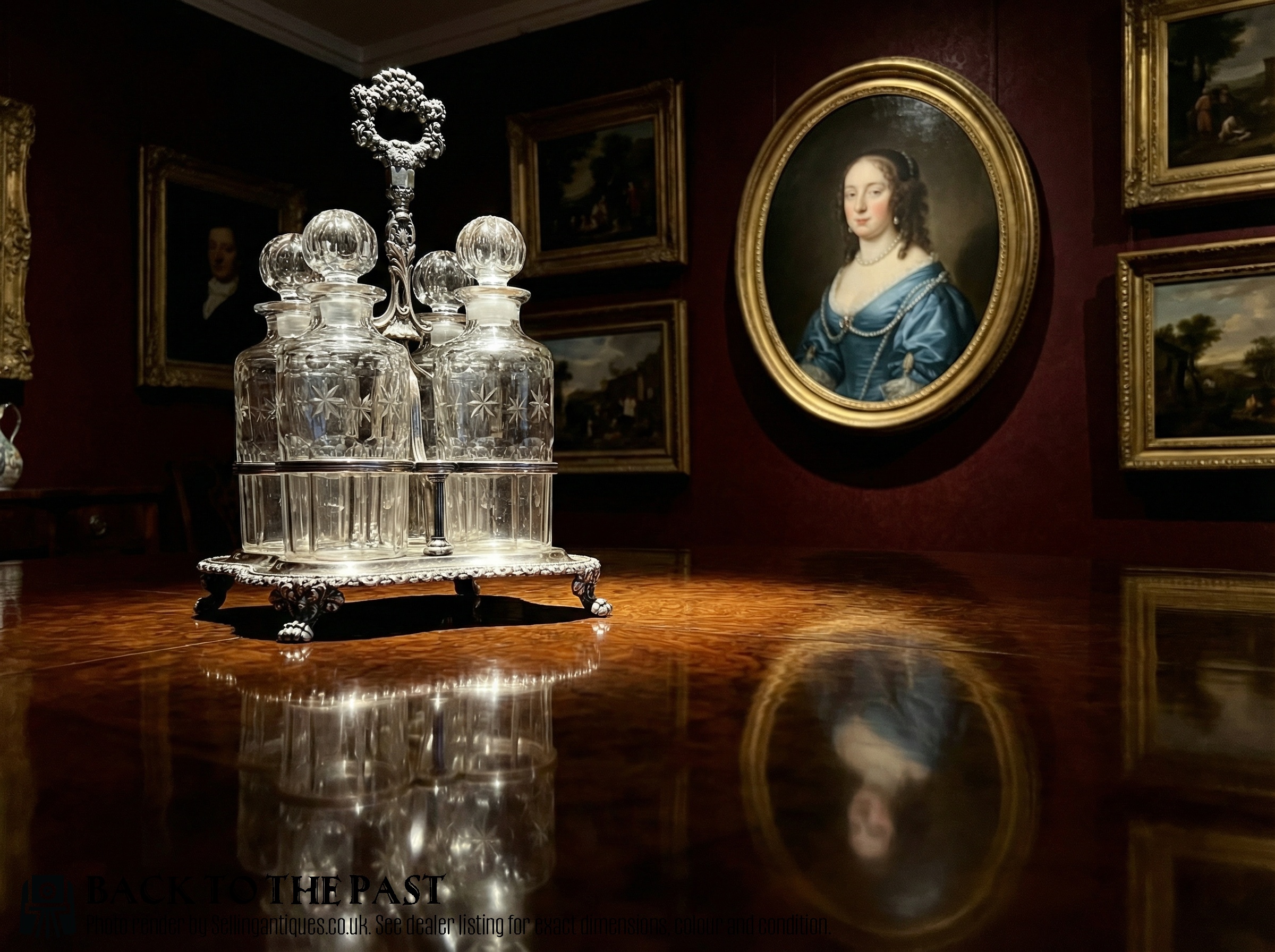
Silver plating on base metal provides the gleaming framework that separates individual decanters, while glass houses rely on heavy cutting, moulding and etching techniques. Crystal decanters and coloured glass vessels - including cranberry, frosted and Bristol green varieties - fit precisely into dedicated metal rings or wooden wells.
Some Victorian stands double as games compendiums, concealing playing cards and cribbage boards beneath the thirsty work of the decanters.
Quality and craftsmanship
The distinction between standard utility items and superior pieces rests on the weight of the metal plating and the precision of the woodwork. Heavy cast silver mounts, crisp marquetry stringing and solid timber construction indicate higher workshop standards than thin plated sheet metal over softwood.
The quality of the glass components determines the overall desirability of the set. Heavy cut crystal with sharp facets, original matching stoppers and intact colour glass vessels elevate a stand considerably above examples with replacement bottles or cloudy glass.
Walker and Hall·Elkington·The Goldsmith Co·Wade Wingfield Wilkins·Henry Wilkinson and Co
The Victorian Decanter Stand Glossary
- Tantalus
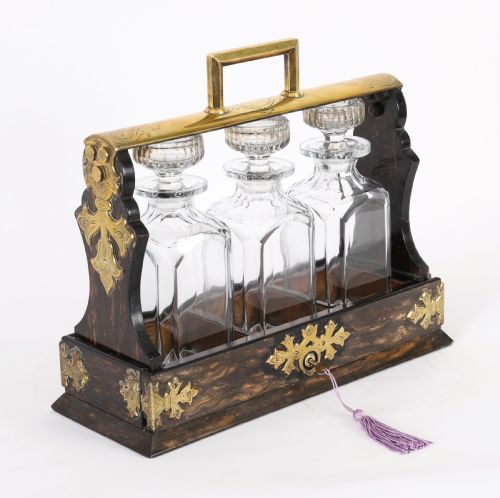
- A locking drink container frame that prevents unauthorized access to the spirits inside by securing the bottle stoppers beneath a metal bar. The mechanism requires a key to release the decanters.
- Silver Plate
- A thin layer of silver fused to a base metal core such as copper or Britannia metal. It offers the appearance of solid silver at a lower production cost.
- Marquetry
- Decorative woodwork formed by fitted veneer pieces assembled to create geometric or floral patterns. It is frequently used to adorn the lids of oak and walnut boxes.
- Cruet Set
- A matched assemblage of small bottles and jars held in a tabletop frame for condiments, oils or vinegars. They share similar metalwork styles with standard bottle stands.
Victorian Decanter Stand: Frequently Asked Questions
What is a tantalus?
A tantalus is a locking drinks cabinet frame that secures spirit decanters beneath a metal bar. The design prevents guests or servants from accessing the bottles without a key.
Most examples hold two or three cut crystal decanters within an oak, walnut or coromandel base. They became popular in the late nineteenth century for gentleman's smoking rooms and sideboards.
How do I date a decanter stand?
Dating relies on the combination of materials, locking mechanisms and decorative motifs present in the piece. Early Victorian stands often feature rosewood and simpler silver plate, while high Victorian and later examples introduce elaborate oak framing and brass mounts.
Maker's marks stamped onto the metalwork provide the most reliable chronological anchor. Stylistic shifts from Georgian proportions to heavy High Victorian ornamentation also help narrow down the decade of manufacture.
Are the decanters usually original?
Many surviving stands retain their original matching cut glass or crystal decanters, often featuring hand-cut facets and matching stoppers. Because bottles frequently suffered breakage over time, replacement vessels are common.
Checking that the decanters fit precisely into the individual wells or rings of the frame indicates whether they belong together. Original sets often display matching numbering or identical glass clarity across all bottles.
How should I clean silver-plated stands?
Silver plate requires gentle cleaning with a specialised non-abrasive polish to preserve the thin metallic layer over the base metal. Heavy rubbing can wear through the plating completely, exposing the underlying copper or brass.
Wooden bases benefit from occasional waxing with a natural beeswax product to nourish the grain. Moisture should be kept away from both the wood and the glass collars during maintenance.