


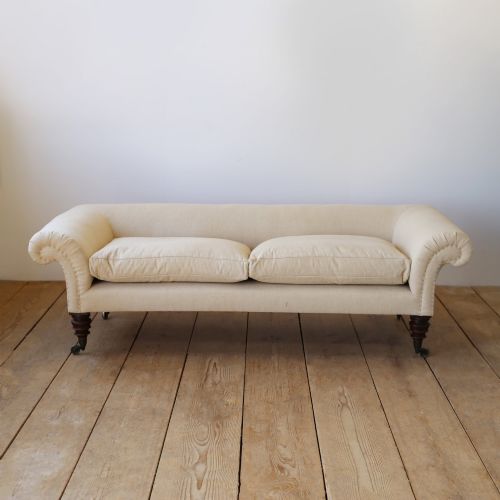


Victorian Daybed Settee
These Victorian daybed settees combine reclining comfort with formal seating, offering a substantial nineteenth-century statement for the home.
Victorian Daybed Settee
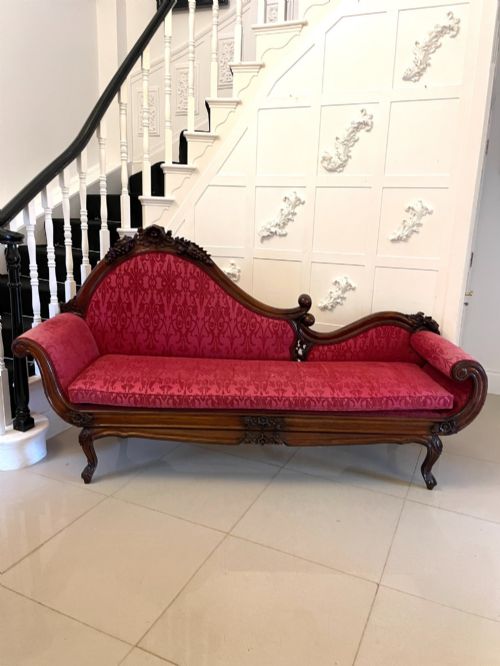
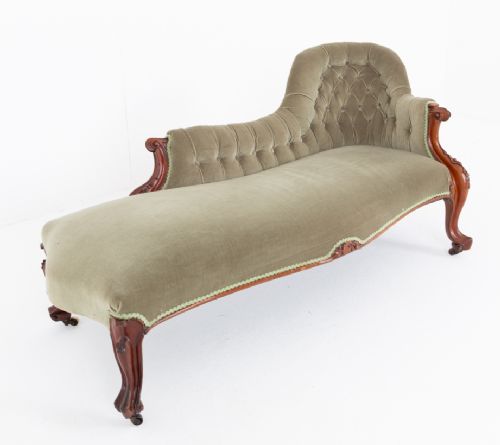
A victorian daybed settee merges the long, single-ended profile of a chaise longue with the deep seating of a sofa. Pieces matching this search span the nineteenth century, including specific dates from the eighteen-fifties through to eighteen-ninety.
The forms vary from grand salon sofas and scroll-end daybeds to low-slung country house benches and walnut framed settees. Many examples take the form of chaise longues designed for reclining in the principal rooms of the house.
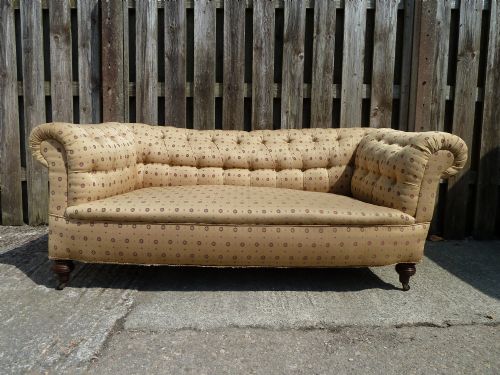
Origins stretch across English workshops, cabinet makers, and international influences including Anglo-Indian colonial designs and Napoleon III styles. Buyers encounter everything from carved rosewood frames to buttoned leather chesterfield formats.
Materials and Construction
Carved timber forms the structural skeleton, predominantly utilising dense hardwoods such as mahogany, walnut, and rosewood. Ebonised finishes and brass detailing also appear across the nineteenth-century examples.
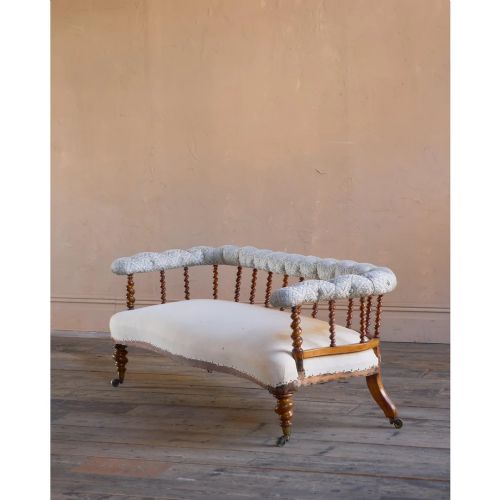
Upholstery relies on traditional stuffing secured within fabrics that range from plain woven textiles to rich velvet and whisky brown leather. Scroll arms and spindle backs are constructed through traditional joinery integrated directly into the wooden frames.
Listings span the nineteenth century, with materials ranging from solid mahogany and rosewood to brass, velvet, and leather.
Quality Variations
The standard of carving on the timber frames dictates much of the visual hierarchy, distinguishing plain country house benches from highly ornate salon pieces. Sharp, deep relief work on rosewood and mahogany indicates skilled workshop production.
Frame solidity and the retention of original structural elements define the better specimens. The integration of maker signatures, where present, alongside balanced scroll proportions separates standard seating from exceptional cabinet work.
C. Hindley & Sons·H. Goodall & Sons·Holland & Sons·Jas Shoolbred
The Victorian Daybed Settee Glossary
- Chaise Longue
- An upholstered long chair for reclining, combining a seat with a single raised backrest or scroll end.
- Scroll Arm
- A structural armrest shaped in a curving, scroll-like profile typical of nineteenth-century seating frames.
- Chesterfield
- A deep-buttoned upholstered sofa style characterised by arms and back of the same height.
- Ebonised
- Wood finished with a dark stain or paint to imitate the appearance of solid ebony.
- Spindle Back
- A chair or sofa back constructed from a series of turned wooden vertical rods or spindles.
Victorian Daybed Settee: Frequently Asked Questions
How do I style a Victorian daybed settee?
These pieces suit placement against a principal wall, in a large hallway, or functioning as an elongated window seat.
Their distinct silhouette works well when given adequate floor space to showcase the carved woodwork and scroll ends.
Were these daybeds meant for sleeping?
They were primarily designed for daytime reclining, reading, and receiving visitors in formal reception rooms rather than overnight sleeping.
The single raised end supports a seated or half-reclining posture during the afternoon.
How can I tell an early Victorian piece from a late one?
Early examples from the eighteen-fifties often lean towards heavy rosewood frames with elaborate floral carving and rich timber grains.
Later pieces from the eighteen-eighties and nineties introduce different proportions, walnut framing, or tailored leather and textile finishes.