



Victorian Cut Glass Chandelier
These Victorian cut glass chandeliers catch light across a room, bringing nineteenth-century brilliance to high ceilings and entrance halls.
Victorian Cut Glass Chandelier
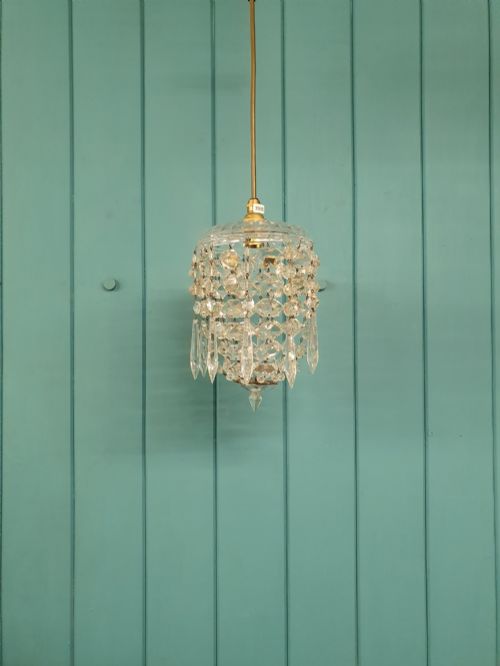
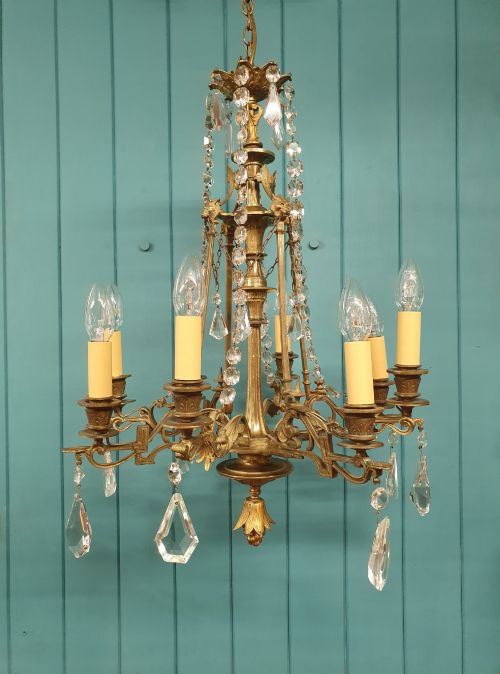
When you search for a victorian cut glass chandelier, you encounter grand fixtures designed to illuminate nineteenth-century interiors with gathered facets and hanging prisms. The selections here span English and French traditions, ranging from compact hall lanterns to multi-armed hanging centerpieces.
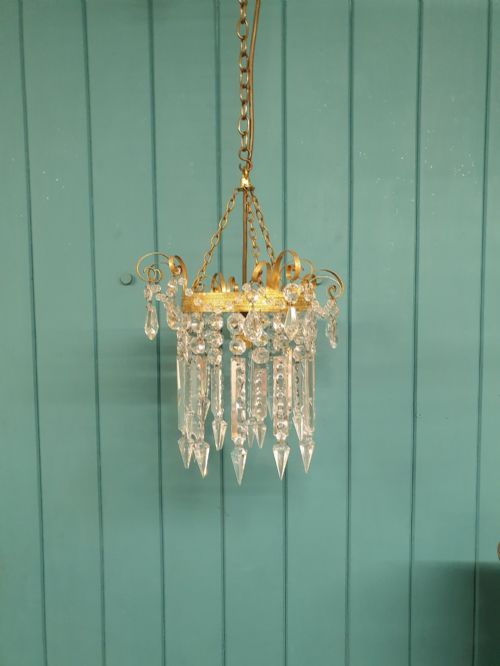
Most examples deploy heavy brass, gilt bronze or silver-plated frames to support elaborate glass drops, beads and cascading waterfalls. You will also find related ceiling lighting such as basket fixtures, flush plafonniers and bronze ceiling lights with cut glass shades.
The periods represented stretch across the nineteenth century into the Edwardian era, with Victorian pieces forming the core of the selection. These lighting fixtures suit period properties and modern spaces alike, wherever overhead illumination requires architectural presence.
Materials and construction methods
The framework relies on cast brass, bronze, gilt bronze and silver-plated metal, shaped into rings, bands and armatures to bear the weight of glass components. Metal elements often feature decorative casting work, including lion masks, putti and chased floral motifs.
Glass elements combine moulded components with hand-cut crystal, lead crystal and paste drops that disperse light through sharp prismatic edges. Individual prisms, beads and pendants hang from wire loops or pins, creating audible movement and brilliant refraction.
Victorian Cut Glass Chandelier Retail Price Guide 2026
Typical asking prices for victorian cut glass chandelier among the pieces listed under this phrase on Sellingantiques today, from the lower quarter to the upper quarter. They describe what is for sale here now, not the wider market.
Some fixtures cast miniature rainbows across the walls when afternoon sunlight strikes the cut glass drops.
Judging quality and craftsmanship
Quality reveals itself in the crispness of the glass cutting and the clarity of the crystal components, where sharp facets create deeper prismatic colour. Dense lead crystal holds greater weight and retains a resonant ring compared to lighter, simpler moulded glass.
The supporting metal armature demonstrates craftsmanship through substantial gauge brass or bronze, secure joinery and refined chasing on mounts. Complete assemblies retain their original configuration of drops and matching prisms, reflecting the integrity of the original design.
Baccarat
The Victorian Cut Glass Chandelier Glossary
- Cut glass
- Glass decorated by grinding facets or patterns into the surface using wheel-cutting techniques. This process creates sharp edges that refract light intensely.
- Crystal
- Clear glass containing metal oxides that increase its weight, refractive index and brilliance. It forms the shimmering drops and pendants on larger fixtures.
- Cage chandelier
- A lighting fixture featuring an open metal framework shaped like a birdcage, entirely draped in glass beads and pendeloques. The metal structure remains largely hidden beneath the glass.
- Lustre
- A decorative tabletop ornament or hanging fixture featuring long pendant drops designed to catch the light. They share the same cut glass vocabulary as chandeliers.
- Plafonnier
- A shallow or dome-shaped ceiling light fitted flush or close to the ceiling surface. These fixtures often utilise patterned glass plates held in metal mounts.
- Paste
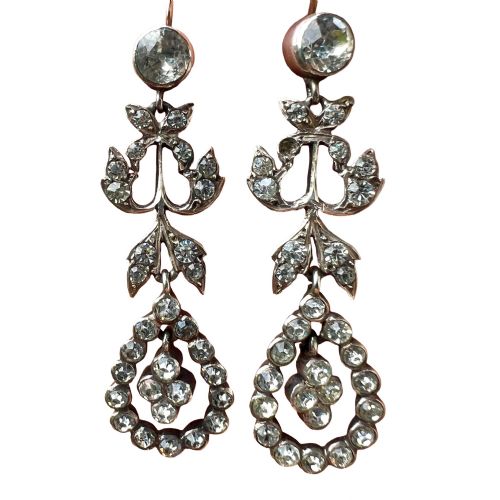
- Transparent glass cut and polished to imitate gemstones or faceted crystals. It appears in smaller decorative drops and related jewellery items.
Victorian Cut Glass Chandelier: Frequently Asked Questions
How do I clean a cut glass chandelier?
Cleaning requires removing dust with a soft brush and washing individual glass drops with warm water and mild soap while supported on the frame. Metal components need careful dusting to preserve patination without disturbing fragile wire fastenings.
Harsh chemical cleaners strip finishes from brass and gilt bronze elements. Maintaining the fixture piece by piece keeps the glass brilliant and secure.
Are these chandeliers wired for modern electricity?
Many antique fixtures have been adapted for modern electrical standards during their history. Rewiring is often recommended to ensure safe operation in contemporary homes.
Installation should be handled by a qualified electrician who can verify the weight capacity of the ceiling mount and the integrity of internal wiring.
What is the difference between an English and a French chandelier?
English fixtures of this period frequently favour structured basket designs, waterfall drops and clean brass or silver-plated frames. They emphasise geometric cut glass precision and balanced proportions. Othewise, French examples often incorporate ornate gilded bronze mounts, putti figures and elaborate cage frameworks inspired by Rococo and Napoleon III styles. These pieces showcase sculptural metalwork alongside cascading crystal.
How do I determine the right size chandelier?
Sizing depends on room dimensions and ceiling height, ensuring the fixture leaves adequate clearance below while anchoring the space visually. A larger room or hallway accommodates multi-armed fixtures or basket designs with substantial drop.
Compact domes and hall lights suit lower ceilings or more intimate rooms where a large drop would obstruct movement.