

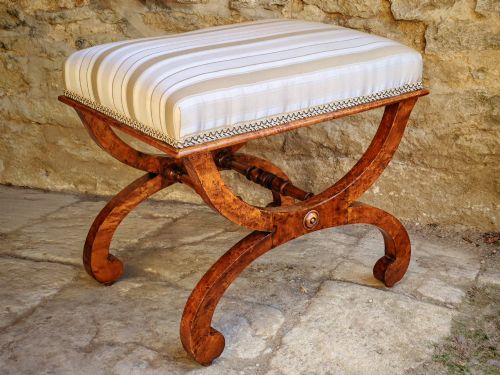


Victorian Curule Seat
These Victorian curule seat examples are classical X-frame forms offering compact elegance and enduring sturdy utility for the discerning interior.
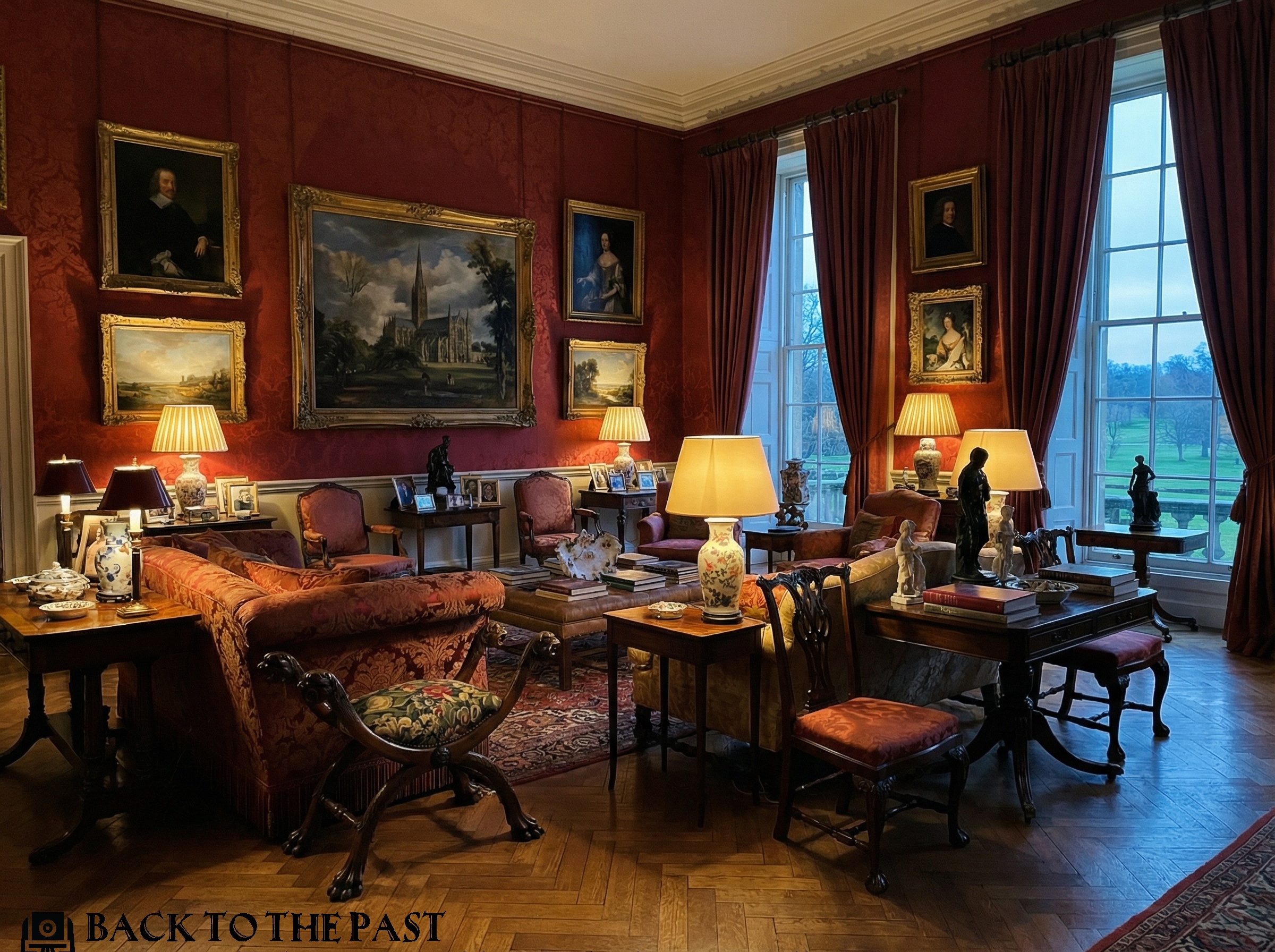
Victorian Curule Seat
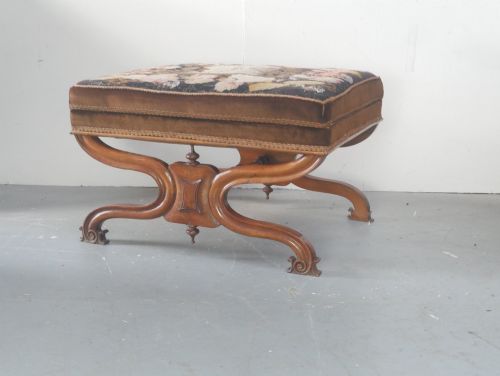
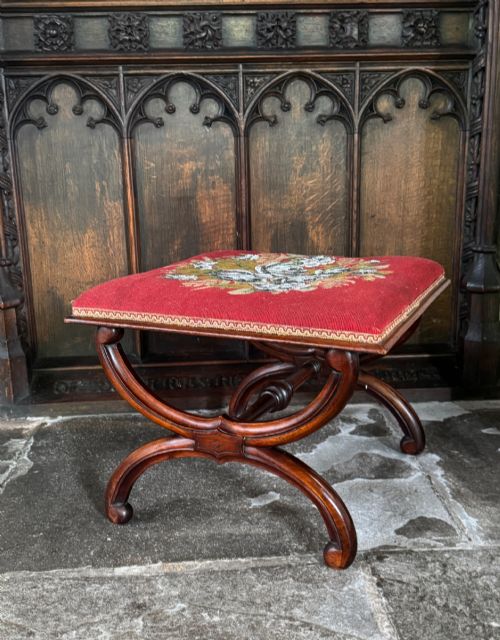
A Victorian curule seat takes the form of an X-shaped stool, dressing stool, or occasional chair derived from ancient Roman magistrate folding chairs. Buyers seeking these distinctive pieces will encounter various iterations ranging from walnut and mahogany X-frame stools to elaborate Gothic Revival and aesthetic designs.
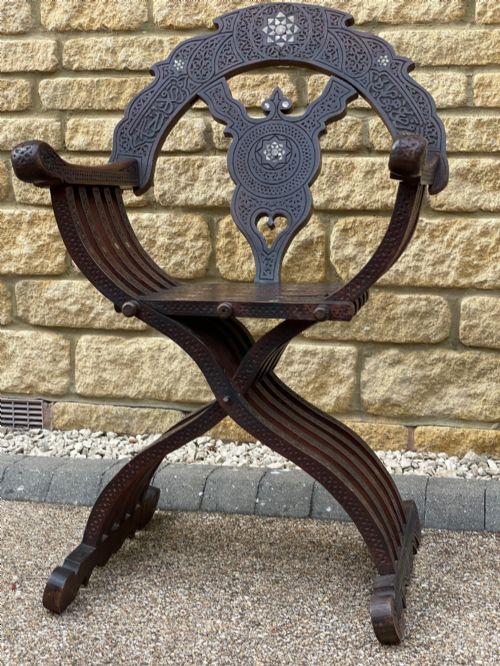
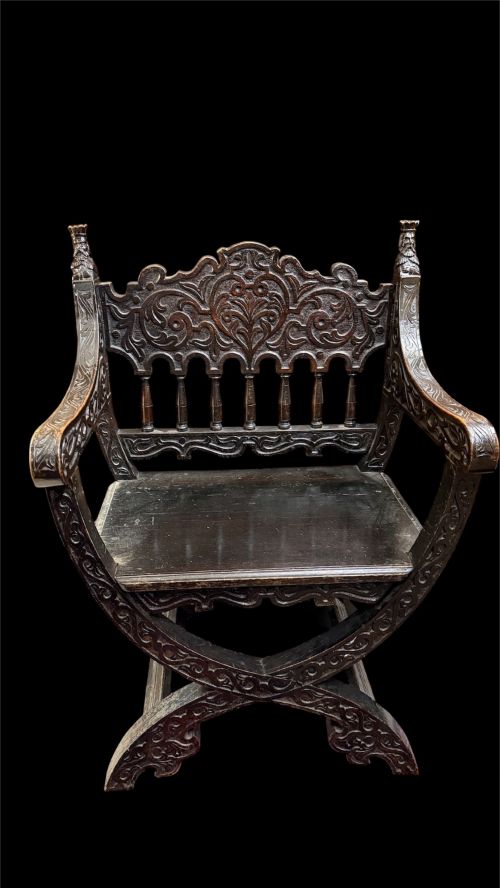
The selections span the nineteenth century into the twentieth, encompassing Victorian, Edwardian, and later periods alongside stylistic influences like Scottish Baronial, Syrian Ottoman, and Renaissance Revival. Stools and dressing seats predominate, often featuring upholstered beadwork, velvet, or fabric surfaces supported by crossed wooden members.
Variations in form extend to armchairs, hall benches, and window seats utilising walnut, oak, rosewood, and satinwood. Each piece demonstrates the enduring nineteenth-century fascination with classical and revivalist silhouettes adapted for domestic interior use.
Construction and Materials
Cabinetmakers constructed these frames using hardwoods such as mahogany, walnut, oak, rosewood, and satinwood, frequently employing ebonised finishes or gilding for decorative effect. Structural stability relied on precise joinery at the intersecting X-frame or cross-frame central pivot points.
Upholstered elements incorporated traditional textile coverings including velvet, fabric, and intricate beadwork seats. Secondary materials such as cane, brass hardware, and mother-of-pearl inlay appear on specific regional and stylistic variants.
Some nineteenth-century makers could not resist adding carved hunting dog heads directly onto the wooden terminals of a domestic window seat.
Distinction in Craftsmanship
The standard of a curule seat rests upon the timber selection and the crispness of the frame carving, where superior examples exhibit dense grains like burr maple or finely figured rosewood. Rigidity in the intersecting frame joints indicates structural integrity and thoughtful proportion.
Decorative embellishments such as carved animal heads, specialised inlays, or original beadwork upholstery elevate the artistic ambition of the piece. Refined surface patination and balanced proportions distinguish accomplished cabinet work from standard production.
The Victorian Curule Seat Glossary
- Curule seat
- An ancient magistrate chair design featuring opposing concave legs that cross in an X-shape. This classic silhouette was revived during the nineteenth century for domestic stools and armchairs.
- X-frame
- A structural furniture base formed by two intersecting members creating an X shape when viewed from the side. It provides both architectural support and visual lightness.
- Gothic Revival
- An architectural and decorative style drawing inspiration from medieval forms. Pieces often feature pointed arches, heavy oak construction, and ecclesiastical motifs.
- Aesthetic Movement
- A late nineteenth-century design current emphasising visual beauty over narrative subject matter. Furniture from this period frequently utilises ebonised wood finishes and refined detailing.
- Scottish Baronial
- A nineteenth-century revival style incorporating Scottish castle architecture and furniture motifs. Examples often employ robust oak timbers and traditional regional carving.
Victorian Curule Seat: Frequently Asked Questions
What is a curule seat?
A curule seat is a stool or chair featuring an X-shaped frame derived from ancient Roman folding furniture.
Nineteenth-century cabinetmakers adapted this classical silhouette into dressing stools, window seats, and occasional chairs for domestic settings.
How do I identify a Victorian X-frame stool?
Victorian examples display characteristic nineteenth-century timber choices such as walnut, mahogany, and rosewood combined with period upholstery.
Stylistic markers often include turned stretchers, carved details like animal heads, or aesthetic ebonised finishes.
Where were these seats used in the home?
These versatile pieces served primarily as dressing table stools, window seats, or occasional chairs in nineteenth-century drawing rooms.
Their compact footprints allowed them to be easily moved and placed in hallways, bedrooms, or parlours.
What woods were used for these frames?
Makers utilised dense hardwoods including mahogany, walnut, oak, rosewood, and satinwood to ensure the X-frame could support weight.
Selected pieces also incorporated exotic materials like burr maple or featured surface treatments such as ebonising and gilding.
How do I care for antique upholstery?
Preserve fabric, velvet, or beadwork seats by keeping them away from direct sunlight and maintaining stable room humidity.
Gentle dusting and professional textile cleaning help protect nineteenth-century materials from unnecessary degradation.