


Victorian Crest Chair
A victorian crest chair brings heraldry and rich timberwork into a room, offering both seating and a piece of carved family history.
Victorian Crest Chair
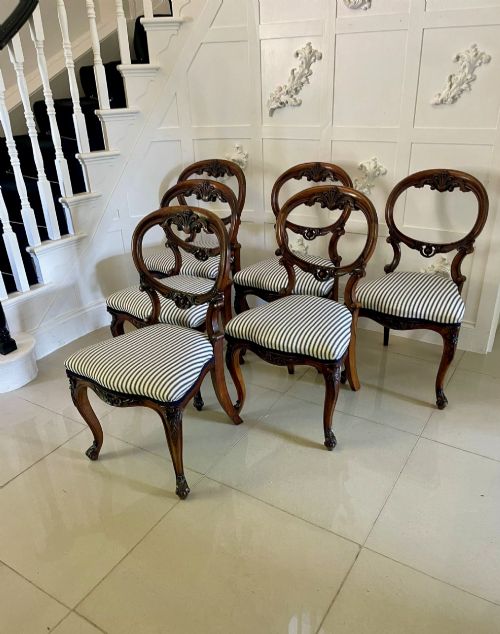
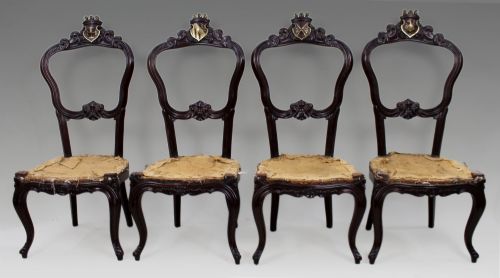
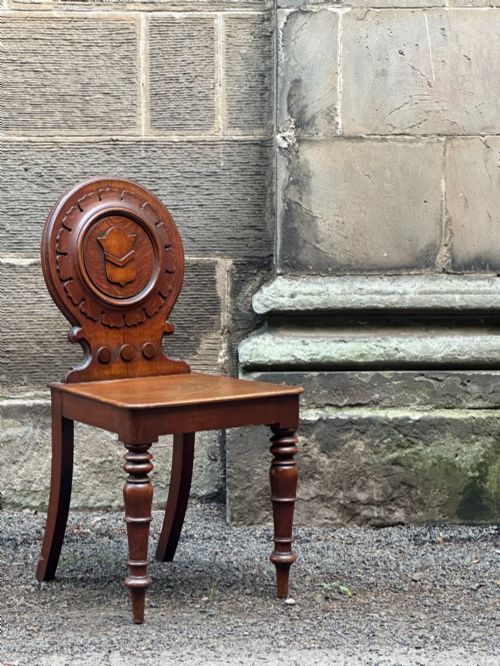
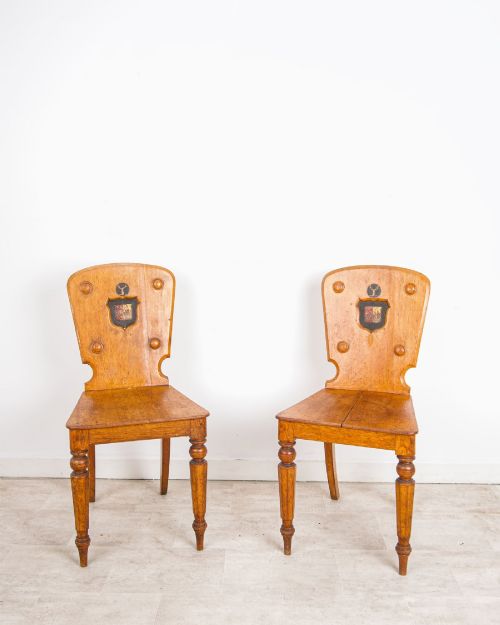
When searching for a victorian crest chair, collectors encounter a variety of forms including hall chairs, dining chairs, and armchairs produced during the nineteenth century. These seating pieces frequently incorporate carved heraldic shields, armorial bearings, or pierced crest rails into their wooden frames.
The selections available range from sturdy oak hall chairs designed for grand entryways to walnut library armchairs and mahogany dining seats. Many examples emerge from the Victorian and Gothic Revival periods, displaying robust joinery and distinct regional British characteristics.
Materials and Construction
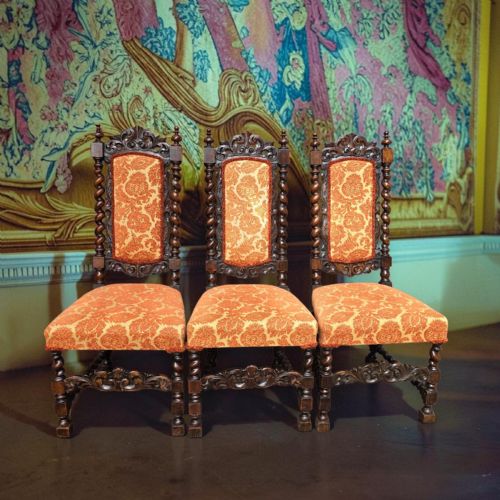
Cabinetmakers utilised hardwoods such as oak, walnut, mahogany, and rosewood to build the structural frames of these seats. Solid timber sections allowed craftsmen to carve deep relief crests, armorial bearings, and barley twist members directly into the wood.
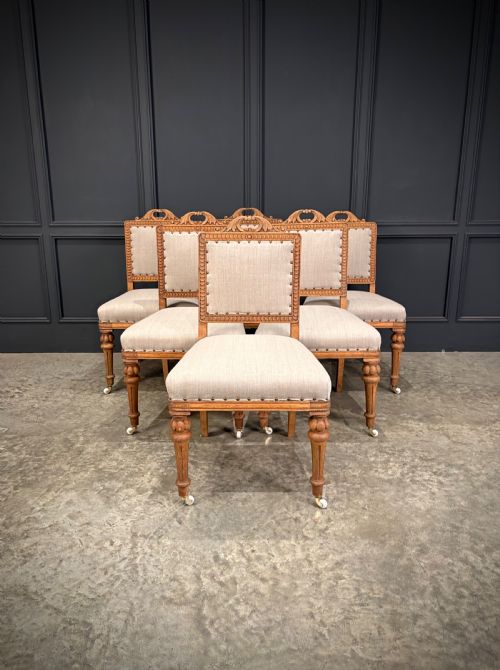
Upholstered versions integrate textile, leather, and fabric secured over horsehair stuffing, while folding campaign variants employ bone button decorations and intricate pin joints. Turned components, scumble paint finishes, and brass hardware further define the physical assembly of these items.
Object forms documented on this page include armchairs, hall chairs, nursing chairs, side chairs, and folding campaign seats.
Assessing Craftsmanship and Detail
The depth and sharpness of the hand-carving on the heraldic shield and crest rail separate standard production items from superior workshop output. Crisp relief work in dense oak or walnut demonstrates a higher level of artisan skill than shallow or mechanical milling.
Structural integrity relies upon the tightness of the original joints, particularly in turned elements and heavy high-backed frames. Pieces retaining their original scumble paint, unblemished wood grains, or documented historical provenance hold greater integrity for collectors.
The Victorian Crest Chair Glossary
- Heraldic shield
- A flat or curved escutcheon shape used in carving to display armorial bearings or family crests. These wooden shields form the central decoration on many nineteenth-century hall chair backs.
- Crest rail
- The top horizontal member of a chair back, frequently pierced, carved, or shaped to provide a decorative crown. On armorial seats, this rail often highlights the carved lineage or emblem of the owner.
- Barley twist
- A cylindrical furniture leg or stretcher carved in a helical spiral resembling a twisted rope. This technique appears frequently on nineteenth-century dining and library chairs.
- Scumble paint
- A decorative paint technique applied to imitate the grain of more expensive timber or to create a mottled aged appearance. Surviving examples on nineteenth-century side chairs preserve this historic surface treatment.
- Turner's chair
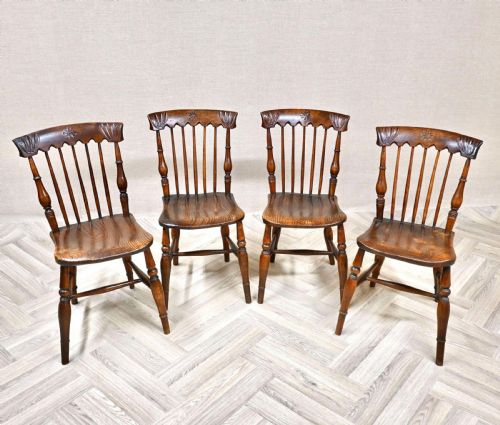
- A sturdy arm chair constructed entirely from turned wooden spindles and members, also known as an Old Saxon or elbow seat. These pieces rely on sophisticated lathe work rather than flat panels.
Victorian Crest Chair: Frequently Asked Questions
What is a victorian crest chair?
A victorian crest chair is a nineteenth-century seating piece featuring a carved heraldic shield, armorial bearings, or an ornate crest rail. These chairs were traditionally placed in halls or dining rooms to display family lineage.
They appear in forms ranging from solid oak hall seats to rosewood library armchairs, combining utility with symbolic woodcarving.
Where were these chairs used?
Hall chairs with heraldic crests were typically arranged along the walls of grand entrance halls, meant more for display than long periods of lounging. Dining chairs and library armchairs served daily domestic functions in studies and formal eating rooms.
Their sturdy timber construction allowed them to withstand active daily use in large nineteenth-century households.
How do I date a Victorian chair?
Dating relies on examining the timber species, joinery methods, and stylistic revival movements such as Gothic Revival or Jacobean Revival. Pieces stamped with specific registry marks or associated with nineteenth-century cabinetmakers offer clearer chronological markers.
Wear patterns on the seat and the depth of the hand-carved crest elements also point towards mid-to-late nineteenth-century production periods.
Are these chairs comfortable for daily use?
Many hall and side chairs feature rigid wooden backs and seats designed for upright posture rather than lounging. Upholstered library armchairs and rocking variants provide softer seating suited for prolonged reading or relaxation.
Selecting the right model depends on whether you require a decorative hall piece or a functional room seat.