
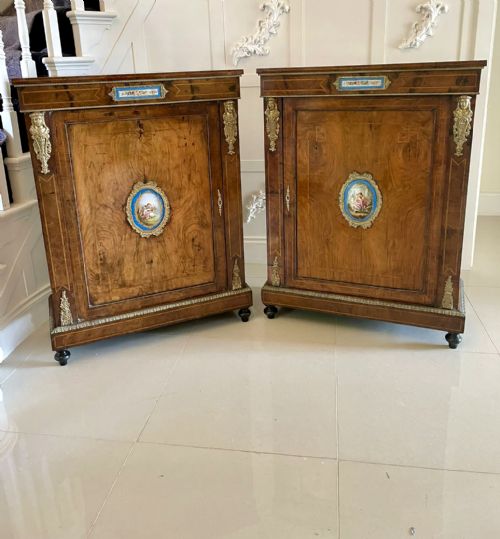


Victorian Credenza Porcelain Plaques
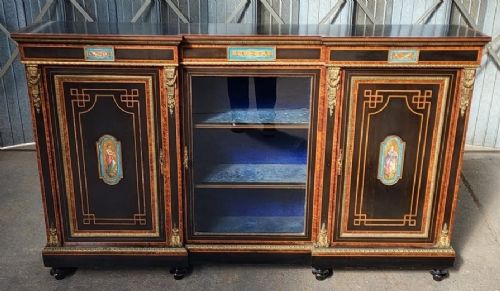
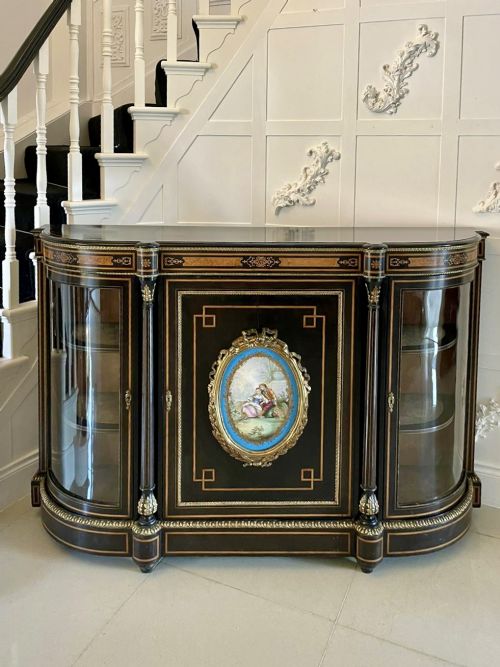
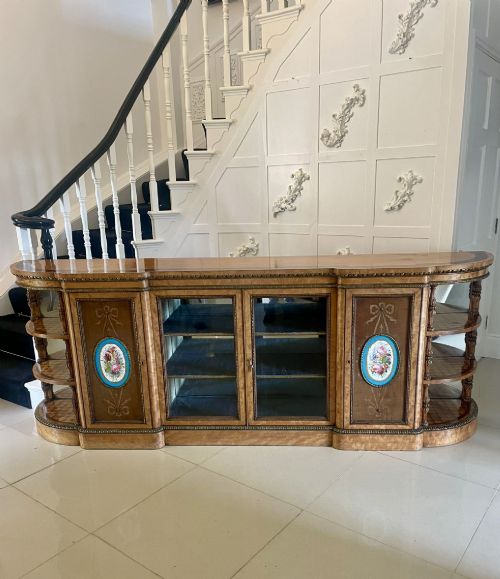
These victorian credenza porcelain plaques combine burr walnut, ebonised wood, and gilt mounts to create striking cabinet centrepieces.
Victorian Credenza Porcelain Plaques
When you search for victorian credenza porcelain plaques, you encounter elaborate display cabinets and sideboards designed for grand nineteenth century reception rooms. These pieces typically feature glazed doors flanked by curved glass cabinets, housing hand painted ceramic inserts within their wooden facades.
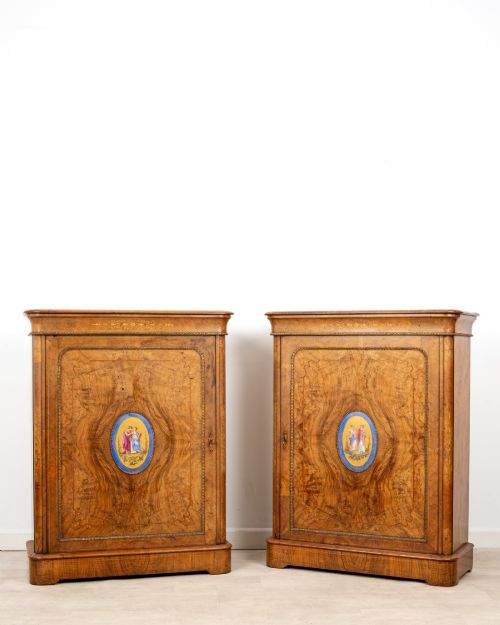
The selections on this page span the mid to late nineteenth century, predominantly showcasing burr walnut, ebonised wood, and occasionally satinwood or coromandel. Forms range from single pier cabinets to monumental three and four door credenzas outfitted with brass or ormolu mounts.
Materials and Construction
Cabinetmakers utilised rich timber veneers such as burr walnut and amboyna, laid over sturdy carcases and enhanced with fine marquetry inlay and stringing. Ebonised finishes provided a dark, contrasting ground for gilt bronze and ormolu mountings.
Porcelain plaques, often associated with Sevres style decoration, were securely fitted into the timber panels or door frames, complemented by glass shelving and panelled glass doors.
Some credenzas were built so heavy that rearranging the parlour required an entire team of strong Victorian footmen.
Assessing Quality and Execution
Quality rests heavily on the choice of timber veneer, where richly figured burr walnut or meticulously ebonised surfaces elevate the piece. The depth and execution of the marquetry inlay and the weight of the ormolu mounts further separate standard production from exceptional examples.
The integration of the porcelain plaques itself dictates standard, with finer cabinets displaying hand painted ceramic details that harmonise precisely with the surrounding gilt bronze mounts and cabinet proportions.
Lamb of Manchester
The Victorian Credenza Porcelain Plaques Glossary
- Credenza
- A low dining room or parlour cabinet designed for display and storage, often fitted with central doors and curved side glass cabinets. It frequently serves as the focal point for decorative porcelain plaques.
- Ormolu
- Gilt bronze ornamentation applied to the structural corners, friezes, and doors of nineteenth century cabinetry. This technique adds metallic brilliance to ebonised and walnut surfaces.
- Marquetry
- Decorative veneer patterns formed by fitting small pieces of contrasting wood and other materials together into geometric or floral designs. It ornaments the body of walnut and satinwood cabinets.
- Pier Cabinet
- A narrow display cabinet built to stand against the wall space between windows. These tall, single units often incorporate porcelain plaques and glass front panels.
- Sevres
- A term denoting French porcelain styles featuring painted scenes or floral motifs within coloured borders. Such plaques were frequently imported and mounted onto English Victorian furniture.
Victorian Credenza Porcelain Plaques: Frequently Asked Questions
What is a Victorian credenza?
A Victorian credenza is a low, substantial cabinet used in nineteenth century interiors for displaying decorative objects and storing fine dining accessories. These pieces typically combine glass fronted side compartments with a central cupboard door.
They often incorporate ornate timber veneers like burr walnut alongside gilt bronze mounts and porcelain plaques, reflecting the revival styles popular during the period.
How were porcelain plaques used on cabinets?
Porcelain plaques were inset directly into the wooden framework of cabinet doors, friezes, or side panels as decorative centerpieces. They were usually framed by gilt bronze or ormolu mounts to highlight their hand painted designs.
These ceramic inserts drew inspiration from French porcelain factories, adding colour and a sense of continental luxury to English walnut and ebonised furniture.
What woods are common in these cabinets?
Burr walnut is the primary timber seen across these pieces, prized for its swirling, highly figured grain patterns. Ebonised wood is also common, providing a deep black finish that contrasts sharply with gilt mounts.
Cabinetmakers additionally utilised satinwood, amboyna, and coromandel to achieve varied tones and sophisticated inlaid marquetry details.
How do I care for burr walnut and ormolu?
Burr walnut surfaces require gentle cleaning with a soft, dry cloth to preserve the natural lustre of the timber veneer. Avoid harsh chemical polishes and keep the wood away from direct heat sources.
Ormolu and gilt bronze mounts should be dusted carefully without abrasive cleaners to maintain their metallic finish and prevent damage to the surrounding wood.