




Victorian Credenza Desk
These Victorian credenza desk pieces bring nineteenth-century timberwork and storage into modern rooms, offering period presence and practical writing space.
Victorian Credenza Desk
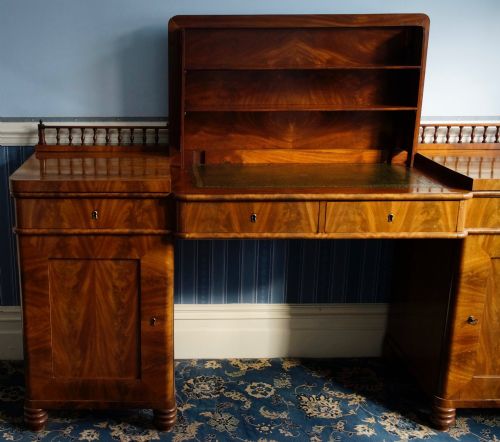
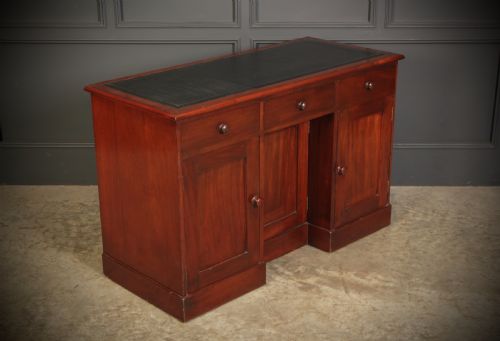
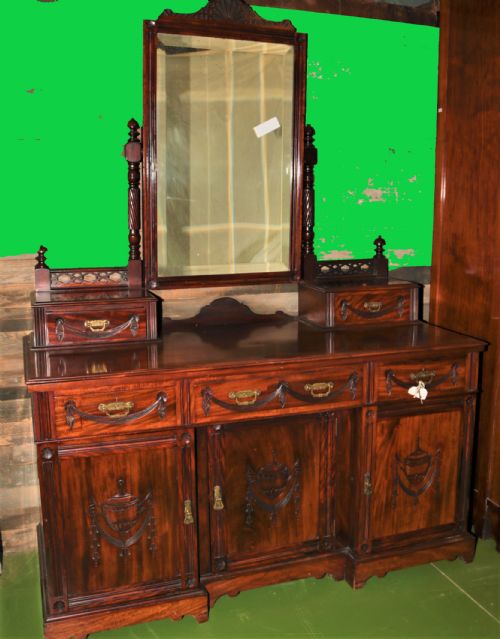
The search phrase points toward nineteenth-century timber furniture, encompassing sideboards, desks, side tables, and dressing tables from the period. Buyers find pieces shaped by Victorian, Georgian Revival, and Anglo-Indian design movements.
Most examples appearing in this category take the form of nineteenth-century sideboards, desks, and writing furniture rather than a distinct form named strictly as a credenza desk. These items reflect the heavy reliance on mahogany, oak, and walnut during the Victorian era.
How they were made
Cabinet makers utilised dense hardwoods such as mahogany, walnut, burr walnut, padouk wood, and oak to construct these pieces. Brass fittings and leather surfaces frequently supplemented the timber construction.
Carved decoration defines the execution of many pieces, alongside painted finishes on select sideboards. Construction often incorporated pedestal configurations and kneehole arrangements suited for writing and storage.
Victorian Credenza Desk Retail Price Guide 2026
Typical asking prices for victorian credenza desk among the pieces listed under this phrase on Sellingantiques today, from the lower quarter to the upper quarter. They describe what is for sale here now, not the wider market.
Some nineteenth-century writers clearly needed somewhere to rest a cup of tea while pondering their correspondence.
What varies in quality
Quality rests upon the selection of timber figures, such as burr walnut veneers against solid mahogany or oak carcases. Finer execution shows in the crispness of carved details and the integration of brass hardware.
The scope of the maker's ambition dictates the overall success of the piece, moving from straightforward utilitarian sideboards to elaborate Victorian Renaissance Revival or French Second Empire expressions.
The Victorian Credenza Desk Glossary
- Burr walnut
- A figured timber veneer taken from the wart or burl of the walnut tree, prized for its swirling grain patterns. It frequently covers the primary surfaces of high-status nineteenth-century cabinet furniture.
- Kneehole desk
- A form of writing table featuring a central recess for the user's legs, flanked by pedestals of drawers. This configuration became standard during the Georgian and Victorian periods.
- Padouk wood
- A dense tropical timber with a reddish hue, often encountered in Anglo-Indian furniture imported or manufactured during the nineteenth century. It provides exceptional durability and a deep colour.
- Pedestal sideboard
- A large dining room or library piece comprising cupboards or drawers flanking a central section, resting upon distinct plinths or feet. This form dominated nineteenth-century storage design.
Victorian Credenza Desk: Frequently Asked Questions
Where did people put these desks?
Nineteenth-century writing furniture and sideboards occupied studies, libraries, and principal reception rooms of substantial houses. They served domestic administrative duties or formal display functions.
In contemporary interiors, these items function effectively as focal points in home offices, living rooms, or hallways where period character is desired.
How do I clean the wood?
Maintain timber surfaces by dusting with a dry, soft cloth to prevent particulate accumulation. Avoid silicone polishes that build up over time and degrade the finish.
Apply a traditional beeswax sparingly when the wood appears dry, buffing gently to restore the natural lustre of mahogany or walnut.
Are these pieces purely decorative?
These items were built for practical utility, incorporating drawers, writing surfaces, and substantial storage capacity for household use. Their robust construction reflects the demanding requirements of nineteenth-century domestic life.
Today, they continue to offer functional workspace and organisation while providing distinct historical presence within a room.
How do I identify a Victorian piece?
Look for characteristic timber choices such as mahogany, oak, and walnut, often accompanied by brass hardware and leather inserts. Construction methods typically involve solid secondary timbers and traditional hand-cut joints.
Stylistic markers range from heavy carved oak ornamentation to refined burr walnut veneers, aligning with nineteenth-century design movements.