



Oak Pedestal Buffet
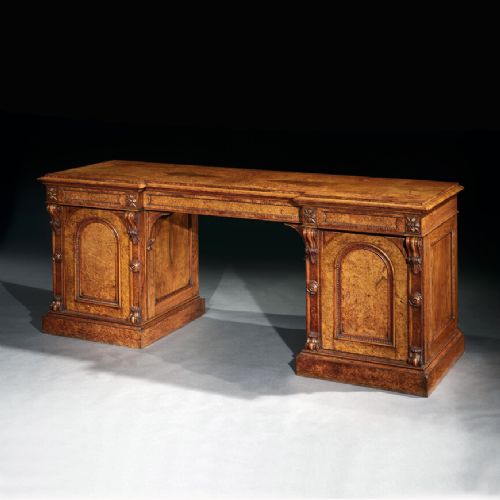
An oak pedestal buffet delivers grand nineteenth-century presence and heavy timber storage to a dining room, offering serious surface space and substantial cupboards.
Oak Pedestal Buffet
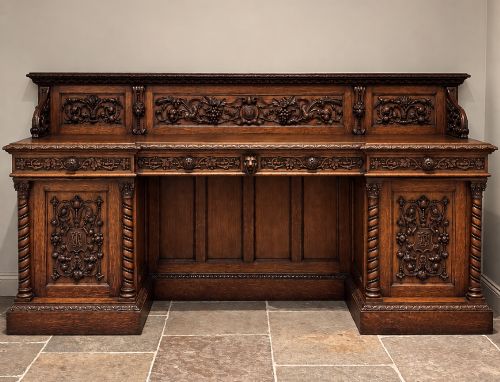
An oak pedestal buffet stands as a substantial piece of nineteenth-century dining room furniture, combining large cupboards with heavy timber construction. Buyers searching for an oak pedestal buffet typically encounter Victorian designs, often featuring carved details or architectural mirror backs.
The form usually incorporates flanking pedestals beneath a wide top surface, designed for serving food and storing heavy tableware. Pieces from this selection span the Victorian era, including specific dates such as eighteen sixty and eighteen eighty, alongside broader nineteenth-century examples.
Makers of the period employed distinct revival aesthetics, resulting in Victorian Renaissance Revival and Victorian Gothic Revival styles alongside plain heavy oak surfaces. These items function primarily as grand sideboards and sideboards and buffets within formal dining spaces.
How they were made
Cabinet makers constructed these pieces primarily from solid oak, often selecting pollard oak or bleached oak for specific visual effects within the timber grain. Workshops incorporated walnut and specimen wood inlay to create contrast on panels and drawers.
Makers integrated structural hardware in brass alongside decorative elements like mirror glass and glass panels. Carvers worked directly into the timber to produce geometric patterns and deep relief ornamentation characteristic of Victorian revivalism.
Oak Pedestal Buffet Retail Price Guide 2026
Typical asking prices for oak pedestal buffet among the pieces listed under this phrase on Sellingantiques today, from the lower quarter to the upper quarter. They describe what is for sale here now, not the wider market.
Several Victorian pieces include mirror backs designed to reflect dining room candlelight and make the heavy timber appear surprisingly bright.
What varies in quality
Quality reveals itself in the choice of timber and the ambition of the surface decoration, from plain planks to intricate specimen wood inlay and carved geometric panels. The presence of specialised woods like pollard oak elevates a piece above standard domestic output.
The structural integration of architectural elements, such as large mirror backs and substantial pedestal bases, defines the upper tier of the range. Superior examples demonstrate crisp carving depth and careful material selection across secondary timbers.
The Oak Pedestal Buffet Glossary
- Pollard oak
- Oak timber harvested from trees that were pollarded, producing a heavily figured and mottled grain pattern. Cabinet makers valued this wood for decorative veneer and panel highlights.
- Gothic Revival
- An architectural and decorative style drawing inspiration from medieval forms, featuring pointed arches and heavy geometric carving. This style appears frequently on Victorian case pieces.
- Pedestal sideboard
- A large dining room furnishing featuring two heavy side cupboards or pedestals supporting a central surface and superstructure. It provides substantial enclosed storage for tableware.
- Specimen wood inlay
- The technique of arranging small pieces of various contrasting timbers to form geometric or pictorial patterns on a surface. This meticulous work demonstrates high workshop skill.
- Mirror back
- A tall wooden frame holding a plate glass mirror attached to the rear of a sideboard. It reflects light and displays objects placed on the serving surface.
Oak Pedestal Buffet: Frequently Asked Questions
What is an oak pedestal buffet?
An oak pedestal buffet is a heavy nineteenth-century dining room storage piece featuring flanking cupboards beneath a wide serving surface.
These items belong to the broader category of Victorian sideboards and often incorporate carved details or mirror backs.
How do I date these sideboards?
Dating relies on stylistic markers such as Victorian Gothic Revival details, specific carved motifs, and the presence of mirror glass.
Evidence from nineteenth-century pieces points to production decades like eighteen sixty and eighteen eighty alongside general Victorian eras.
What materials are used?
Construction relies heavily on solid oak, frequently augmented by pollard oak veneers, bleached oak finishes, and walnut elements.
Workshops also integrated brass hardware, glass panels, mirror glass, and multi-timber specimen wood inlay.
Where were these pieces used?
These sideboards served primarily in formal nineteenth-century dining rooms as functional storage and serving stations.
Owners utilised the large cupboards for heavy tableware and the top surface for food presentation during meals.