



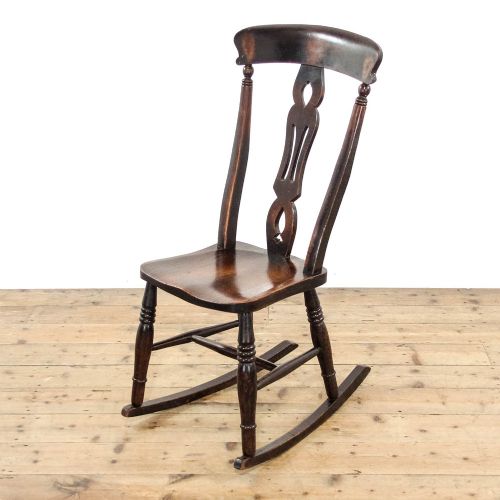


Victorian Country Rocking Chair
A victorian country rocking chair brings vernacular warmth to a fireside, offering sturdy timber construction built for domestic comfort.
Victorian Country Rocking Chair
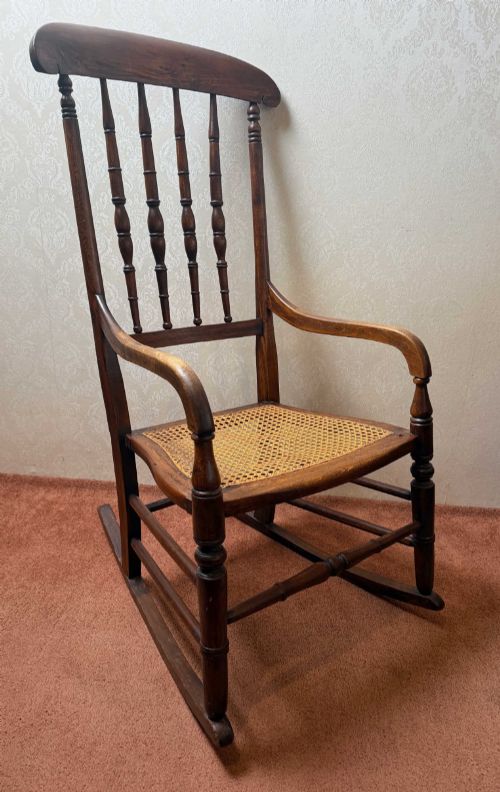
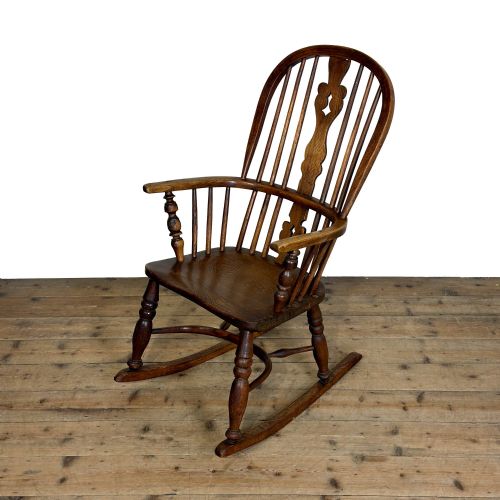
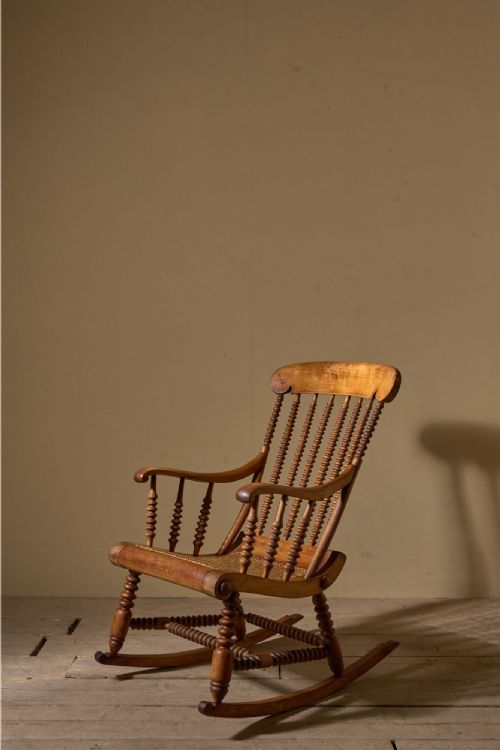
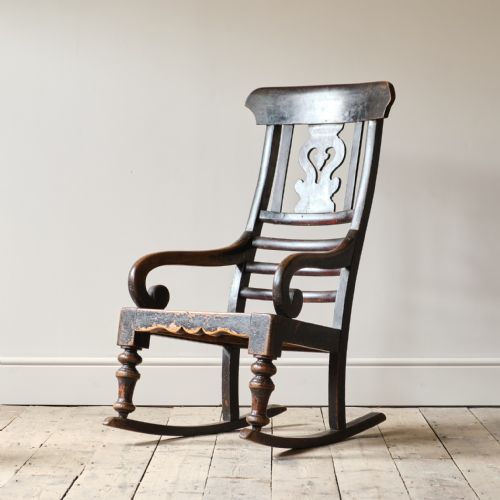
A victorian country rocking chair encompasses sturdy farmhouse, Windsor, ladder back and bobbin framed armchairs designed for domestic relaxation. These pieces emerge primarily from nineteenth century vernacular traditions, combining local timber construction with functional rocking rails.
Buyers will encounter adult and child variants across this page, ranging from spindle back fireside seats to substantial farmhouse armchairs. The forms reflect regional English and Scottish rural workshops rather than urban formal design centres.
Materials and Construction
Makers utilised native timbers such as elm, ash, beech and oak, often combining multiple woods within a single frame for structural integrity. Seats frequently employ solid carved elm, while uprights and spindles rely on turned ash, beech or fruitwood.
Framing techniques include bobbin turning, spindle backs and ladder backs, supplemented by woven seating inserts like rush, cane or sea grass. Ebonising and paint finishes appear on selected frames alongside natural waxed timber surfaces.
Victorian Country Rocking Chair Retail Price Guide 2026
Typical asking prices for victorian country rocking chair among the pieces listed under this phrase on Sellingantiques today, from the lower quarter to the upper quarter. They describe what is for sale here now, not the wider market.
A tiny doll sized rocking chair sits quietly alongside full sized farmhouse armchairs.
Craftsmanship and Proportion
Quality rests in the balance of the timber selection and the precision of the turned spindles and framing joints. Superior examples display harmonious proportions between the high back, the arm supports and the sweeping wooden rockers.
The integrity of the structural joinery and the survival of original surface patination distinguish finer vernacular pieces from heavily restored examples. Grain movement in solid elm seats and crispness in bobbin or spindle turnery further indicate superior workshop production.
The Victorian Country Rocking Chair Glossary
- Vernacular
- Everyday objects made by regional craftsmen using local traditions rather than high style academic designs. These pieces prioritise utility and local material availability.
- Windsor
- A chair built with a solid wooden seat into which the legs, back spindles and bow are directly socketed. This method creates a robust and rigid framework.
- Bobbin turned
- Spindles shaped on a lathe to resemble a series of wooden reels or bobbins placed end to end. This decorative turning technique was popular in nineteenth century country seating.
- Ladder back
- A chair back constructed with horizontal slats or rails positioned between two vertical uprights. The design provides simple back support in domestic seating.
- Spindle back
- A chair back featuring numerous slender turned vertical rods connecting the seat to the top rail. This construction distributes weight evenly across the frame.
Victorian Country Rocking Chair: Frequently Asked Questions
How do I identify a country rocking chair?
Look for sturdy native hardwoods such as elm and ash combined with vernacular framing styles like Windsor bows, ladder backs or bobbin turnings. These characteristics distinguish rural domestic seating from formal urban furniture.
Check the seat construction and the curve of the rocking rails for signs of age and regional hand craftsmanship.
Where were these chairs used?
These rocking chairs served primarily in farmhouses, country cottages and country houses as comfortable seating by the fireside or in nurseries. Their robust construction suited daily domestic service.
Smaller variants served specifically as children's or nursing chairs, offering practical utility in domestic quarters.
Are original seats usually solid wood?
Many examples feature solid carved timber seats, particularly in elm, shaped to provide comfort without upholstery. Other variants incorporate woven seating materials like rush, cane or sea grass.
When inspecting a seat, observe how the timber or woven insert integrates with the surrounding frame and legs.
How do I care for antique wood furniture?
Maintain the timber by keeping pieces away from direct heat sources and sudden temperature fluctuations that can dry out the wood. Apply appropriate wax polish sparingly to preserve the surface patination.
Avoid excessive moisture and handle the frame gently to protect historical joints and turned elements.