
Victorian Country House Armchair
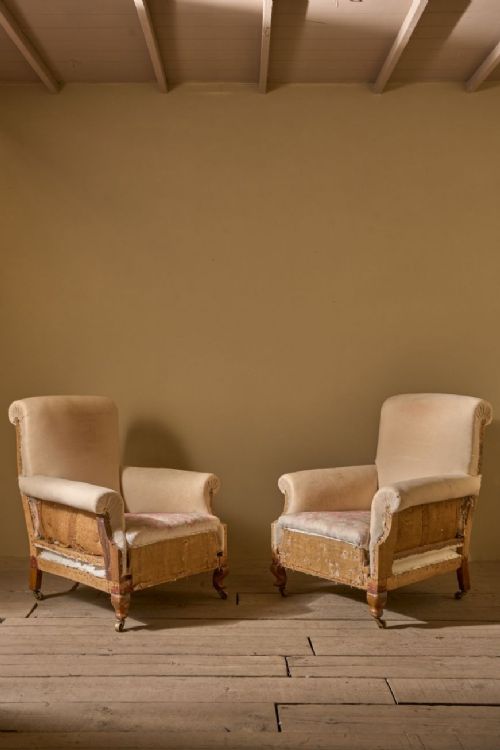
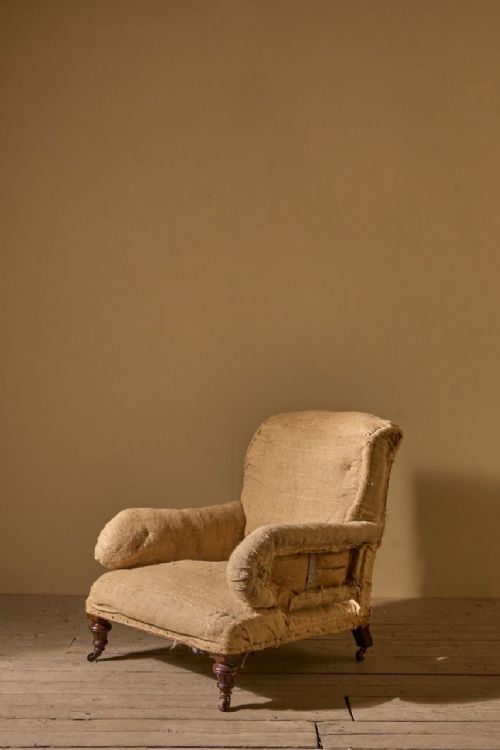
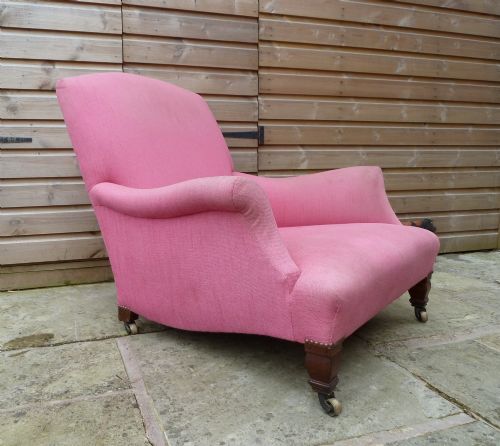
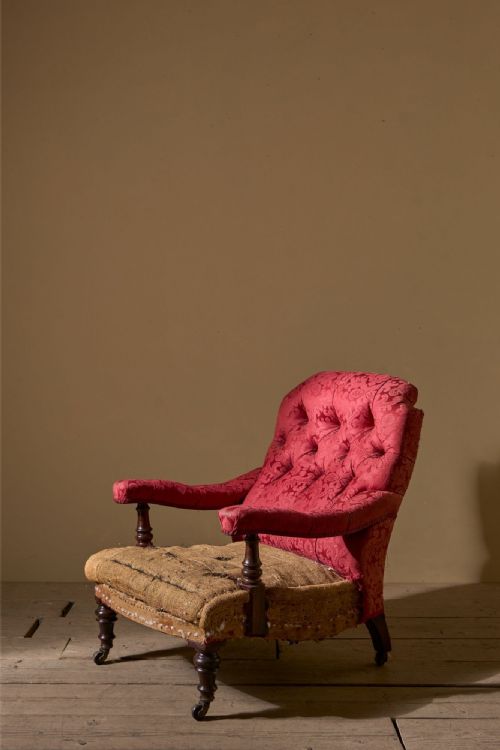
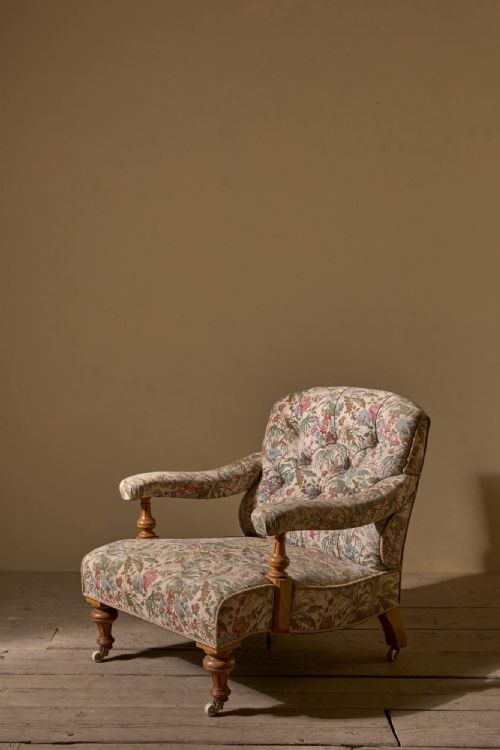
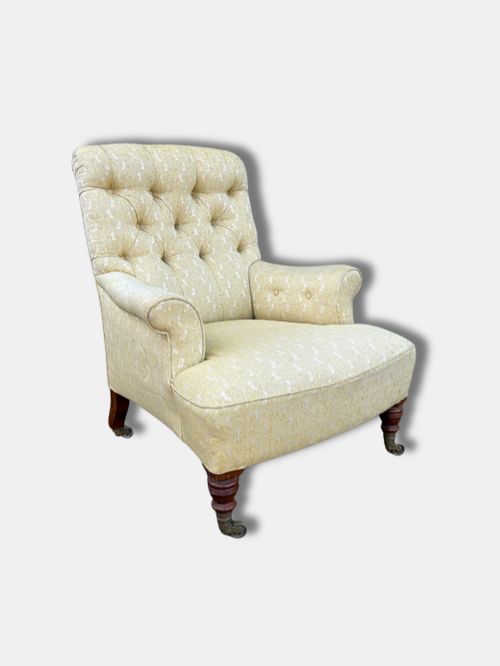
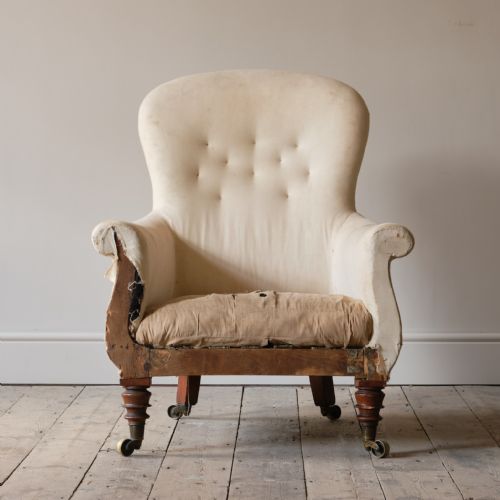
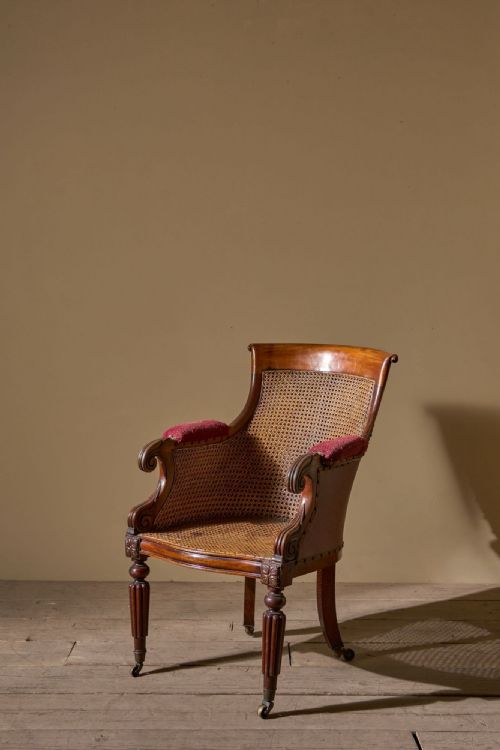
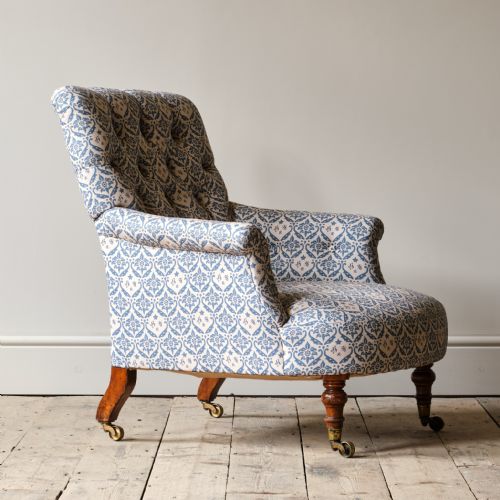
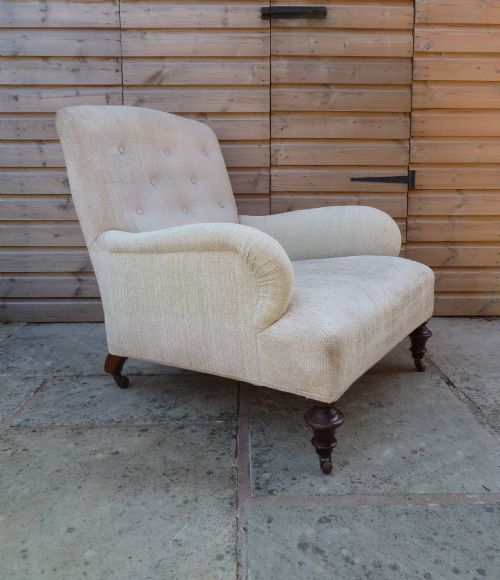
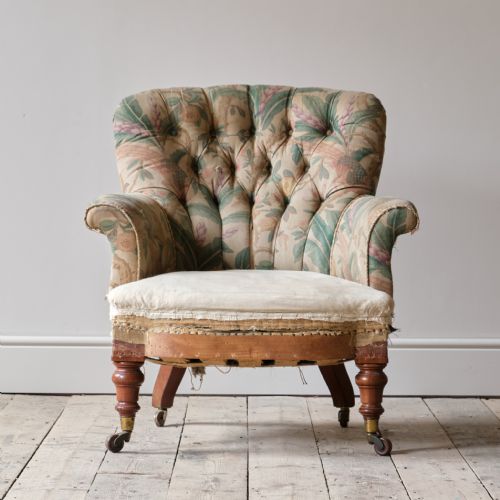
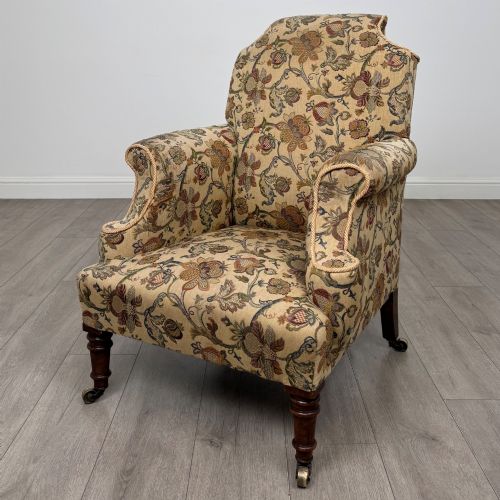
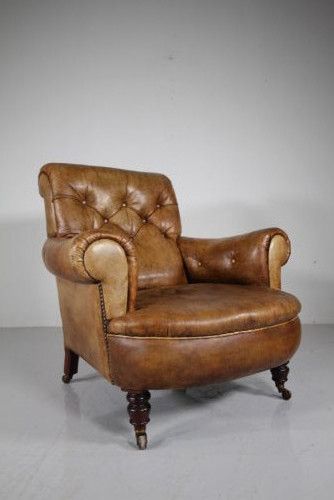
These pieces are a victorian country house armchair, offering deep proportions and lived-in comfort for fireside reading or drawing room lounging.
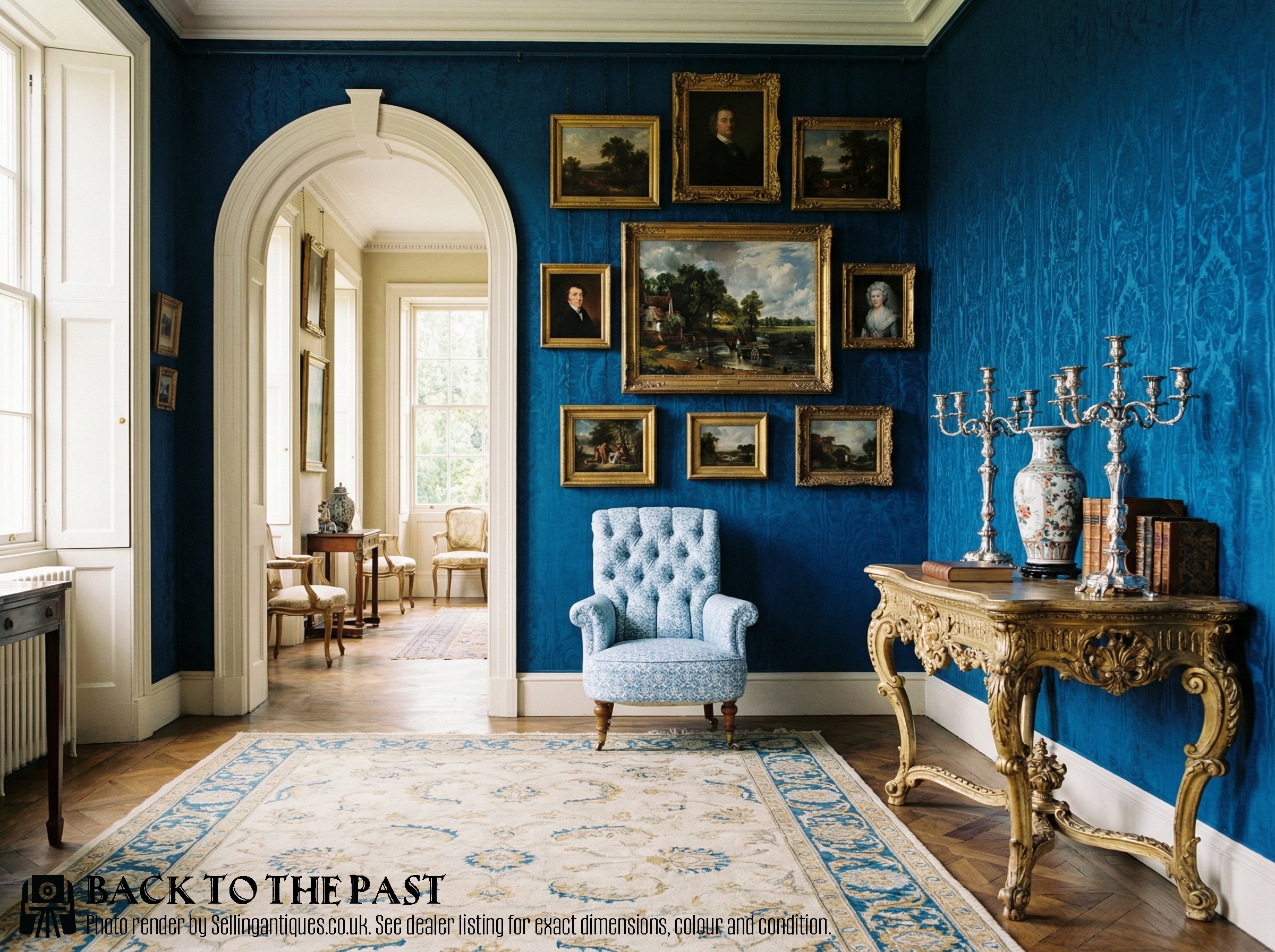
Victorian Country House Armchair
A victorian country house armchair brings together heavy upholstery, generous proportions and deep seats designed for long hours of relaxation in a country residence. The selection spans open armchairs, low library chairs, button-backed spoon backs, and substantial upholstered lounge seats.
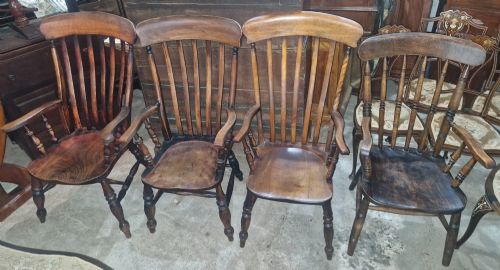
Most examples originate from the nineteenth century, including specific periods like the Regency and Edwardian eras. Pieces range from straightforward farmhouse Windsor designs in wood to finely turned frames and low-slung lounge chairs built for ease.
The style absorbs various revivals, from Carolean and Jacobean influences to the distinctive low-slung profiles associated with maker-led designs. Buyers encounter both open wooden frames and fully upholstered sprung versions covered in ticking, chintz or leather.
Materials and construction
Frames rely on sturdy timbers such as mahogany, walnut, oak and elm, providing structural integrity for heavy use. Wood elements appear exposed on carved arms and legs, or remain entirely concealed beneath layers of padding and heavy cloth.
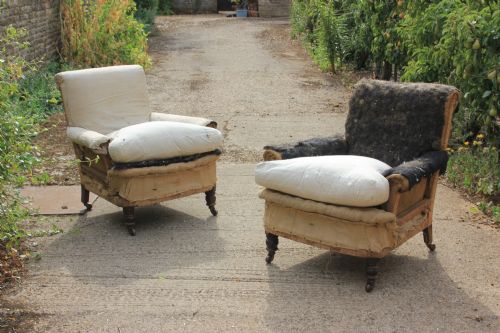
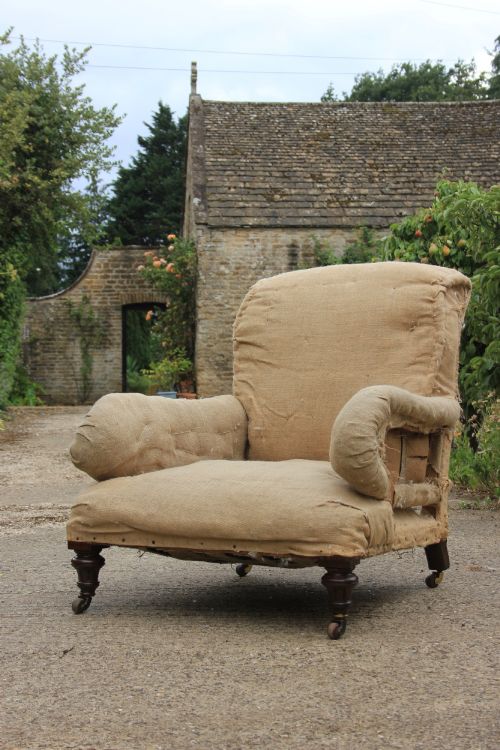
Upholstery relies on traditional stuffing secured with hessian and calico foundations, often finished in leather, chenille twill, ticking, or printed fabric. Brass castors frequently support the feet, allowing easy movement across heavy carpets.
Specialist workshops utilised coiled spring systems to achieve deep, supportive seating. Buttoning techniques create tailored tufted backs, while turned or simulated rosewood components add decorative detail to the wooden framework.
Some chairs hid deep within country house libraries for generations before seeing the light of a saleroom.
Assessing the standard
Quality rests in the integrity of the frame's timber and the sophistication of the internal springing system. Superior examples maintain firm, supportive deep seating without sagging, whereas simpler Windsor or kitchen armchairs depend entirely on the joinery of the wooden spindles and solid seats.
Maker attribution elevates certain pieces, particularly those bearing stamps or paper labels from esteemed workshops. The refinement of carved details, the weight of the timber, and the balance of the proportions distinguish standard utility seating from high-end drawing room furniture.
Howard and Sons·Morison and Co·Holland and Sons·Gillows·Sopwith·Hindley and Sons·William Birch
The Victorian Country House Armchair Glossary
- Hessian
- A coarse woven fabric typically used as a foundation layer for stuffing and springs in traditional upholstery.
- Calico
- A plain-woven cotton fabric utilised as an inner lining beneath the final decorative outer cover.
- Spoon back
- An upholstered chair back shaped in a concave oval resembling the bowl of a spoon, designed to fit the human spine.
- Wingback
- An armchair featuring protective side panels or wings attached to the arms to deflect drafts from the hearth.
- Ticking
- A tightly woven cotton or linen material, traditionally striped, used to contain upholstery fillings.
Victorian Country House Armchair: Frequently Asked Questions
What defines a victorian country house armchair?
These seating pieces are characterised by deep, generous dimensions and heavy upholstery designed for comfort rather than formal posture. They often combine sturdy timber frames with sprung seats and heritage fabrics.
Origins trace back to nineteenth-century drawing rooms and libraries, where durability and relaxation took priority over rigid design rules.
How do I identify a Howard style armchair?
Howard style pieces typically feature low, rolled arms, deep sprung seats, and short turned wooden legs mounted on brass castors. They prioritise unpretentious comfort and are frequently upholstered in ticking or patterned chintz.
Original pieces often bear maker stamps on the castors or frame woodwork, distinguishing them from later interpretations.
Where were these armchairs used?
Estate owners placed these seats in libraries, drawing rooms, smoking rooms, and bedrooms across large rural properties. Their sturdy construction suited daily family life and long hours of reading or resting.
Simpler wooden versions, such as Windsor and captain's chairs, served in farmhouses and less formal rooms.
How do I care for antique leather upholstery?
Leather surfaces benefit from regular dusting with a soft cloth and occasional treatment with appropriate conditioning balms to prevent drying out. Keeping the hide away from direct heat sources preserves its suppleness.
Avoid harsh cleaning chemicals that can strip the natural finish and patination accumulated over decades of use.