
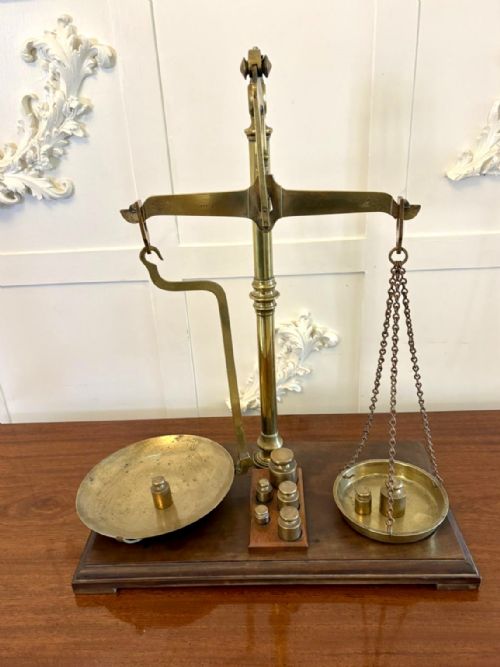
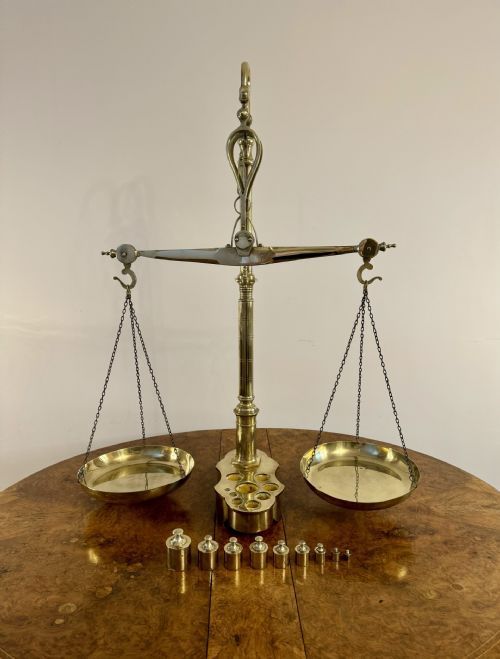


Victorian Counter Balance Scales
These Victorian counter balance scales are robust weighing instruments built for shops and surgeries, offering tactile history and functional presence for the modern interior.
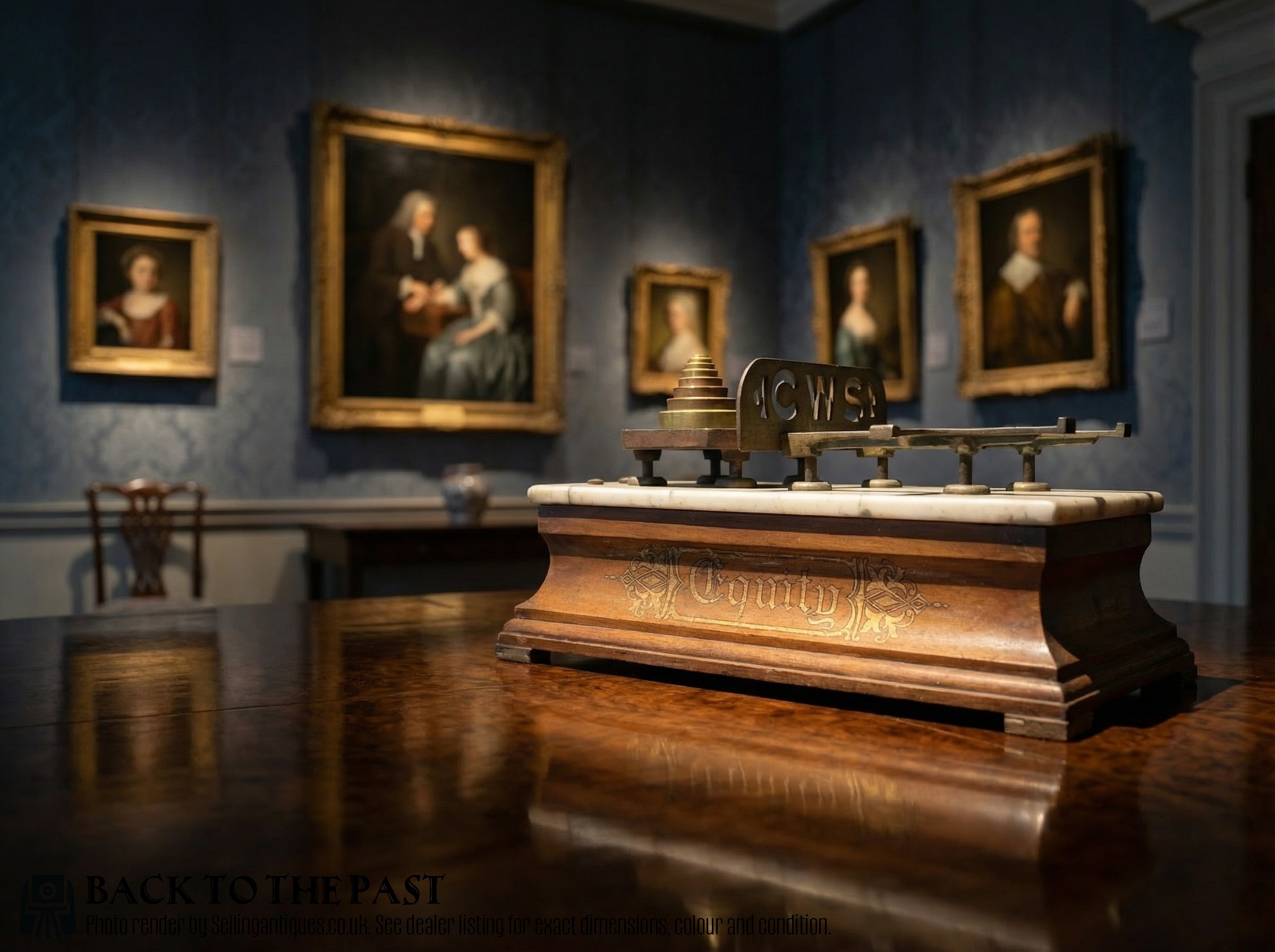
Victorian Counter Balance Scales
Victorian counter balance scales are functional weighing devices designed for tradesmen, grocers, and apothecaries during the nineteenth and early twentieth centuries. These pieces appear on this page in forms ranging from heavy grocers scales and butcher balances to delicate apothecary beam sets.
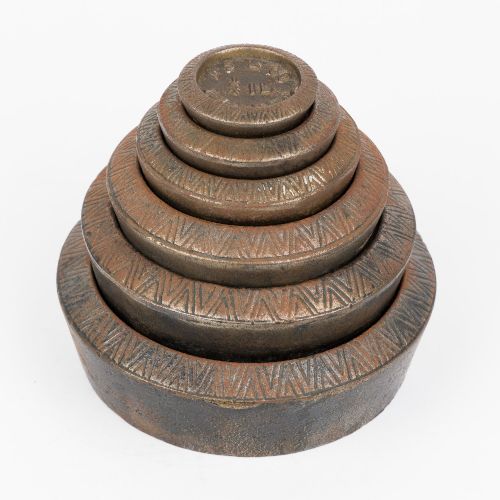
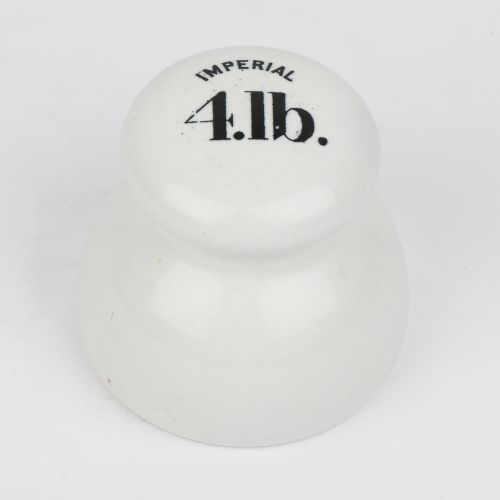
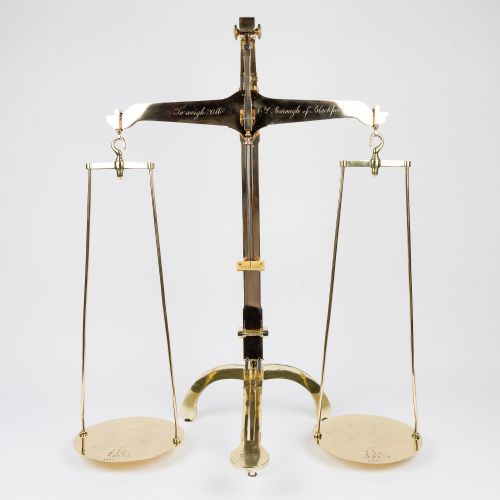
The most common examples you will encounter are brass beam scales mounted on mahogany bases, alongside heavy cast iron and copper commercial setups. Many listings include matching ceramic scale pans or associated stacking weights in imperial measures.
Originating from commercial settings such as cooperative stores and borough markets, these balances combine utilitarian design with polished metal and timber. They serve as striking display items that reflect the commerce and domestic life of the Victorian era.
Materials and Construction
The construction of these pieces relies on the pairing of polished brass beams with dense mahogany bases to provide stability and precise movement. Cast iron and wrought iron are utilised for the heavy structural frames and supporting pillars necessary to bear substantial weights.
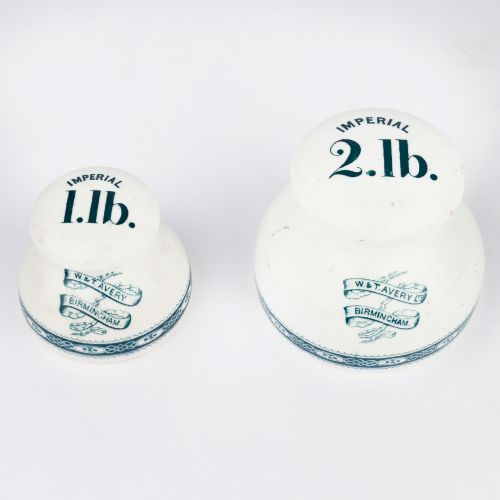
Glazed ceramic is frequently incorporated into the scale pans or produced as dedicated weights, often bearing maker details or advertising. Metal components are cast, forged, and hand-finished to ensure the sensitive calibration required for trade use.
Some butcher balances double as clever advertising displays, quietly selling sausages to hungry shoppers while waiting for the next joint of meat.
Gradations of Quality
Quality in these instruments is determined by the crispness of the maker stamp and the structural integrity of the timber base. Superior examples retain their original matching weights, complete beam assemblies, and unpolished brass surfaces with clear patination.
Finer pieces show careful proportion in the cast iron or mahogany housing, whereas simpler utility scales display plain ironwork intended solely for heavy industrial tasks.
W & T Avery·Day & Millward·Parnall & Sons of Bristol·Bartlett & Sons
The Victorian Counter Balance Scales Glossary
- Beam scale
- A weighing device consisting of a horizontal lever suspended from a central fulcrum with pans hanging from each end. This design forms the primary mechanism for accurate measurement in trade.
- Apothecary balance
- A sensitive weighing instrument used by chemists and doctors for measuring small quantities of medicine. These typically feature enclosed timber cases or delicate brass beams.
- Imperial stacking weights
- A nested set of calibrated metal blocks used with counter scales, stamped with official verification marks. They follow traditional British weights and measures.
- Scale pan
- The shallow dish suspended from the balance beam to hold goods or weights. They are often produced in glazed ceramic, brass, or copper.
Victorian Counter Balance Scales: Frequently Asked Questions
How do counter balance scales work?
These scales operate on the principle of lever equilibrium, where an item placed on one pan is balanced by standard weights added to the other until the central pointer aligns vertically.
The horizontal brass beam pivots on a knife-edge fulcrum, allowing for precise measurement despite the heavy commercial loads placed upon the structure.
Were these scales used in shops?
Commercial tradesmen utilised these balances daily across grocers, butchers, and cooperative stores to weigh provisions for customers before packaging.
Heavier cast iron and copper variants stood directly on shop counters, while specialised apothecary versions sat in chemist dispensaries for mixing medical ingredients.
How do I clean brass scale beams?
Maintenance of brass and copper components involves gentle dusting and occasional wiping with a dry microfiber cloth to preserve the natural aged surface. Harsh metal polishes should be avoided to retain the historic patina developed over decades of use.
Can these scales still weigh accurately?
While many surviving examples retain their mechanical balance and movement, they are predominantly displayed as decorative antiques rather than certified measuring instruments.
Checking the knife-edge pivots and ensuring the pans hang freely will determine whether a specific set still moves true to weight.