


Victorian Corinthian Candlesticks
Victorian corinthian candlesticks bring classical architectural order to a room, cast in solid silver, silver plate, and brass.
Victorian Corinthian Candlesticks
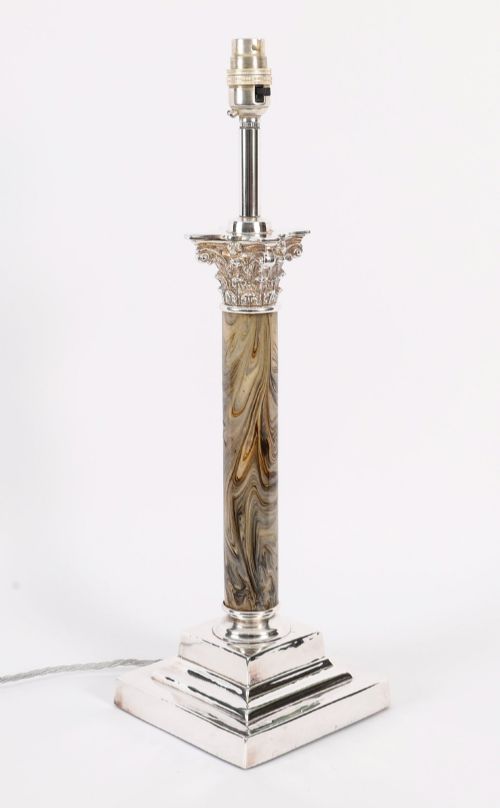
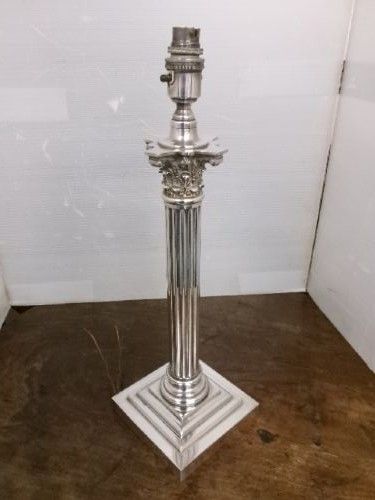
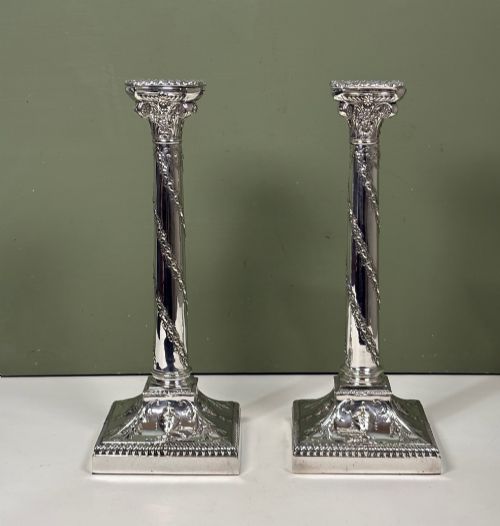
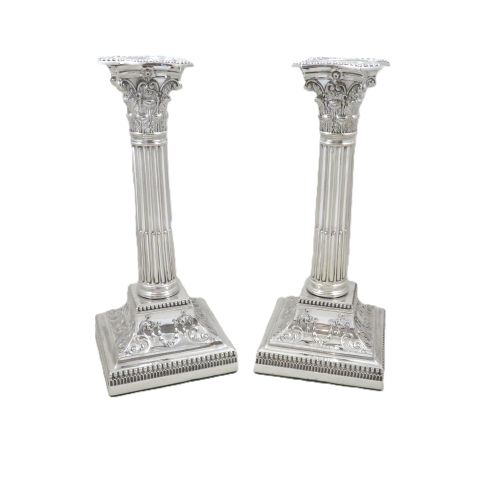
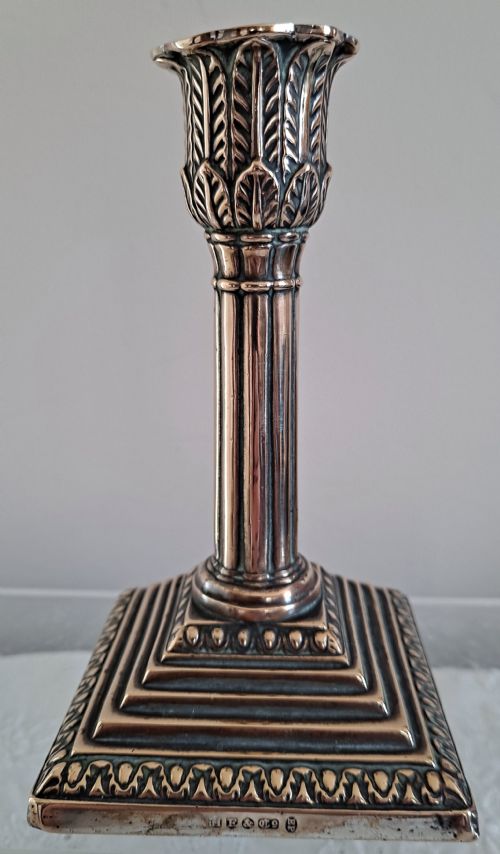
Victorian corinthian candlesticks follow classical architectural rules, taking the form of fluted columns topped by ornate acanthus leaf capitals. These pieces date principally from the nineteenth century, with related examples extending into the Edwardian era.
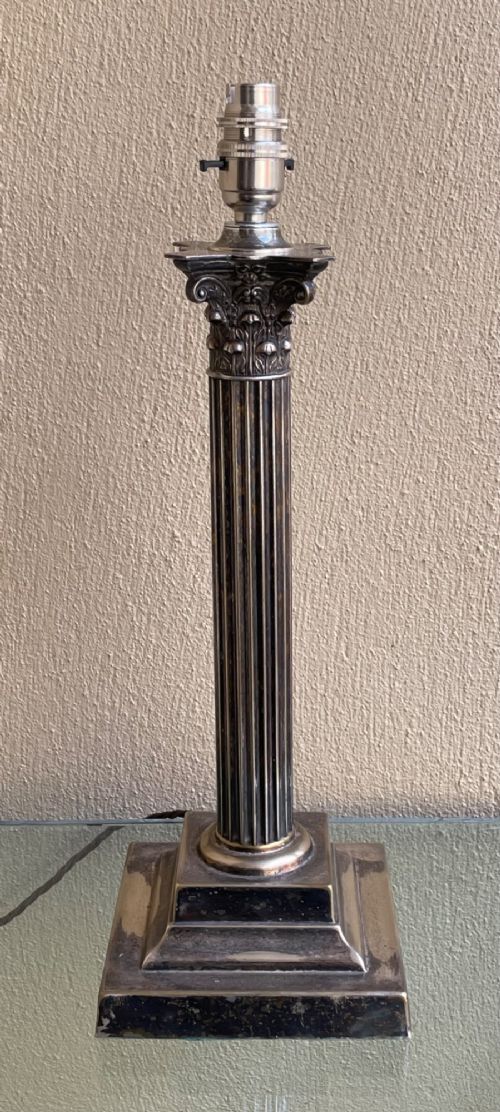
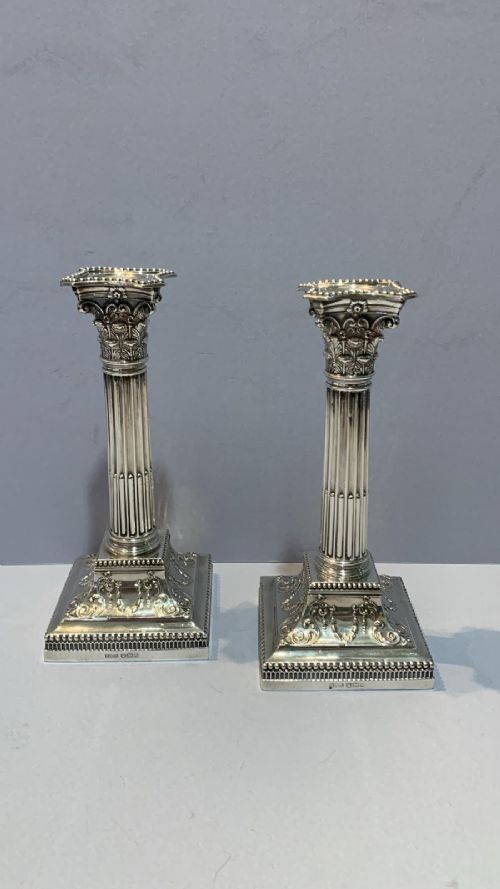
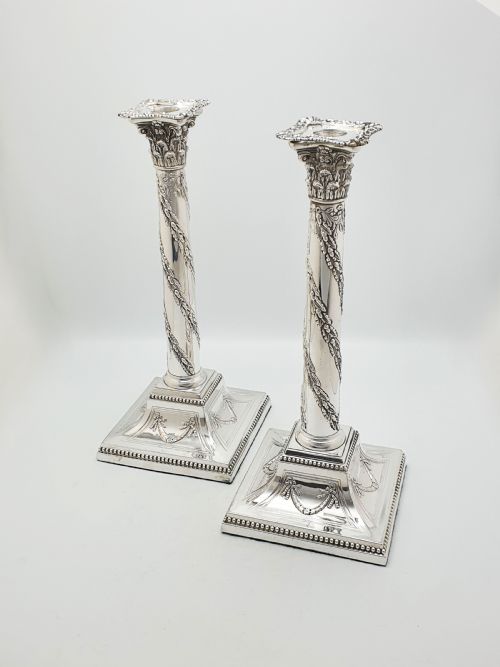
The versions most commonly met on this page are pairs of silver plated or sterling silver columns, alongside converted table lamps and occasional candelabras. Height varies considerably, from low desk models to tall floor or mantlepiece arrangements.
Materials and Technique
Makers utilised sterling silver and silver plate over base metals, alongside solid brass, copper, and occasional onyx or glass components. Metals were cast, spun, and chased to render the fine detail of the classical orders.
Column shafts often feature fluting, while bases incorporate square stepped plinths, sometimes supported by lion's paw feet or decorated with beaded borders.
Masonic lodges ordered specialised decorated brass columns to illuminate secret rituals.
Distinctions in Quality
Quality rests upon the crispness of the casting in the acanthus capitals and the structural weight of the metal. Superior examples display sharp relief work on the Corinthian foliage and solid construction in the weighted bases.
The integrity of the silver plating or the depth of the solid silver hallmarks contributes directly to the standing of a piece. Finer items retain their original proportions and structural rigidity without leaning or distortion in the column.
Goldsmiths·Martin Hall·Palmer Co
The Victorian Corinthian Candlesticks Glossary
- Capital
- The uppermost member of a column, carved with acanthus leaves in the Corinthian order. It provides the decorative crown beneath the drip pan.
- Fluting
- Shallow, vertical concave grooves run along the shaft of the column. This technique derives from ancient stone architecture.
- Candelabra
- A branched candlestick holding multiple lights on a single base. These often share the column form of standard candlesticks.
- Plinth
- The flat, square base block upon which the column rests. It provides stability and grounds the classical design.
Victorian Corinthian Candlesticks: Frequently Asked Questions
How do I date these candlesticks?
Dating relies primarily on hallmarks found on sterling silver examples, which indicate specific assay offices and years. Stylistic clues and construction methods also help place pieces within the nineteenth or early twentieth century.
Unmarked silver plated versions require comparison of base weights, felt types, and manufacturing techniques typical of specific decades.
Were these converted into table lamps later?
Many columns were adapted to electricity during the twentieth century, often involving drilled wiring channels through the original burners. Such conversions range from period alterations to later modifications.
Buyers should examine the top fitting to determine if the conversion preserved or replaced the original candle nozzle.
How should I clean silver plated columns?
Gentle cleaning with a dedicated silver cloth prevents the removal of the thin metal layer on plated surfaces. Avoid harsh dips that strip the underlying base metal exposed through wear.
Solid silver examples tolerate standard polishing compounds, provided care is taken around detailed capitals.
Do these pieces come in pairs?
Matching pairs represent the most common survival rate from the period, originally designed to flank mantlepieces or dining tables. Single pieces and larger sets of three or four occasionally appear.
Pairs often show minor variations due to hand-finishing processes applied during manufacture.