




Victorian Copper Scuttle
When you search for a victorian copper scuttle, you are looking at practical fireside vessels formed in metal to hold coal and logs.
Victorian Copper Scuttle
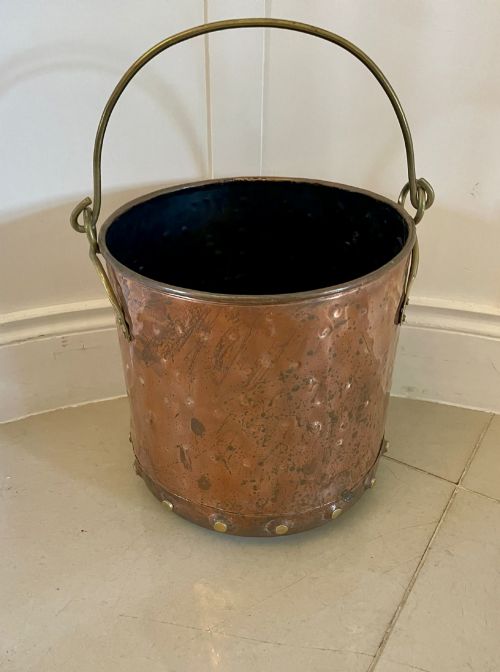
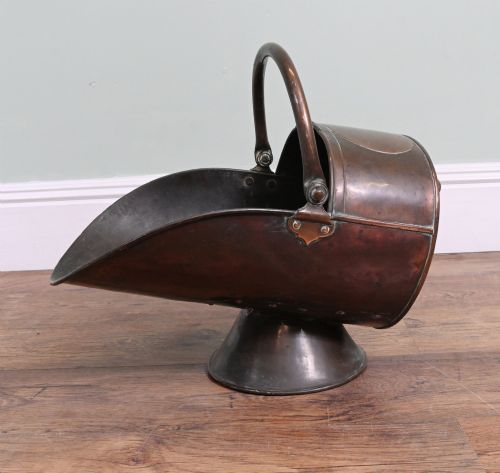
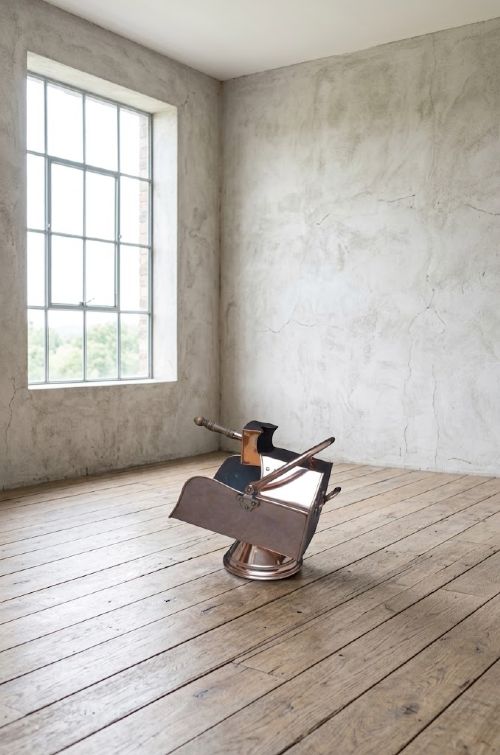
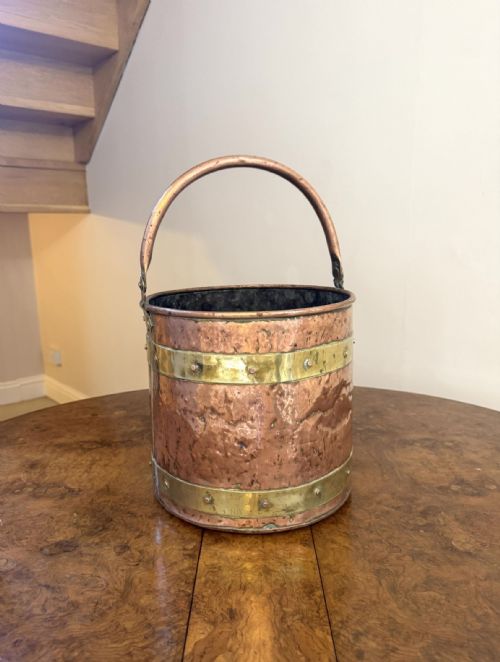
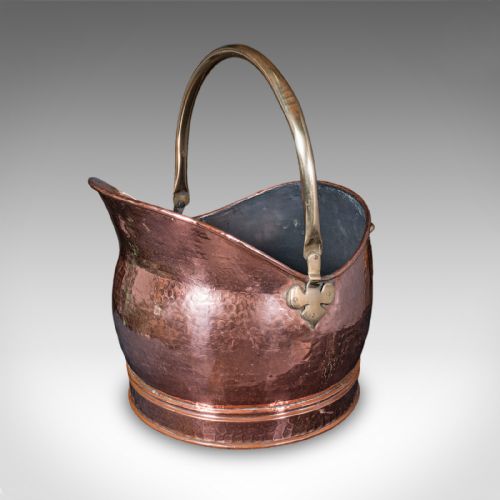
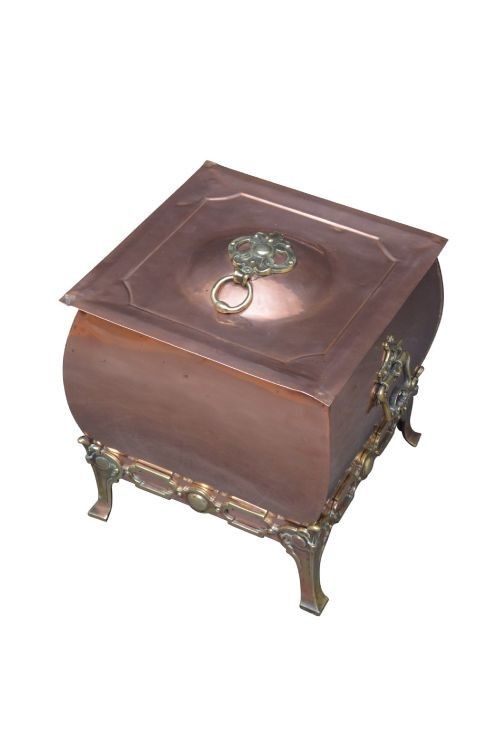
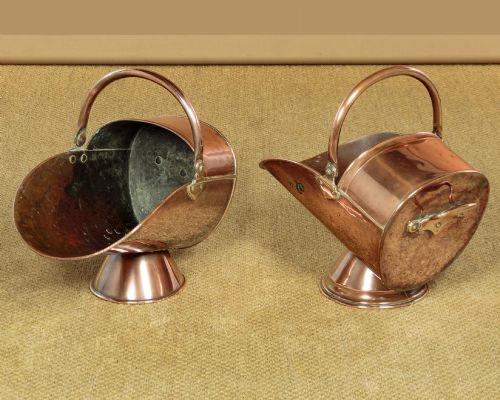
A victorian copper scuttle is a fireside vessel designed to hold coal, peat or logs beside a hearth. The versions you are most likely to meet on this page take the form of helmet scuttles, cylindrical buckets, and lidded boxes made during the nineteenth century.
Makers shaped these utilitarian items to sit beside open grates, combining sheet metal with contrasting brass handles, feet, and bands. While many served for decades in domestic coal carriage, today they find new roles as planters and log bins.
How they were made
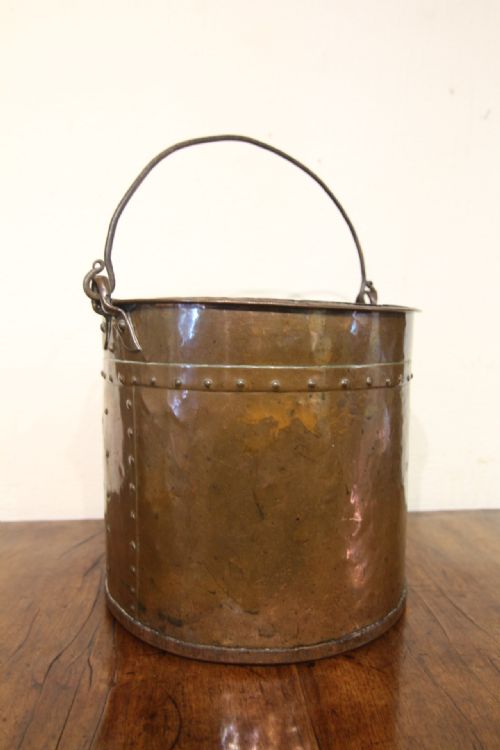
The primary material is sheet copper, often joined by visible rivets or hand-beaten to create a textured surface. Makers incorporated brass for handles, feet, and decorative bands, utilising iron for internal framing and wrought iron for sturdy swing handles.
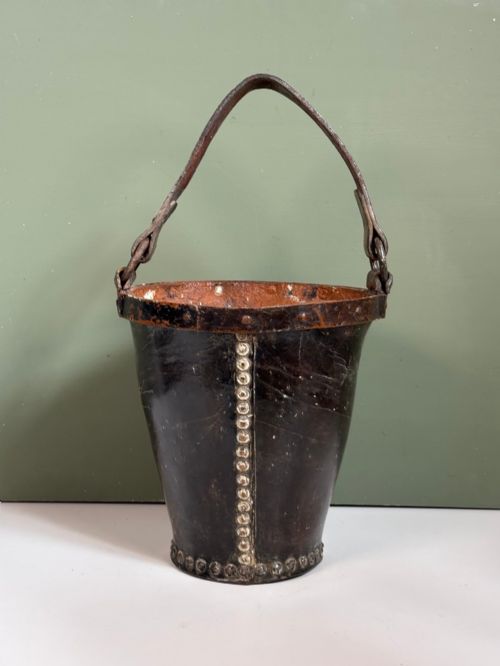
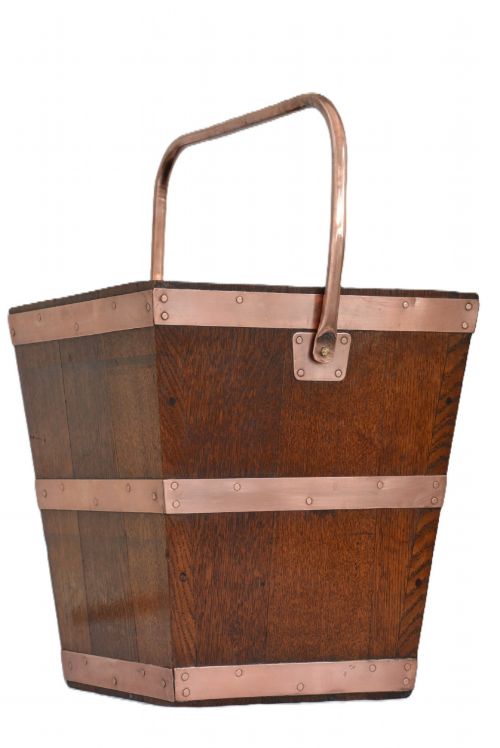
Selected examples also integrate oak, boiled leather, or wood linings. Craftspeople hand-finished the metal surfaces, employing techniques ranging from smooth polishing to distinct hand-beating and embossing.
Victorian Copper Scuttle Retail Price Guide 2026
Typical asking prices for victorian copper scuttle among the pieces listed under this phrase on Sellingantiques today, from the lower quarter to the upper quarter. They describe what is for sale here now, not the wider market.
Listings feature copper, brass, oak, and wrought iron formed into helmet scuttles, coal buckets, planters, and Gladstone bags across Victorian and Edwardian periods.
What varies in quality
The distinction between standard utility items and finer pieces lies in the weight of the metal and the integrity of the construction. Heavier gauge copper and robust riveted joints separate sturdy vessels from lighter stamped examples.
Attention to detail in the mounts, such as cast brass feet, decorative embossing, and well-fitted swing handles, marks the difference between basic production and superior workshop output.
Henry Loveridge and Co
The Victorian Copper Scuttle Glossary
- Helmet Scuttle
- A traditional coal scuttle shaped with a flared rim resembling a classical helmet, designed to pour fuel cleanly into a grate.
- Jardiniere
- An ornamental pot or receptacle for holding plants or flowers, often adapted from coal bins and buckets.
- Embossed
- A surface technique where a design is raised in relief from the sheet metal using punches and hammers.
- Riveted
- A method of joining sheet metal panels together by passing metal pins through aligned holes and hammering the ends flat.
- Arts and Crafts
- A design movement favouring honest construction, hand-beaten textures, and visible craftsmanship over machine-made ornamentation.
Victorian Copper Scuttle: Frequently Asked Questions
What is a victorian copper scuttle used for?
These vessels were originally designed to store and transport coal, peat, or logs directly to the hearth for an open fire. Their sturdy construction allowed them to carry heavy loads of fuel daily.
Today, many owners repurpose them beside modern fireplaces or utilise them as decorative planters and umbrella stands in hallways.
How do I clean a copper scuttle?
Cleaning depends entirely on whether you prefer a bright polished finish or an aged dark patina. Gentle washing with warm soapy water removes dust and soot without harming the metal.
Avoid harsh abrasive compounds if you wish to preserve historical surface marks and the natural darkening accumulated over decades.
Can I use these outdoors as planters?
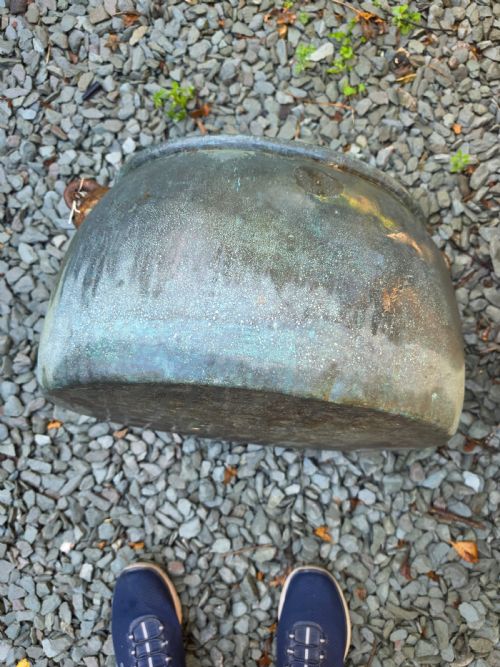
Many of these vessels are robust enough to withstand outdoor use when planted with flowers or small shrubs. Copper and brass resist heavy corrosion well, though iron components may rust if left in standing water.
Ensure adequate drainage inside the vessel to protect the historic base from moisture damage over time.
How can I tell the period?
Dating relies on observing construction methods, handle attachments, and stylistic cues such as hand-riveting or embossed decoration. Mid-nineteenth-century examples frequently feature heavy riveted seams, whereas later Victorian and Arts and Crafts pieces show smoother machine rolling or deliberate hand-beating.
Comparing the form and metal thickness against known period pieces helps confirm the date of manufacture.