

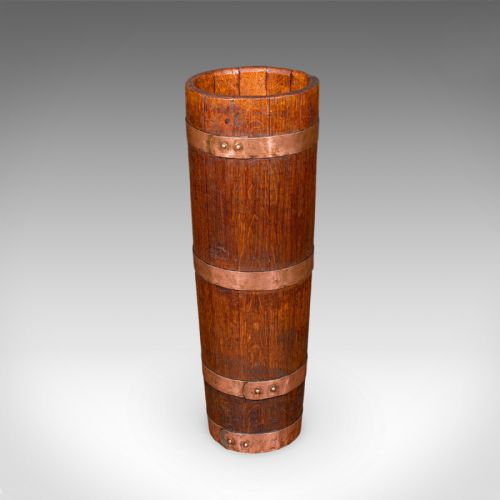


Victorian Coopered Oak Barrel
These victorian coopered oak barrel pieces are sturdy hallway and bar items built to hold sticks, umbrellas, and wine.
Victorian Coopered Oak Barrel
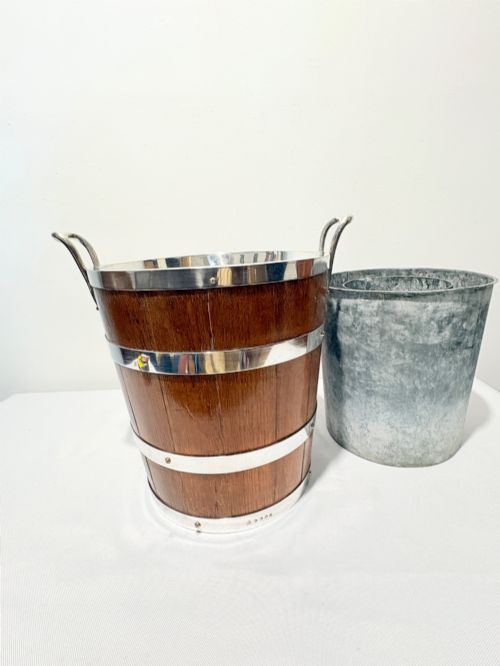
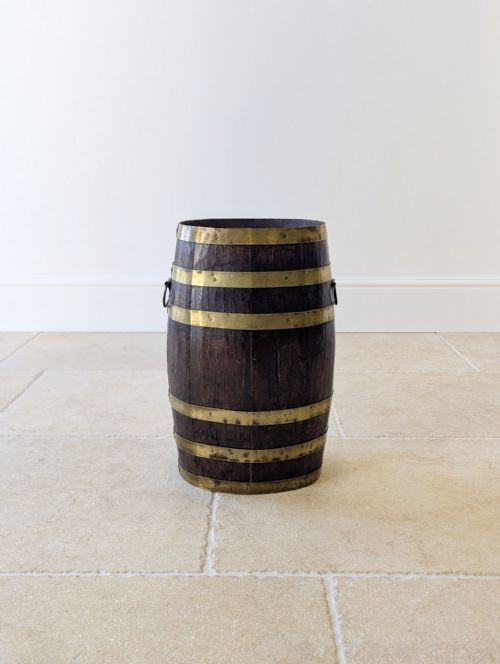
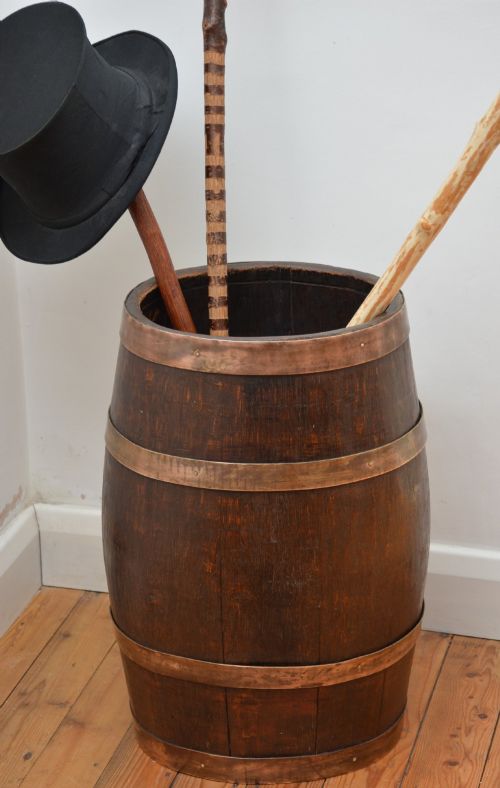
A victorian coopered oak barrel takes the form of sturdy umbrella stands, stick stands, and wine coolers intended for domestic service. Most examples seen here function as hallway stick and umbrella stands, or as barware ice buckets and wine coolers.
The objects stem predominantly from the Victorian and Edwardian periods, stretching across the nineteenth and early twentieth centuries. English country house origins appear frequently in these forms, reflecting functional utility in grand and modest settings alike.
How they were made
Makers built these pieces using solid oak staves shaped by hand and bound together with metal hoops of brass, copper, iron, or silver plate. This traditional cooperage technique creates the curved barrel silhouette characteristic of every piece.
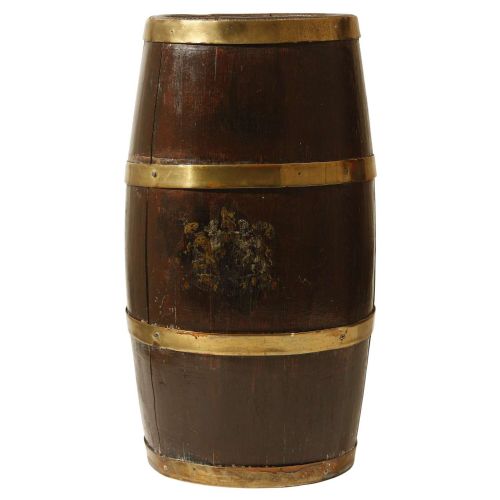
Interior components include ceramic creamware liners in ice buckets, whilst umbrella stands often incorporate metal stick loops and heraldic elements such as an English coat of arms.
Victorian Coopered Oak Barrel Retail Price Guide 2026
Typical asking prices for victorian coopered oak barrel among the pieces listed under this phrase on Sellingantiques today, from the lower quarter to the upper quarter. They describe what is for sale here now, not the wider market.
At least one oak barrel stand proudly bears an English coat of arms, ready to inspect your lineage before you drop off your brolly.
What varies in quality
The standard of timber selection and the finish of the metal mountings distinguish individual pieces. Heavy brass bands and integrated umbrella loops indicate a sturdier build than plain iron hoops.
The presence of original ceramic liners in wine coolers and detailed additions like painted coats of arms elevate the craftsmanship of the vessel.
The Victorian Coopered Oak Barrel Glossary
- Coopered
- Constructed from curved wooden staves fitted together to form a hollow vessel. This method relies on tight joints and exterior bands rather than glue.
- Staves
- The narrow vertical strips of oak that form the sides of a barrel. Each piece is tapered to create the curved profile.
- Creamware
- A fine earthenware body with a pale yellowish glaze, frequently utilised for interior liners in barware. It provides a clean surface for holding ice and bottles.
- Stick Loop
- A metal ring or divider mounted above the barrel to keep walking canes and umbrellas upright. These fittings prevent items from slipping sideways.
Victorian Coopered Oak Barrel: Frequently Asked Questions
How do I clean a coopered oak barrel?
Wipe the oak surfaces with a dry or lightly dampened cloth to preserve the polished finish. Avoid soaking the wood, as excessive moisture can weaken the staves and metal bands.
Polish brass or copper hoops occasionally with a suitable metal cleaner if you prefer a brighter shine. Leaving the metal unpolished allows a darker natural patina to develop over time.
Were these barrels used for drinks or umbrellas?
Both functions appear across these pieces, depending on the internal fittings and overall scale. Shorter vessels with ceramic creamware liners operate as wine coolers and ice buckets.
Taller barrels fitted with metal loops serve as umbrella and stick stands for hallways. The underlying construction remains similar for both purposes.
Can I place wet umbrellas inside them?
Original stick stands generally accommodated wet umbrellas, though modern users often insert a small plastic tray inside the base to protect the old wood. Checking the interior condition helps determine whether direct moisture is appropriate.
Allowing standing water to sit inside unlined wooden barrels can cause the timber to swell or rot. Using a discreet liner preserves the structural integrity of the base.
How do I date a victorian oak barrel?
Dating relies on the style of the metal mounts, the type of timber, and any accompanying hallmarks or construction details. Pieces from the mid nineteenth century often feature heavier brass bands and simpler forms.
Later Victorian and Edwardian examples may incorporate silver plated elements or specific ceramic liners. Comparing the joinery with dated pieces in the archive helps narrow down the decade of manufacture.