



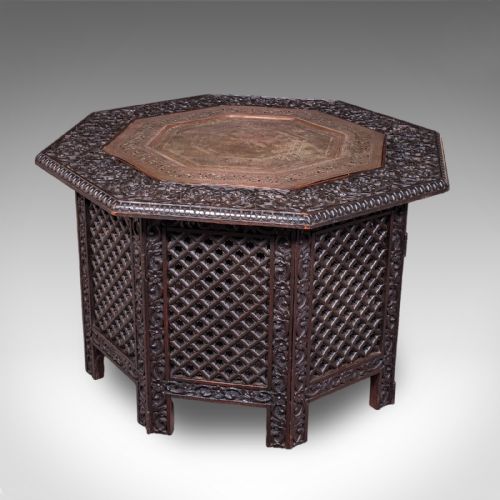

Victorian Colonial Table
These pieces combine domestic British utility with intricate craftsmanship from workshops across the nineteenth-century Empire, offering rich timbers and folding forms that suit modern rooms.
Victorian Colonial Table
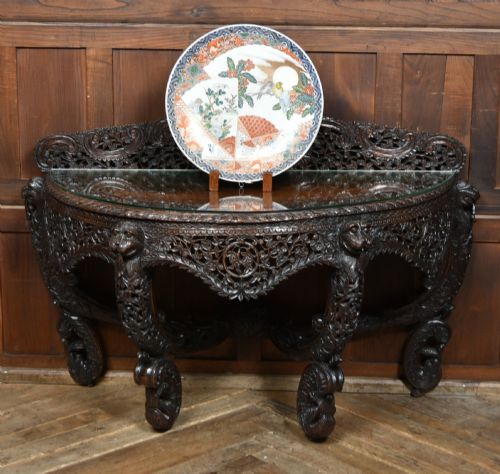
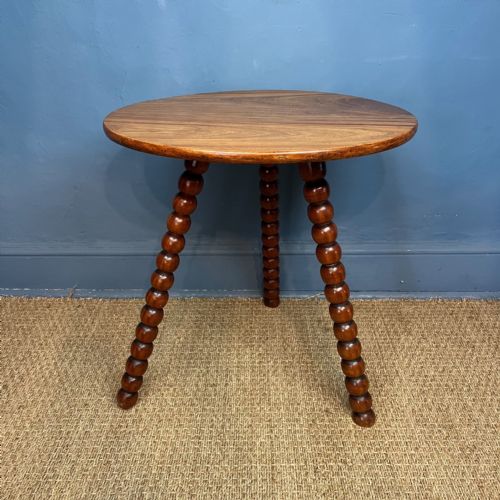
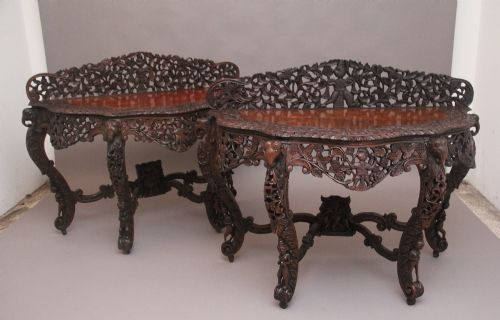
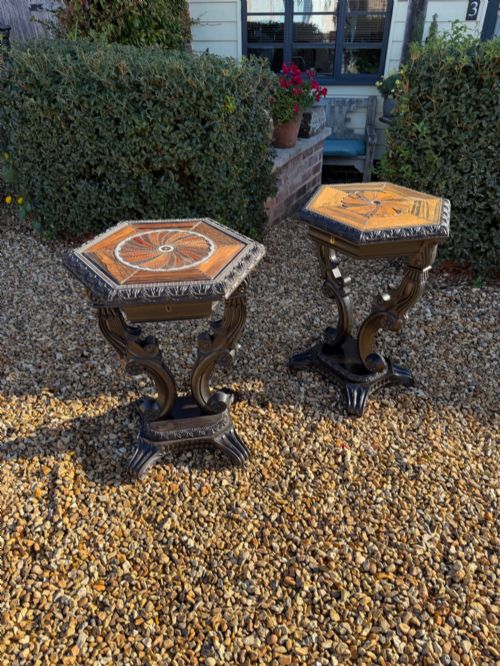
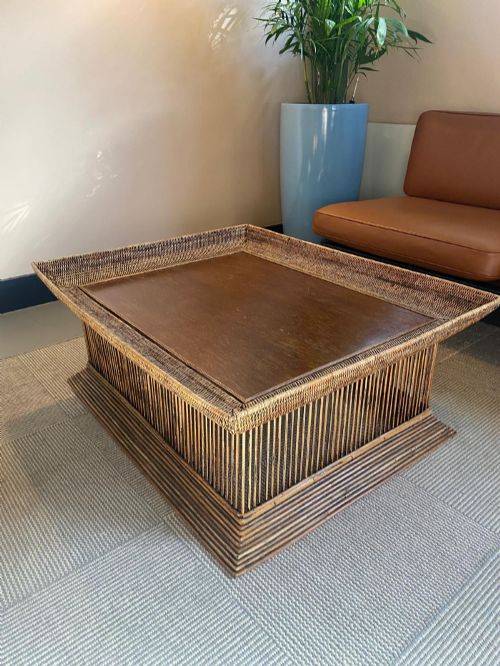
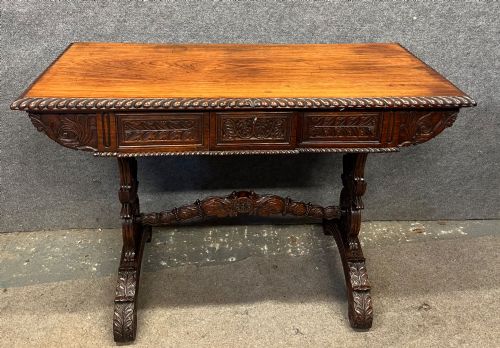
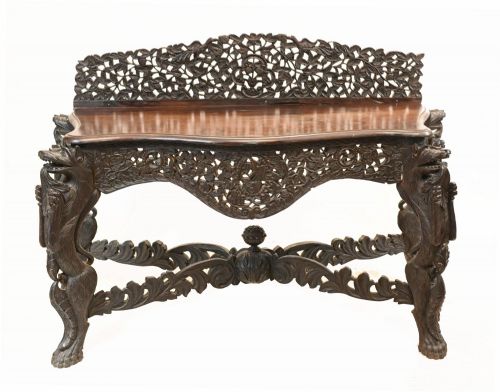
A victorian colonial table bridges formal nineteenth-century interior design and practical overseas administration, spanning versatile occasional pieces, side tables, and folding campaign furniture. Buyers encounter forms ranging from octagonal Hoshiarpur tables with detailed inlay to sturdy teak desks and intricately carved padauk consoles.
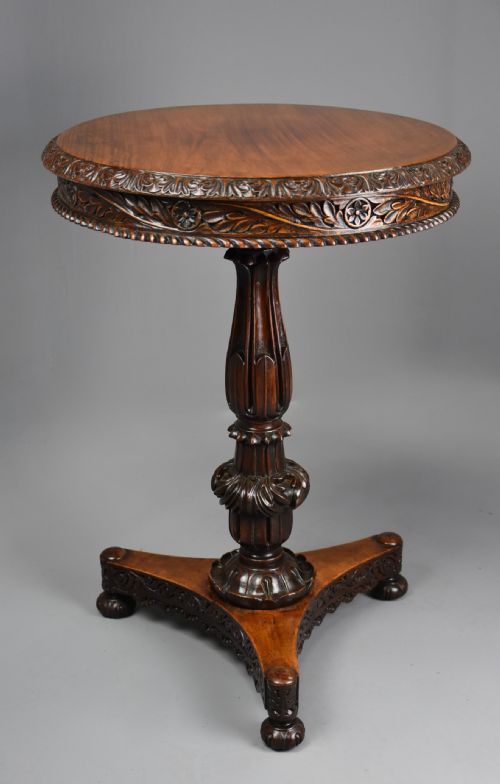
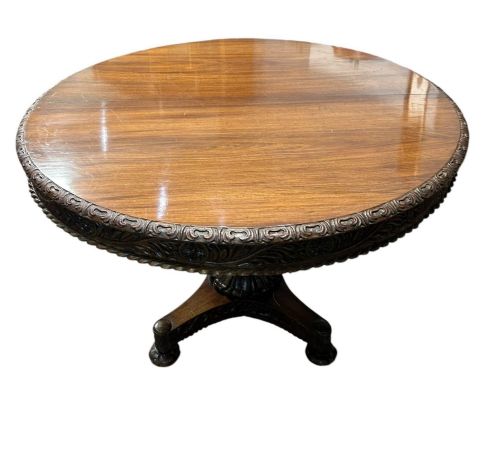
The regional origins are broad, drawing heavily on Anglo-Indian, Burmese, Ceylonese, and New Zealand workshops. Octagonal elephant tables and tilt-top centre tables dominate the selection, often showcasing deep relief carving and specialised regional timber work.
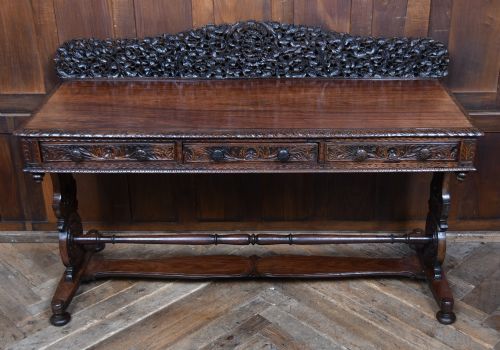
Many survivors reflect military or travelling origins, utilising campaign designs that disassemble or fold flat for transport. Alongside these portable examples, heavier library tables and occasional stands reveal how expatriate craftsmen adapted traditional British furniture forms to local materials.
Materials and construction
Makers relied upon dense tropical hardwoods such as teak, padauk, rosewood, ebony, and mahogany to withstand varied climates and allow for deep, crisp carving. These timbers provide the foundational strength for intricate pierced foliage and animal motifs without splintering.
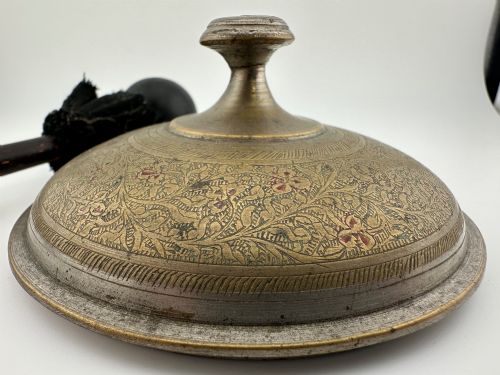
Surface enrichment frequently involves contrasting inlays of bone, mother-of-pearl, and brass wire, set flush into dark wood grounds. Campaign variations incorporate functional metal binding, recessed handles, and folding mechanisms designed for rapid packing.
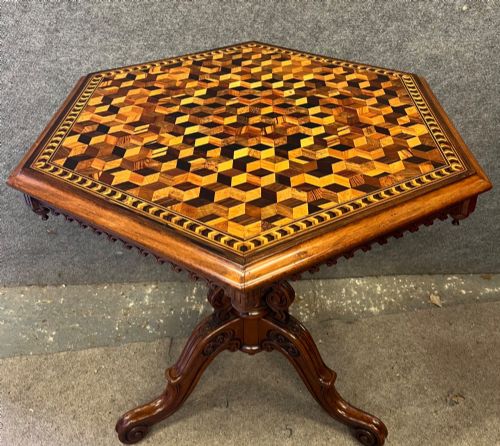
Marquetry examples demonstrate meticulous geometric arrangement, piecing together dozens of native specimen woods to create elaborate geometric or pictorial tabletop surfaces.
Victorian Colonial Table Retail Price Guide 2026
Typical asking prices for victorian colonial table among the pieces listed under this phrase on Sellingantiques today, from the lower quarter to the upper quarter. They describe what is for sale here now, not the wider market.
Distinctions in craftsmanship
The depth and definition of the hand-carved relief dictate the artistic standard of a piece, separating shallow, hasty cutting from patient, undercut foliage and expressive animal figures. Crisp borders and secure, flush inlay work indicate superior workshop execution.
Structural integrity remains paramount, particularly in folding tables and tilt-top mechanisms where joints must operate smoothly without excessive play. The choice and matching of timber veneers, especially in multi-wood specimen tables, reflect the ambition of the maker.
Anton Seuffert
The Victorian Colonial Table Glossary
- Anglo-Indian
- Furniture made in India during the British period, combining British forms with local decorative carving. It often utilises dense native hardwoods.
- Campaign furniture
- Portable pieces designed for military officers or travellers, featuring folding frames, removable legs, and recessed brass mounts. They prioritize strength and compact storage.
- Padauk
- A heavy, durable reddish-brown tropical timber favoured by colonial makers for its stability and suitability for deep carving. It darkens richly with age.
- Specimen wood
- A tabletop or surface composed of numerous different native and exotic timbers arranged in geometric patterns or pictures. This technique highlights botanical variety.
- Tilt-top
- A table mechanism allowing the top to pivot vertically for storage against a wall when not in use. It is commonly found on round occasional and centre tables.
- Teak
- A highly durable, oil-rich Asian hardwood resistant to moisture and pests. It serves as a primary structural material for campaign trunks and colonial tables.
Victorian Colonial Table: Frequently Asked Questions
What defines a colonial table?
These pieces represent British furniture patterns adapted and manufactured within nineteenth-century colonies using indigenous materials and local carving traditions. They merge familiar domestic forms with distinct regional craftsmanship.
Makers utilised dense tropical woods like padauk and rosewood, applying intricate relief work or specialised inlay that reflects the cultural interchange of the period.
How were folding campaign tables used?
Campaign furniture was built for British officers and administrators on the move, requiring sturdy construction that could be quickly dismantled and packed into trunks. Hinges, folding bases, and removable legs facilitated transport across difficult terrain.
In contemporary spaces, these folding designs offer flexible functionality as occasional or side surfaces that adapt easily to changing room layouts.
What is an elephant table?
An elephant table is an octagonal or circular occasional piece featuring carved wooden elephant heads or tusks as structural supports or decorative motifs. Originating primarily in the Bombay Presidency during the late nineteenth century, they showcase regional carving skills.
These tables typically combine geometric pierced panels with figural elements, creating a distinct silhouette within Victorian interiors.
How do I care for tropical hardwood?
Maintain stable indoor humidity levels to prevent the dense timbers, such as teak and rosewood, from experiencing movement or cracking at the joints. Avoid placing these tables near direct heat sources or strong sunlight that might dry out the wood.
Dust regularly with a soft, dry cloth and occasionally apply a minimal amount of appropriate furniture wax to nourish the surface without building up residue.