


Victorian Coastal Scene
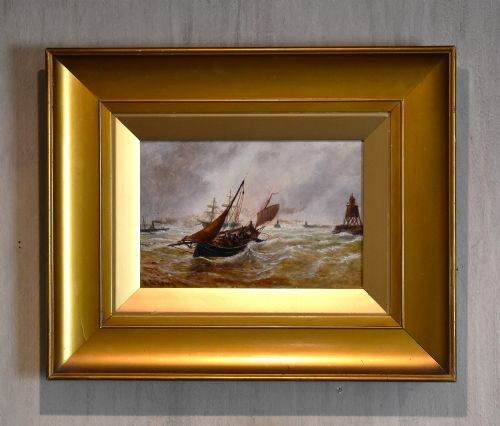
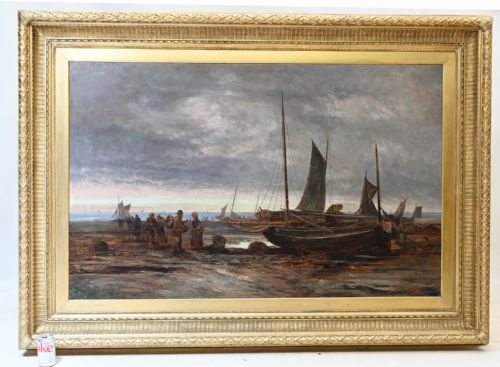
A victorian coastal scene brings the dramatic sea stacks, bustling harbours and quiet fishing villages of the nineteenth century straight into a room.
Victorian Coastal Scene
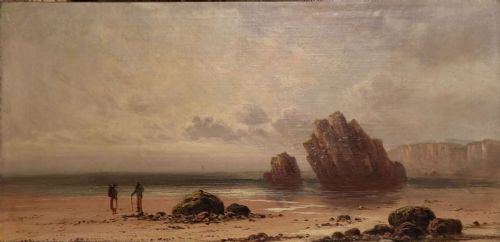
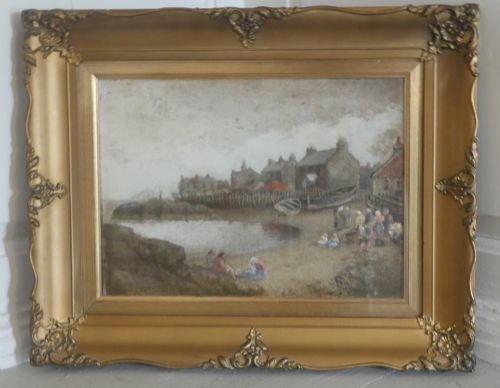
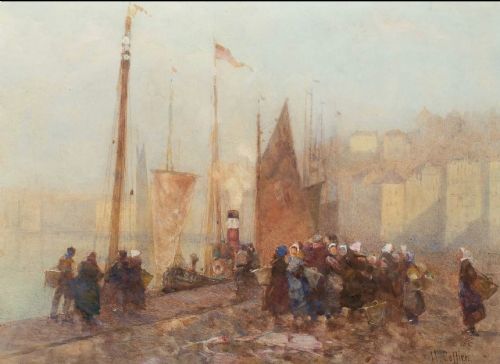
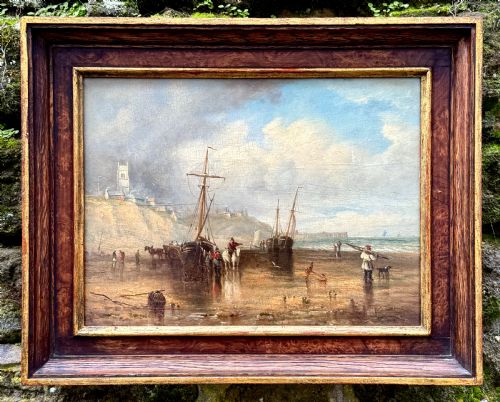
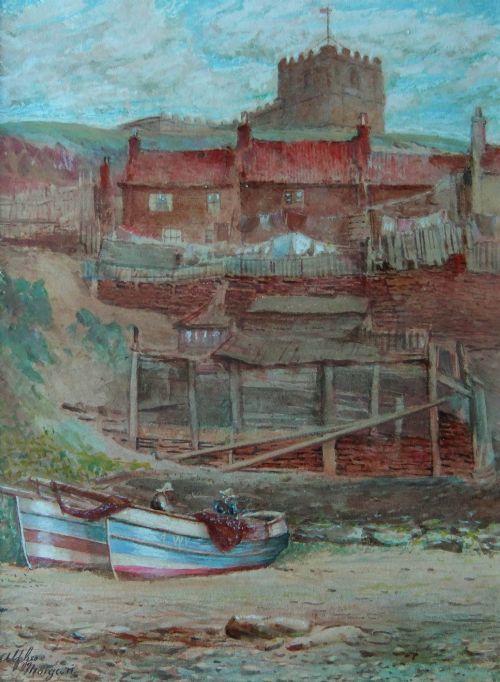
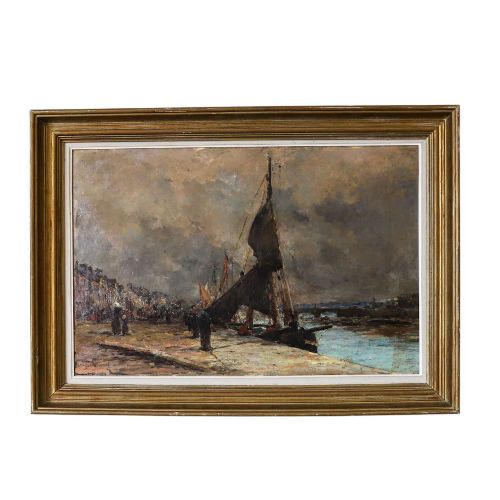
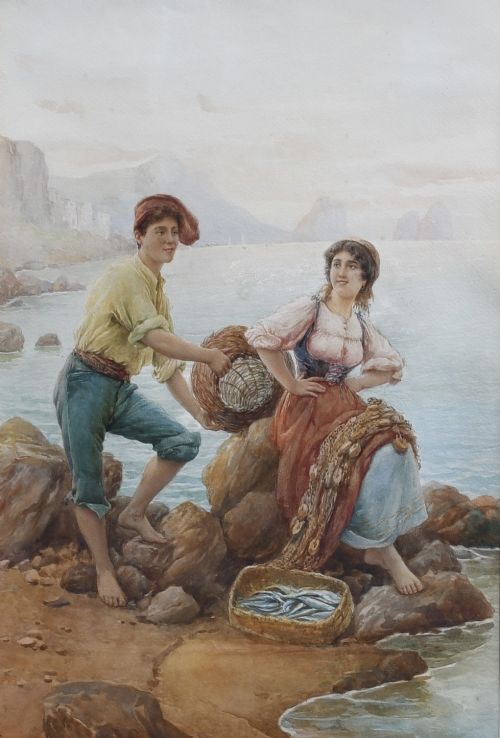
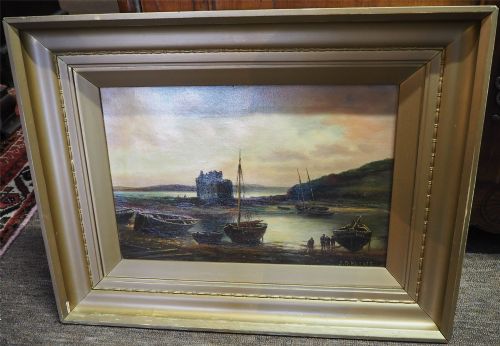
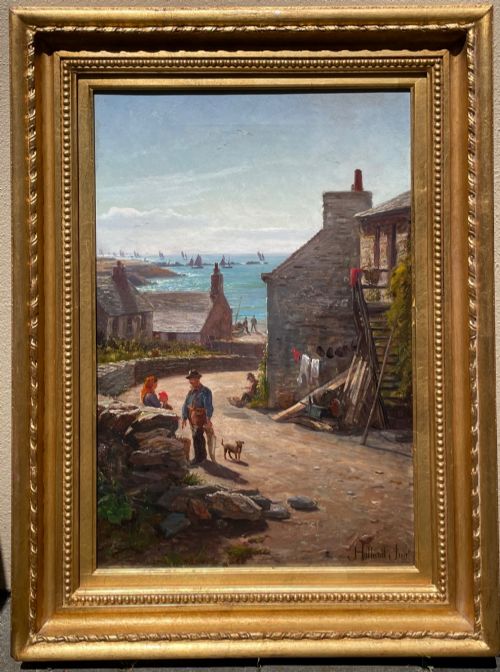
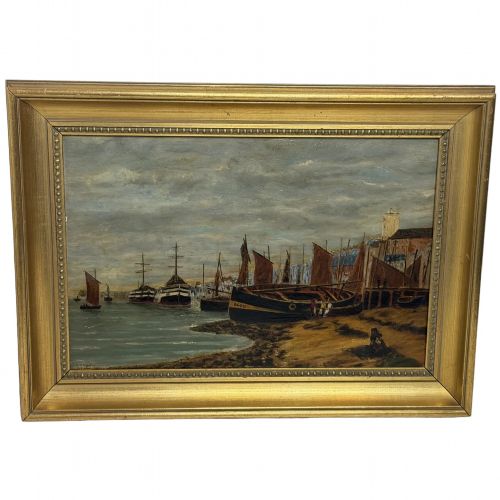
A victorian coastal scene depicts the maritime life, rugged shorelines and busy ports of the nineteenth century through traditional painting and watercolour. These works capture everything from calm sandy beaches and distant abbeys to stormy seas with fishing boats battling the elements. Buyers searching for a victorian coastal scene will encounter framed works recording specific locations such as Whitby, St Ives, Boulogne and the Isle of Man.
Most pieces date from the nineteenth century and adopt styles ranging from British Impressionism to Victorian Realism and Marine Art. Oil paint on canvas or panel and delicate watercolours on paper form the primary mediums of these historic works. Many arrive preserved in their original gilt wood frames, complete with gesso detailing that complements the maritime subject matter.
How They Were Made
Artists painted these scenes using oil paint on canvas, wood panels, or card, alongside watercolours applied to paper. Canvas works often required stretched linen or cotton primed with gesso to hold heavy layers of pigment, while watercolours relied on quick washes of translucent paint. Wooden supports and sturdy cardboard provided alternative bases for smaller studies and plein air coastal sketches.
Framing played an integral part in the presentation of these artworks, with makers enclosing canvases in ornate gilt wood frames embellished with moulded gesso ornaments. These frames enhanced the visual depth of the maritime views, protecting the delicate edges of the oil on canvas or watercolour paintings from environmental wear.
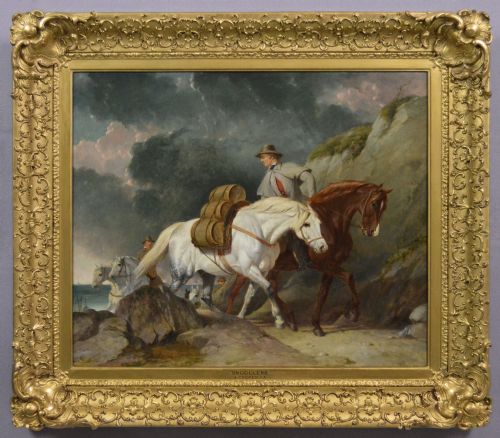
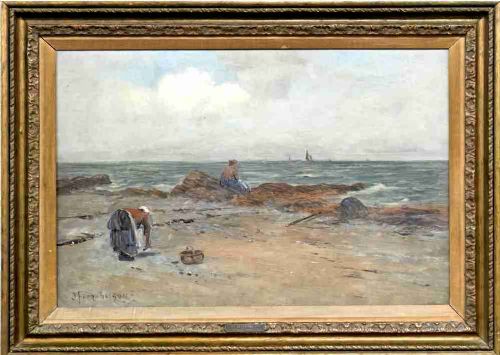
Several Victorian coastal canvases quietly smuggle horses, dogs, and oyster pickers into the spray of the North Sea.
What Varies In Quality
The sophistication of the brushwork and the precision in capturing light upon the water separate the finest examples from standard decorative works. Superior compositions display a keen understanding of atmospheric perspective, rendering turbulent waves, distant sea stacks and atmospheric coastal skies with convincing depth and texture. Weaker pieces often rely on formulaic arrangements and heavy, uninspired applications of pigment that lack natural movement.
Provenance and documentation also distinguish exceptional items, particularly when signed by known nineteenth-century marine artists or exhibited with verified local historical contexts. The preservation of the original gilt wood and gesso frame adds considerable integrity to a piece, whereas heavily restored canvases or mismatched later frames diminish the historical cohesion of the artwork.
James Orrock·William Banks Fortescue·Hector Caffieri·Thomas Creswick·Alfred G Morgan·Abraham Cooper RA·Joseph Farquharson RA·Carlo Ferranti·John Holland·Bernard Benedict Hemy·Abraham Hulk I·William Edward Webb·Gustave De Bréanski·James Kyd·Thomas Bush Hardy·Colin H Greenwood·T S Wallis·George Gregory·William Pitt·James Webb·Claude Thomas Stanfield Moore·Frederick William Hattersley·James Thomas Watts·Kate E Booth·Nathaniel Mills
The Victorian Coastal Scene Glossary
- Seascape
- A work of art depicting the sea, coastal views, ships, or marine activities. These compositions focus primarily on the expanse of water and atmospheric coastal weather.
- Gesso
- A plaster-like mixture applied to wood or canvas to prepare a smooth surface for painting, or moulded onto frames to create relief decoration. It provides a stable base for rich gilt finishes.
- Gilt Wood
- Wood treated with a thin layer of gold leaf or metallic gilt paint, frequently used for ornate nineteenth-century picture frames. This finish catches candlelight and natural daylight to highlight the artwork.
- Watercolour
- A painting method in which the pigments are suspended in a water-based solution, typically applied to paper. It allows for translucent washes and luminous depictions of coastal light.
Victorian Coastal Scene: Frequently Asked Questions
What subjects appear in these coastal paintings?
These works feature rocky beaches, bustling harbour entrances, fishing boats landing their catch, and quiet coastal paths. Artists documented specific British and European locations alongside dramatic open seas.
Scenes frequently incorporate human elements, including figures spreading nets, oyster pickers, and fishermen with horses navigating shores and cliffs.
How do I care for antique oil and watercolour works?
Oil paintings on canvas require stable indoor humidity and protection from direct sunlight to prevent the pigment and canvas from degrading. Keeping them away from excessive heat sources preserves the structural integrity of the wood and gesso frames.
Watercolours on paper demand strict protection from bright light, which can fade the delicate pigments permanently. Displaying them behind glass in rooms with controlled light levels ensures their long-term survival.
How can I tell a watercolour from an oil painting?
Watercolours are painted on paper and typically sit beneath protective glass to prevent moisture damage to the delicate water-soluble pigments. They display a translucent quality where the texture of the paper shows through the paint.
Oil paintings utilise heavier, opaque paints applied to canvas, wood panels, or card, creating a textured surface that often remains unglazed. The paint layer feels substantial and can exhibit visible brushstrokes or impasto.
Where were these maritime scenes typically painted?
Artists travelled along various British and European coastlines, recording working ports like St Ives, Whitby, Boulogne, and North Shields. They also found inspiration in the landscapes of the Isle of Man and Dutch waterways.
Many painters worked plein air directly on the shore or aboard boats to capture authentic marine lighting and the daily routines of coastal communities.