



Framed Maritime Seascape
Framed maritime seascape works capture historical vessels and coastal views through traditional painting mediums.
Framed Maritime Seascape
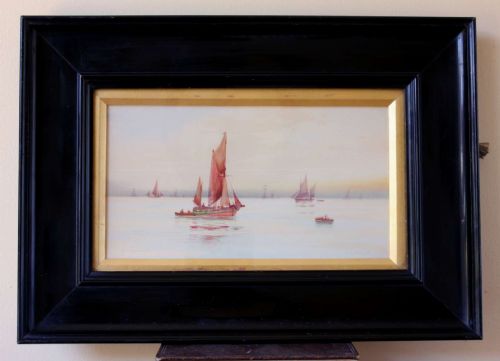
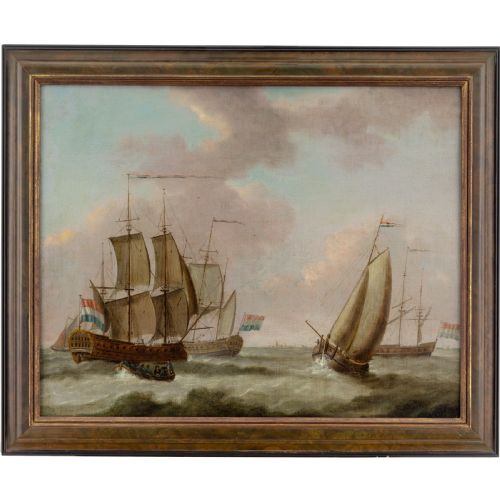
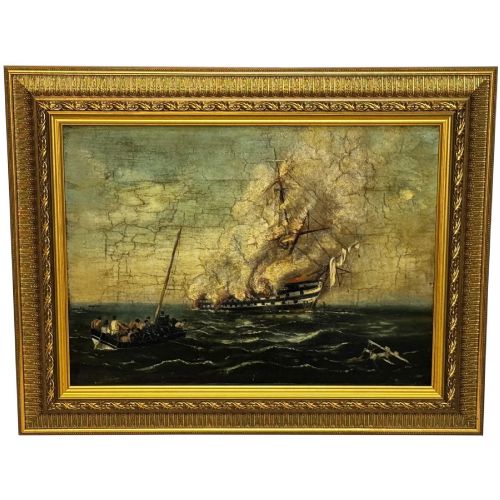
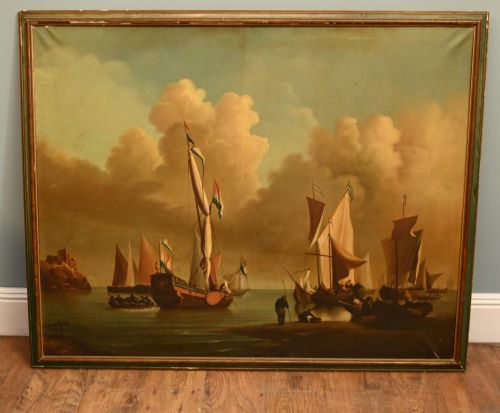
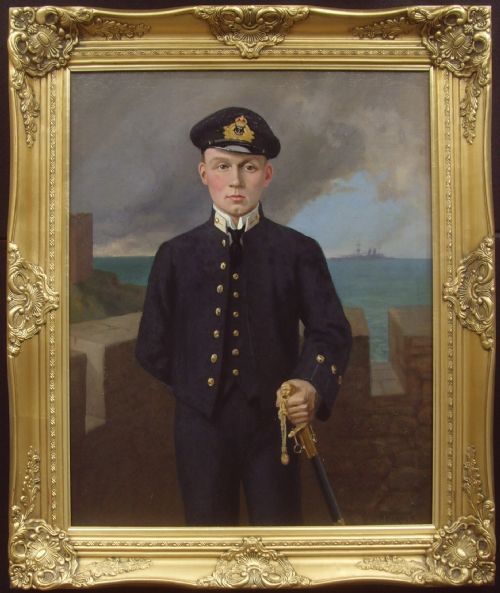
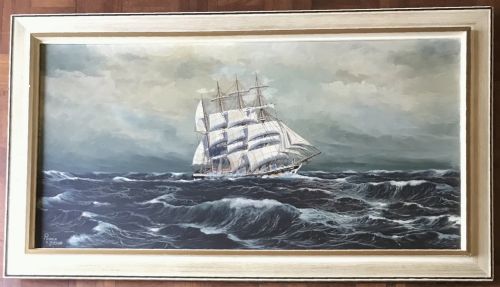
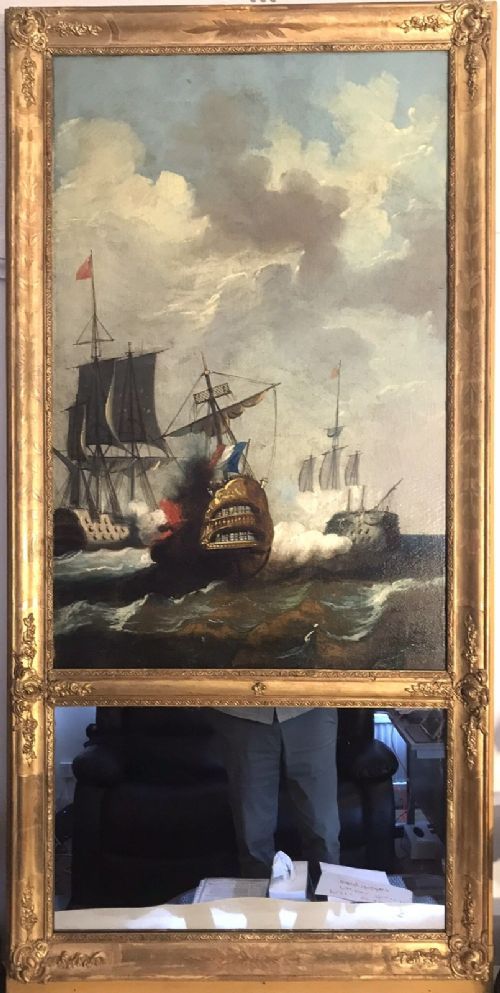
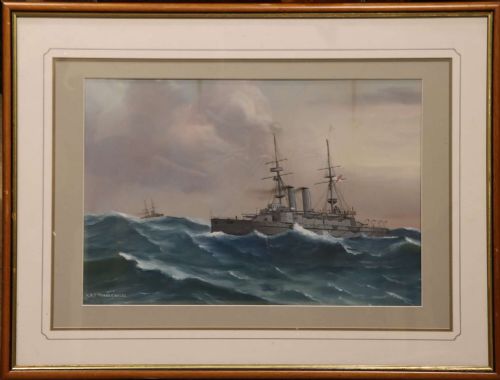
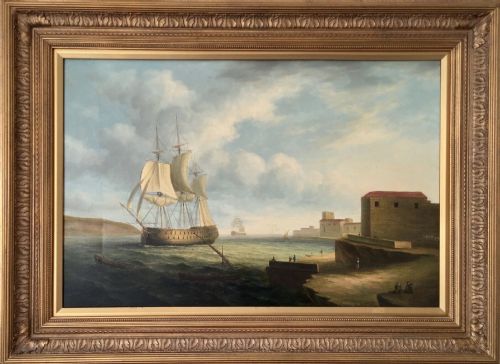
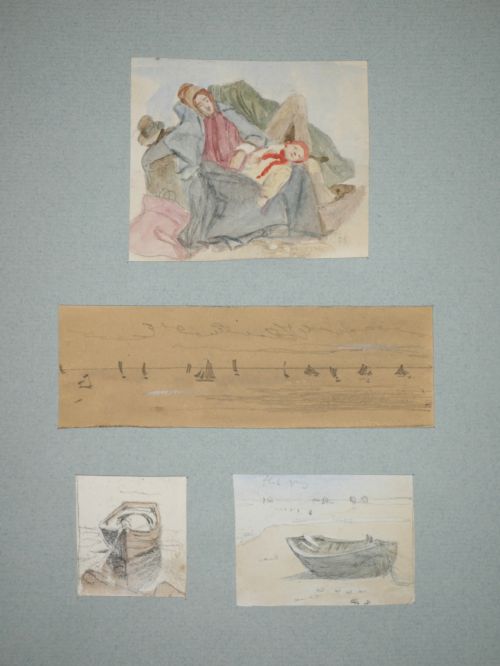
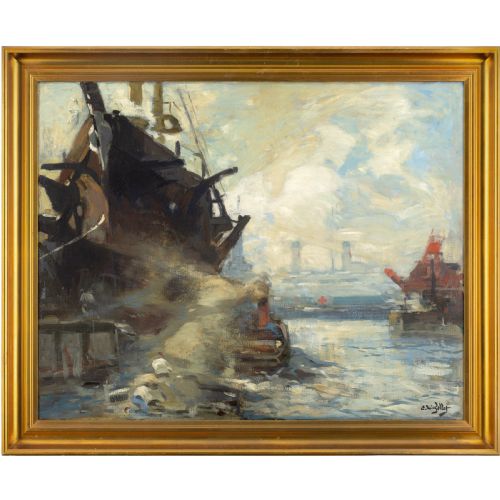
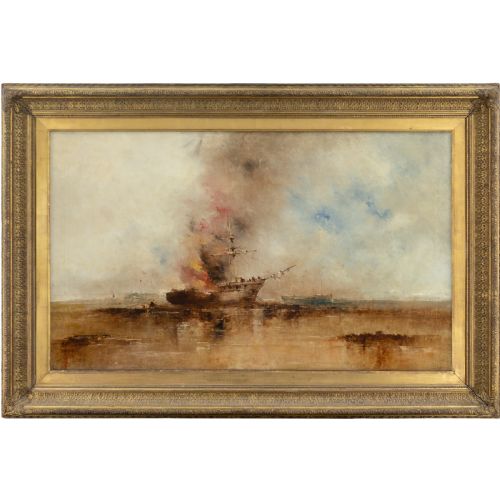
A framed maritime seascape depicts coastal views, naval battles, harbour scenes and ships upon the water, drawn from periods such as the nineteenth century and the Edwardian era. Buyers encounter works executed in oil on canvas, oil paint on board, and watercolour on paper, often preserved within original wooden or gilt frames.
The subjects range from tranquil depictions of fishing boats near Brighton or St Ives to dramatic scenes of steamships and three-masted schooners navigating rough seas. Many pieces record specific historical vessels, such as naval warships or merchant ships operating near British and European ports.
Most examples originate from the nineteenth and early twentieth centuries, reflecting diverse styles including British Impressionism and Victorian marine art. Works span from intimate watercolours to large panoramic oil paintings depicting locations from the Thames to Venice.
Materials and construction
Artists utilised oil paint applied to canvas, wood panels or boards to build textured depictions of water, sky and shipping. Watercolours on paper offer a lighter medium often deployed for detailed coastal sketches and harbour views.
Protective framing typically combines carved wood with gilt finishes, housing the canvas or paper alongside glass in the case of works on paper. These surrounds secure the paintings while framing the subject matter for display.
Some nineteenth-century artists clearly had more enthusiasm for dramatic waves than accurate naval architecture.
Distinctions in execution
Quality rests upon the artist's command of light, movement and maritime architecture, separating competent records from works of high artistic skill. Superior pieces capture the dynamic weight of rough seas and the precise rigging of vessels with confident brushwork.
The integrity and period compatibility of the wooden or gilt frame also influence the overall standard, alongside the condition of the underlying canvas or paper surface.
James Orrock·Eugène-Louis Gillot·William McAlpine·Charles Edward Dixon·Eric Tufnell·William Banks Fortescue·John Rose Miles·James Kay·Frank Watson Wood·William Broome·Bernard Gribble·Bonaventura Peeters·Frank William Scarbrough·Peter Brannan·Francis Moltino·Bernard Benedict Hemy·Thomas Creswick·Lucy Pratt·Willem Bos·John Wilson Carmichael
The Framed Maritime Seascape Glossary
- Gilt wood
- Wood coated with a thin layer of gold leaf or metallic paint. This finish creates a reflective border around nineteenth-century paintings.
- Watercolour
- A paint consisting of pigment suspended in a water-based solution applied to paper. It is frequently utilised for lighter coastal and marine sketches.
- Oil on canvas
- Pigment mixed with drying oil applied to a stretched fabric support. This combination dominates nineteenth-century marine art.
- Panel
- A flat piece of wood used as a rigid surface for painting. Artists utilised panels for smaller maritime oil portraits and harbour scenes.
- Gouache
- An opaque water-based paint containing pigment and a binding agent. It provides denser colour coverage than standard watercolour.
Framed Maritime Seascape: Frequently Asked Questions
How do I date a framed maritime seascape?
Dating relies on examining the style of the vessel, the painting technique, and the framing materials used. Nineteenth-century works often feature specific riggings and clothing styles that anchor them to a particular decade.
Signatures, artist registry records, and the composition of the canvas or wood panel provide further clues. Comparing the piece to documented works from known marine artists helps narrow down the production period.
Where should I hang a marine painting?
Choose a wall away from direct sunlight and excessive moisture to protect the oil paint, canvas, or watercolour paper. Placing the piece at eye level in a principal room allows the details of the shipping and coastal atmosphere to be appreciated.
Ensure the weight of the frame is properly supported by appropriate wall fixings. Matching the wood or gilt finish of the frame to existing interior woodwork enhances the display.
What is the difference between oil and watercolour marine art?
Oil paintings utilise pigments suspended in drying oil on canvas or board, creating rich textures and deep tones suited for stormy seas. Watercolours employ water-based pigments on paper, offering a more delicate, translucent depiction of light and atmosphere.
Oils are generally heavier and require sturdy wooden frames, whereas watercolours need glass protection to prevent moisture damage. Both mediums capture maritime subjects but achieve entirely different visual effects.
How do I identify different types of historical ships?
Identifying vessels depends on counting the masts and observing the arrangement of the sails, such as square-rigged or fore-and-aft configurations. Three-masted barques and schooners possess distinct structural profiles that differentiate them from steamers and warships.
Naval vessels often display specific armament, flags, or funnel placements characteristic of their era. Historical records and maritime art references assist in confirming exact vessel types.