





Victorian Coastal Landscape Painting
These nineteenth-century coastal landscape painting works capture shorelines, harbours and maritime life through traditional brushwork and atmospheric observation.
Victorian Coastal Landscape Painting
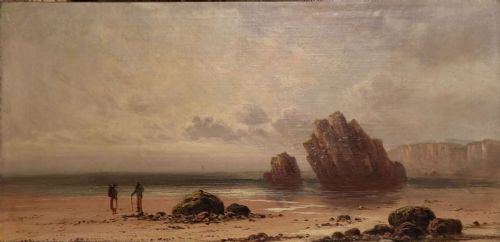
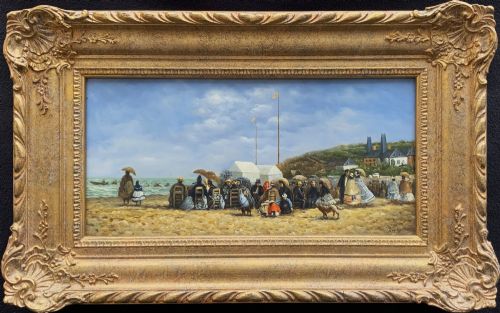
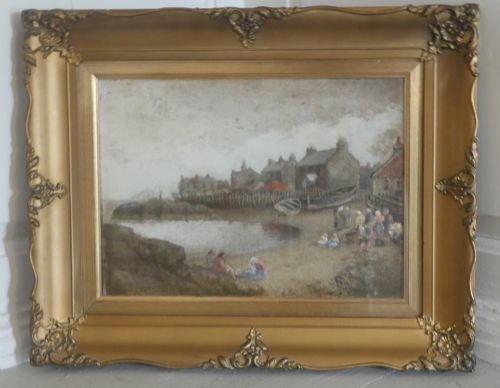
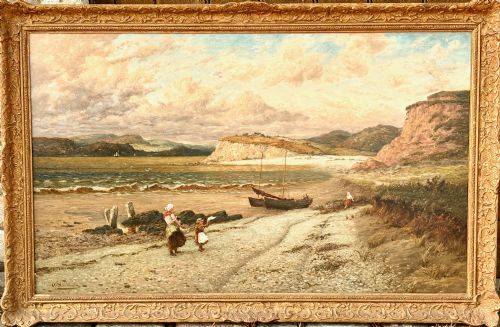
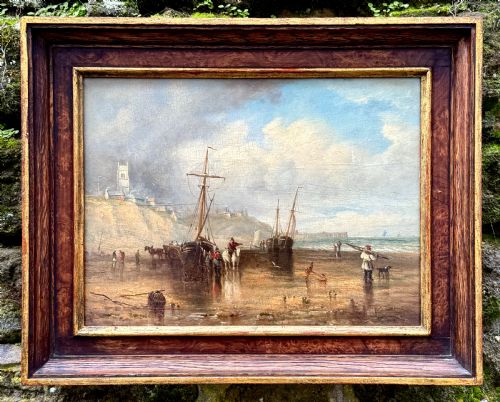
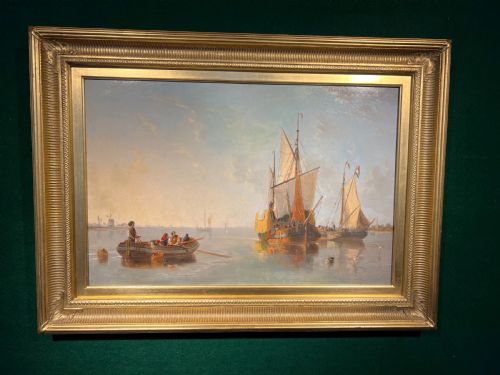
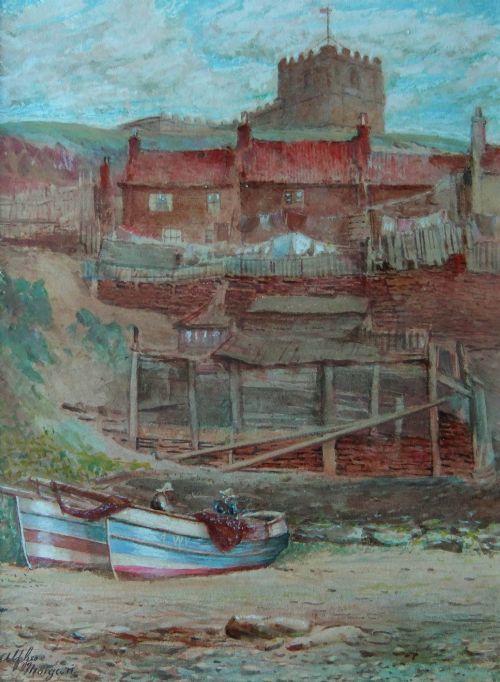
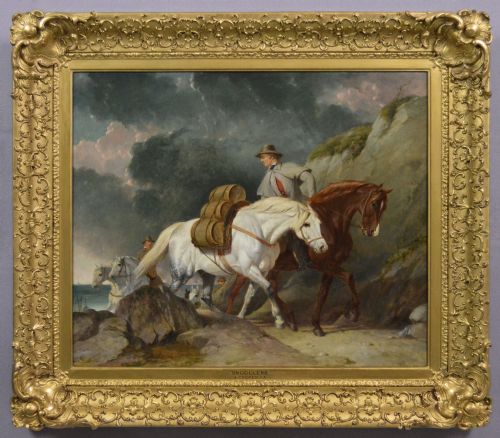
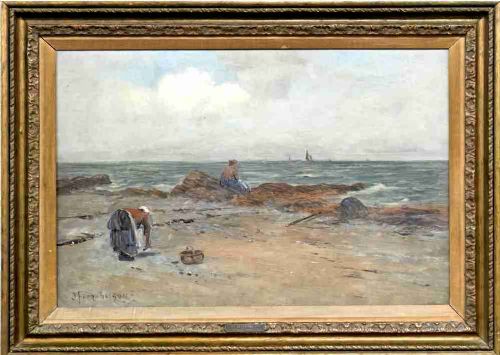
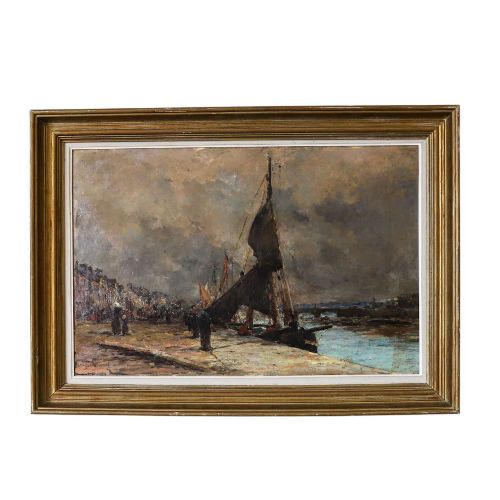
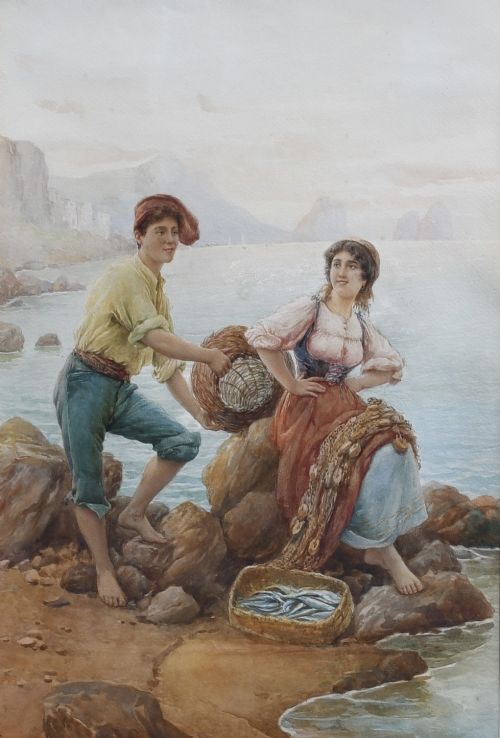
A Victorian coastal landscape painting records maritime scenes, fishing harbours, and shorelines produced during the nineteenth century and the early twentieth century. You will frequently encounter watercolours on paper and oil paintings on canvas depicting specific locations across Britain and Europe.
The subjects range from busy working ports with fishing boats to quiet sandy bays, cliffs, and coastal paths. Artists often documented local activities such as landing the catch, gathering oysters, or vessels at anchor.
These works reflect a strong nineteenth-century interest in marine art, topographical accuracy, and the changing moods of the sea. Many examples are housed within their original gilt wood frames.
How they were made
Artists utilised oil paint on canvas or board, and watercolour pigment on paper, building up compositions through layered washes or textured brushstrokes. Oil paintings allowed for rich impasto on large surfaces, while watercolours offered delicate transparency.
The finished paintings were typically mounted behind glass for works on paper or secured in stretcher frames for canvas, then enclosed in decorative gilt wood mouldings.
Watch for nineteenth-century artists who braved gale-force winds on cliff edges just to catch a rogue wave on paper.
What varies in quality
The standard of a Victorian coastal landscape painting depends upon the artist's ability to handle light, atmosphere, and maritime perspective convincingly. Finer works display confident brushwork, accurate rendering of water and shipping, and a harmonious palette.
Condition also plays a significant part, distinguishing works with well-preserved pigment and original framing from those requiring restoration or conservation.
James Orrock·William Banks Fortescue·Hector Caffieri·Bernard Benedict Hemy·Thomas Creswick·John Wilson Carmichael·Alfred G. Morgan·Abraham Cooper·Joseph Farquharson·Carlo Ferranti·John Moore of Ipswich·William Henry Williamson·John Holland·Henry Barlow Carter·John Moxon·William Frederick Settle·John Bedloe Goddard·Charles William Adderton·William Edward Webb·Gustave De Bréanski·Sir Thomas Newenham Dean·Arthur Tucker·Thomas Bush Hardy·Stanley Leader·William Greaves
The Victorian Coastal Landscape Painting Glossary
- Watercolour pigment
- A water-soluble medium applied in transparent washes to paper, widely used by nineteenth-century topographical artists.
- Oil on canvas
- A traditional painting medium consisting of pigments bound with an oil drying medium, stretched across a wooden frame.
- Gilt wood
- Carved or moulded timber finished with a thin layer of gold leaf, commonly used for nineteenth-century picture frames.
- Impasto
- Paint applied thickly to a canvas, standing out in relief from the surface to create texture.
- Seascape
- A work of fine art that depicts the sea, coastal views, shipping, or marine subjects.
Victorian Coastal Landscape Painting: Frequently Asked Questions
How do I date a Victorian coastal landscape painting?
You can date these works by examining the artist's recorded active years, stylistic markers, and occasionally inscribed dates or biographical details on the reverse.
Framing styles and materials also provide helpful clues, as many nineteenth-century paintings remain in their original gilt wood mounts.
Where were most nineteenth-century coastal scenes painted?
Artists travelled widely around British and European shorelines, recording active fishing ports, famous landmarks, and rugged cliffs.
Locations frequently depicted include Cornish harbours, Yorkshire coastal towns, and various spots along the south coast.
How should I display a watercolour coastal painting?
Works on paper require protection from direct sunlight and excessive moisture to prevent fading of the watercolour pigments and damage to the paper support.
Displaying them in stable indoor environments away from direct heat sources ensures the preservation of both the painting and its frame.
What is the difference between oil and watercolour marine art?
Oil paintings utilise heavy pigments on canvas or board, allowing for textured brushwork and deep, saturated tones suited to dramatic seas.
Watercolour paintings rely on transparent washes on paper, offering a lighter, luminous quality often used to capture atmospheric coastal light.