


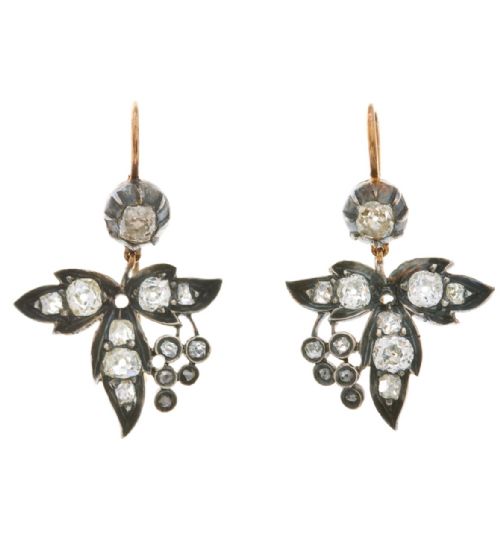

Victorian Cluster Drop Earrings
These Victorian cluster drop earrings balance nineteenth-century craftsmanship with enduring elegance, offering a sophisticated statement for the modern wearer.
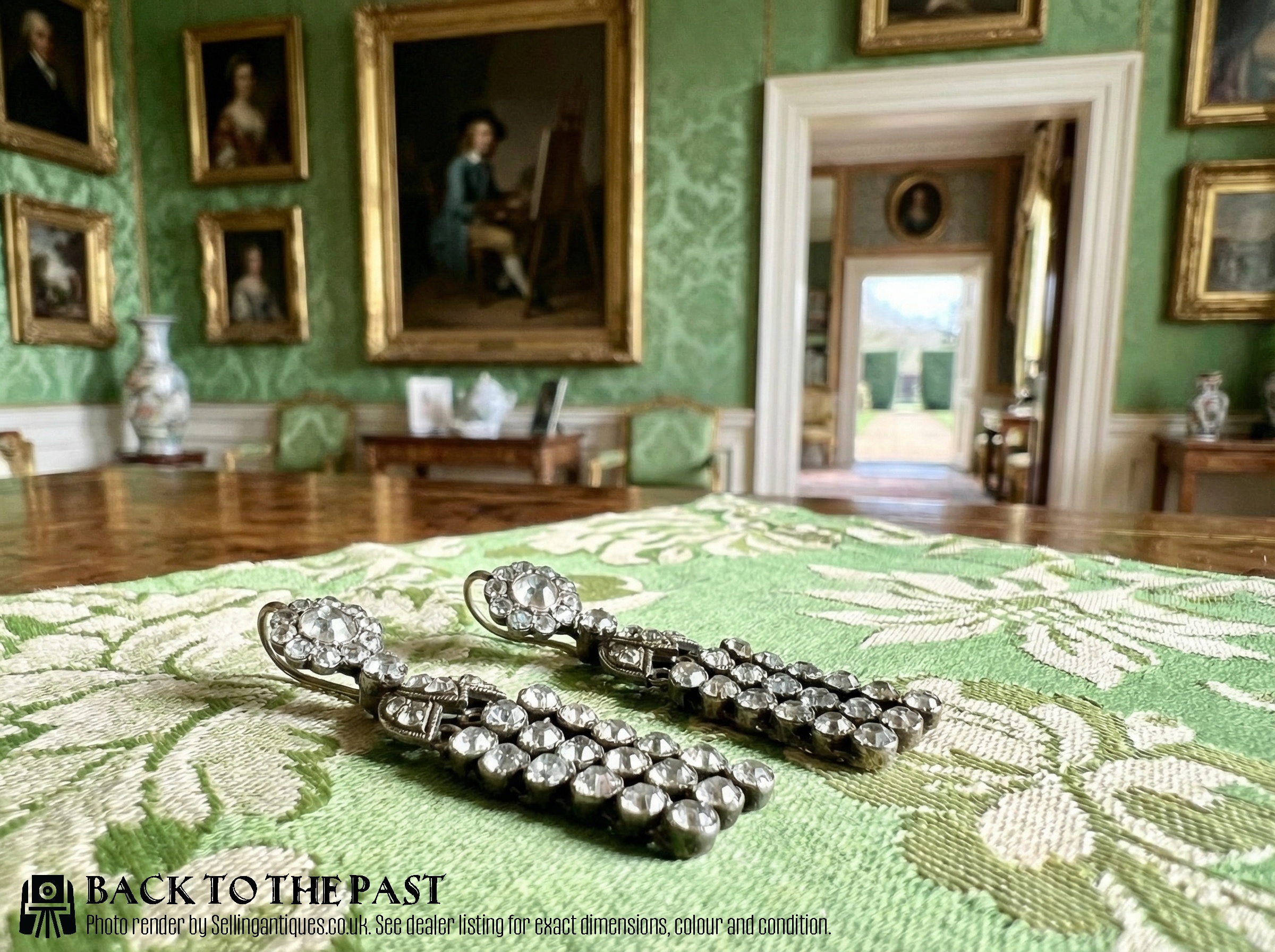
Victorian Cluster Drop Earrings
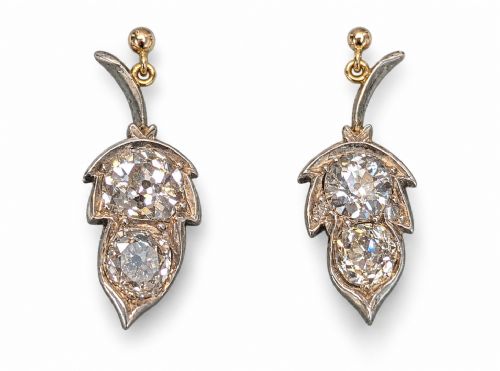
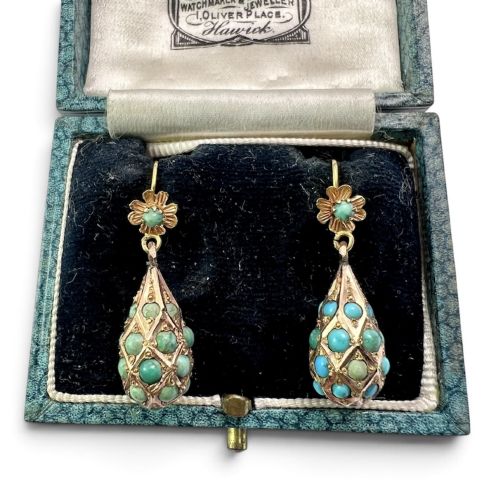
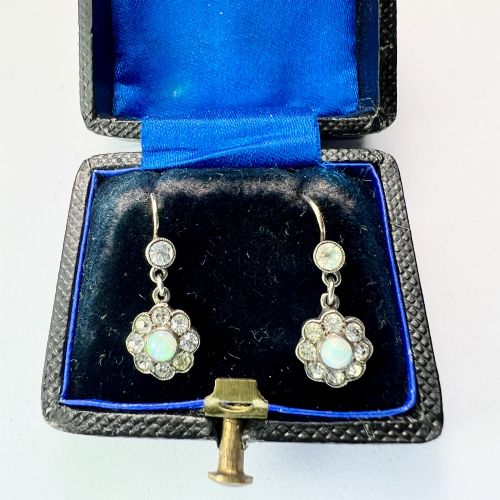
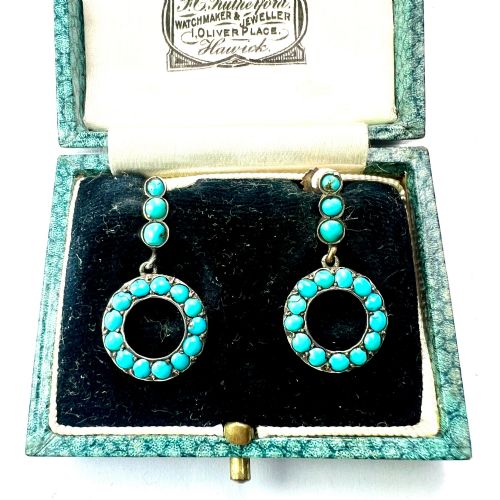
Victorian cluster drop earrings present a distinctive design defined by a central stone or motif encircled by smaller gems, suspended to create movement. The pieces available span the nineteenth century and into the Edwardian era, predominantly showcasing the Victorian aesthetic alongside Aesthetic Movement and Art Deco influences.
The forms range from teardrop flowers and ivy leaves to sunbursts, tassel drops, and elaborate grape clusters. Gold and silver serve as the primary foundations for these dangling configurations, often incorporating hinged mechanisms or screwbacks for secure wear.
Buyers will encounter various configurations featuring central clusters that transition into graceful drops. The integration of botanical and geometric motifs highlights the diverse stylistic expressions popular during the period.
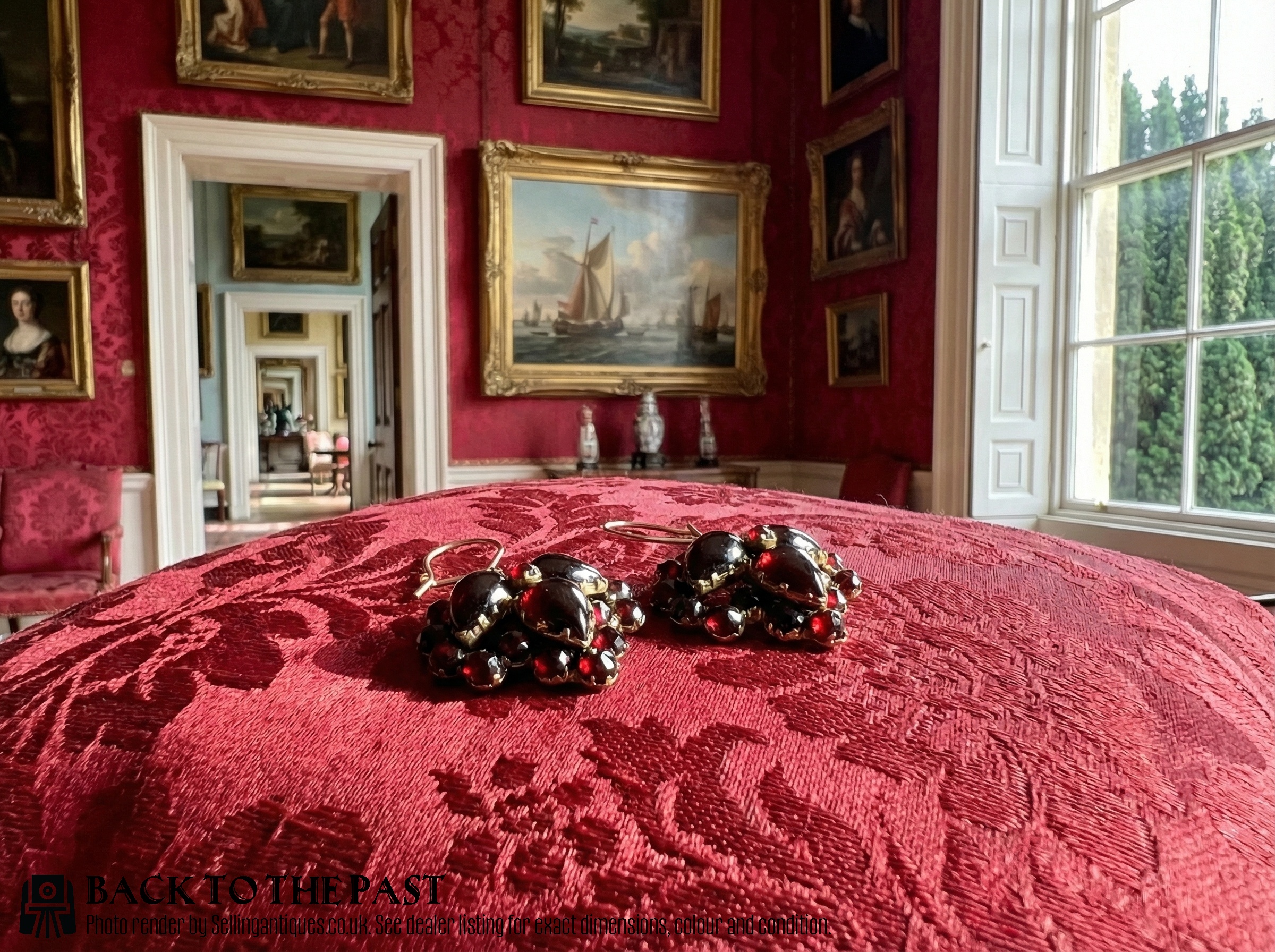
Materials and construction
The construction relies on a combination of gold, including rose and yellow variants, frequently paired with silver to securely hold old cut diamonds and coloured gemstones. Artisans utilised durable settings to mount turquoise, pearls, natural pearls, paste, enamel, green tourmaline, amethyst, and Bohemian garnets into intricate floral and geometric clusters.
Techniques from the period involve meticulous hand-setting of stones and delicate metalwork to form leaves, tendrils, and dangling hoops. Hinged drop components and screwback closures demonstrate the functional mechanical engineering applied to nineteenth-century jewellery.
Grape and ivy leaf clusters let Victorian wearers turn their earlobes into miniature botanical gardens.
Evaluating the pieces
Quality separates pairs with intact, original stones and secure settings from those showing replacement gems or compromised metalwork. The precision of the hand-cut diamonds, the uniformity of the seed pearls or turquoise, and the crispness of the chased or engraved gold and silver details dictate the refinement of each drop earring.
The complexity of the cluster configuration, such as multi-layered floral or grape arrangements, reflects the level of artisanal skill involved. Preservation of the enamel work and the structural integrity of the dangling elements further distinguish superior examples.
Knoll and Pregizer
The Victorian Cluster Drop Earrings Glossary
- Cluster
- A jewellery arrangement featuring a central stone or motif closely surrounded by a ring of smaller gems. This layout maximises visual impact and light reflection.
- Old cut diamond
- A diamond cut by hand during the eighteenth or nineteenth century, characterised by a smaller table, higher crown, and open culet. These stones exhibit a distinctive, softer scintillation under candlelight.
- Natural pearl
- A pearl formed organically within an oyster without human intervention. These gems possess a deep, organic lustre distinct from cultured varieties.
- Screwback
- A mechanical earring fastening utilising a threaded post and screw mechanism to secure the piece to an unpierced earlobe. This fitting provides adjustable pressure for heavier drop designs.
Victorian Cluster Drop Earrings: Frequently Asked Questions
How do I wear drop earrings?
These earrings suspend from the earlobe, creating gentle movement with the wearer's motion. They pair well with updos or swept-back hair to showcase the intricate cluster designs.
Securing them properly depends on the specific fastening mechanism, whether a standard hook, hinged drop, or screwback. Ensure the backing fits snugly to support the weight of the cluster.
What periods do these earrings represent?
The pieces span the nineteenth and early twentieth centuries, primarily capturing the Victorian and Edwardian eras. Stylistic influences also include the Aesthetic Movement and Art Deco.
Dating relies on material combinations, gemstone cuts, and manufacturing techniques characteristic of these specific historical windows.
Which materials appear most often?
Gold and silver form the foundational metals, frequently paired together in nineteenth-century mounting techniques. Gemstone selections feature diamonds, turquoise, seed pearls, Bohemian garnets, paste, and enamel.
Natural pearls and green tourmalines also feature in specific configurations, adding distinct colour and texture to the clusters.
How were these earrings used historically?
Owners wore such drop earrings for formal evening events and daily social calls during the nineteenth century. The dangling design added sophistication to fashionable garments of the period.
Parure sets sometimes included matching pendants and brooches to coordinate the entire ensemble for grand occasions.