


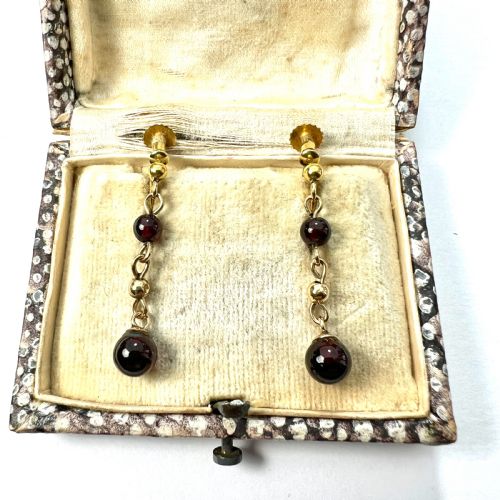


Gold Garnet Drop Earrings
These gold garnet drop earrings bring deep red stones together with yellow, rose, and white gold settings across Victorian, Edwardian, and mid-century designs.
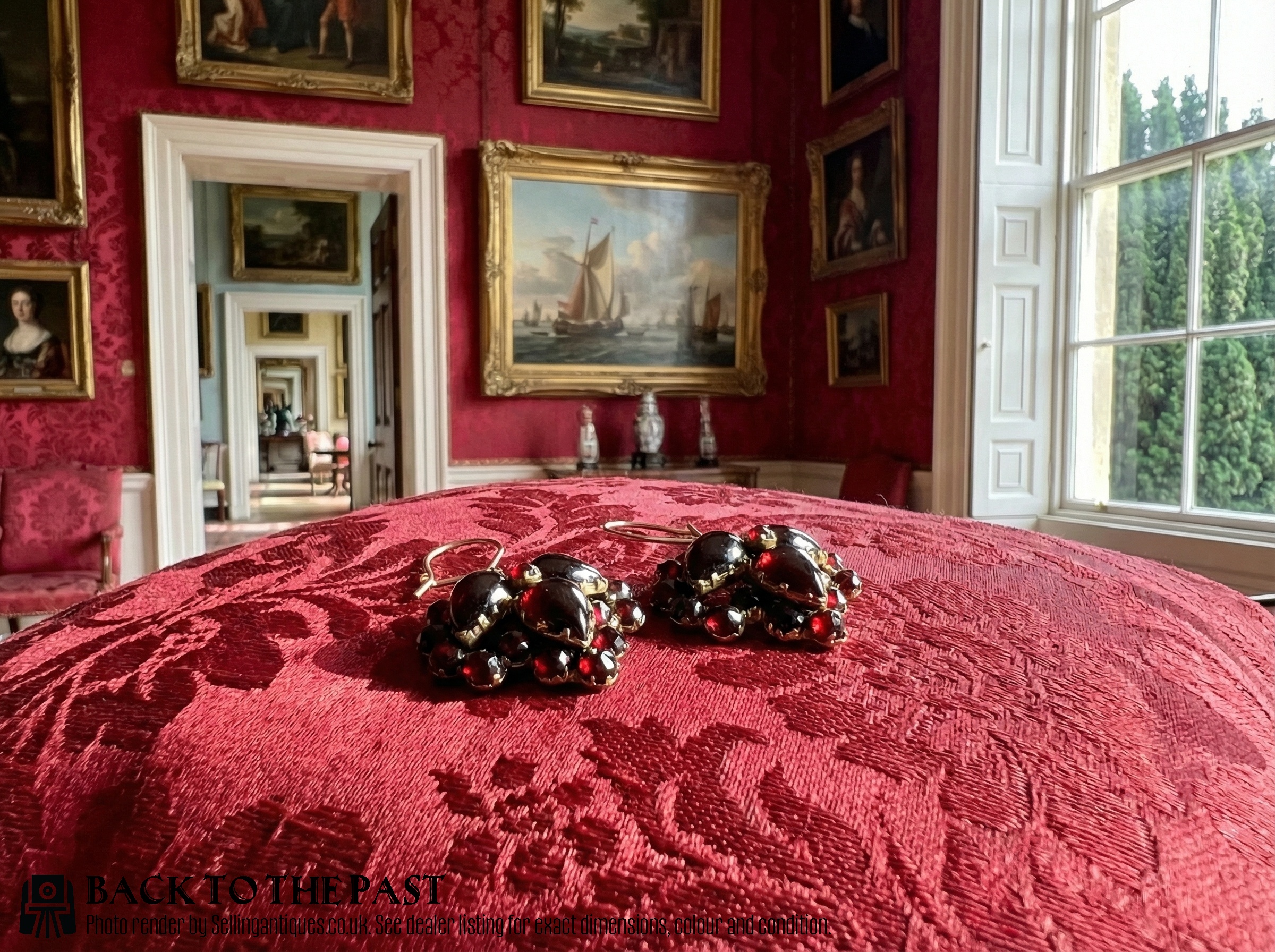
Understanding gold garnet drop earrings
Gold garnet drop earrings combine warm yellow, rose, or white gold settings with rich red garnets in hanging designs that catch the light with every movement. These pieces range from compact mid-century double drops to elaborate Victorian cluster formations and delicate Edwardian screwbacks.
The most common examples encountered here rely on durable 9ct gold alloy paired with faceted or cabochon garnets, often arranged in pear, oval, or teardrop configurations. Styles span from the mid-nineteenth century through the 1950s and 1960s, showing how jewellers adapted the drop silhouette across successive eras.
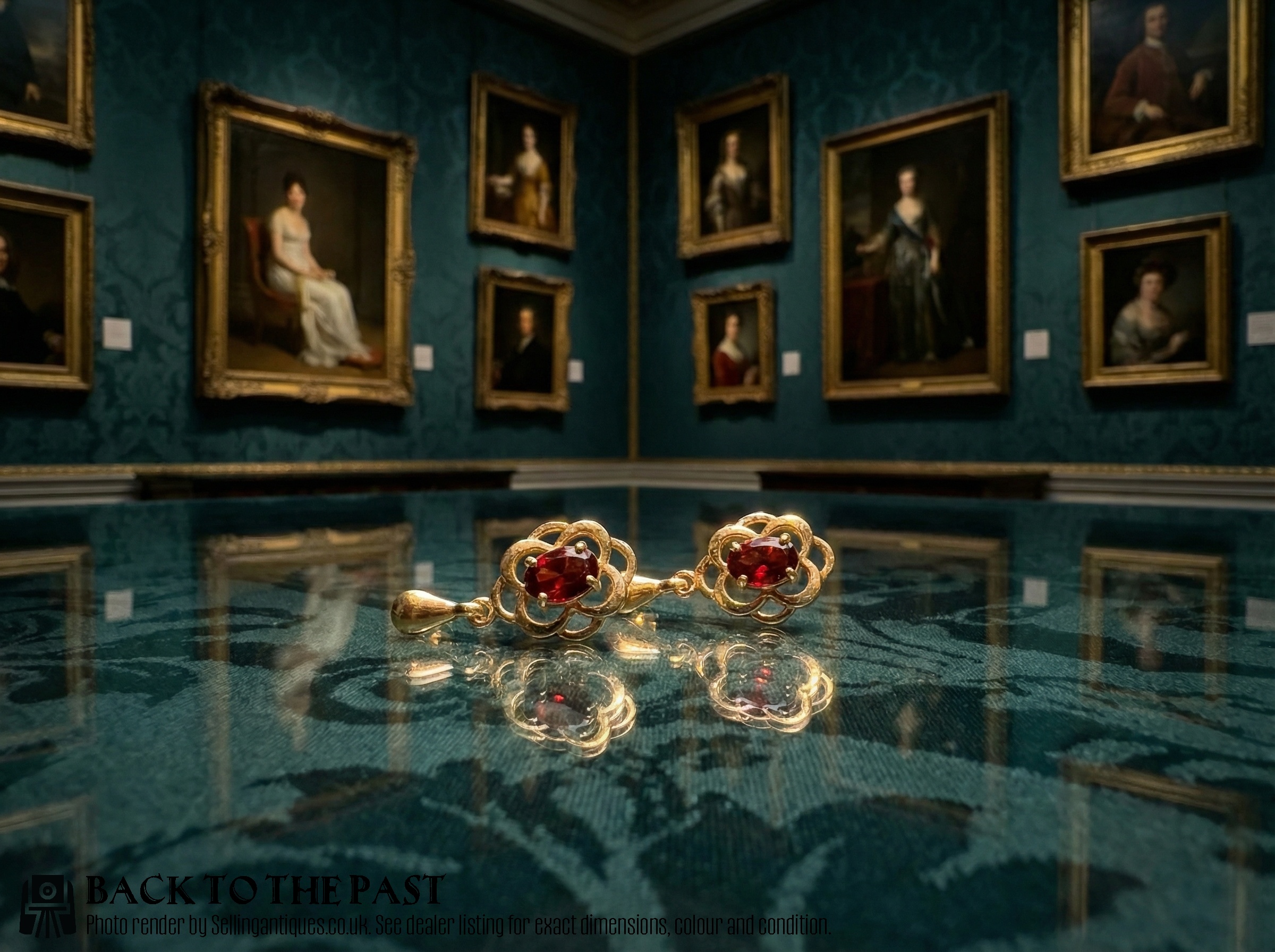
Materials and construction methods
Metals span 9ct yellow, rose, and white gold, alongside unhallmarked gold alloys tested to similar standards, forming secure settings for stones. Artisans shaped these metals into screwbacks, fishhooks, and stud fittings designed to suspend the stones comfortably from the ear.
Garnets appear in varied cuts including flat cut, pear cut, oval cut, and smooth cabochon forms, occasionally accompanied by glass paste, pearls, diamonds, or sapphires. Foil back techniques appear in older examples to enhance the depth of the red stones, while cluster arrangements group multiple smaller gems together.
Retail Price Guide 2026
Typical UK retail prices for gold garnet drop earrings, calculated from the Sellingantiques database of over a million retail prices indexed since 2003. This retail price guide relies exclusively on Sellingantiques data; no external sources or auction records are used, so the figures do not describe the wider market.
Listings feature 9ct gold alongside rarer uses of 18ct gold and white gold alloys across Victorian, Edwardian, and mid-century periods.
Distinctions in execution and design
The finer pieces separate themselves through the precision of stone cutting and the harmony of the metalwork, whether in delicate Etruscan wirework or clean mid-century lines. Heavier gold weight and secure stone settings indicate greater care in original manufacture.
Workmanship shows in the integration of secondary stones like pearls or diamonds and the stability of drop mechanisms, ensuring the earrings move fluidly without structural weakness.
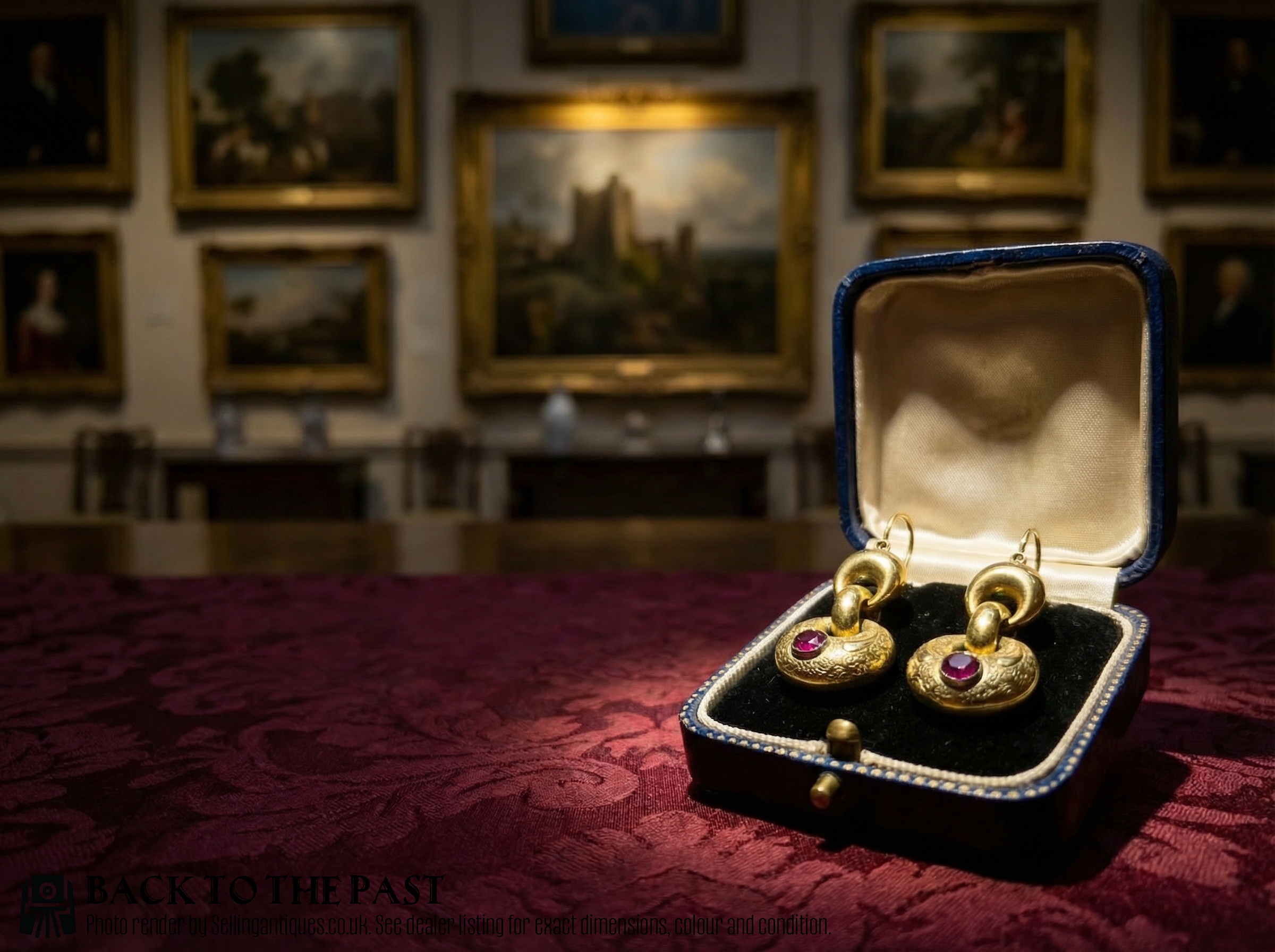
The Gold Garnet Drop Earrings Glossary
- Cabochon
- A gemstone shaped and polished with a smooth, rounded surface rather than faceted. This style highlights the natural lustre of the garnet.
- Screwback
- A fastening mechanism utilising a threaded post and a small screw nut to secure the earring without requiring a pierced earlobe. This was common in the Edwardian period.
- Foil back
- A manufacturing technique where a thin sheet of reflective metal is placed behind a gemstone to boost its brilliance and colour intensity. It is frequently found in older Victorian pieces.
- Cluster
- An arrangement where multiple smaller gemstones are grouped closely around a central stone or motif. This creates a dense, colourful focal point in the drop.
- Flat cut
- A historical stone-cutting style featuring a flat base and a faceted top, common in Georgian and early Victorian jewellery.
Frequently Asked Questions
How do I care for antique gold garnet earrings?
Store them individually in soft pouches to prevent the gold and softer stones from scratching against other items.
Clean them gently with a dry or slightly damp cloth, avoiding harsh chemical dips that can damage foil backs or delicate settings.
Are these earrings suitable for daily wear?
Many sturdy 9ct gold designs handle regular use well, provided you check the fastenings and settings periodically.
More delicate Victorian or foil-backed pairs benefit from careful handling and are best reserved for occasional outings.
How can I tell a Victorian pair from a mid-century pair?
Victorian examples often feature closed-back settings, foil backs, or intricate cluster motifs like ivy leaves and Etruscan wirework.
Mid-century and later 1950s designs typically employ brighter 9ct yellow gold with open-backed prong settings and simpler double drop configurations.
What type of fastenings do these earrings have?
Fastenings vary by era, ranging from early fishhooks and screwbacks to standard post and butterfly studs on later pieces.
Each mechanism reflects the prevailing technology and piercing fashions of its respective decade.