


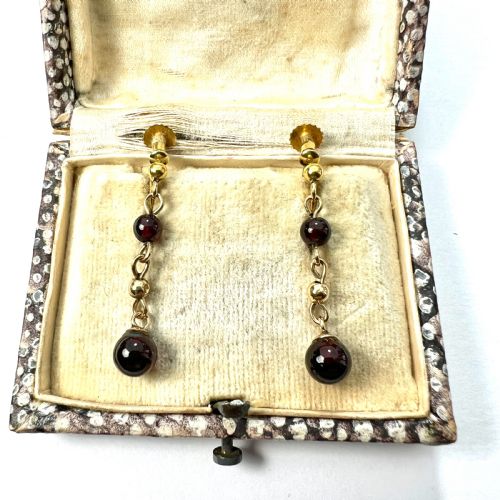


Red Garnet Gold Earrings
These red garnet gold earrings bring together deep red stones and warm metal work, offering a touch of period character for everyday wear.
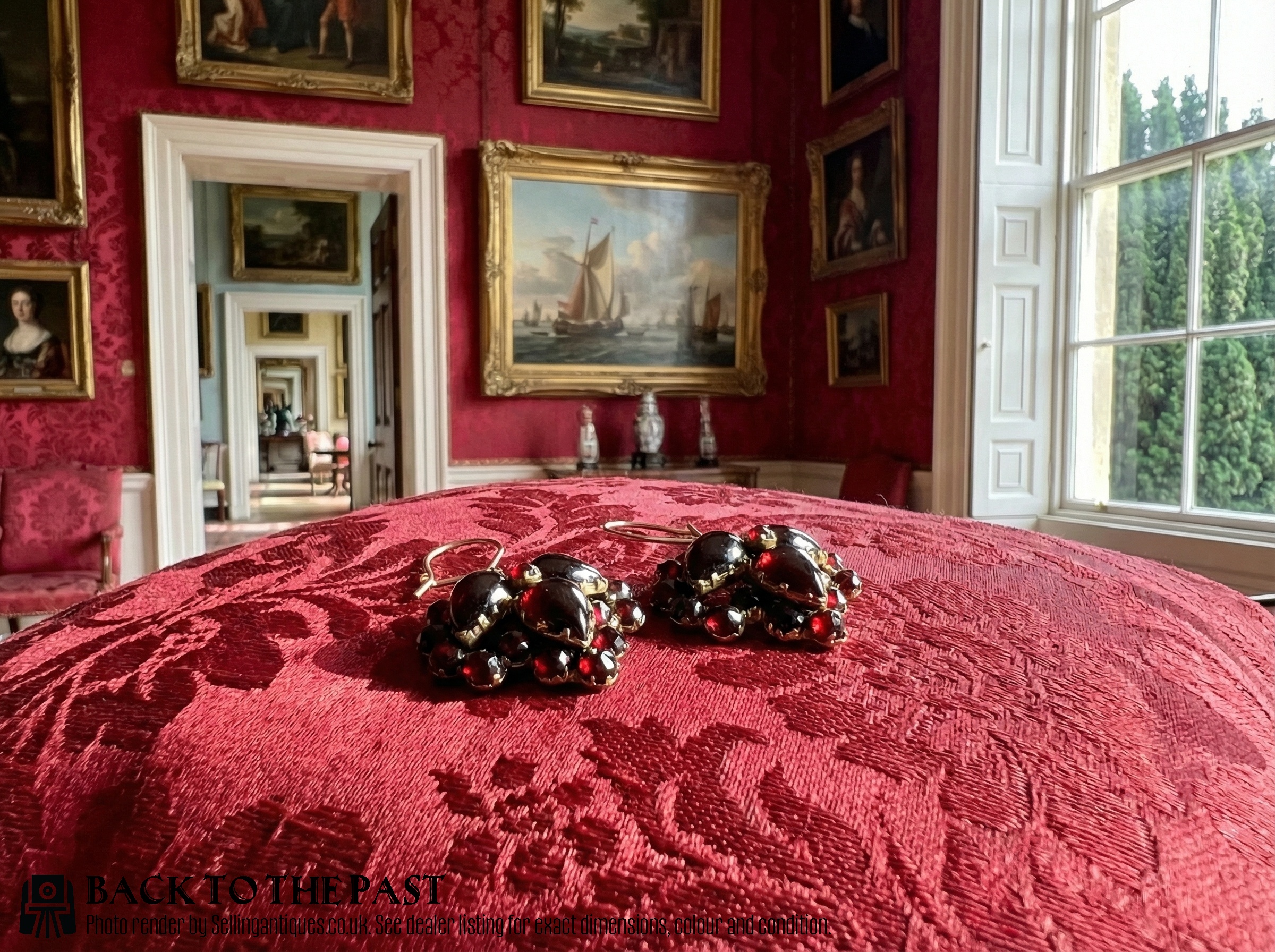
Red Garnet Gold Earrings
When you search for red garnet gold earrings, you are looking at a varied selection of drop, cluster and stud designs spanning the Victorian, Edwardian and mid-twentieth-century periods. The pieces on this page lean heavily towards Victorian and 1960s examples, ranging from intricate floral clusters to simple drop studs.
You will encounter distinct regional flavours among these designs, including Austro-Hungarian silver gilt work alongside classic British Victorian pieces. Forms range from delicate ivy leaves and flower heads to substantial cabochon drops and complete jewellery suites.
The materials paired with the central stones shift according to the era, moving from higher carat golds and silver gilt in the nineteenth century down to nine-carat yellow and rose gold in later decades. Pearls, diamonds and paste additions frequently accompany the garnets to accent the main stones.
Materials and Construction
The construction relies heavily on yellow, rose and white golds ranging from nine to eighteen carats, occasionally complemented by silver gilt settings. Metalwork techniques span delicate filigree, Etruscan revival wirework and secure claw or cluster settings to hold the stones.
Garnets appear in varied cuts including round, pear and cabochon forms, sometimes augmented by small rose-cut diamonds, seed pearls or paste. Mounts range from standard posts and clip-on mechanisms to screwbacks and traditional drop wires.
Current listings feature garnets paired with nine, fourteen, fifteen and eighteen carat gold, alongside silver gilt and diamond accents.
Evaluating the Pieces
Quality rests upon the depth of colour in the stones and the precision of the metalwork, whether in fine Edwardian claw settings or intricate Victorian wirework. Heavier gold weights and higher carat measures, such as fifteen or eighteen carat, elevate the standing of a piece.
The integrity of the original mounts and the matching of the stone clusters determine the overall cohesion of the earrings. Finer examples display careful stone matching and secure, well-integrated fixings that have survived decades of use.
The Red Garnet Gold Earrings Glossary
- Cabochon
- A gemstone shaped and polished with a smooth, rounded surface rather than faceted facets. This style highlights the deep, rich colour of the garnet.
- Silver gilt
- Silver that has been coated with a thin layer of gold. This technique was frequently utilised in Austro-Hungarian pieces to give a rich golden appearance over a silver base.
- Paste
- A heavy, highly refractive lead glass used to imitate gemstones. Victorian makers often set paste alongside genuine stones or within revival pieces.
- Cluster
- An arrangement of smaller stones clustered tightly around a larger central stone. This layout mimics the form of a flower and maximises visual impact.
Red Garnet Gold Earrings: Frequently Asked Questions
How do I date these earrings?
Dating relies on identifying the metal fineness marks, fastening types and overall design motifs. Victorian and Edwardian pieces often display distinct wirework and higher carat golds.
Mid-twentieth-century examples, particularly those from the nineteen-fifties and sixties, generally utilise nine-carat gold alongside simpler stud or drop configurations.
Are these earrings comfortable for daily wear?
Comfort depends entirely on the specific fastening mechanism and the weight of the individual drop or cluster. Lighter studs and smaller drops sit easily on the ear throughout the day.
Larger Victorian cabochon drops or heavier cluster designs carry more weight, making them better suited to shorter periods of wear.
What is Austro-Hungarian style jewellery?
Austro-Hungarian pieces typically feature elaborate silver gilt metalwork combined with rich clusters of garnets. These designs draw upon Central European traditions of ornate craftsmanship.
They often present a distinctive multi-stone halo or cluster arrangement that stands apart from standard British Victorian output.