
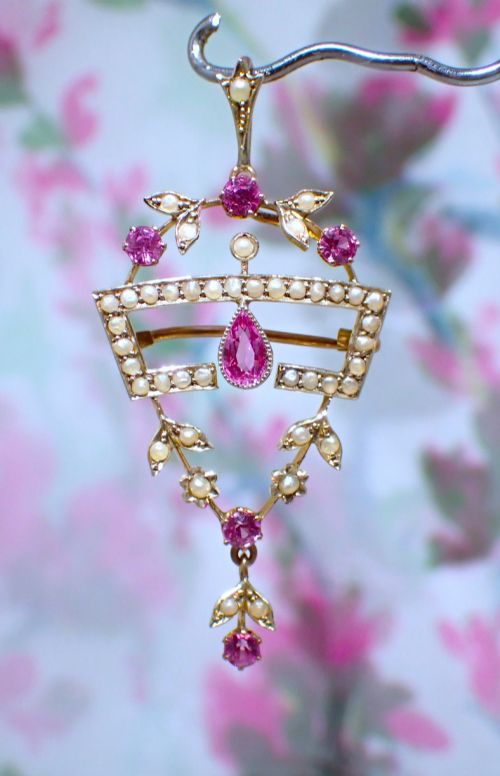


Antique Tourmaline Jewellery
Antique tourmaline jewellery brings bright colour and distinct character to any collection through pieces crafted in Victorian and Edwardian workshops.
What antique tourmaline jewellery comprises
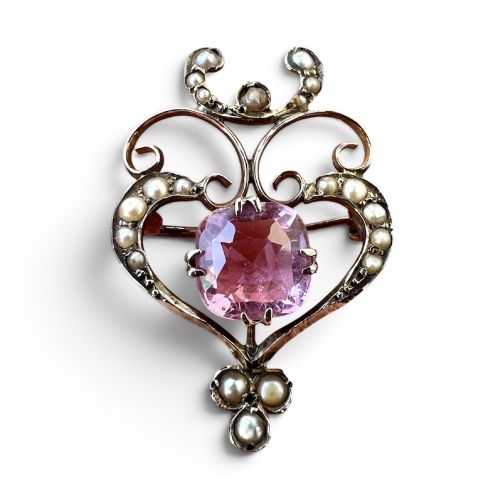
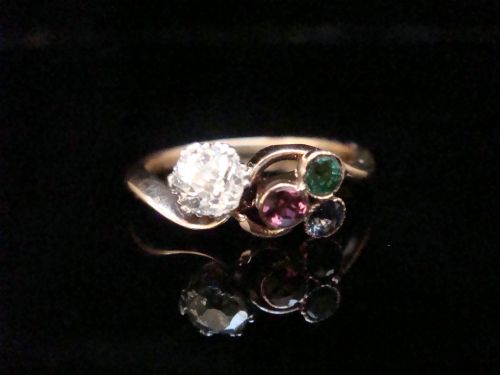
Antique tourmaline jewellery consists of rings and earrings from the Victorian and Edwardian periods. These pieces set vibrant stones within gold mounts, often accompanied by supporting gems.
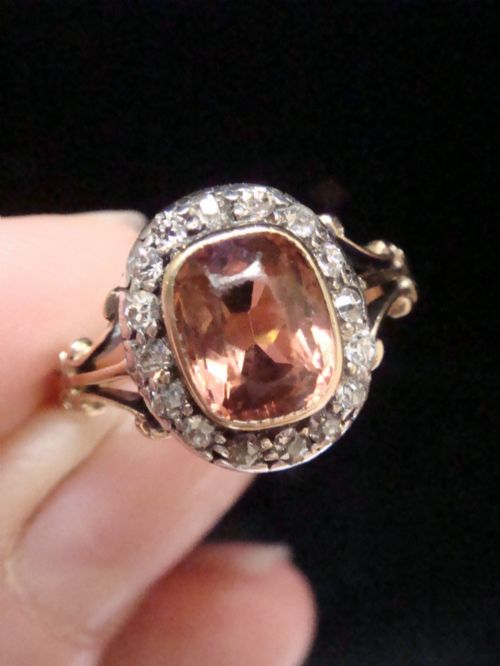
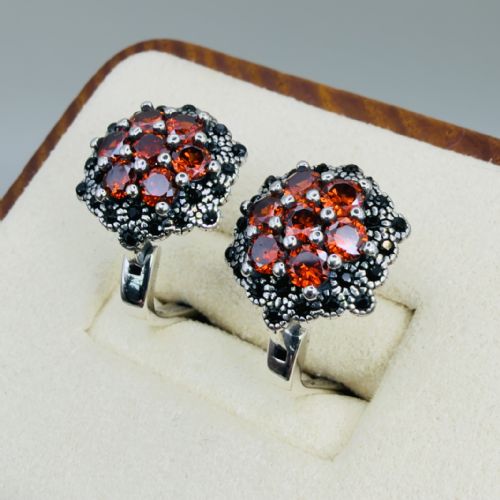
The earrings and rings available here showcase both Victorian and Edwardian design sensibilities. Buyers encounter cluster rings and drop earrings featuring distinct gemstone combinations.
Materials and construction
Goldsmiths utilised 18ct gold, rose gold, and 9ct gold to fabricate the metal mounts. Stones such as tourmaline, diamond, seed pearl, and rock crystal are set within these precious metals.
Techniques include cluster arrangements and hinged drop constructions. Screwback mechanisms appear on specific earring designs from the period.
Distinctions in quality
Quality rests upon the selection and saturation of the tourmaline stones alongside the precision of the surrounding diamond or pearl work. Finer examples display harmonious colour pairing within secure gold settings.
The complexity of the mount, such as hinged drops or detailed cluster formations, separates standard production from superior craftsmanship.
The Antique Tourmaline Jewellery Glossary
- Tourmaline
- A crystalline mineral silicate gemstone displaying a wide spectrum of colours, frequently utilised in nineteenth and early twentieth-century rings and earrings. This stone forms the central focus of the jewellery described here.
- Cluster ring
- A ring design featuring a central gemstone encircled by a border of smaller stones, such as diamonds or seed pearls. This layout maximises visual impact on the hand.
- Hinged drop earrings
- Earrings constructed with articulated joints that allow the lower section to swing independently. This technique adds movement when worn.
- Seed pearl
- Very small, naturally occurring pearls often used in tight groupings or borders during the Victorian and Edwardian eras. They provide a soft contrast to faceted gemstones.
Frequently Asked Questions
What periods do these pieces date from?
The items originate from the Victorian and Edwardian eras.
Maker methods and material choices align with these specific historical periods.
What metals were used?
Goldsmiths worked primarily in 18ct gold, rose gold, and 9ct gold.
These metals provide the structural foundation for the tourmalines and supporting stones.
Which stone types accompany tourmaline?
Diamonds, seed pearls, and rock crystals frequently appear alongside the main stones.
Such combinations enhance the overall design and sparkle of the rings and earrings.
What jewellery forms are available?
The selection includes rings and earrings.
Specific formats involve cluster rings, hinged drop earrings, and screwback earrings.