




Edwardian Screw Back Earrings
Edwardian screw back earrings are charming period pieces designed for non-pierced lobes, offering secure wear alongside delicate historical character.
Edwardian Screw Back Earrings
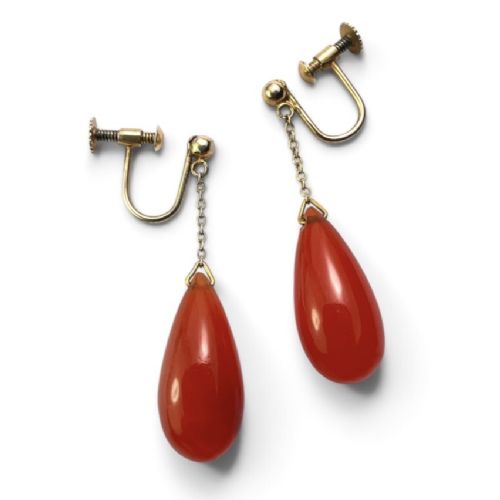
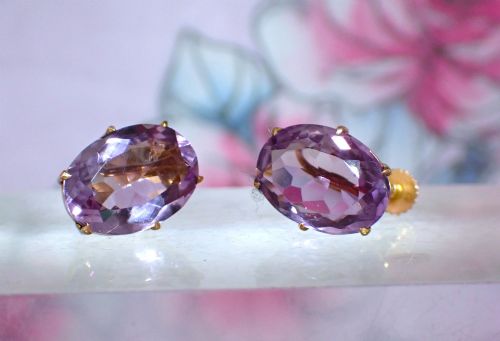
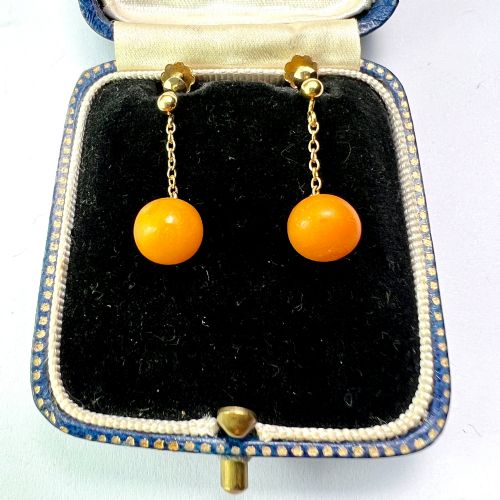
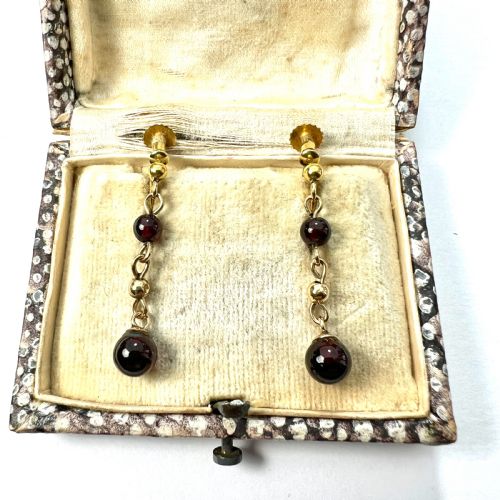
When you search for edwardian screw back earrings, you encounter delicate jeweller's work spanning the Edwardian period, the 1910s, 1920s, and occasionally Victorian styles. These pieces primarily take the form of screw-on studs, chain drops, and cluster designs intended for non-pierced ears.
The materials you are most likely to meet on this page include 9ct gold and silver settings holding stones such as red agate, amethyst, amber, garnet, tourmaline, citrine, moonstone, and white chalcedony. Faux pearls and glass paste also appear frequently across the current and archived selection.
Most examples align with Edwardian, Victorian, and Arts and Crafts aesthetics. Chain drop configurations and secure screw mechanisms define the practical build of these ornaments.
How they were made
Maker's workshops constructed these earrings using 9ct gold and silver as the principal structural metals, shaping them into fine chains, bezels, and settings. The mechanical screw-back fitting required precise threading to allow the wearer to adjust the tension comfortably against the earlobe.
Gemstones such as amethyst, garnet, tourmaline, and amber were cut in various forms, including cushion cuts, beads, and teardrops. Glass paste and faux pearls were also utilised alongside precious and semi-precious stones to achieve intricate coloured designs.
These earrings let anyone channel early twentieth-century elegance without needing to hunt down a piercing needle.
What varies in quality
The fineness of the metalwork and the precision of the screw mechanism distinguish different pieces within this range. Robust gold and silver frames paired with smoothly operating screws represent superior construction compared to simpler alloy alternatives.
The selection and cutting of the stones, from natural amethysts and tourmalines to decorative paste and faux pearls, dictate the visual depth of each earring. Well-matched stones and secure settings separate the finer examples from standard production.
The Edwardian Screw Back Earrings Glossary
- Screwback
- A fastening mechanism that uses a threaded post and a small turning disc to secure the earring without requiring a pierced earlobe.
- Chain drop
- An earring design featuring a suspended ornament hanging below the main fixing by a short length of fine chain.
- Glass paste
- A form of dense lead glass moulded or cut to imitate precious gemstones in antique jewellery.
- Arts and Crafts
- A design style prioritising handcraftsmanship and simple natural materials over mass-produced ornamentation.
Edwardian Screw Back Earrings: Frequently Asked Questions
How do screw back earrings work?
The mechanism relies on a threaded post that passes behind the earlobe, where a small butterfly or threaded disc turns to tighten the fitting securely.
This design allowed people without pierced ears to wear dangling or stud earrings comfortably throughout the day.
Are these earrings comfortable to wear?
Yes, because the wearer can manually adjust the pressure of the screw mechanism to suit the thickness of their earlobe.
Careful adjustment ensures the earring stays in place without pinching or causing discomfort during extended wear.
How do I identify Edwardian jewellery?
Edwardian pieces often feature light, airy metalwork in gold or silver, frequently incorporating garlands, delicate chains, and pastel or bright gemstones.
The era spanned the early twentieth century, overlapping with the 1910s and drawing on refined stylistic traditions.
Can screw back earrings be converted for pierced ears?
While conversion is physically possible by a jeweller, collectors generally prefer preserving the original screw mechanism to maintain historical integrity.
Altering the original findings removes the distinct functional characteristic that defines these antique pieces.