




Screwback Drop Earrings
Screwback drop earrings are period drop designs secured with a threaded screw mechanism, offering secure movement without pierced lobes.
Screwback Drop Earrings
Screwback drop earrings span the Victorian, Edwardian, and Art Deco periods, alongside mid-century examples. These pieces combine hanging dangles or drops with a hinged screw mechanism designed for unpierced ears.
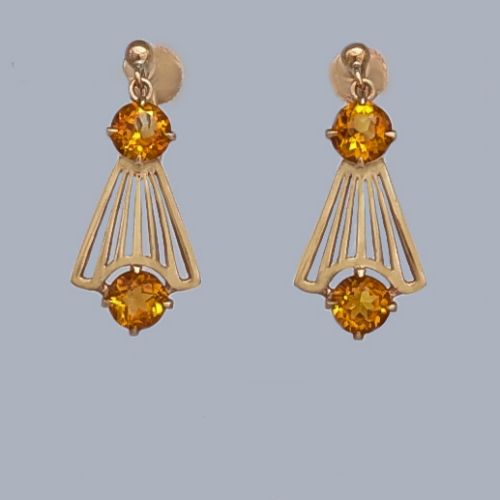
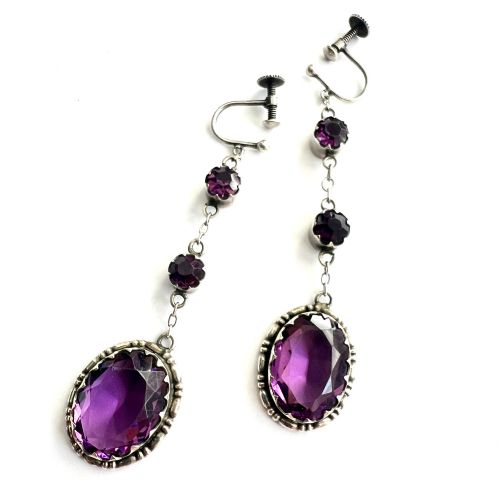
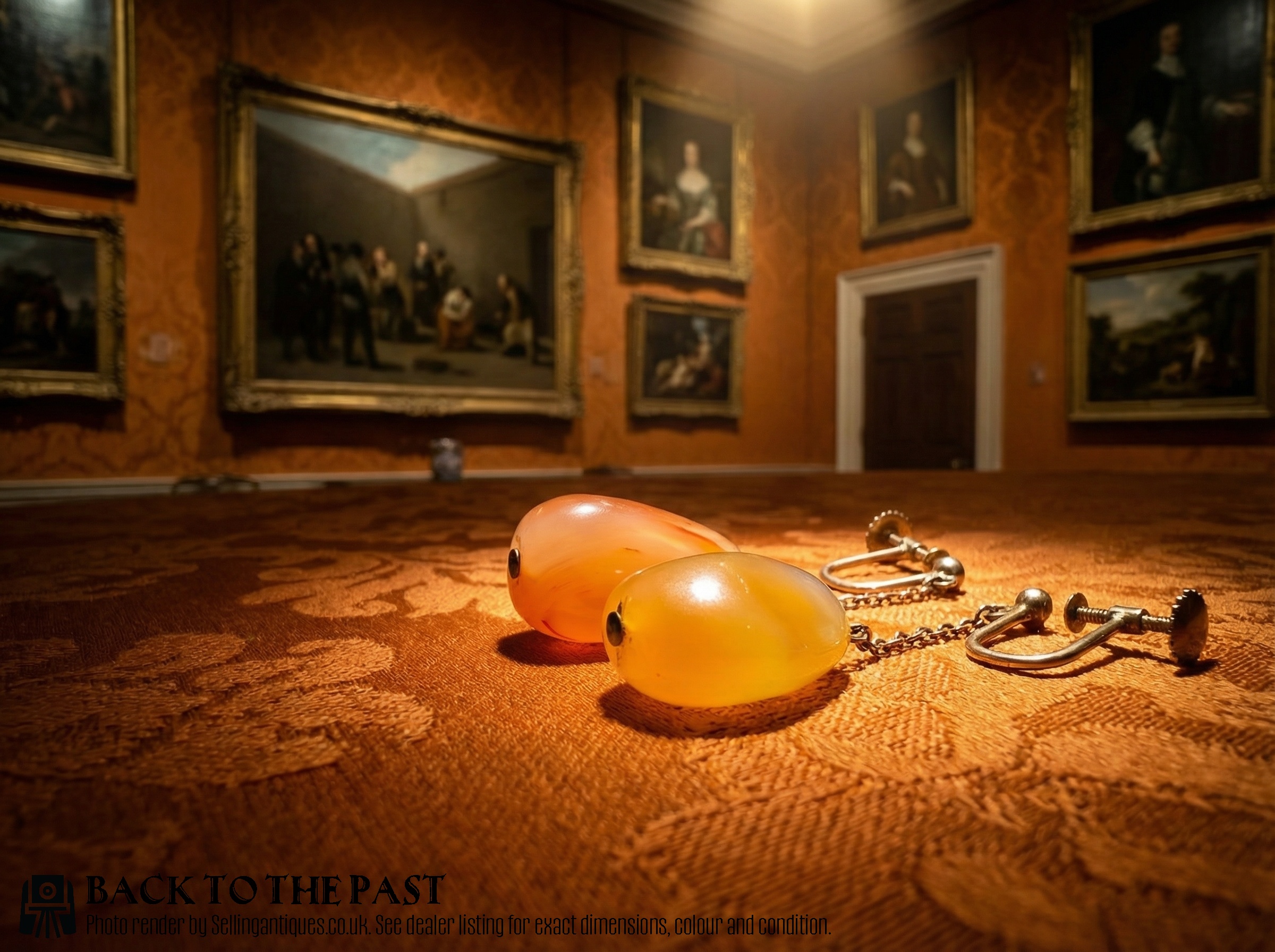
The versions most commonly met on this page utilise 9ct gold or silver, often set with stones such as citrine, agate, paste, or onyx. Styles range from early aesthetic and Victorian leaf motifs to geometric Art Deco designs.
How they were made
Maker construction relies on precious metals such as 9ct gold and sterling silver to form the screw mechanisms, settings, and hanging chains. Metalwork techniques include intricate wirework, chain links, and stamped elements.
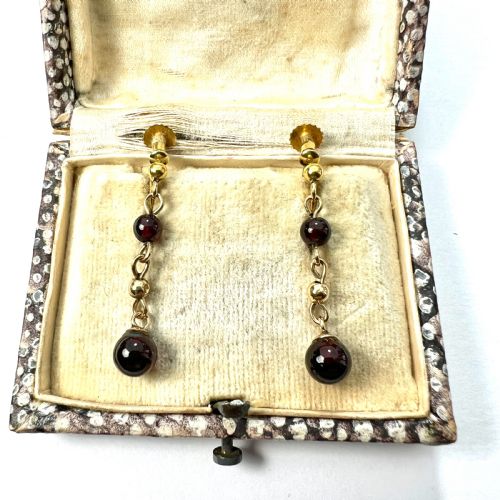
Gemstone selection encompasses natural stones like citrine, tourmaline, agate, garnet, and moonstone, alongside glass pastes, mother of pearl, and enamel. These materials are bezel-set or prong-set into drop configurations that move with the wearer.
Materials recorded across these items combine 9ct gold and silver with organic elements like mother of pearl alongside mineral stones and glass pastes.
What varies in quality
Quality rests in the precision of the metalwork and the integration of the screw mechanism. Superior examples display robust threading that holds tension reliably, alongside crisp stamping and secure stone settings.
The choice of materials also dictates the grade of the piece, distinguishing finely cut natural gemstones and heavy 9ct gold from lighter silver-plated or paste configurations.
The Screwback Drop Earrings Glossary
- Screwback
- A non-pierced earring finding tightened via a small threaded screw. This mechanism applies gentle pressure to the lobe to hold the earring in place.
- Paste
- Faceted glass used as a gemstone substitute in historical jewellery. It is cut and polished to mimic stones like citrine or amethyst.
- Marcasite
- Small polished pyrite stones set closely in silver. This technique creates a sparkling, textured border popular in Art Deco pieces.
- Bezel setting
- A metal collar that wraps around the outer edge of a gemstone. It holds the stone securely in place without prongs.
Screwback Drop Earrings: Frequently Asked Questions
How do screwback earrings work?
These earrings use a small threaded screw attached to a hinged backing. Turning the screw adjusts the distance between the paddle and the post to secure the unpierced lobe.
This mechanism allows the wearer to control the pressure precisely, keeping the drop pendant stable during movement.
Can screwback earrings be converted?
Conversion is possible by a jeweller, though altering historical pieces changes their original construction. Many collectors prefer to keep the screw mechanisms intact.
Retaining the screwback preserves the period integrity of Victorian and Art Deco examples.
What periods do these earrings come from?
The pieces span the Victorian, Edwardian, and Art Deco eras, extending into the mid-century period. Each era introduces distinct design characteristics.
Victorian pieces often feature natural stones and leaf motifs, while Art Deco versions favour geometric forms and marcasite.
Are the gemstones in these earrings natural?
Materials vary between natural stones and historical substitutes. Listings include natural gems like citrine, agate, tourmaline, garnet, and moonstone.
Other examples utilise glass paste, mother of pearl, and enamel to achieve colourful decorative effects.