
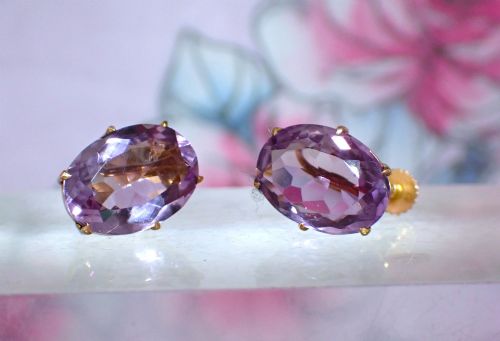


Yellow Gold Amethyst Studs
Yellow gold amethyst studs bring vibrant purple quartz together with warm precious metal in earrings designed to sit close to the ear.
Yellow Gold Amethyst Studs
Yellow gold amethyst studs are classic items of jewellery taking the form of earrings designed to attach firmly to the lobe. The pieces collected under this search phrase span the Edwardian era through to the mid-twentieth century, including items from 1910, 1950, and 1960.
Buyers are most likely to encounter simple cluster designs alongside drop variants and screw-on configurations. The forms range from small everyday wear to large cabochon and emerald cut stones set securely in metal.
The aesthetic leans heavily on traditional and classic presentations, alongside Victorian revival and Art Nouveau revival styles. These earrings offer a straightforward way to wear purple quartz set in nine carat gold.
Materials and construction
The construction relies on nine carat gold combined with natural amethyst stones. The metal provides a durable yellow setting that frames the purple quartz securely.
Gemstones are shaped into various profiles, notably emerald cuts, oval cuts, and smooth cabochons. These stones are mounted into stud or drop configurations using traditional setting techniques suited to the period.
Screw-on backs ensure that even the most determined afternoon nap cannot dislodge your vintage earrings.
Distinguishing quality
Quality in yellow gold amethyst studs rests on the depth of colour in the quartz and the precision of the setting work. Stones with vibrant saturation and clean crystal structure elevate the piece above paler alternatives.
The refinement of the mounting also dictates the standard of the jewellery. Neat claw work or well-formed bezels in nine carat gold show careful manufacturing by the maker.
The Yellow Gold Amethyst Studs Glossary
- Amethyst
- A purple variety of quartz prized for its translucent violet colour. It has served as a popular gemstone in British jewellery for centuries.
- Cabochon
- A gemstone shaped and polished with a smooth, rounded surface rather than faceted edges. This style highlights the natural depth of the quartz.
- Emerald cut
- A rectangular gemstone cut with stepped facets and cropped corners. This geometry emphasises clarity and creates broad flashes of light.
- Screw-on
- A fastening mechanism utilising a threaded post and a small nut to secure the earring without piercing the lobe. This type was common in earlier twentieth-century designs.
- Cluster
- An arrangement of smaller stones gathered tightly around a central focal gem. This layout maximises visual impact on the ear.
Yellow Gold Amethyst Studs: Frequently Asked Questions
How do screw-on earrings work?
These earrings use a threaded post that passes behind the lobe and secures with a small threaded backing. You gently wind the backing until the fitting rests comfortably against the skin without pinching.
This mechanism allowed people without pierced ears to wear secure studs throughout the early and mid-twentieth century. The tension remains adjustable to suit individual lobes.
Are these earrings comfortable for daily wear?
The lightweight nature of nine carat gold makes most of these studs suitable for regular daytime use. Their compact profile prevents them from catching on clothing or hair during normal activity.
Drop variants add slight movement while maintaining a secure fit against the ear. Proper fastening ensures they stay firmly in place throughout the day.
How do I date an amethyst stud?
Dating relies on the fastening mechanisms, the cut of the stones, and the overall manufacturing style. Edwardian pieces often feature delicate metalwork and specific screw fittings, whereas later mid-century examples utilise simpler posts.
Design revivals from the twentieth century frequently borrowed Victorian or Art Nouveau motifs. Comparing the cut of the amethyst and the alloy colour helps narrow the production era.
What is nine carat gold?
Nine carat gold is an alloy containing thirty-seven point five percent pure gold mixed with other metals to increase durability. It offers a warm yellow tone well suited to holding gemstones securely.
This alloy became a standard material for British jewellery due to its strength and resistance to everyday wear. It develops a subtle patina over decades of handling.