




Antique Statement Drop Earrings
Antique statement drop earrings bring genuine presence to the ear, combining precious metals and gemstones from the Victorian era to the mid-twentieth century.
Antique Statement Drop Earrings
These antique statement drop earrings span several distinct eras, from ornate Victorian designs to geometric Art Deco creations and mid-century pieces. You will frequently encounter styles featuring dangling tassels, fringe work, or prominent gemstone clusters that catch the light with every movement.
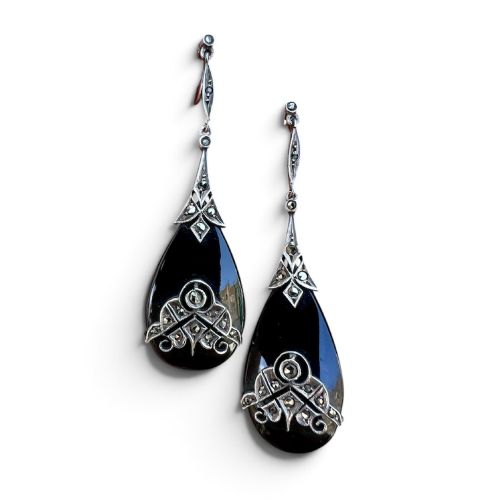
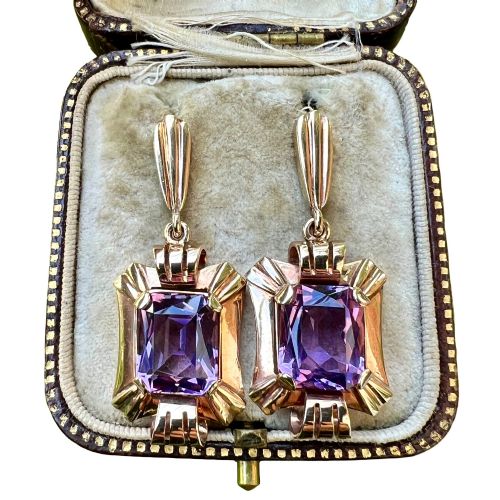
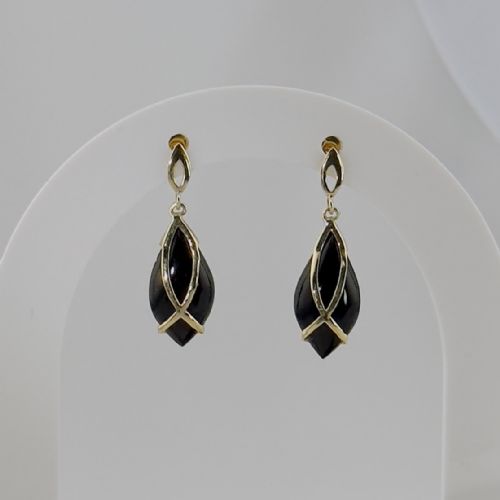
The selection here encompasses items fashioned from gold, platinum, and silver, often paired with diamonds, amethysts, rubies, emeralds, and onyx. Drop earrings from this range offer a tangible connection to past craftsmanship, whether through an Edwardian configuration or a 1930s platinum design.
How they were made
Maker's hands shaped these pieces using precious metals such as platinum, 9ct gold, 18ct white gold, and silver. Gemstones including diamonds, amethysts, and turquoise matrix were meticulously set to create striking visual contrasts.
Techniques range from intricate marcasite work and paste setting to sophisticated tassel fringe arrangements. Artisans employed old European cut diamonds and detailed metalwork to achieve depth and texture in each drop configuration.
Listings feature platinum, gold, and silver alongside diamonds, amethysts, rubies, and onyx across multiple twentieth-century decades.
What varies in quality
Quality in these pieces rests upon the harmony of the design and the skill with which the precious stones are integrated into the metal framework. Finer examples display superior stone selection, such as well-matched diamonds or rich amethysts, alongside secure settings that endure through decades.
The distinction between standard examples and exceptional pieces lies in the precision of the metalwork, whether in delicate filigree or substantial tassel construction. Balance and proportion dictate how a drop earring hangs and moves, elevating the overall presence of the jewellery.
The Antique Statement Drop Earrings Glossary
- Drop earrings
- Earrings that extend below the earlobe, often swinging or swaying with movement. They have been favoured across Victorian, Edwardian, and Art Deco periods.
- Marcasite
- Small, polished pyrite stones cut with facets and set into silver to resemble sparkling diamonds. This technique was popular in Art Deco and vintage jewellery.
- Paste
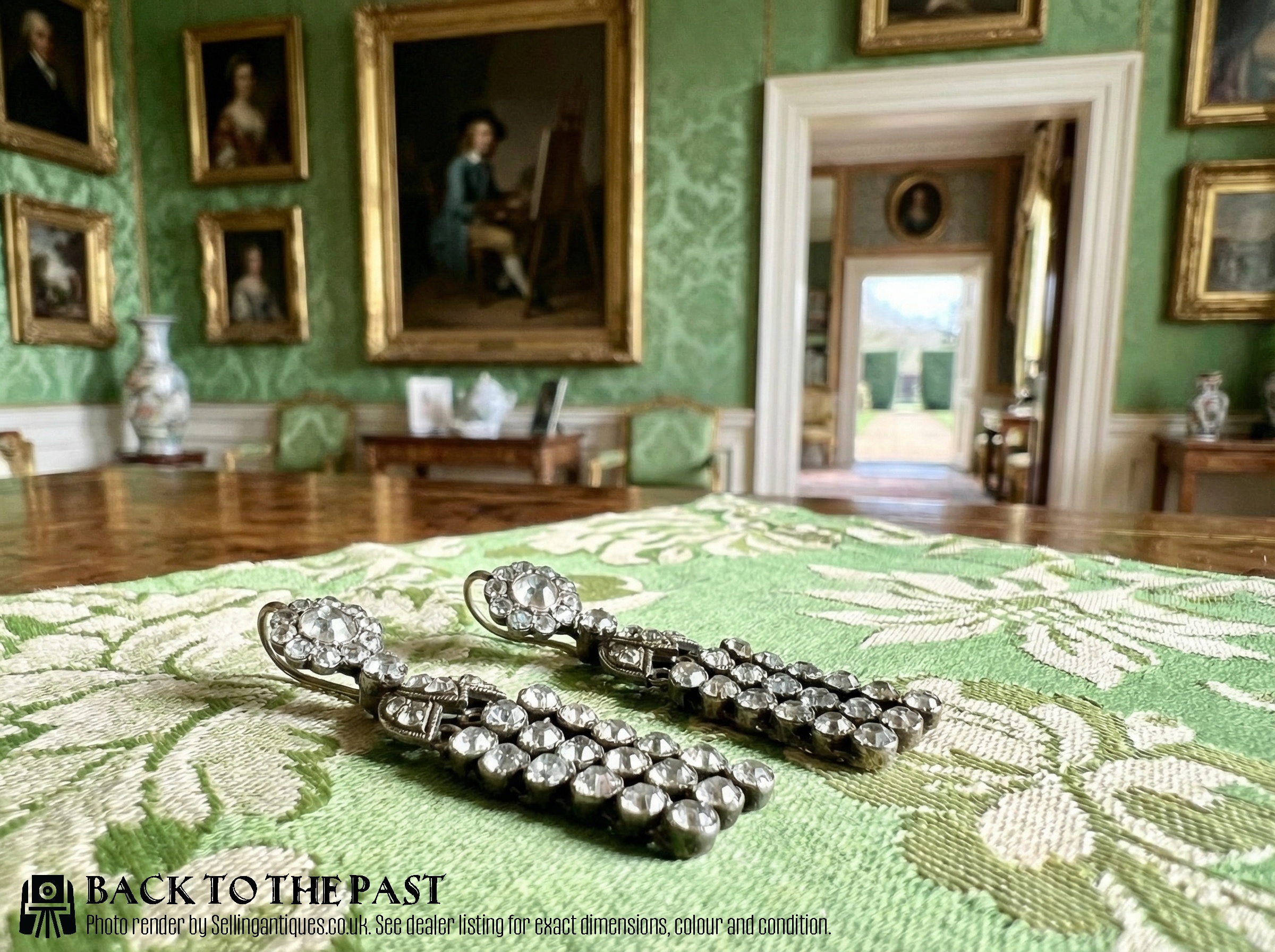
- Hand-cut glass or lead crystal used to imitate gemstones in antique jewellery. High-quality paste work involves careful foiling and setting.
- Parure
- A matched set of jewellery intended to be worn together, typically including earrings, a necklace, and a ring. The evidence includes an Arts and Crafts silver parure with turquoise matrix.
- Old European cut
- An early form of brilliant diamond cut characterised by a small table, heavy crown, and open culet. This cut is commonly found in pieces from the late nineteenth and early twentieth centuries.
Antique Statement Drop Earrings: Frequently Asked Questions
How do I wear antique drop earrings?
These earrings suit evening attire or special occasions where their length and movement can be fully appreciated. Their substantial presence often makes them the focal point of an outfit.
Pair them with simpler necklines to let the design of the drops take centre stage. Ensure the weight is comfortable for your earlobes before wearing them for extended periods.
What periods do these earrings cover?
The pieces span from the Victorian era and Arts and Crafts movement through the Edwardian period into Art Deco and mid-century modern design. Each era brings distinct characteristics in metal choice and stone arrangement.
Victorian and Edwardian pieces often lean towards romantic motifs or intricate silver work, while 1930s items favour geometric platinum and diamond configurations.
How can I tell Art Deco earrings apart?
Art Deco drop earrings typically feature geometric shapes, symmetrical lines, and combinations of platinum with diamonds and onyx. The focus shifts from organic floral motifs to sharp angles and stylised patterns.
Look for calibre-cut stones and clean white metal settings that define the aesthetic of the 1920s and 1930s.
What metals were used in antique drops?
Jewellers utilised silver, platinum, 9ct gold, 18ct yellow gold, and 18ct white gold depending on the period. Platinum gained immense popularity during the Art Deco era for its strength and bright finish.
Earlier pieces often combined gold and silver to showcase diamonds effectively against a dark background.