


Victorian Chinoiserie Vase
A victorian chinoiserie vase brings together nineteenth-century European imagination and East Asian motifs, offering a striking decorative focus for a traditional interior.
Victorian Chinoiserie Vase
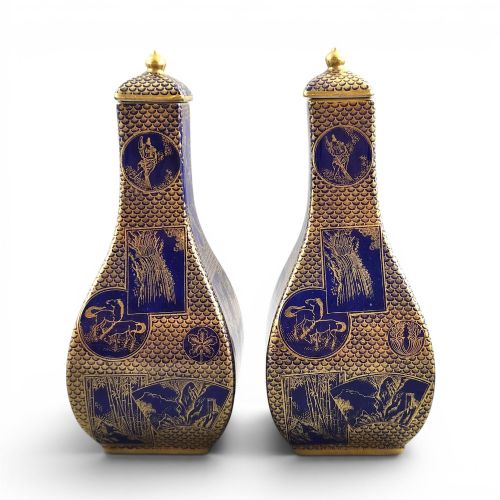
The victorian chinoiserie vase encompasses a diverse selection of nineteenth-century vessels, table lamps, and garnitures created under the influence of Chinese and Japanese design. Buyers encounter forms ranging from lidded ironstone vessels to glass table lamps and lacquerware.
Many examples date from the nineteenth century, including specific pieces from the Victorian era and the Georgian period. The inventory includes works produced by English makers alongside continental European interpretations.
The objects frequently adapt traditional vessels into functional lighting or retain their original display purpose as decorative urns and potpourri containers. Ironstone, porcelain, glass, and papier-mâché represent the primary physical forms available.
How they were made
Potters utilised ironstone, stoneware, and porcelain bodies, shaping them into vases, urns, and garniture sets before applying detailed enamel pigments and underglaze blue decoration. Manufacturers such as Mason's employed durable ceramic pastes suited to rich colour palettes and transfer-printed patterns.
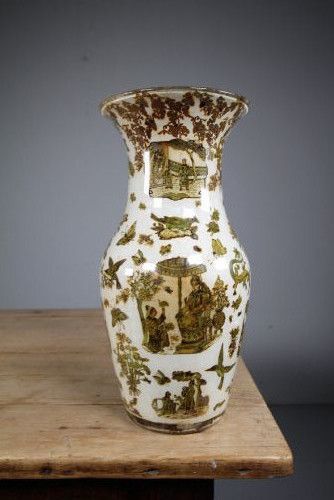
Makers applied surface ornamentation using decalcomania techniques on glass, hand-painted watercolours, and gold leaf highlights over lacquer. Skilled artisans also integrated ormolu mounts to cast bronze and brass fittings onto ceramic and glass bodies.
Listings feature nineteenth-century materials including ironstone, porcelain, brass, glass, enamel, and lacquered papier-mâché.
What varies in quality
The refinement of the painted or transferred decoration distinguishes individual pieces, with hand-painted famille rose and Canton scenes offering greater artistic depth than standard production wares. The crispness of moulding in ironstone and stoneware bodies also marks out superior examples.
The integration of metal components, such as gilt ormolu mounts and brass lamp fittings, contributes significantly to the overall presence of the object. Maker marks and stamps, such as those from established nineteenth-century workshops, further define the standing of a piece.
Mason's·Jennens & Bettridge·Carlton Ware
The Victorian Chinoiserie Vase Glossary
- Chinoiserie
- European artistic style reflecting Chinese and East Asian motifs. This aesthetic influenced nineteenth-century ceramic decoration and furniture design.
- Ironstone
- A heavy, durable type of ceramic invented in the nineteenth century. Manufacturers used it as a robust alternative to porcelain for decorated vases.
- Decalcomania
- A transfer technique used in the nineteenth century to apply printed designs onto glass and ceramic surfaces. It allowed makers to achieve elaborate decorative effects.
- Garniture
- A set of matching vases or urns designed to be displayed together on a mantelpiece or sideboard. These sets typically consist of three or five graduated pieces.
- Ormolu
- Gilded bronze mounts applied to decorative objects and lamps. French and English makers utilised these metal mounts to enhance the status of ceramic vessels.
Victorian Chinoiserie Vase: Frequently Asked Questions
How do I identify a Victorian piece?
Look for stylistic markers typical of the nineteenth century, including transfer-printed patterns, hand-painted enamel colours, and specific ceramic bodies like ironstone. Documentary evidence such as maker stamps or registration marks helps confirm the production era.
Compare the glaze characteristics and mounting techniques with known nineteenth-century examples. Material ageing and construction methods also provide guidance on the period of manufacture.
Were these originally made as lamps?
Many nineteenth-century vases were originally produced as display vessels, garnitures, or potpourri containers rather than lighting. Artisans frequently converted these decorative pieces into table lamps at a later date.
Converted pieces retain their original ceramic or glass bodies while incorporating electrical wiring and metal hardware. This adaptation allowed decorative vessels to serve a functional purpose in period interiors.
What is decalcomania glass?
Decalcomania is a decorative technique where printed pictures are transferred onto a glass surface. Nineteenth-century makers applied this method to create intricate interior designs on vases and lamps.
This process produced rich visual effects that imitated hand-painting at a commercial scale. Decalcomania glass items remain distinctive due to their layered appearance and fragile internal decoration.
How should I clean these items?
Maintain ceramic and glass surfaces by dusting gently with a dry, soft cloth. Avoid using harsh chemical cleaners or abrasive materials that might damage painted enamel and gold leaf.
Take particular care around ormolu mounts and lacquered papier-mâché, as moisture can harm these delicate finishes. Professional advice is recommended if a piece requires deeper conservation.