


Victorian Chimney Ornaments
Victorian chimney ornaments are spirited ceramic and metal figures made to display on mantelpieces, and collectors seek them for their lively character and domestic charm.
Victorian Chimney Ornaments
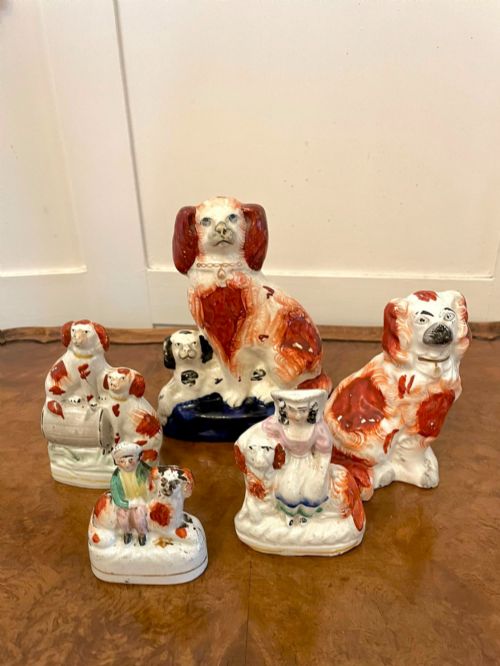
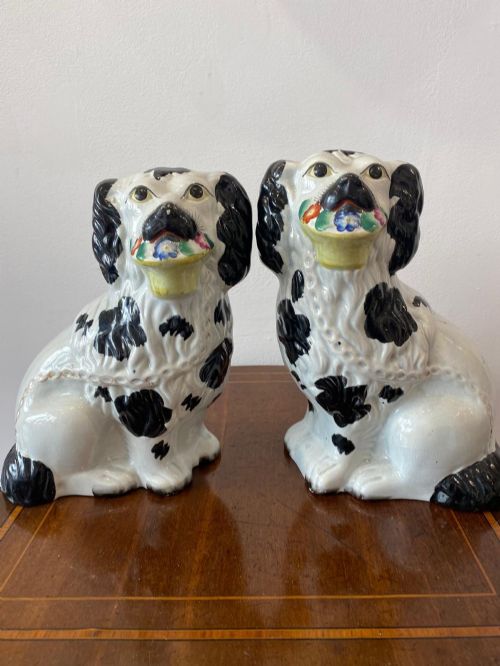
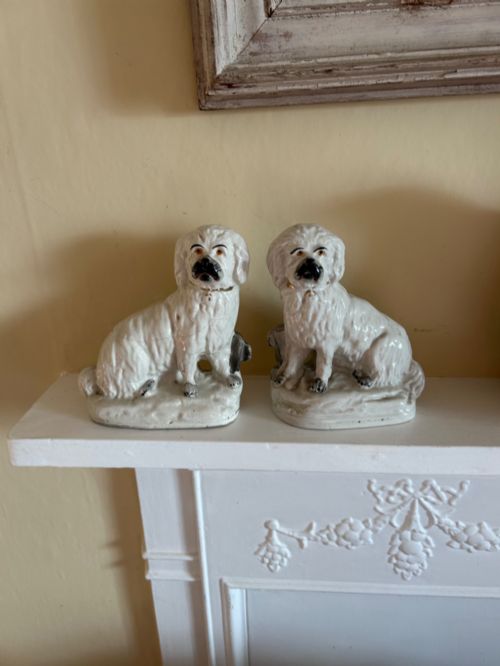
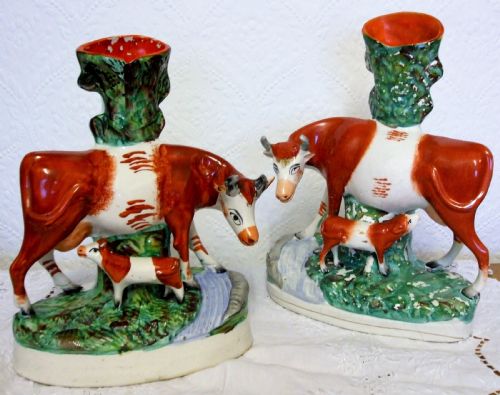
Victorian chimney ornaments encompass a diverse array of decorative ceramic figures, spill vases, and heavy metal door porters designed specifically for display upon the mantelpiece. The most frequent encounters on this page are Staffordshire earthenware figures, particularly dogs such as spaniels, pugs, and poodles, alongside architectural flatbacks depicting castles and cottages.
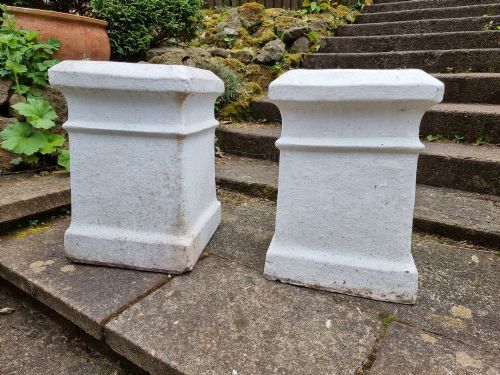
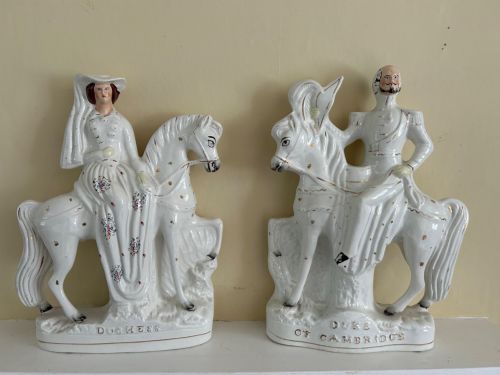
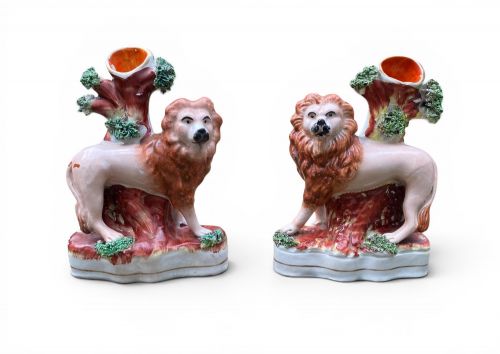
Makers fashioned these pieces during the nineteenth century, ranging from pairs of lion and deer spill vases to historical figures like the Duke and Duchess of Cambridge. Buyers also find larger terracotta garden pedestals and chimney pots alongside domestic items, reflecting the broad nineteenth-century domestic taste for mantelpiece ornamentation.
The selection ranges from modest single figures to matched pairs intended to sit symmetrically at either end of a fireplace. These objects capture Victorian domestic life through animal studies, architectural models, and portrait figures modelled in earthenware and brass.
How they were made
Metal ornaments such as chimney horses and Hussars employed brass casting techniques to create heavy, durable door porters that doubled as hearth ornaments. These materials provided the necessary weight and resilience for use near active fireplaces and domestic hearths.
Listings span the Victorian era from 1850 to 1900, featuring earthenware, terracotta, and brass materials formed into figures, spill vases, and architectural models.
What varies in quality
The survival of original glaze surfaces and minimal restoration separates standard pieces from superior examples. Matched pairs with uniform sizing and matching colour palettes also command greater interest among collectors.
The Victorian Chimney Ornaments Glossary
- Flatback
- A figure moulded with a flat, unpainted rear side intended to sit flush against a mantelpiece wall. This method saved materials and production time for potters.
- Spill vase
- A hollow ceramic figure incorporating an attached cylinder designed to hold wooden spills for lighting pipes and fires. These combine practical utility with decorative mantelpiece sculpture.
- Earthenware
- A porous pottery body fired at lower temperatures, commonly used for nineteenth-century Staffordshire figures. It requires a glaze layer to become completely watertight.
- Lead glaze
- A glossy coating containing lead applied to ceramic pieces before firing to produce a smooth, shiny finish. This technique enhances the brightness of underlying enamel colours.
- Door porter
- A heavy metal weight, often cast in brass, used to keep doors open. These objects frequently served a dual purpose as chimney ornaments on the hearth.
Victorian Chimney Ornaments: Frequently Asked Questions
What are Victorian chimney ornaments?
Victorian chimney ornaments are decorative figures and vases made of ceramic, terracotta, or brass designed to sit on mantelpieces. They include Staffordshire dogs, architectural flatbacks, and metal door porters.
These pieces reflect the Victorian taste for domestic display, bringing colour and character into the parlour. Families placed them symmetrically on the mantel shelf above the fireplace.
Were these pieces actually used on chimneys?
Most of these ornaments stood on the mantel shelf inside the room rather than on the exterior chimney stack. The mantelpiece provided a prominent focal point in the Victorian parlour.
Heavier items like terracotta chimney pots and metal door porters served structural or functional roles elsewhere in the home. Smaller ceramic figures remained strictly decorative.
How should I clean my antique figures?
Dust ceramic and brass ornaments gently with a soft, dry brush to remove surface accumulation. Avoid soaking earthenware pieces in water, as moisture can penetrate old glaze crazing.
Harsh chemical cleaners will strip original enamel paint and gilt highlights from Staffordshire pottery. Gentle maintenance preserves the historic surface finish.