
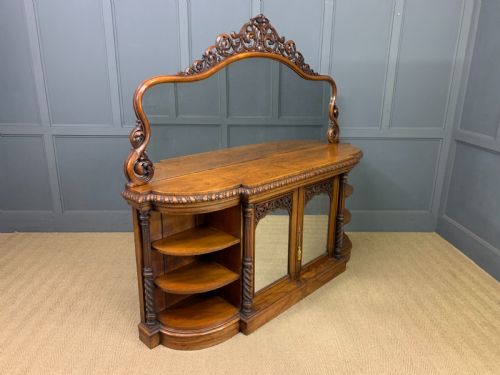
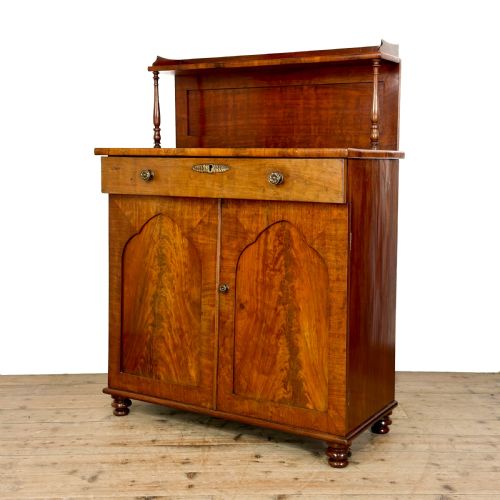


Victorian Chiffonier with Shelf
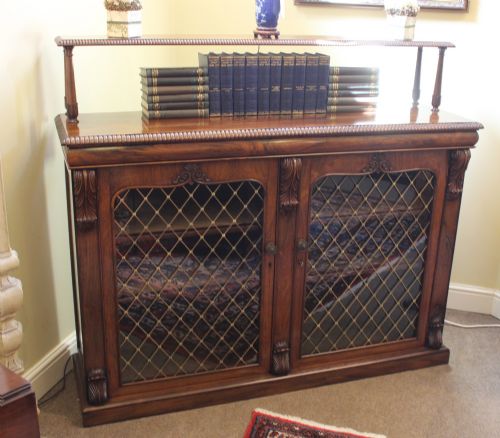
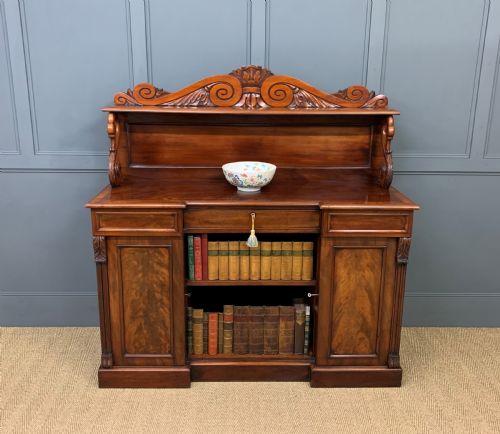
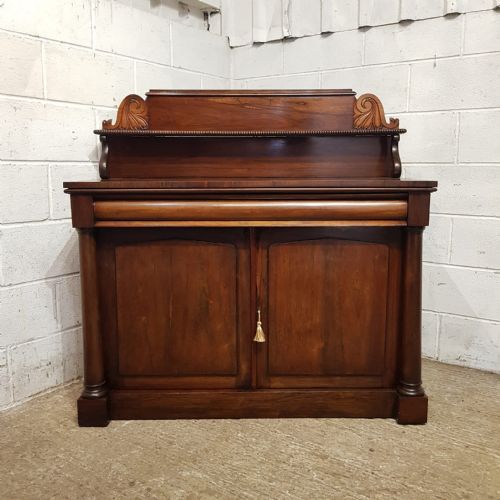
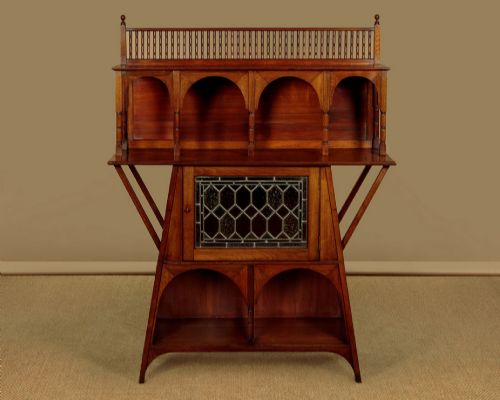
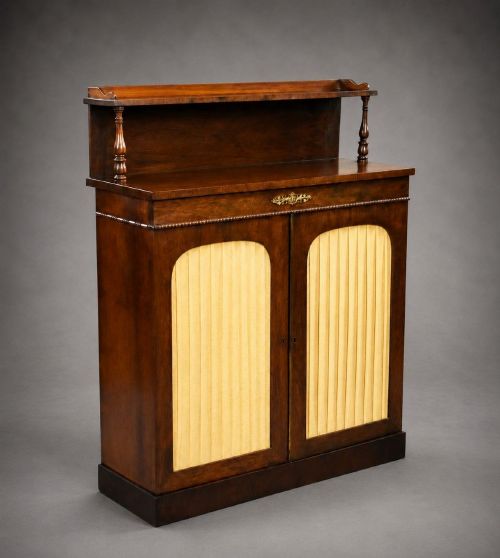
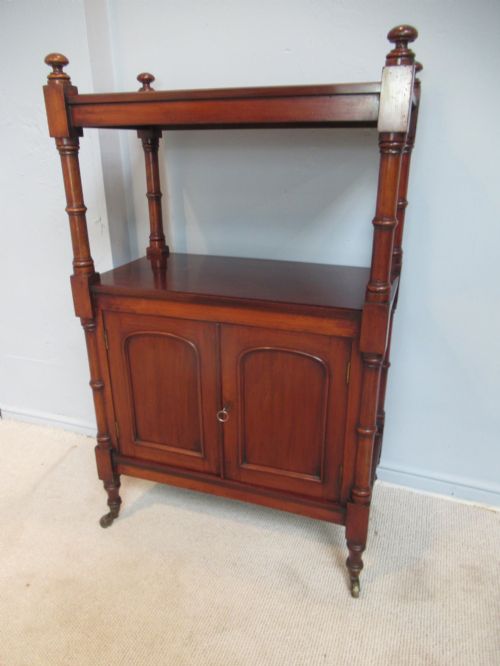
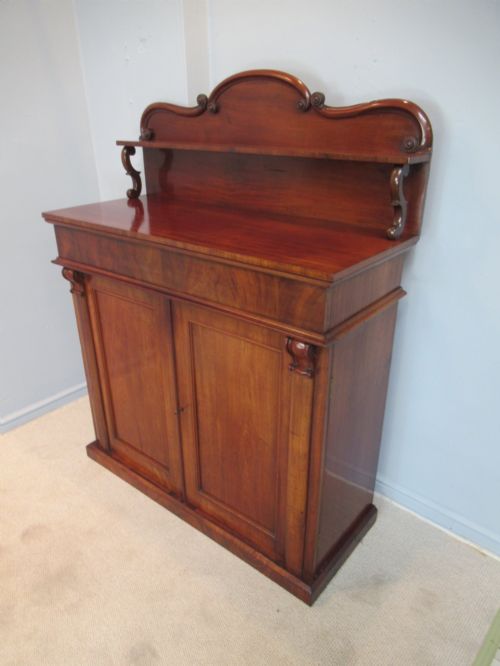
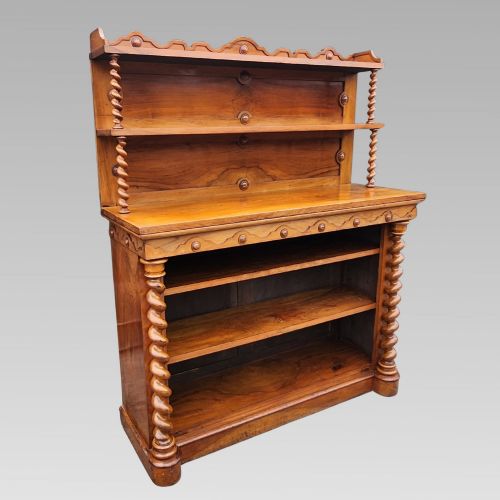
A Victorian chiffonier with shelf combines a low enclosed base with upper display tiers, offering both storage and surface space for a Victorian interior.
Victorian Chiffonier with Shelf
A Victorian chiffonier with shelf is a foundational piece of nineteenth-century furniture designed to anchor a principal room while displaying prized objects on its upper tiers. The examples met on this page typically combine a lower cupboard section with open shelving above, drawing on forms spanning the mid to late nineteenth century.
Makers of the period produced these cabinets in various formats, occasionally intersecting with related sideboards, side cabinets, and bookcases. Buyers searching for a Victorian chiffonier with shelf encounter pieces ranging from compact small chiffoniers to grander three-door buffet iterations.
The form evolved to serve dining rooms, parlours, and libraries, functioning equally as a sideboard for serving or a cabinet for books and decorative ornaments. Most items present an enclosed lower storage space topped by one or more display shelves supported by columns or carved brackets.
Materials and construction
Cabinet makers of the period relied heavily on solid timber frames faced with rich veneers, selecting mahogany, rosewood, burr walnut, and pollard oak for their distinct grain patterns. Flame mahogany veneer and satinwood inlay appear frequently, adding visual depth and contrast to the primary timber surfaces.
Structural elements incorporated brass details and occasionally fabric linings within panelled doors. Joinery techniques ensured sturdy housing for the upper shelves, which were mounted securely to the lower sideboard carcass using traditional dowels and screw fixings.
Listings feature items from the nineteenth century, including specific decades such as the 1850s, 1860s, 1870s, and 1880s.
Judging quality in nineteenth-century cabinets
Quality rests in the selection of timber figures, such as plum pudding mahogany or figured burr walnut, and the precision of any satinwood stringing or inlay work. Superior pieces display harmonious proportions between the heavy lower cabinet and the lighter, balanced upper shelving.
The sophistication of the carved brackets, the thickness and stability of the applied veneers, and the integrity of the original brass hardware elevate a cabinet above standard utility furniture. Master cabinet makers demonstrated refinement in the crispness of mouldings and the tight tolerances of door panels and drawer joints.
Robert Strahan
The Victorian Chiffonier with Shelf Glossary
- Chiffonier
- A low sideboard or cabinet featuring a combination of lower cupboards and upper display shelving. The form developed during the nineteenth century to serve dining and entertaining needs.
- Veneer
- A thin slice of decorative wood applied to a secondary timber base to create a rich surface figure. Flame mahogany and burr walnut are common examples found on these cabinets.
- Pollard oak
- Oak timber taken from a tree that has been pruned close to the trunk, producing a dense, knotty grain pattern. It provides a heavily textured surface used on substantial Victorian sideboards.
Victorian Chiffonier with Shelf: Frequently Asked Questions
What is a Victorian chiffonier with shelf used for?
These cabinets served primarily as sideboards or display units in nineteenth-century dining rooms and parlours. The lower cupboards stored table linens, silver, or documents.
The upper shelves held books, ceramics, and decorative ornaments. Today, they function well in modern living spaces for similar display and storage purposes.
How do I identify the wood on my cabinet?
Nineteenth-century makers used rich timbers such as mahogany, rosewood, and walnut for their principal surfaces. Look closely at the grain patterns and colour variations to distinguish between dense rosewood and figured mahogany.
Veneers often feature striking flame or burr formations, while solid secondary woods appear inside the carcass and drawer linings.
Are these cabinets difficult to place in modern homes?
Their modest depth makes them remarkably adaptable for narrow hallways, dining rooms, or living areas. The combination of enclosed storage and open shelving offers practical utility without dominating a room.
Ensure you measure ceiling height and floor space to accommodate the upper shelving tiers comfortably.
How can I tell the difference between periods?
Mid-nineteenth-century examples often display restrained neoclassical lines or heavy rosewood veneers associated with the Victorian era. Later nineteenth-century pieces may incorporate lighter satinwood details or eclectic revival styles.
Construction methods and timber selection also offer clues to the exact decade of manufacture.