
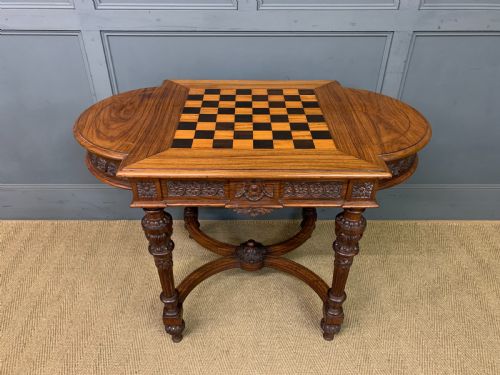


Victorian Chess Board
A victorian chess board brings tactile warmth and intellectual history into a room through rich timber inlays and folding leather panels.
Victorian Chess Board
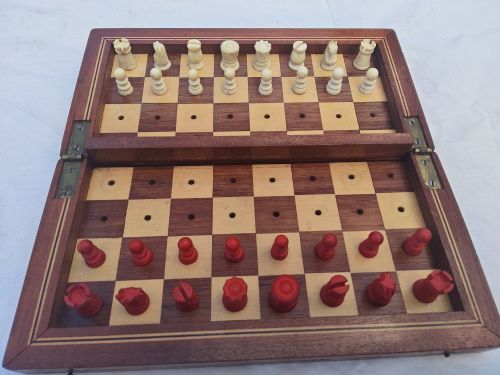
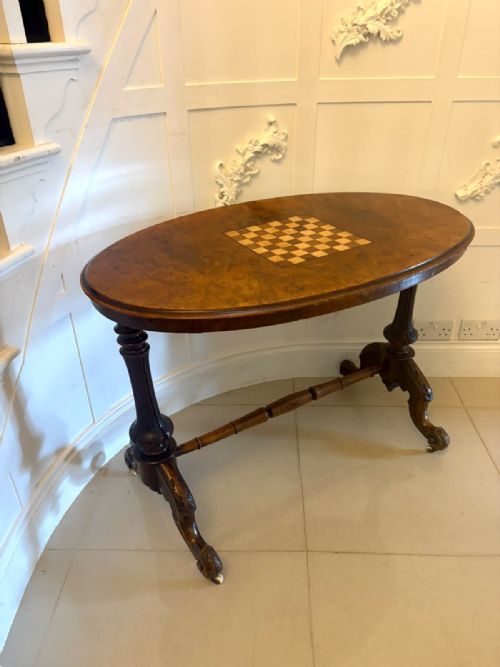
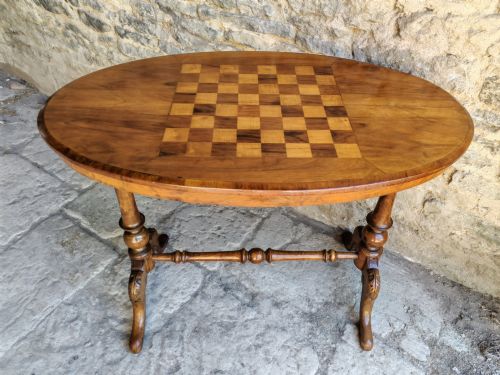
A victorian chess board appears in several distinct formats, ranging from portable folding boards to permanent table tops integrated into occasional and centre furniture. The evidence shows frequent examples designed as multifunction pieces, combining chess with backgammon, cribbage, or sewing facilities inside compendium boxes and tables.
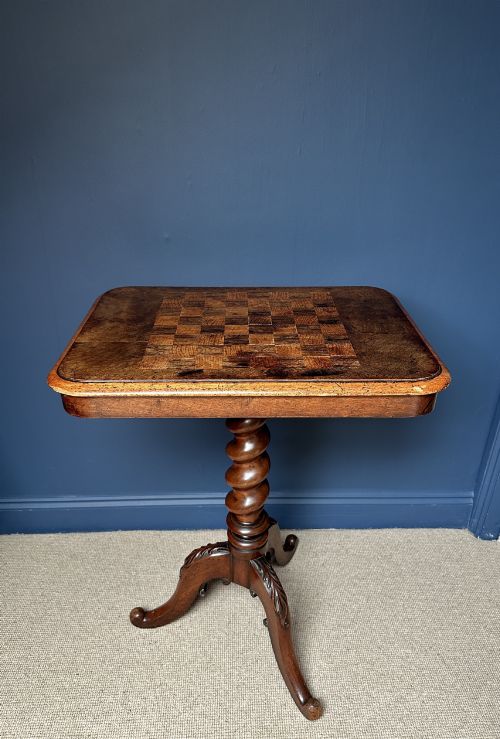
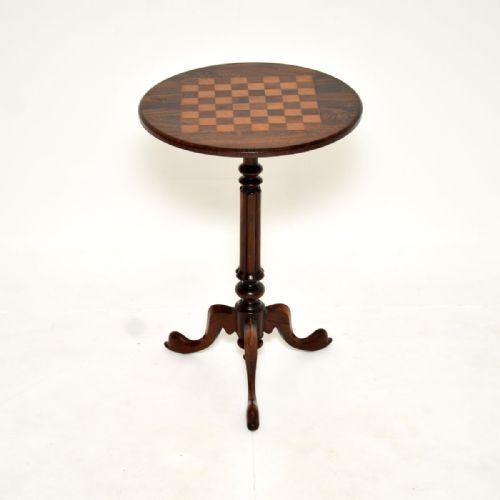
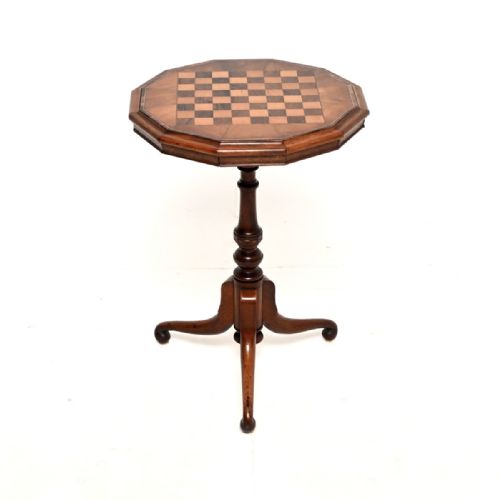
Most pieces date from the nineteenth century, encompassing standard Victorian production as well as Edwardian variants and Anglo-Indian imports. Makers utilised diverse timber and decorative schemes, resulting in everything from simple wooden folding boards to elaborate rosewood and burr walnut pedestal tables.
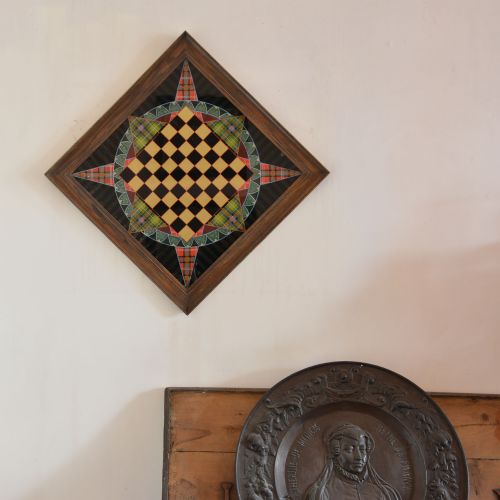
Buyers seeking a victorian chess board will frequently encounter walnut and rosewood surfaces featuring inlaid squares of lighter woods, alongside leather-bound faux books and Scottish reverse glass painted examples. These objects reflect a period when domestic board games formed a central pillar of middle-class leisure.
Materials and Techniques
Craftsmen built these boards using solid timbers and decorative veneers, selecting walnut, burr walnut, rosewood, and mahogany for their deep colour and grain. Contrasting light squares were formed using boxwood or sycamore, while finer items incorporated mother of pearl and gold leaf detailing.
Folding variants relied on leather bindings and textile hinges, while rigid boards utilised sturdy wooden carcases to prevent warping. Tables often featured intricate marquetry and parquetry inlay, requiring precise hand-cutting of individual wood squares.
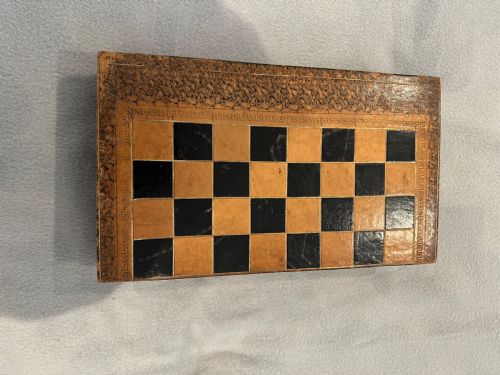
Specialised items employed reverse glass painting or applied decorative leather with gilt tooling to create playing surfaces. Carved bone and wood chess sets frequently accompanied these boards, completing the tactile ensemble.
Markers of Distinction
Quality rests in the precision of the timber inlay and the richness of the grain selection, particularly in burr walnut and rosewood specimens. Superior examples display tight, flush joints between contrasting squares without gaps or visible adhesive.
The architectural integration defines better tables, where the chess top harmonises with carved tripod bases, trumpet shapes, or fitted interior compartments. Flimmier items show mechanical shortcuts in their hinges or drawer construction.
Decorative ambition separates standard boards from exceptional pieces, with mother of pearl accents, gilt leather work, and multi-game compendium interiors indicating superior workshop execution.
Whittington Pattern·A British Chess Company
The Victorian Chess Board Glossary
- Parquetry
- Geometric mosaic woodwork formed by fitting small wood blocks together. This technique created the contrasting light and dark squares on the playing surface.
- Marquetry
- Decorative veneer work depicting pictures or abstract patterns applied to furniture surfaces. Craftsmen utilised this on the borders and pedestals surrounding the playing field.
- Compendium
- A boxed collection containing multiple games and equipment within a single case. These often housed chess, backgammon, and cribbage boards together.
- Burr walnut
- Wood taken from the growth growths of a walnut tree, yielding swirling grain patterns. It served as a prized veneer for high-end Victorian games tables.
- Boxwood
- A dense, pale yellow hardwood employed for the lighter squares on inlaid boards. It provided a sharp contrast against darker rosewood or walnut.
Victorian Chess Board: Frequently Asked Questions
Were these boards meant for travel or display?
Both purposes existed side by side during the nineteenth century, catering to different domestic needs. Portable folding boards, leather-bound faux books, and travel sets allowed players to take games on journeys.
Meanwhile, large rosewood and burr walnut tables remained stationary in drawing rooms and libraries. These served as permanent pieces of occasional furniture when not in active play.
What games besides chess are found with these boards?
Backgammon and cribbage appear most frequently alongside chess in Victorian gaming items. Many tables feature reversible tops or sliding panels that reveal alternative playing grids underneath.
Compendium boxes also grouped multiple game boards and pieces into a single fitted case. Draughts sets commonly accompanied chessmen within these multi-use containers.
How should I care for a wooden chess top?
Keep wooden and leather boards away from direct sunlight and strong heat sources to prevent timber shrinkage and veneer lifting. Maintaining a stable indoor environment protects the delicate inlays and glued joints.
Apply a light microcrystalline wax occasionally to nourish the antique wood finish. Avoid using wet cloths or harsh modern cleaning chemicals on leather and gilt surfaces.