



Victorian Cherub Table Clock
A victorian cherub table clock brings winged figural bronze and gilt metalwork to the mantel, offering ornamental timekeeping rooted in nineteenth-century French and English design.
Victorian Cherub Table Clock
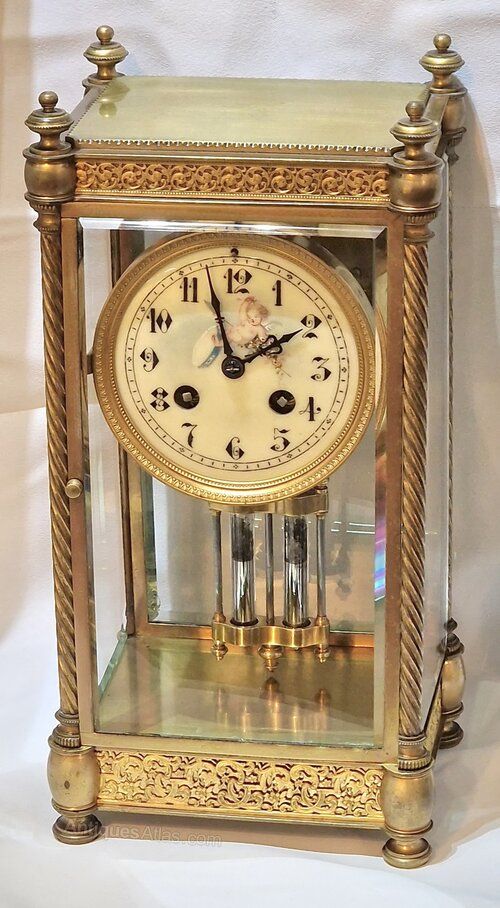
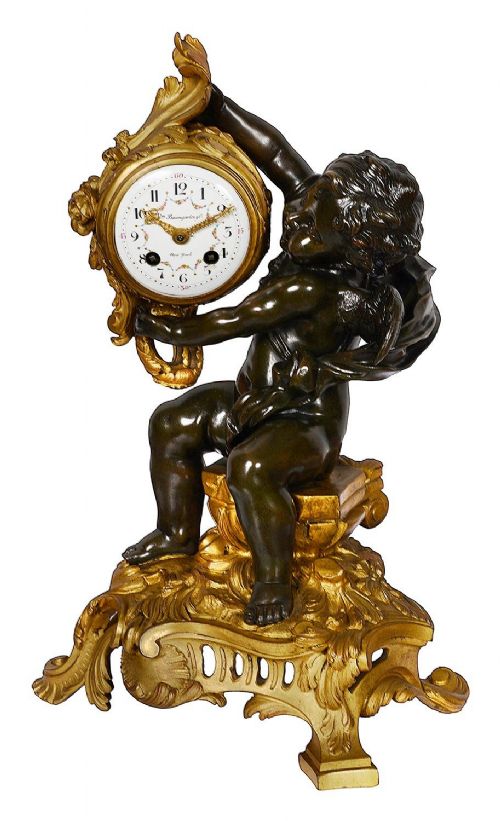
A victorian cherub table clock sits within the category of nineteenth-century horology, spanning mantel clocks, clock garnitures, and small timepieces featuring figural putti or cherubs. You will most frequently encounter French gilt bronze and ormolu pieces from the 1860s to the 1880s, alongside English interpretations and four glass models.
The objects combine functional clock movements with sculptural bronze work, porcelain dials, and marble or bronze plinths. Formats range from large ornate mantel pieces to small timepieces on bronze bases and swinging cherub designs.
Materials and construction
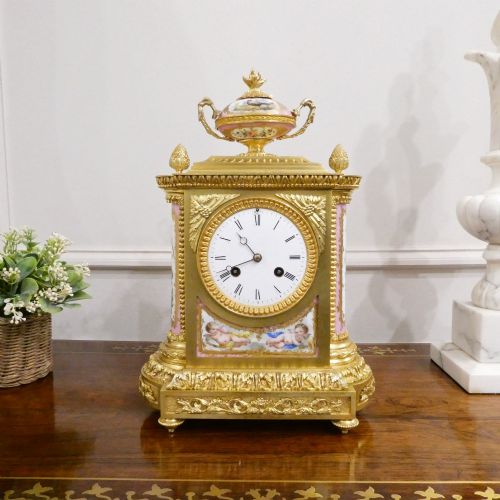
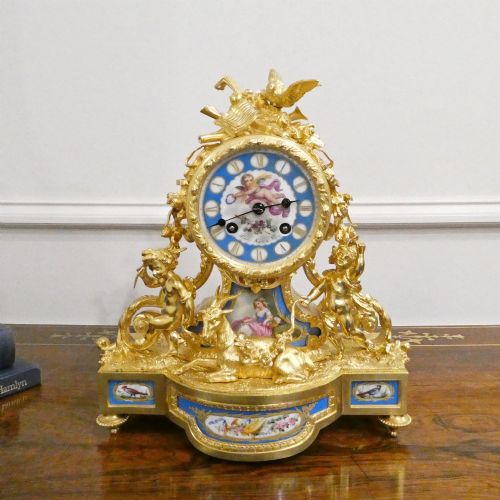
Makers utilised cast bronze, gilt metal, and ormolu for the figural elements and cases, frequently mounting them on variegated marble or bronze plinths. Dial construction incorporates painted porcelain, enamel, and hand-painted details.
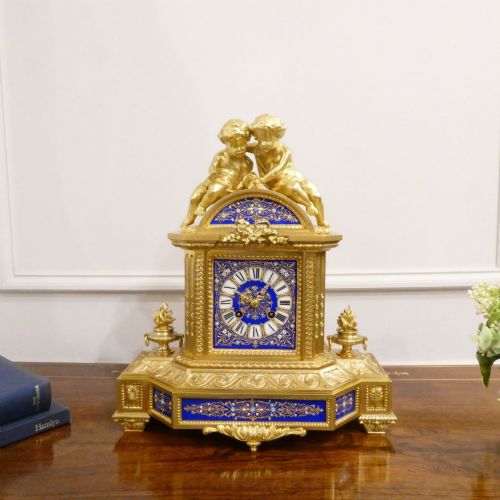
Movements are housed within cast and chased metal structures, sometimes accompanied by champleve enamel work, porcelain panels, and specialised mechanisms such as swinging or four glass configurations.
Victorian Cherub Table Clock Retail Price Guide 2026
Typical asking prices for victorian cherub table clock among the pieces listed under this phrase on Sellingantiques today, from the lower quarter to the upper quarter. They describe what is for sale here now, not the wider market.
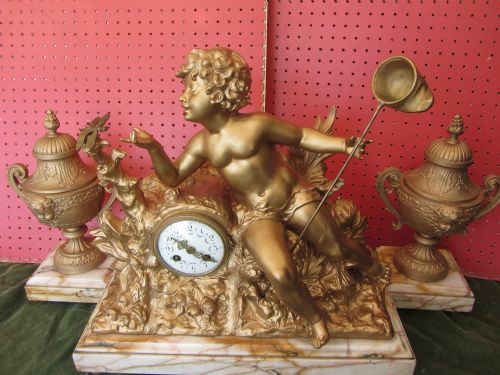
Some cherubs hold dragonflies while others balance on swinging mechanisms, bringing motion to cast bronze.
Distinctions in quality
Quality rests in the crispness of the bronze casting and the depth of the gilding across the cherub and case details. Finer examples display meticulous hand-chasing on the figural bronze and integration with materials like champleve enamel and porcelain.
The standard of the movement and the provenance associated with recognised makers set apart the upper tier of these clocks from standard production pieces.
Jean-Baptiste Delettrez·Henry Marc·Le Roy and Fils·Phillipe H. Mourey·John Bennett Cheapside London·Farcot
The Victorian Cherub Table Clock Glossary
- Ormolu
- A technique of applying finely ground high-carat gold to a bronze object using mercury. This creates the rich metallic surface seen on French clock cases.
- Champleve enamel
- A method where troughs or cells are hollowed out of the metal surface and filled with vitreous enamel before firing. It decorates the panels and frames of nineteenth-century clock bodies.
- Clock garniture
- A set comprising a central clock flanked by matching ornamental pieces such as urns or candelabra. These matched sets share identical stylistic vocabularies.
- Putto
- A figure of a small winged infant, frequently depicted as a cherub in nineteenth-century figural bronze sculpture. They form the central decorative motif of these clocks.
- Four glass clock
- A mantel clock design featuring glass panels on all four sides to expose the movement and pendulum. These typically date from the latter part of the nineteenth century.
Victorian Cherub Table Clock: Frequently Asked Questions
Where were these clocks made?
The majority originate from French workshops and Parisian makers, though English retailers and makers also produced them.
French pieces often display Rococo Revival or Louis XVI Revival styling with gilt bronze and porcelain.
How do four glass clocks differ?
Four glass models feature transparent panels on all sides, allowing light through the movement and showcasing the mercury or temperature-compensated pendulums.
They emerged towards the end of the nineteenth century alongside traditional figural bronze cases.
What is a clock garniture?
A garniture pairs the main clock with matching side ornaments, designed to sit together on a mantelpiece or sideboard as a unified decorative scheme.
These sets share identical materials, such as ormolu and porcelain mounts.
How do I wind the movement?
Winding typically involves a dedicated key inserted into the dial arbors to tension the spring-driven or weight-driven train.
Careful handling ensures the escapement and pendulum remain undisturbed during the process.