


Victorian Charcoal Portrait
A victorian charcoal portrait captures the direct, unvarnished gaze of the nineteenth century through monochrome draughtsmanship.
Victorian Charcoal Portrait
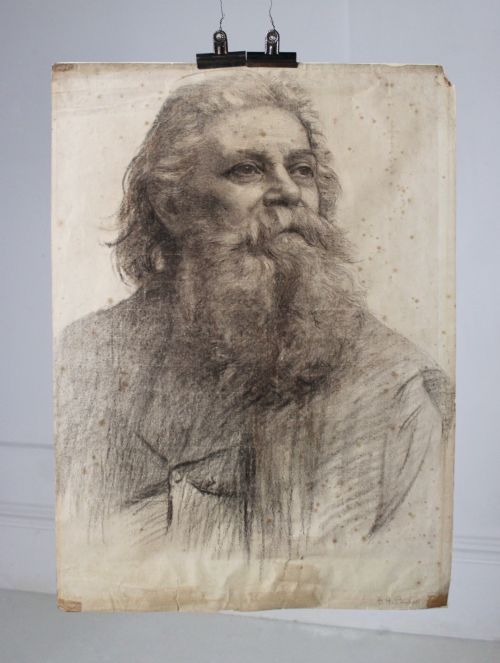
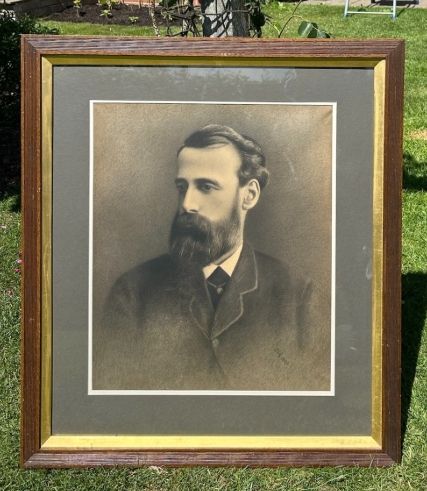
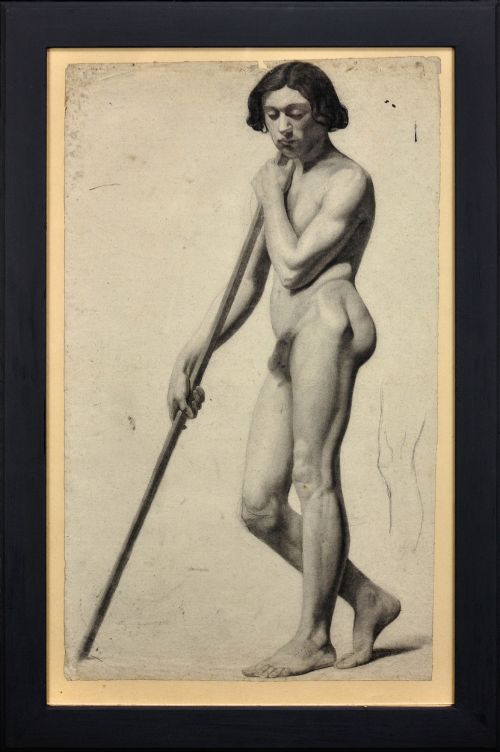
A victorian charcoal portrait brings nineteenth century sitters into focus through the direct medium of drawing. You will find studies of gentlemen, academic life drawings, and specific historical figures rendered on paper.
The selection ranges from anonymous nineteenth century school works to signed pieces from the 1840s up to the Edwardian era. Portraits appear framed under glass, often accompanied by chalk or pastel highlights.
How they were made
Artists worked primarily with charcoal and graphite on paper or canvas, sometimes touching the surface with white chalk or pastel to catch the light. The powdery nature of the medium required careful fixing to preserve the delicate grey tones.
Framing typically involved wood moulding finished with gesso and giltwood to protect the works from atmospheric moisture. Many bear the marks of academic training through careful attention to proportion and shadow.
Sitters range from anonymous Victorian gentlemen to feminist writers and Lord Chancellors.
What varies in quality
The strength of the draughtsmanship separates a routine academic exercise from a compelling character study. A sure hand in the handling of shadow and facial expression defines the better examples.
Condition of the paper and the integrity of the original frame heavily influence the character of the piece. Foxing or damp stains alter the monochrome balance, whereas a well-preserved surface retains its crisp atmospheric depth.
Henry Arthur Roberts·Sir Edwin Landseer·Theobald Chartran·George Richmond
The Victorian Charcoal Portrait Glossary
- Charcoal
- A dry drawing medium made from charred organic material that produces deep blacks and soft grey tones. It allows for both broad smudging and sharp linear work.
- Giltwood
- Wood carved and covered with a thin layer of gold leaf, commonly used for nineteenth century picture frames. It provides a warm metallic border to dark monochrome drawings.
- Academic Realism
- A style of painting and drawing produced under the influence of European academies of art. It emphasises precise anatomy, careful observation, and classical proportions.
- Gesso
- A paint mixture consisting of a binder mixed with chalk, gypsum, or pigment used to prepare wood frames. It creates a smooth surface before gilding.
- Foxing
- Brown spots of chemical oxidation that commonly appear on old paper over time. It results from iron impurities in the paper or damp storage conditions.
Victorian Charcoal Portrait: Frequently Asked Questions
Are these works signed?
Some pieces bear artist signatures, monograms, or period inscriptions identifying the sitter, while others remain anonymous nineteenth century school studies.
Attributions often rely on stylistic comparison and contemporary documentation rather than a signature on the paper.
What is the difference between charcoal and pastel?
Charcoal utilises burnt organic material to create monochrome tonal depth and sharp linear marks. Pastel incorporates powdered pigments bound with gum to introduce colour to the composition.
How do I identify a Victorian frame?
Victorian frames often feature heavy wood moulding decorated with moulded gesso ornaments and finished in giltwood. The reverse typically shows older corner joins and oxidized fixings.
Original frames complement the period of the drawing, though many works have been reframed over the decades.