
Victorian Cased Silver
Victorian cased silver combines fine sterling smithing with fitted presentation boxes, offering collectors functional elegance and miniature architectural mastery.
Victorian Cased Silver
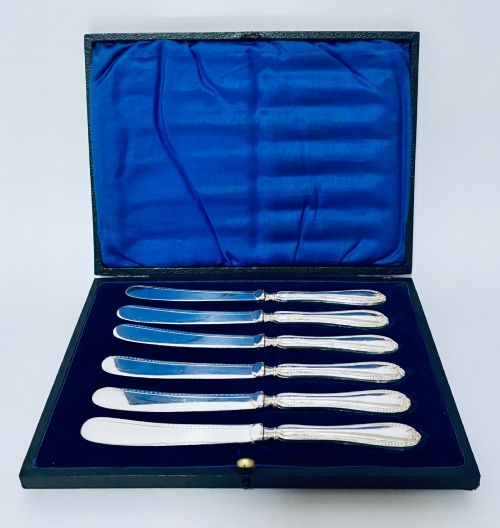
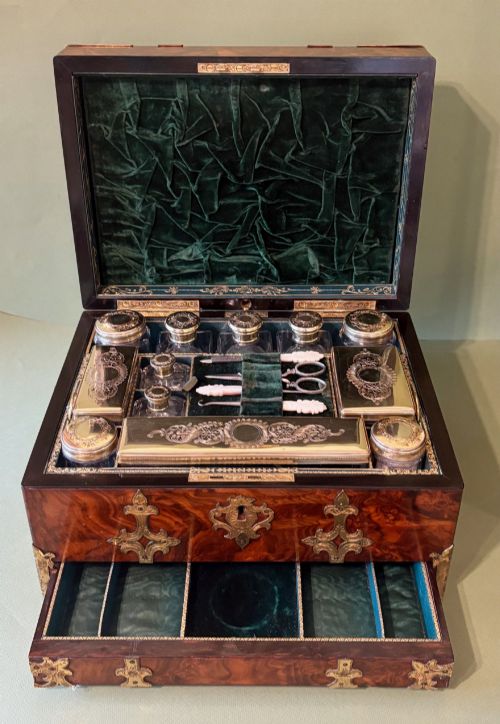
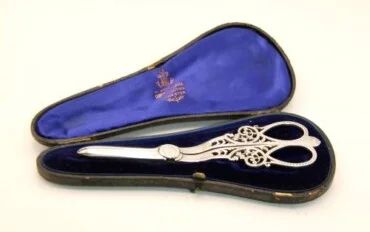
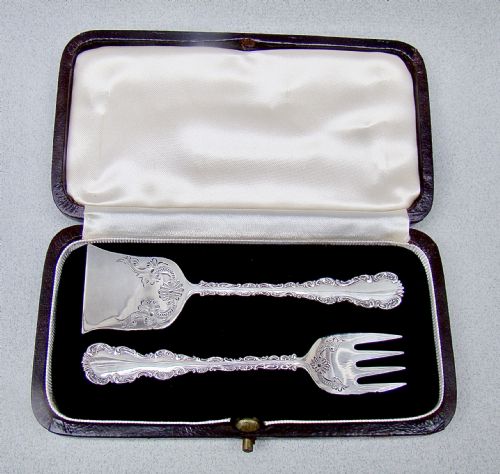
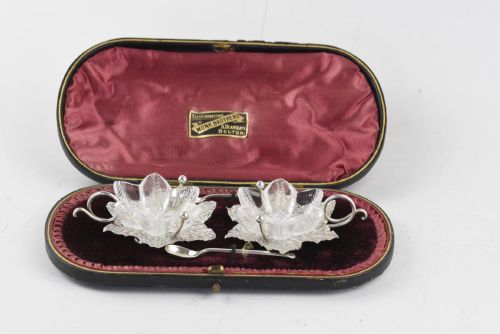
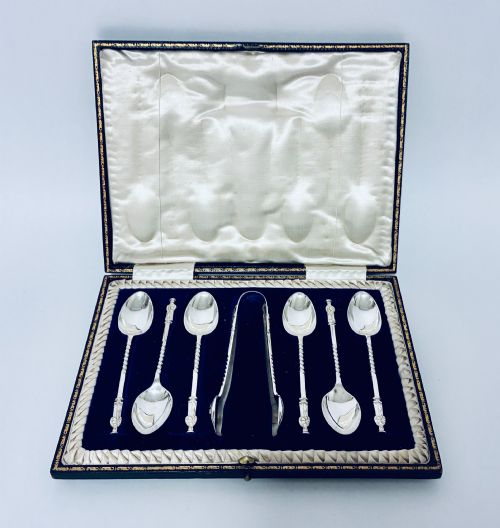
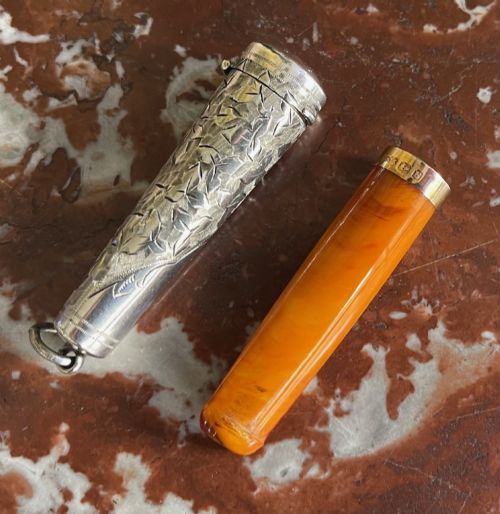
Victorian cased silver encompasses coordinated table service sets, travelling requisites, and vanity items housed in purpose-built protective boxes lined with velvet, silk, or satin. These objects span from christening flatware and salt cellars to scent bottles, card cases, and carving sets produced during the nineteenth century.
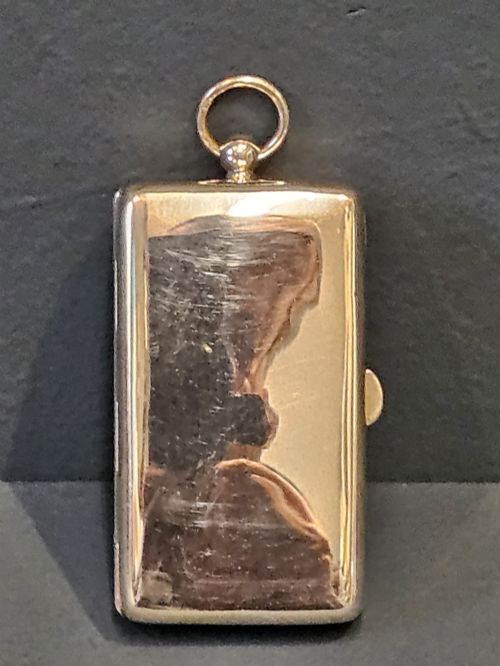
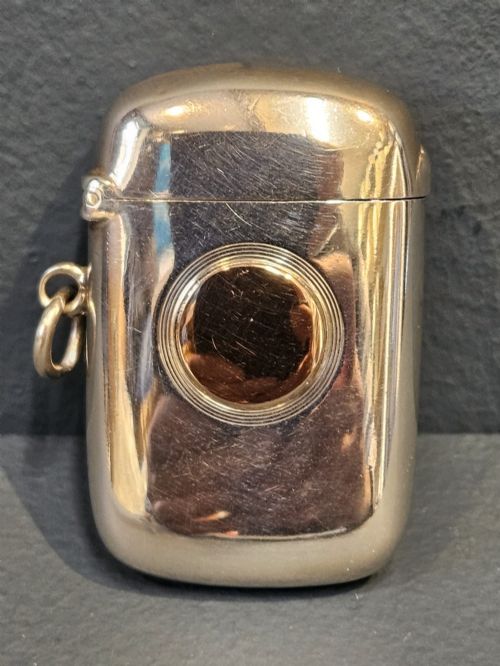
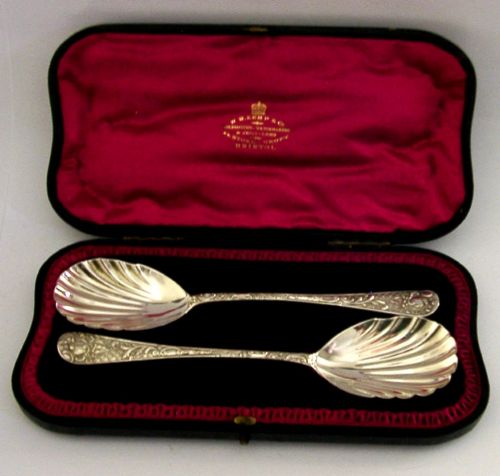
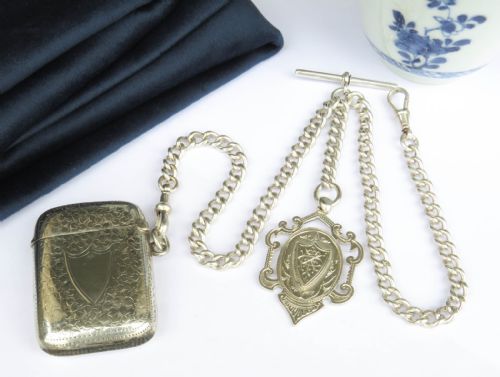
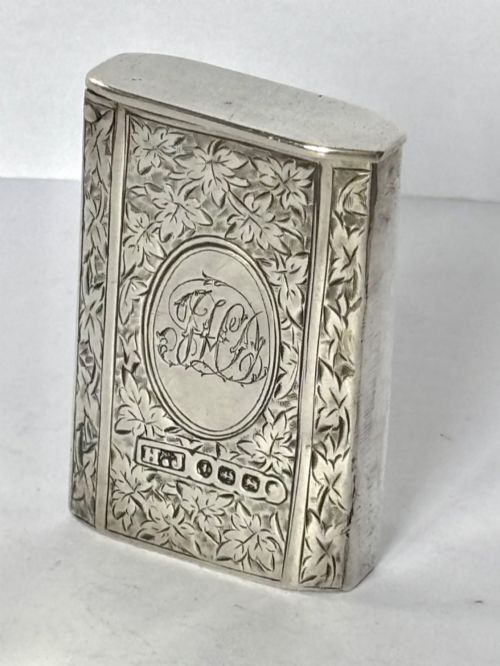
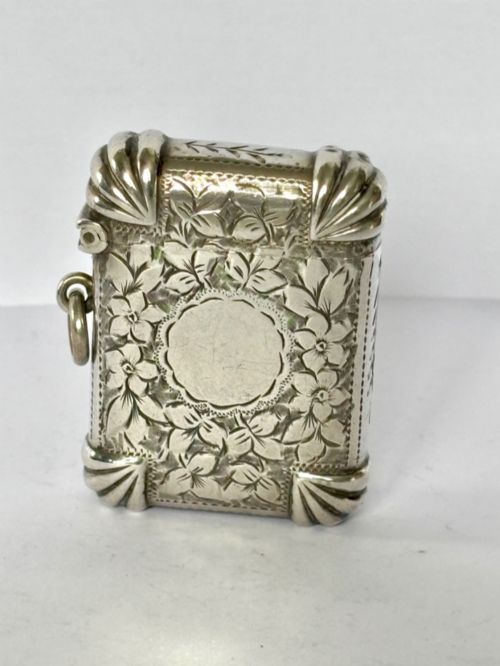
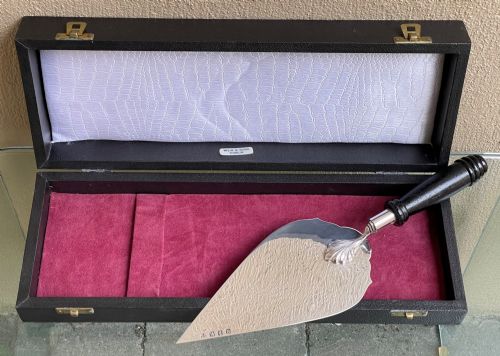
The buyer encounters varied forms on this page, including apostle spoons, fish servers, napkin rings, and novelty vesta cases accompanied by tailored leatherette or wooden cases. Many pieces bear clear hallmarks from major English assay centres like Birmingham, Sheffield, and London, alongside French and Scottish provincial origins.
These sets were designed for gifting on momentous occasions or for orderly travel by affluent Victorians, preserving delicate items from tarnish and wear. The survival of both the silver and its original fitted enclosure dictates the desirability of the piece.
How Victorian cased silver was made
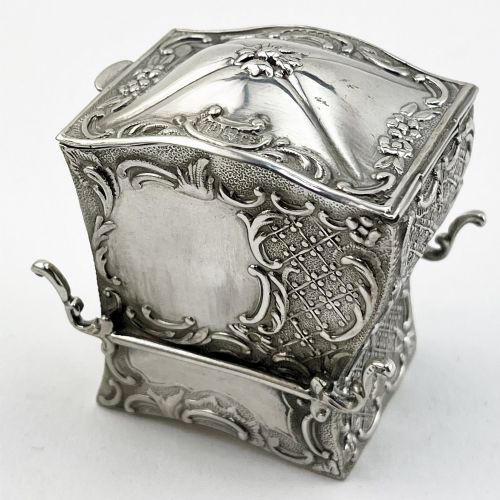
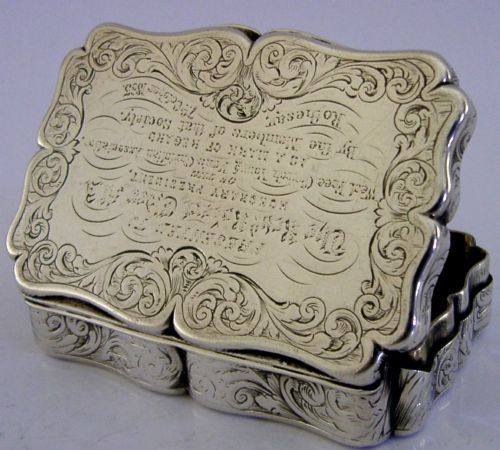
Silversmiths utilised sterling silver alongside silver plate, shaping components through casting, hammering, and intricate hand-engraving such as the famed castle top scenes and ivy motifs. Gilding, mother-of-pearl inserts, and applied ormulu enrich specific pieces.
The protective cases rely on rigid wooden foundations covered in leather, leatherette, or burr walnut, then precision-lined with padded silk or velvet to cradle the specific contours of the silver items. Hinges, clasps, and push-buttons in brass or gilt metal secure the protective enclosures.
Recorded forms span functional tablewares like apostle spoons and salt cellars alongside personal accessories such as vesta cases and scent bottles.
What varies in quality
Quality rests upon the crispness of the silversmith's chasing and engraving, the weight of the sterling metal, and the absolute integrity of the original fitted case. Works by renowned makers or specific regional assay offices command greater attention from discerning collectors.
The condition of the interior lining - whether silk, velvet, or satin - and the smooth operation of original brass clasps and hinges significantly influence the overall standard of any cased ensemble.
Henry Wilkinson·Howard James·EV Pledge and Son·Horton and Allday·James Dixon and Sons·Sampson Mordan and Co·Nathaniel Mills·Charles Horner·Mousley Brothers·Benetfink·Jonas Bowen and Sons·Josiah Williams and Co·Elkington and Co·George Unite·Martin Hall and Co·Samuel Foskett·William Thorneywork·Charles May·Levi and Salaman·Elizabeth Eaton·FA Barrett
The Victorian Cased Silver Glossary
- Castle top
- A detailed high-relief engraving of a famous building or landmark on the silver surface, commonly found on card cases and vesta boxes.
- Vesta case
- A small portable box designed to hold safety matches, often featuring an integrated striker on the base.
- Aide memoire
- A small pocket notebook or memorandum pad furnished with silver covers and an internal writing slate or paper leaves.
- Silver gilt
- Sterling silver that has been coated with a thin layer of gold, sometimes referred to as vermeil.
- Hallmark
- An official stamp applied by an assay office indicating the purity of the metal, the maker, and the year of manufacture.
Victorian Cased Silver: Frequently Asked Questions
What are cased silver sets?
Cased silver sets are collections of silverware, vanity items, or cutlery manufactured alongside a custom-fitted storage box lined with fabric.
These enclosures were engineered to protect delicate items from tarnish and damage while making them portable for travel or presentable as gifts.
How do I date Victorian silver?
Dating relies heavily on the official hallmarks stamped directly onto the metal surface by assay offices in cities like Birmingham, Sheffield, and London.
Each operating year corresponds to a specific letter stamp, which works alongside the maker's mark and standard purity symbols to establish the exact timeline.
Were these items meant for daily use?
Many sets, such as christening flatware, salt cellars, and travelling shaving kits, served practical functions during dinners or journeys in the nineteenth century.
Others, like decorative card cases and prayer book holders, acted as fashionable personal accessories for upper-class social calls.
How should I care for cased silver?
Keep the silver away from direct moisture and sulphur sources to prevent rapid tarnishing, using a soft cloth for gentle cleaning without abrasive polishes.
Store the items within their original fitted cases, ensuring the velvet or silk linings remain dry and free from dust accumulation.