

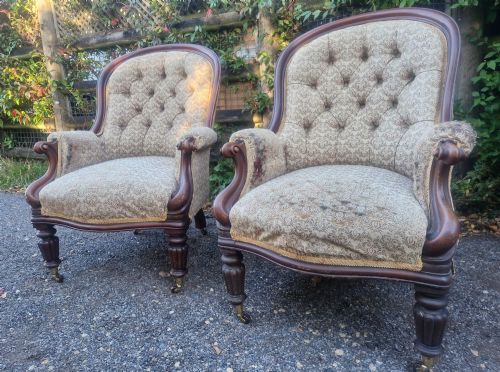
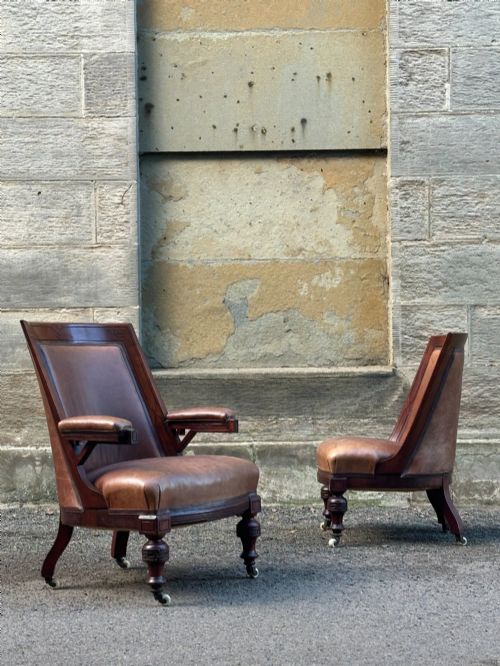
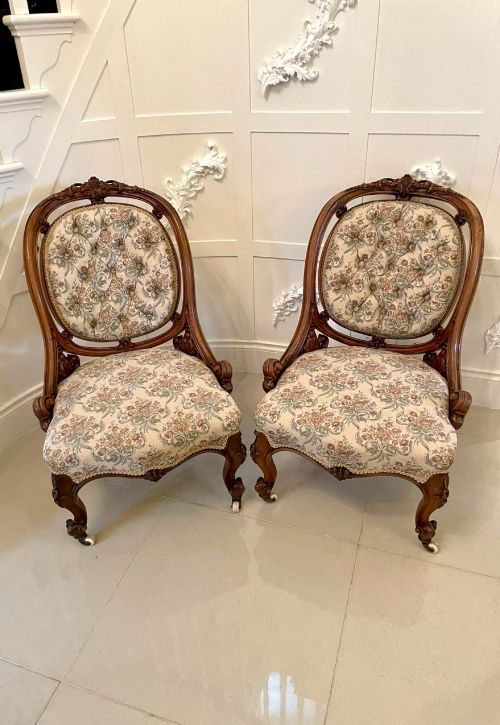
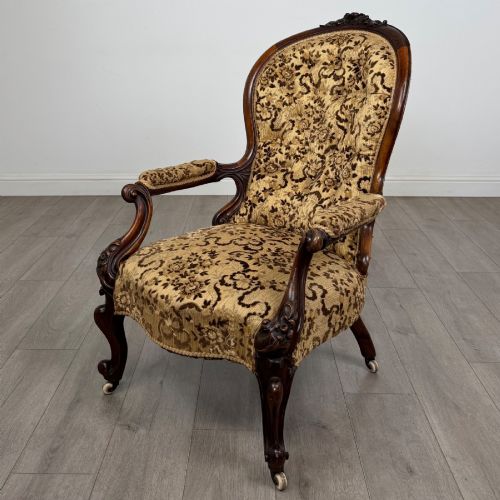
Victorian Carved X Frame Chair
A victorian carved x frame chair brings architectural form and heavy timber into a room, offering a seat shaped by structural geometry.
Victorian Carved X Frame Chair
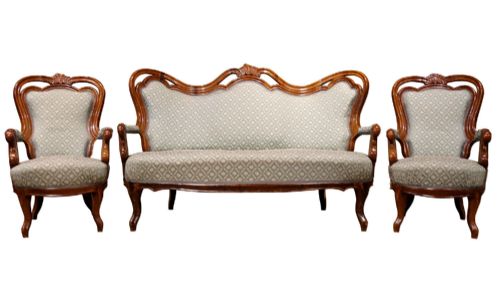
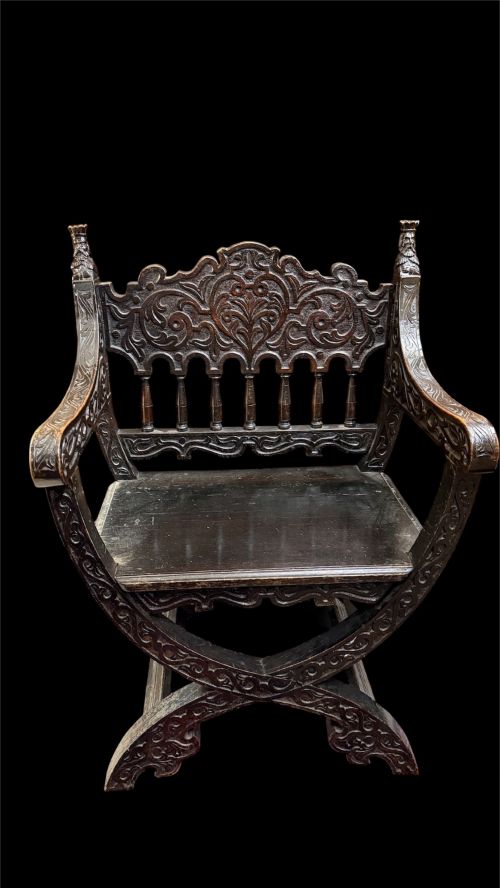
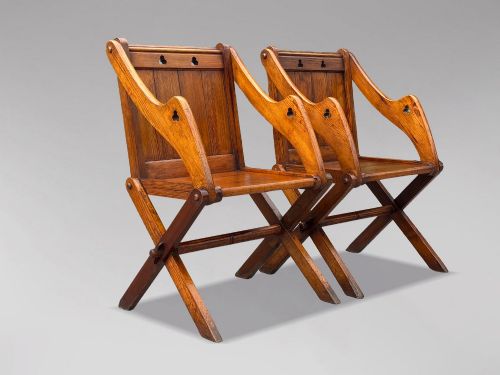
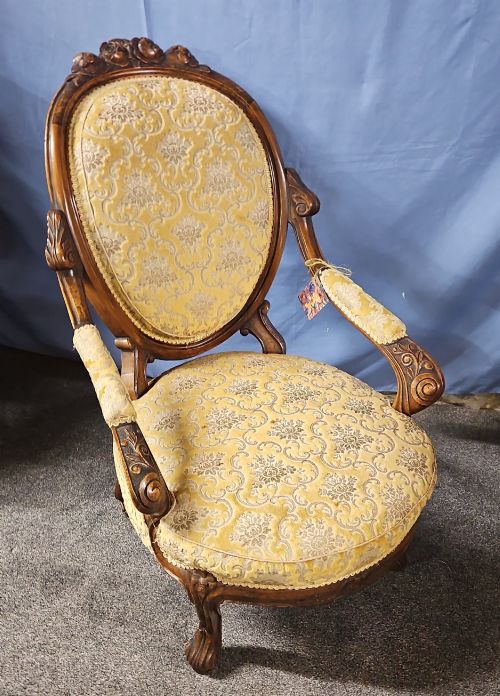
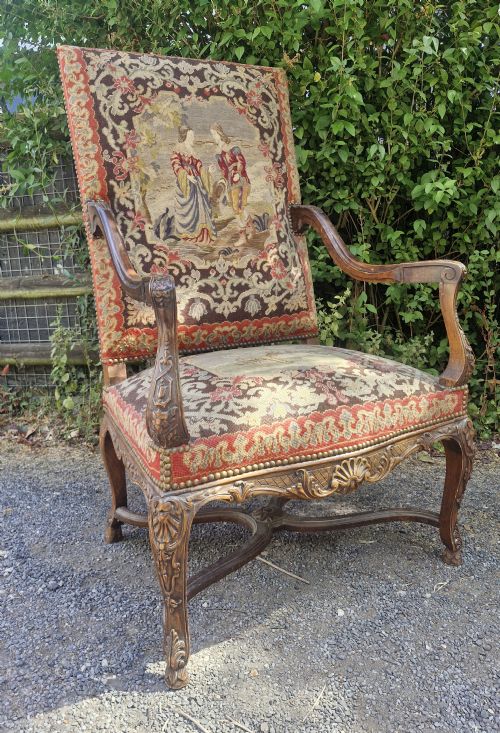
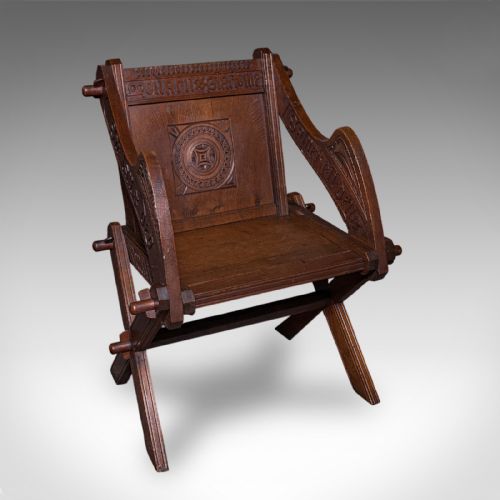
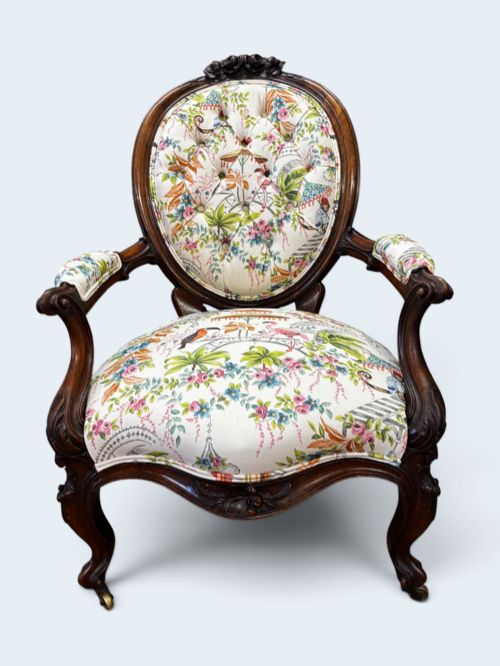
A victorian carved x frame chair takes its structural identity from intersecting diagonal timbers that form a distinct cross beneath the armrests or seat. This page holds various interpretations of the form, from heavy oak examples rooted in Gothic Revival designs to refined walnut pieces carrying Rococo curves.
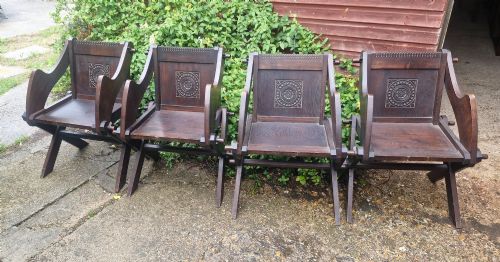
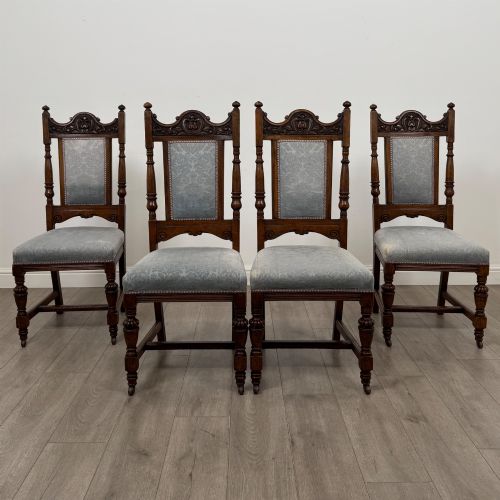
The pieces emerge primarily from the nineteenth century, spanning decades from eighteen fifty to nineteen hundred. Alongside single armchairs, the selection includes sets of dining chairs, library armchairs, and variants such as the Glastonbury chair.
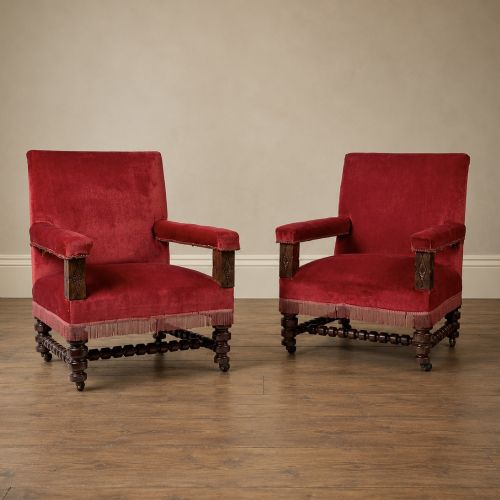
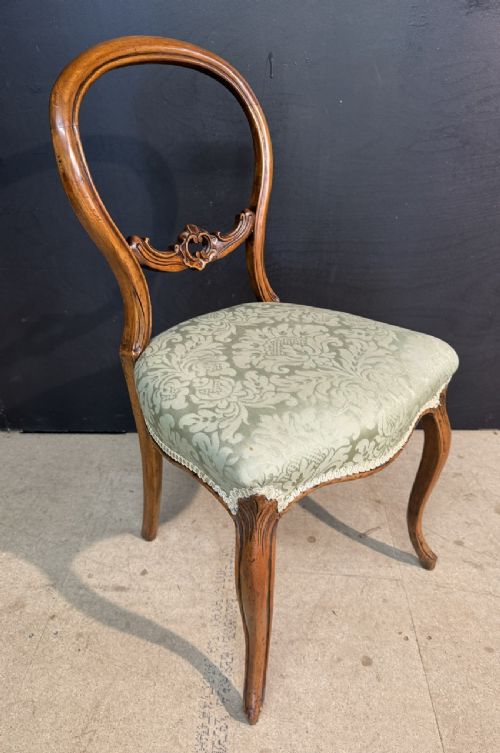
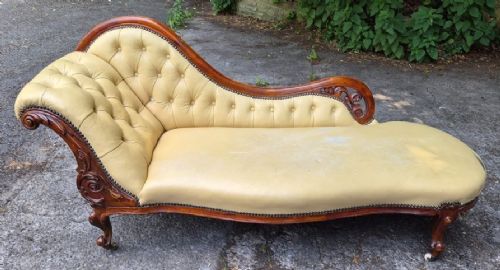
Makers and designers drew inspiration from historical precedents, resulting in pieces shaped by Gothic, Renaissance, and Jacobean revivals. Buyers encounter everything from robust pitch pine frames to elegant rosewood and mahogany seating upholstered in velvet, leather, or needlework.
How they were made
Craftsmen shaped these frames from dense hardwoods including oak, walnut, mahogany, rosewood, and pitch pine, selecting timber for strength and grain pattern. Joinery relied on mortise and tenon construction to support the diagonal stress inherent in intersecting frame designs.
Carving was executed by hand directly into the solid wood elements, rendering foliate motifs, linenfold panels, or strapwork depending on the revival style. Upholstered sections utilised traditional stuffing techniques secured over webbing or springs, finished with leather, velvet, or fabric.
Victorian Carved X Frame Chair Retail Price Guide 2026
Typical asking prices for victorian carved x frame chair among the pieces listed under this phrase on Sellingantiques today, from the lower quarter to the upper quarter. They describe what is for sale here now, not the wider market.
Listings feature oak, walnut, mahogany, rosewood, and pitch pine across Victorian, Gothic Revival, and Rococo Revival styles.
What varies in quality
Quality rests in the depth and crispness of the hand carving on the frame, where sharp relief work distinguishes superior pieces from softer, mechanical mouldings. The choice of primary timber also dictates merit, with dense figured rosewood or dense quarter-sawn oak representing higher production standards.
Proportion and structural integrity define the upper tier, ensuring the intersecting members meet cleanly without excessive secondary bracing. The quality of the upholstery execution, from hand-tacked leather to fitted velvet, completes the distinction between standard seating and exhibition examples.
Gillows·Howard And Sons
The Victorian Carved X Frame Chair Glossary
- X-frame
- A chair construction method featuring intersecting diagonal members that support the seat and armrests. This ancient architectural form experienced revivals during the nineteenth century.
- Glastonbury chair
- A traditional ecclesiastical folding armchair design constructed from intersecting flat timber panels. Examples often feature inscribed backs and Gothic Revival detailing.
- Gothic Revival
- An architectural and decorative style drawing on medieval forms. Pieces display pointed arches, tracery, and heavy carved woodwork.
- Rococo Revival
- A mid-nineteenth-century design movement favouring asymmetrical flowing curves, C-scrolls, and naturalistic carved foliage. Walnut and rosewood were typical framing materials.
- Pitch pine
- A resinous softwood utilised in nineteenth-century cabinetmaking and seating frames. It offers a strong structural core with pronounced grain patterns.
Victorian Carved X Frame Chair: Frequently Asked Questions
Were these chairs used at dining tables?
While many survive as single armchairs or library seats, period makers produced sets intended for formal dining rooms.
Examples range from single library armchairs to matched sets of six or eight dining chairs.
How do I identify a Gothic Revival piece?
Gothic Revival pieces display architectural motifs such as pointed arches, quatrefoils, and heavy linenfold or tracery carving on the wooden frame.
They are predominantly constructed from solid oak or pitch pine with a dark finish.
What woods were used for Victorian frames?
Cabinetmakers utilised a variety of hardwoods depending on the intended style and finish of the seating frame.
Common selections include oak for Gothic pieces, walnut and rosewood for revival drawing room suites, and mahogany or pitch pine.