




Victorian Carved Trestle Table
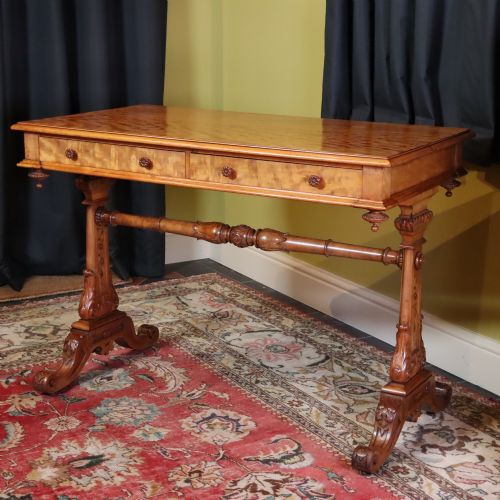
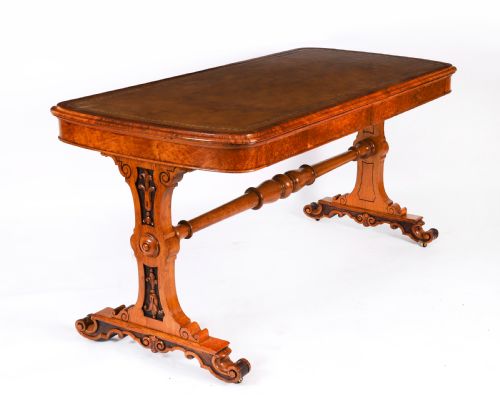
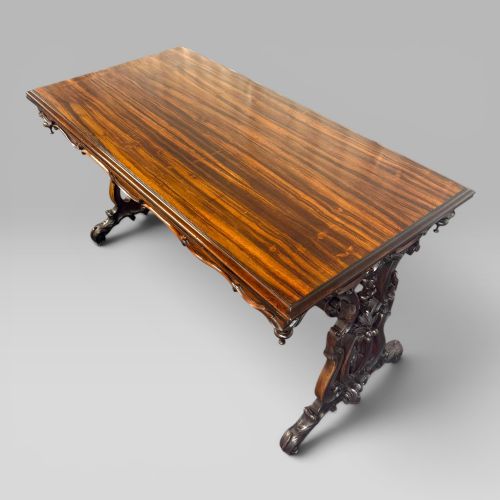
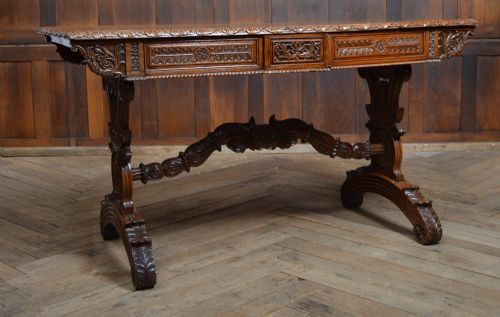
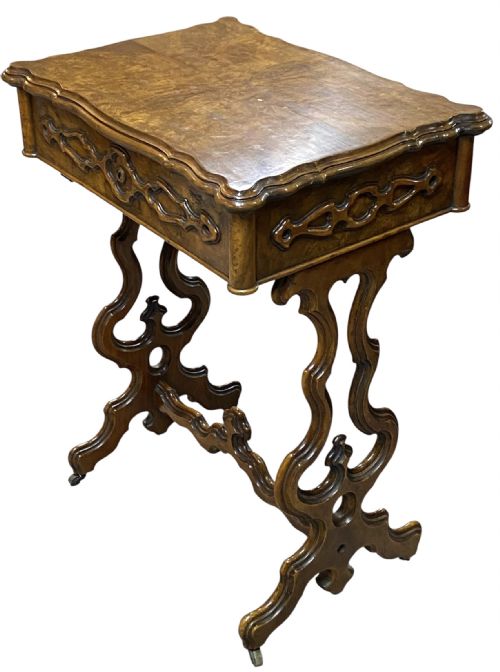
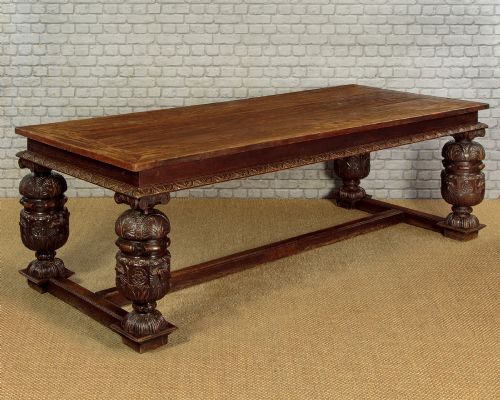
These Victorian carved trestle table options bring solid nineteenth-century presence to a room, offering sturdy refectory timber and carved walnut framework.
Victorian Carved Trestle Table
When you search for a Victorian carved trestle table, you encounter substantial dining boards, library tables, and refectory furniture spanning the nineteenth century.
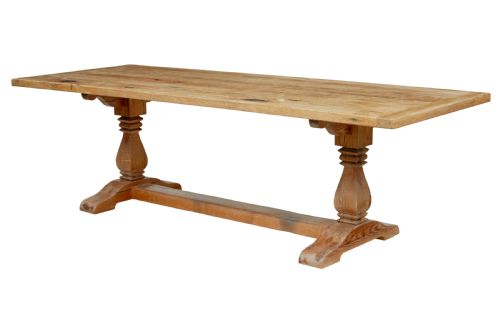
The pieces appearing on this page lean heavily toward oak refectory forms, walnut library pieces, and pitch pine country tables rather than standard domestic dining sets.
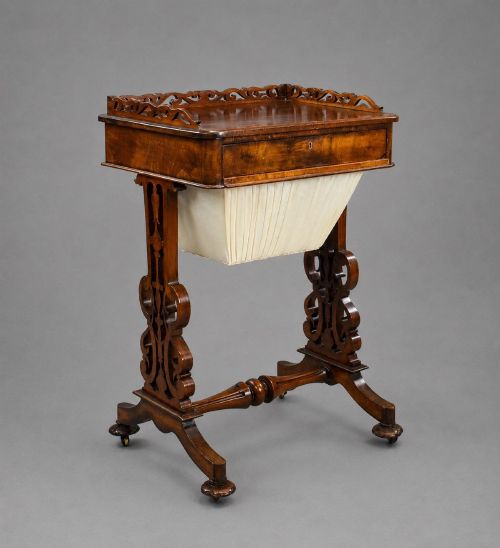
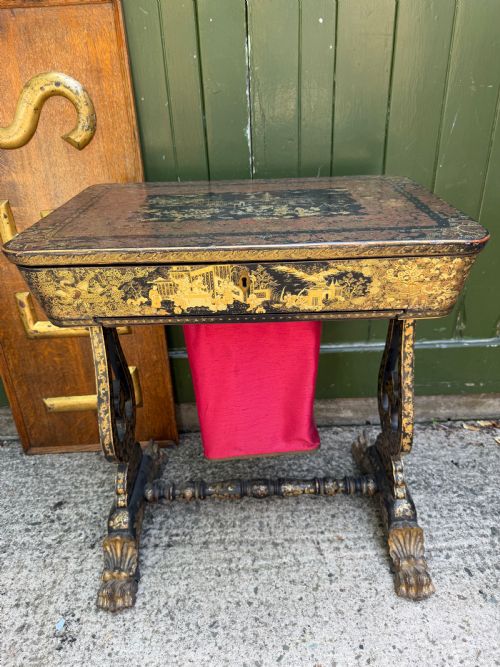
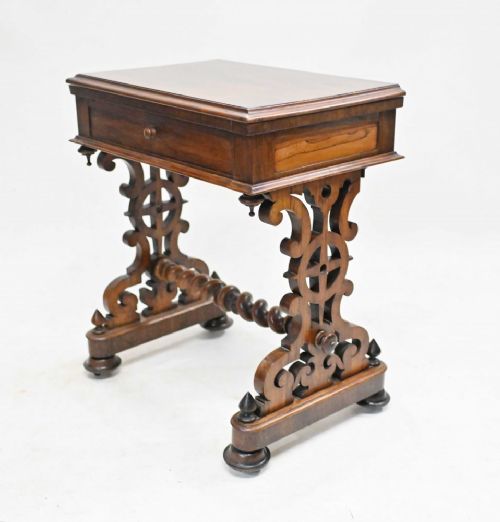
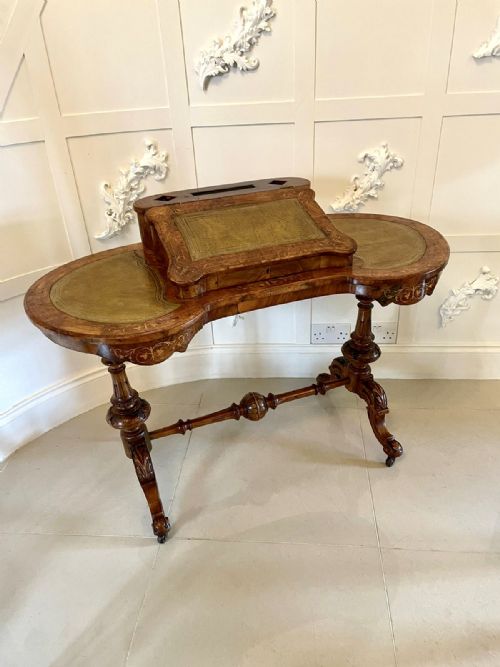
Makers of this era also utilised diverse formats like side tables, centre tables, and writing desks while applying heavy carved woodwork to the structural supports.
Construction and timber selection
Cabinet makers utilised dense hardwoods including oak, mahogany, walnut, rosewood, and exotic padauk alongside softer pitch pine for larger refectory boards.
Carving was executed directly into the solid timber frames, often incorporating Gothic revival motifs, Renaissance details, or heavy plank construction fixed to strong trestle bases.
The documented timber selection includes burr walnut, rosewood, zebrawood, and satinwood applied across library desks, card tables, and refectory dining boards.
Judging nineteenth-century table quality
Quality rests upon the selection of timber figures, such as burr walnut or flame mahogany veneers, paired with crisp hand-carved relief work on the supports.
Superior examples demonstrate sound structural integrity in their multi-plank tops and joinery, whereas lesser items rely on simpler pine or plain deal boards.
Gillows·Holland + Son
The Victorian Carved Trestle Table Glossary
- Refectory table
- A long dining table historically used in communal dining halls and adopted during the nineteenth century for robust domestic kitchens.
- Trestle base
- A structural support system where horizontal beams rest on vertical feet or shaped legs rather than standard corner posts.
- Burr walnut
- A prized wood grain featuring swirling patterns formed from tree growths, commonly applied as decorative veneer on Victorian tables.
- Gothic Revival
- An architectural and decorative style popular in the nineteenth century that revived medieval arches, tracery, and heavy carved ornamentation.
- Padauk
- A dense tropical hardwood with a rich reddish hue utilised by nineteenth-century cabinet makers for carved library and side tables.
Victorian Carved Trestle Table: Frequently Asked Questions
Are these tables suitable for everyday dining?
Most refectory and dining tables from this period were built from solid hardwoods like oak and pine, making them exceptionally durable for daily meals.
Their robust trestle construction provides ample legroom and steady support, though antique surfaces still require sensible care with heat and moisture.
How do I identify a Gothic Revival piece?
Gothic Revival tables display characteristic medieval architectural motifs, such as pointed arches, quatrefoils, and heavy carved tracery along the frieze.
These elements reflect nineteenth-century romanticism, utilising dark oak and pitch pine to replicate medieval monastic furniture.
What is the difference between a refectory and a centre table?
Refectory tables are long, narrow dining boards designed for seating multiple guests along benches or chairs in a dining space.
Centre tables are generally more compact, freestanding pieces placed in the middle of a room for display, lamps, or occasional writing.
How should I care for a burr walnut top?
Burr walnut surfaces require gentle dusting with a soft cloth and occasional treatment with quality beeswax to nourish the delicate grain.
Avoid placing hot items or liquids directly onto the polished veneer to preserve the intricate figuring of the nineteenth-century timber.