
Victorian Carved Oak Display
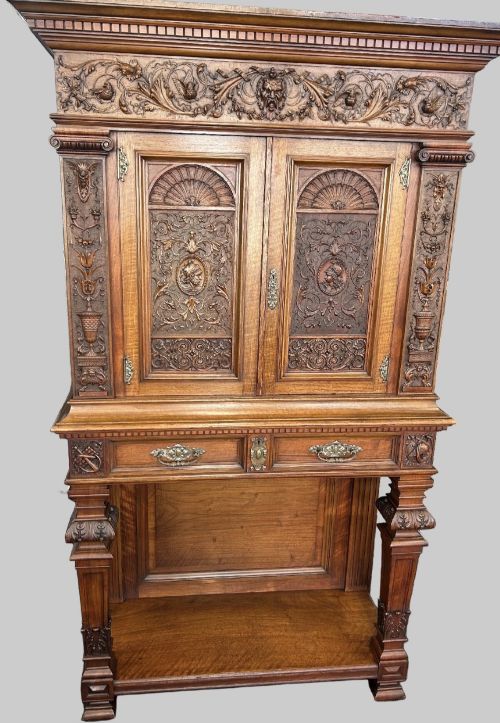
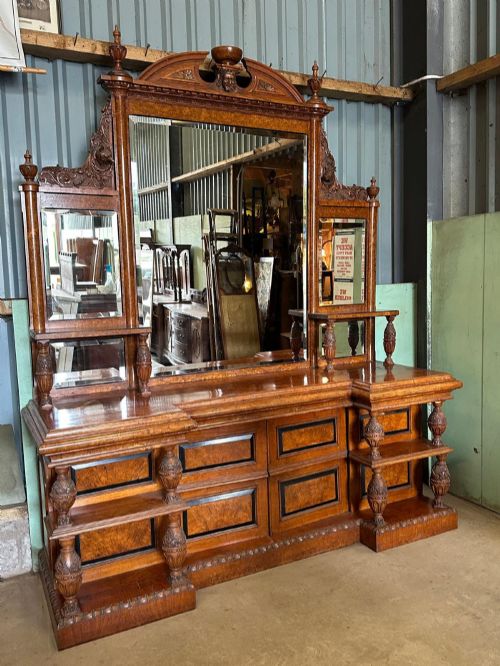
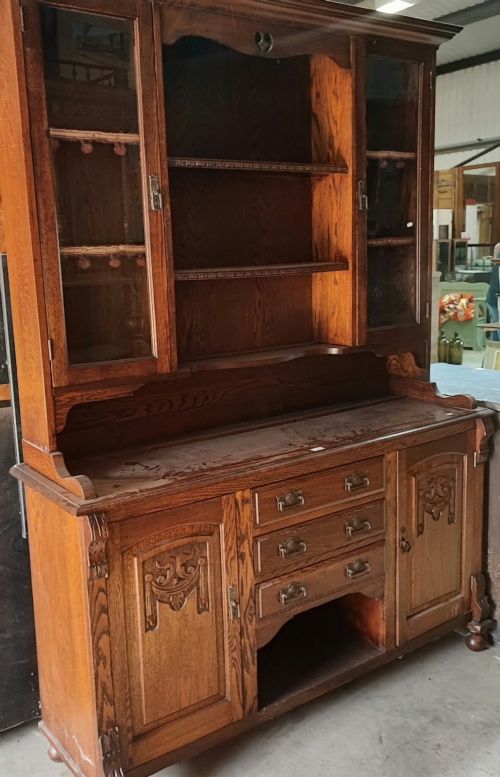
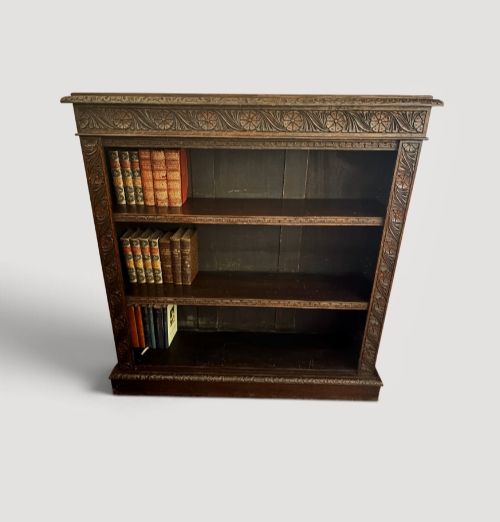
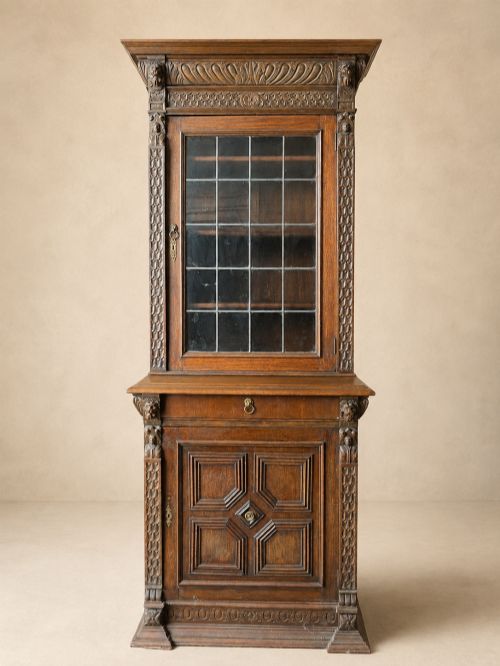
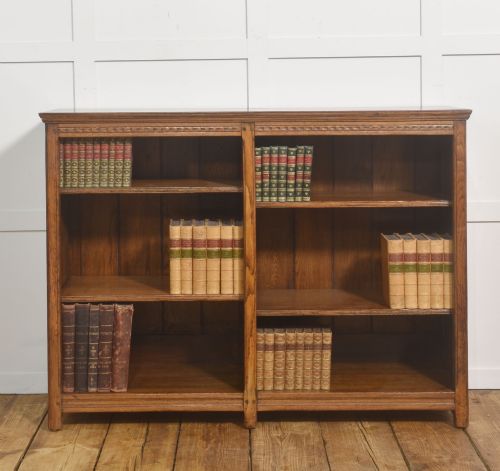
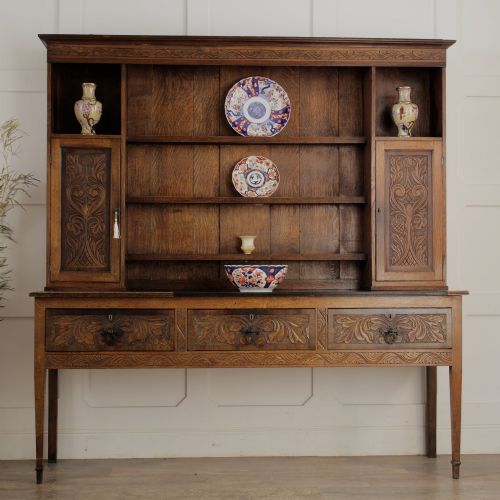
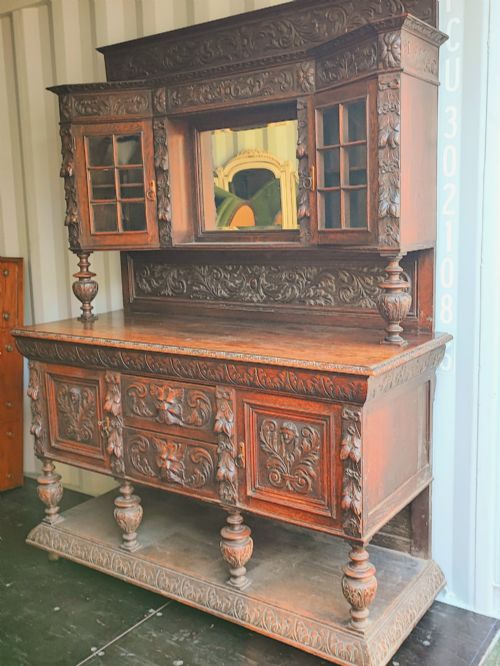
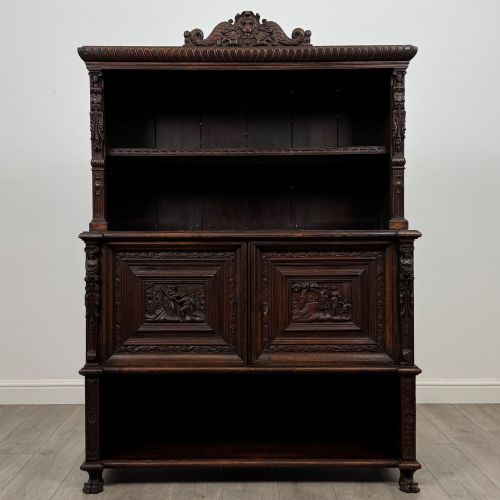
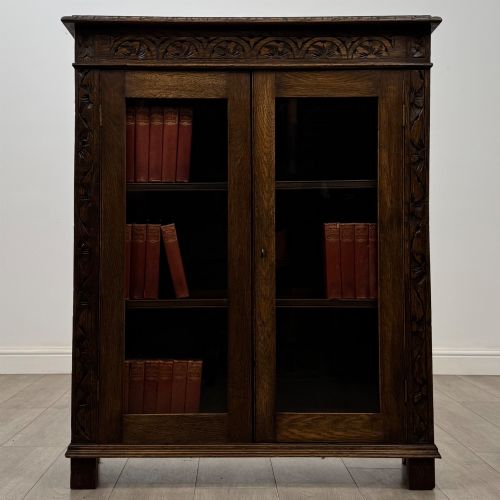
These heavy, figured pieces of victorian carved oak display combine dense timber with deep relief work to house books and china.
Victorian Carved Oak Display
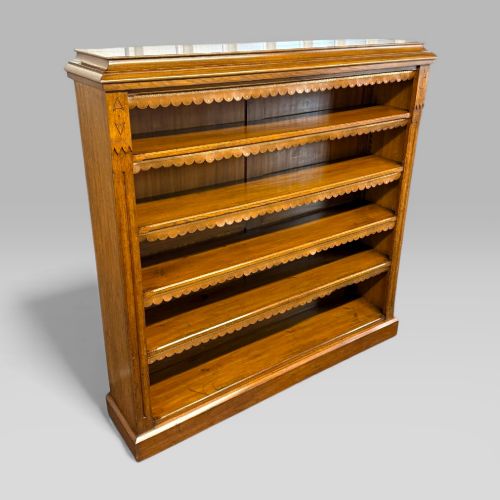
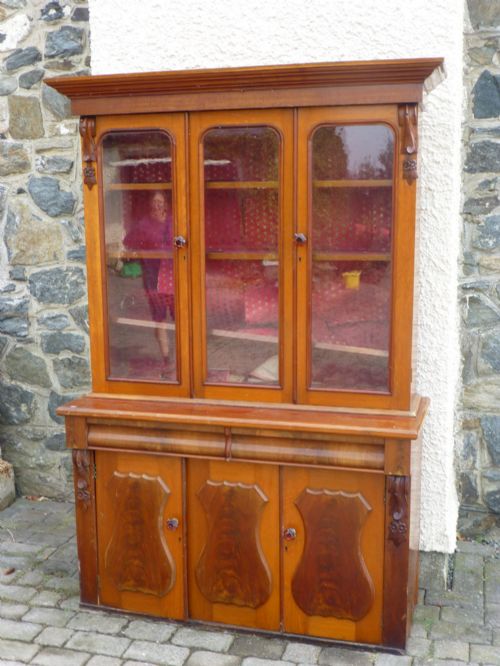
A victorian carved oak display encompasses large library bookcases, glazed cabinets, and wall shelves produced across the nineteenth century. These forms rely on the strength of oak to support substantial shelving and glazed doors, often enriched by revivalist motifs.
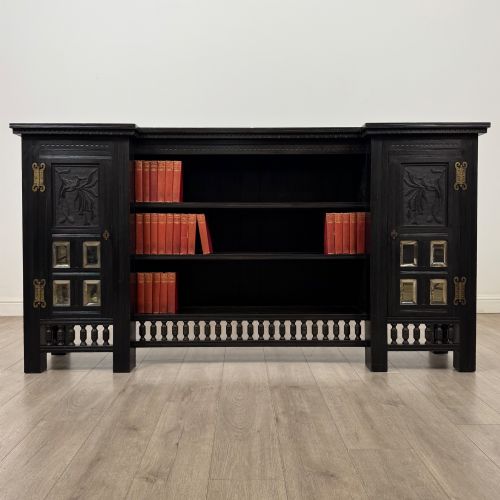
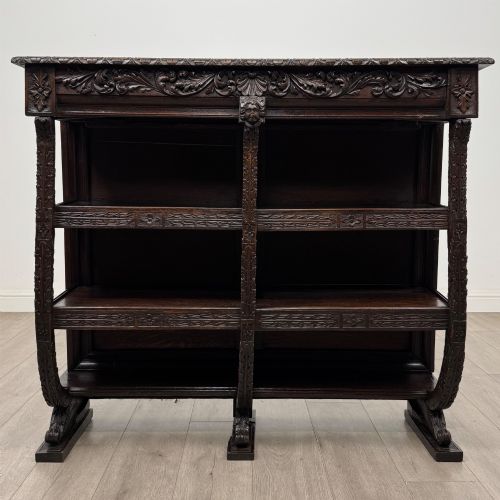
Bookcases and open shelving units dominate the selections, frequently featuring adjustable shelves and carved cupboard bases. Pieces range from slim wall cabinets to monumental breakfront libraries originating from English workshops.
Distinctions in Execution
The depth and crispness of the hand-carved relief separate standard utility storage from ambitious library furniture. Figures, foliate scrolls, and architectural mouldings executed with sharp, confident chiseling indicate superior workshop production.
Timber selection and structural integration also determine grade, where figured pollard or tiger oak veneers and solid frames meet without warping. Superior pieces retain original brass fittings, functional adjustable shelving mechanisms, and intact leaded or stained glass.
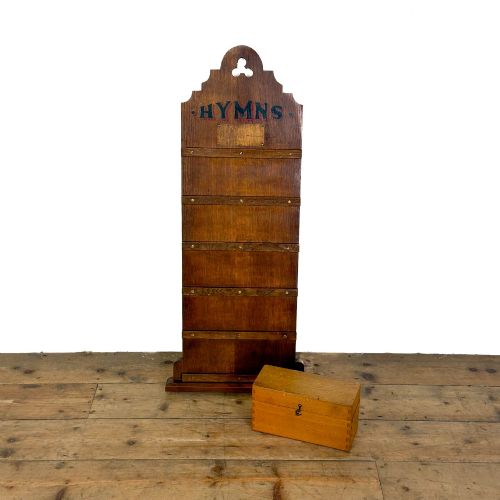
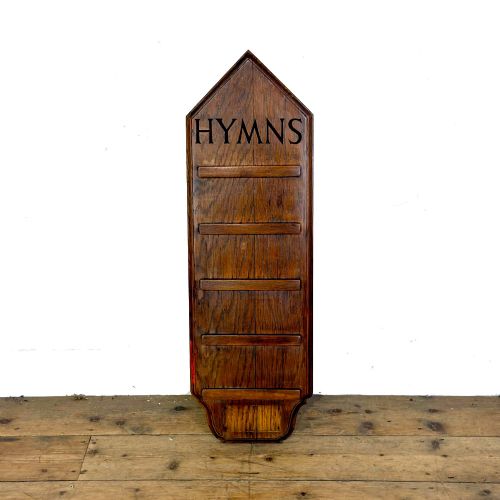
Sturdy hymn boards wait quietly to announce Sunday numbers, proving that even church administration needed solid oak joinery.
John Moyr Smith
The Victorian Carved Oak Display Glossary
- Breakfront
- A piece of furniture having a central section that projects forward from the flanking sections. This configuration adds architectural depth to large library bookcases.
- Pollard oak
- Timber taken from trees that have been pollarded, producing a tightly clustered, highly figured grain pattern. Cabinet makers valued this wood for decorative door panels.
- Gothic revival
- An architectural and decorative style drawing on medieval forms, featuring pointed arches, trefoils, and heavy relief carving. It heavily influenced nineteenth-century cabinet work.
- Tiger oak
- Quarter-sawn oak displaying prominent medullary rays that resemble tiger stripes. The distinct figuring appears frequently in nineteenth-century display furniture.
- Green Man
- A sculptural motif representing a human face entwined with foliage, leaves, or vines. This ancient symbol recurs often in nineteenth-century carved woodwork.
Victorian Carved Oak Display: Frequently Asked Questions
How do I identify a true period piece?
Examine the construction methods inside the cabinet and behind the backboards, looking for hand-cut joints and timber ageing consistent with the nineteenth century.
Check for period-specific revival styles like Gothic tracery or Aesthetic Movement detailing that match the documented design vocabulary of the era.
Can I adjust the shelves?
Many nineteenth-century bookcases feature adjustable shelving systems utilising wooden ratchets, metal pins, or sliding tracks.
Inspect the interior uprights for the slot mechanisms that allowed Victorian owners to change shelf heights for different book sizes.
Where should I place a heavy oak cabinet?
Position these substantial pieces against structural walls capable of supporting significant timber and glass weight.
Keep them away from direct sunlight and heat sources to protect the dense oak timber and prevent the antique glass from thermal stress.
What is the difference between an open bookcase and a display cabinet?
Open bookcases provide immediate shelf access without doors, suiting everyday library use and book storage.
Display cabinets incorporate glazed doors, sometimes with leaded or stained glass, to protect finer volumes and decorative objects from dust.