


Victorian Carved Oak Desk
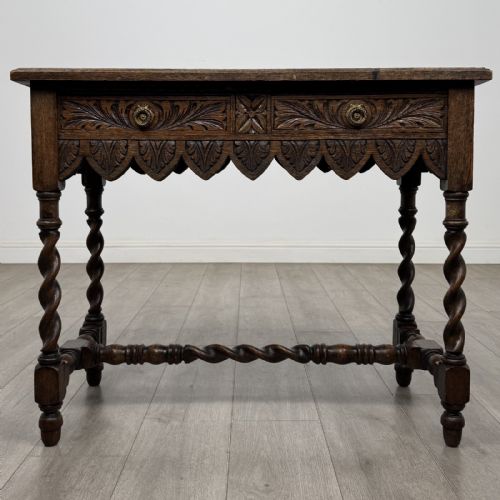
A victorian carved oak desk brings solid nineteenth-century presence and rich relief work into a working room.
Victorian Carved Oak Desk
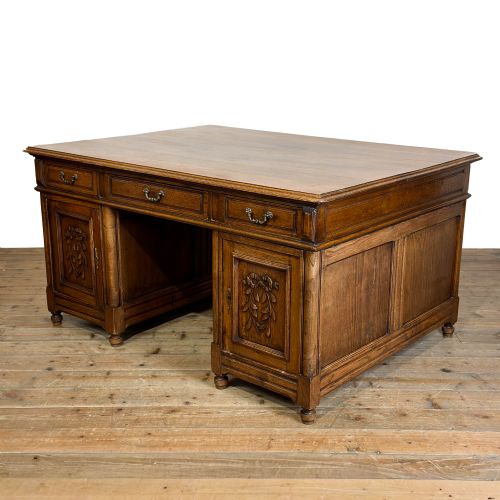
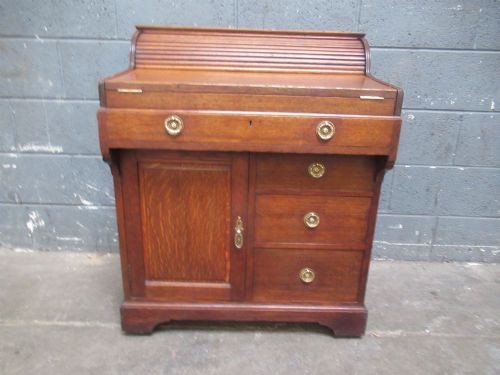
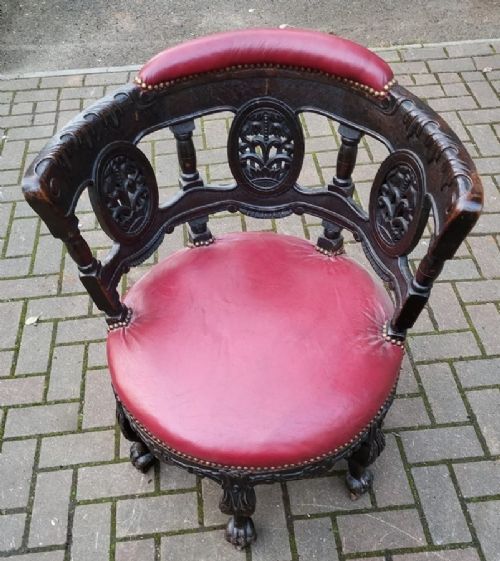
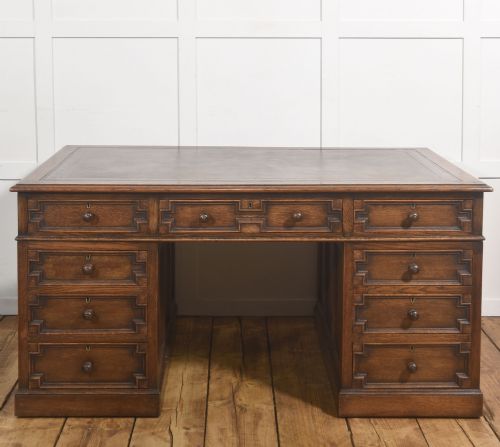
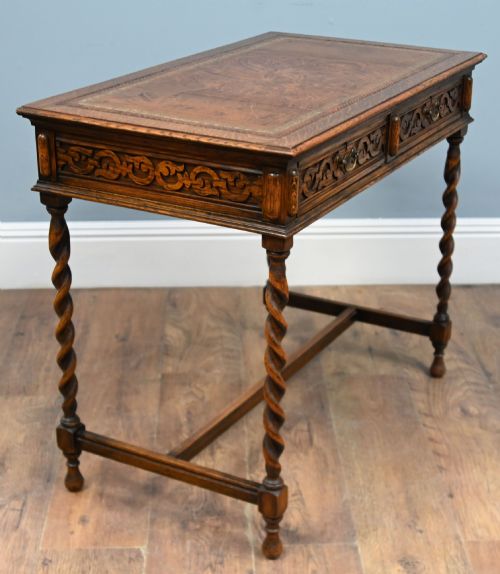
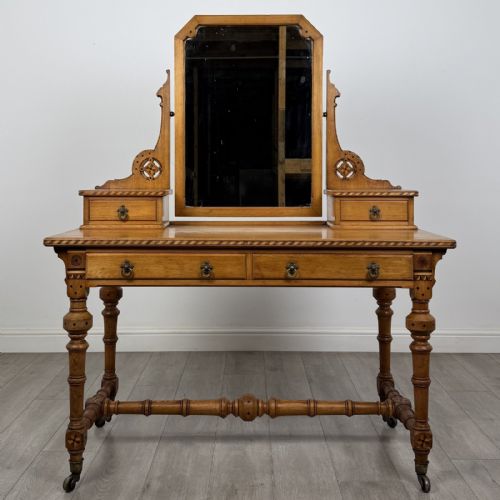
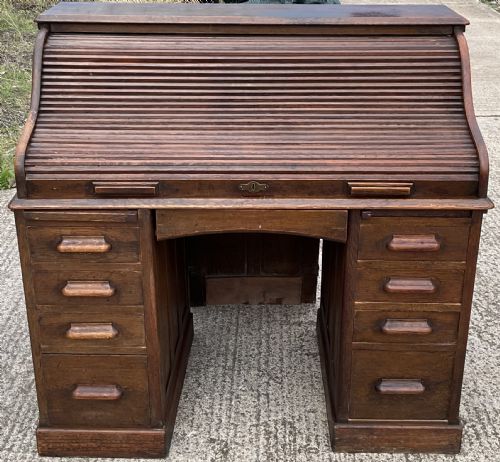
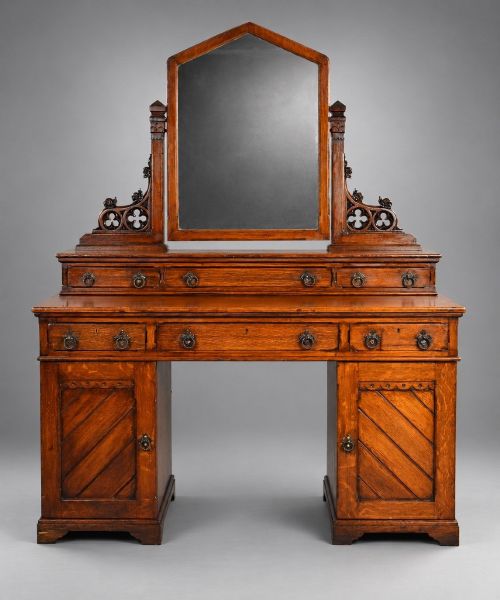
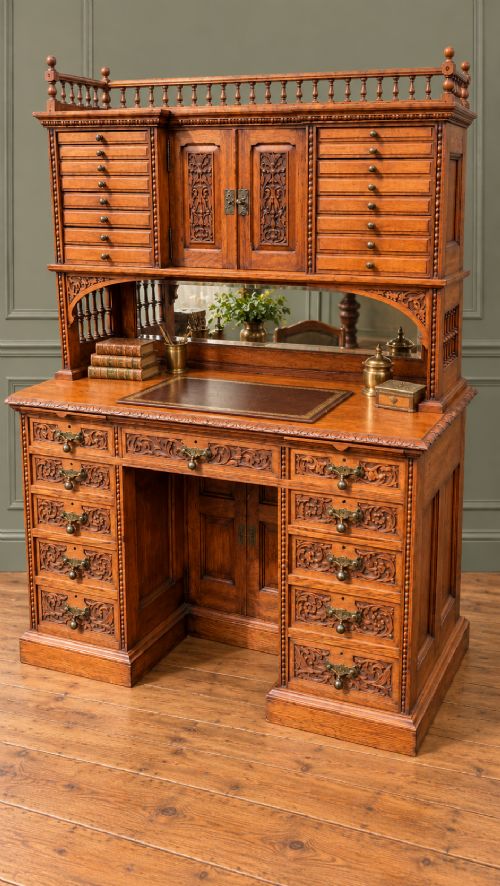
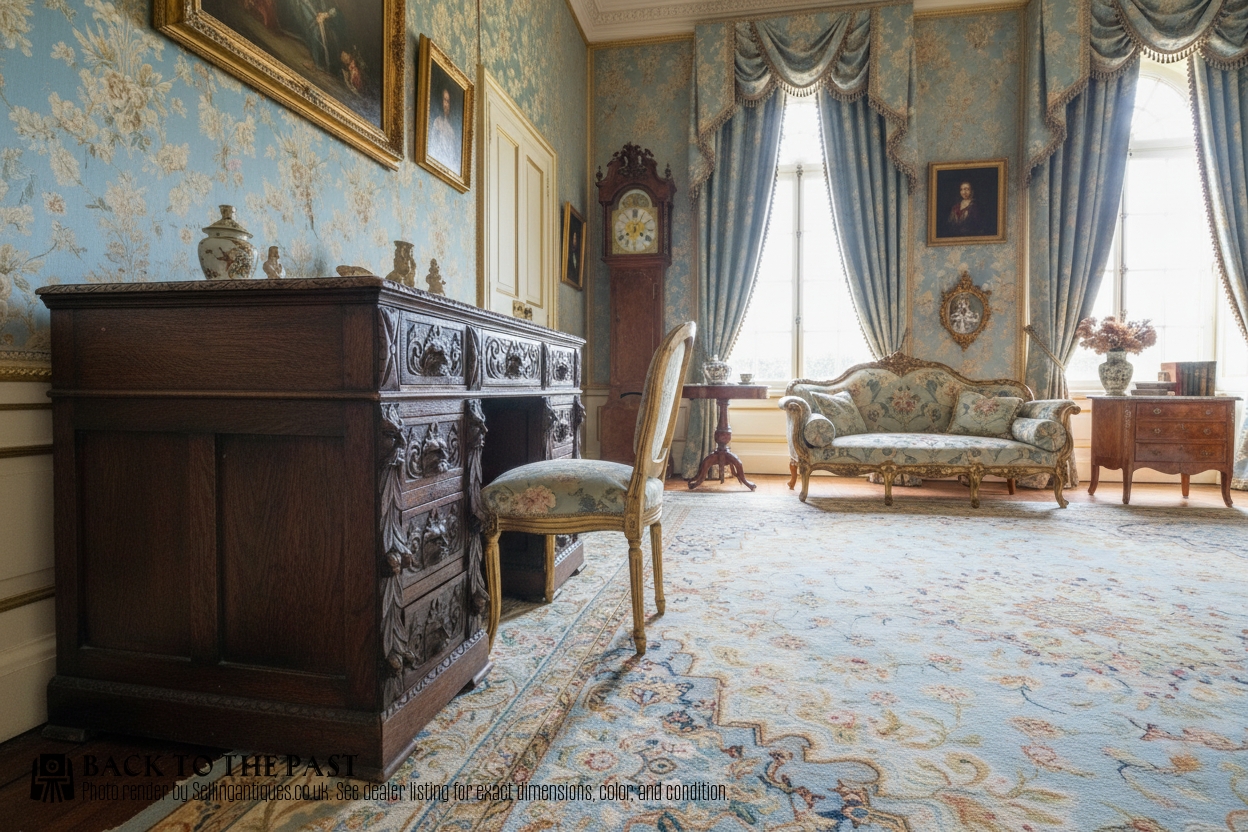
A victorian carved oak desk encompasses sturdy pedestal writing tables, kneehole desks, and smaller Davenport or bureau forms produced during the nineteenth century. These pieces range from restrained writing tables to heavily carved examples featuring expressive green man motifs.
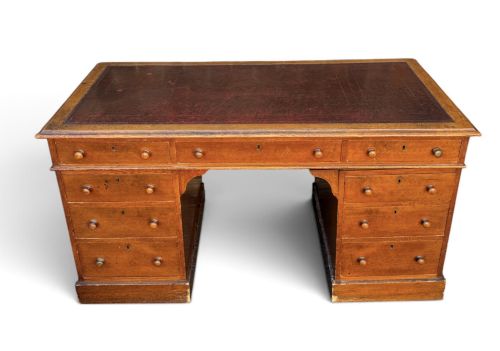
The versions most commonly met on this page date from the 1870s to the 1890s, often displaying Gothic Revival or Renaissance Revival influences alongside structural oak timber. Many incorporate inset leather writing surfaces and drawers arranged around central pedestals.
Alongside standard desks, related library tables and partners desks frequently appear in oak, sharing the same heavy proportions and decorative hand-carving. These larger pieces often service multiple users with drawers to both sides.
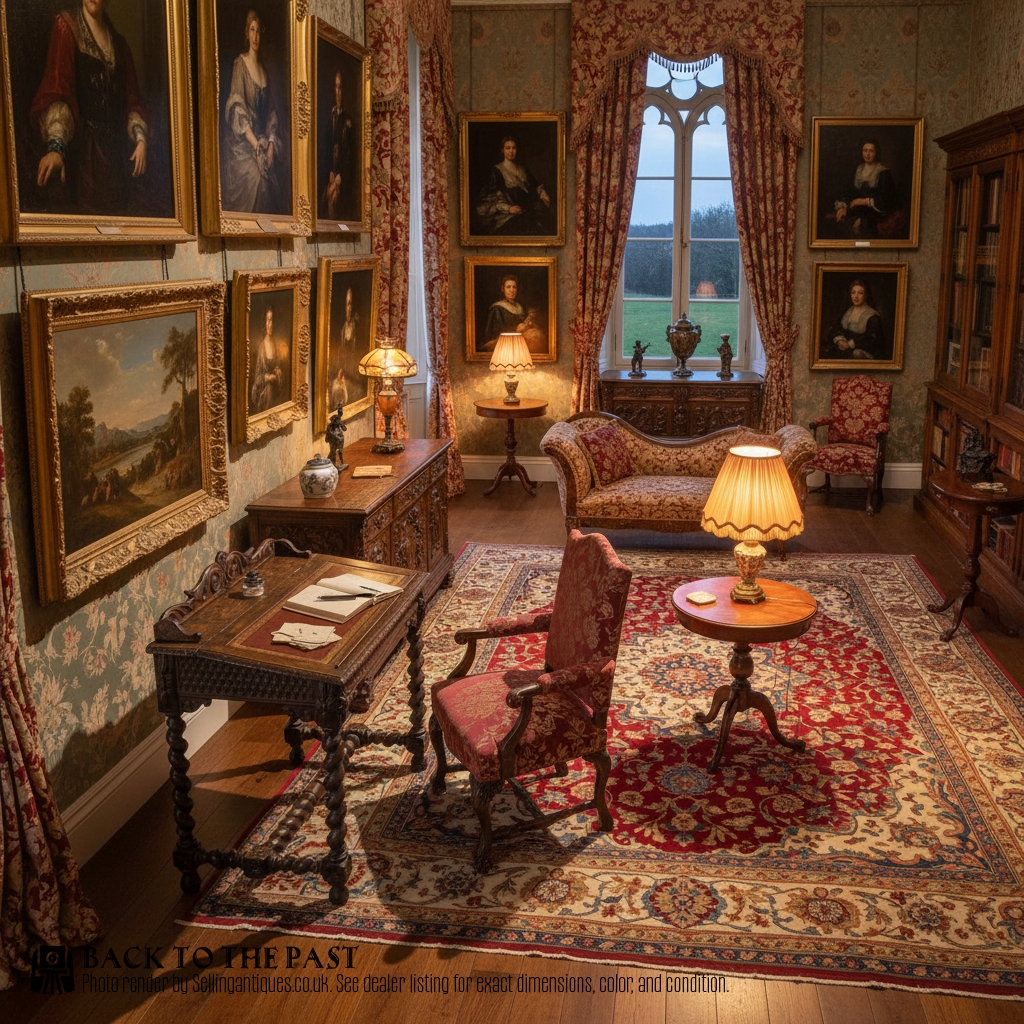
Materials and construction
Makers utilised solid oak and burr oak veneers over structural carcases, often combining harder timbers with brass handles, hinges, and castors. Leather inserts, frequently tooled in gold, provided a durable writing surface atop the timber framework.
Carving was executed entirely by hand, rendering deep relief motifs such as foliage, strapwork, and mythological faces directly into the solid wood. Drawers were typically constructed with hand-cut dovetails and mounted on solid wood runners.
Victorian Carved Oak Desk Retail Price Guide 2026
Typical asking prices for victorian carved oak desk among the pieces listed under this phrase on Sellingantiques today, from the lower quarter to the upper quarter. They describe what is for sale here now, not the wider market.
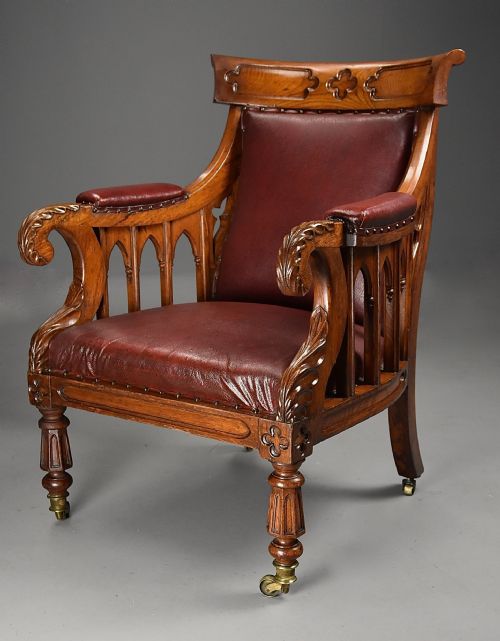
Listings demonstrate that nineteenth-century oak desks frequently incorporated Gothic Revival and Renaissance Revival decorative vocabulary.
Assessing quality and finish
Proportion and timber selection equally divide the range, with figured pollard oak or carefully matched grain marking out superior examples. Original brass hardware, integrated working locks, and undamaged tooled leather surfaces preserve the integrity of the piece.
James Shoolbred & Co·Edwards & Roberts·Gillows
The Victorian Carved Oak Desk Glossary
- Green Man
- A decorative architectural and furniture motif depicting a human face emerging from or entwined with foliage. It symbolises rebirth and appears frequently carved onto nineteenth-century oak furniture.
- Partners Desk
- A large double-sided writing table designed for two people to work opposite one another, featuring drawers and cupboards on both faces.
- Kneehole Desk
- A freestanding desk with a central recess for the user's legs, flanked by pedestals containing banks of small drawers.
- Gothic Revival
- An architectural and decorative style popular during the Victorian era that drew inspiration from medieval forms, pointed arches, and heavy tracery.
- Davenport Desk
- A compact writing desk featuring a sloping, hinged desktop over a side-opening pedestal of drawers.
Victorian Carved Oak Desk: Frequently Asked Questions
How do I care for the leather top?
Leather writing surfaces require gentle cleaning with a damp cloth and occasional treatment with appropriate leather balms to prevent cracking.
Avoid using harsh chemical cleaners or placing hot drinks directly onto the antique leather.
Are these desks heavy?
Nineteenth-century oak furniture is exceptionally dense and heavy, often constructed in modular sections for easier movement.
Pedestal desks typically separate into top and side components to facilitate transport.
How can I date a Victorian desk?
Dating relies on examining construction methods, timber choices, and stylistic influences such as Gothic Revival or Arts and Crafts details.
Drawer dovetailing, secondary woods, and hardware styles help narrow the decade of manufacture between 1850 and 1900.