


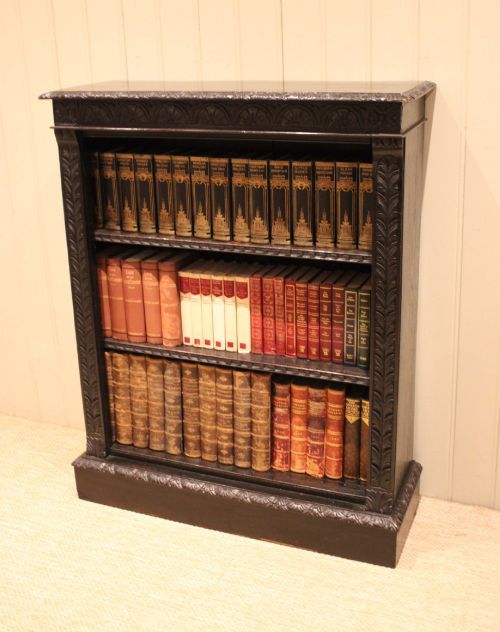
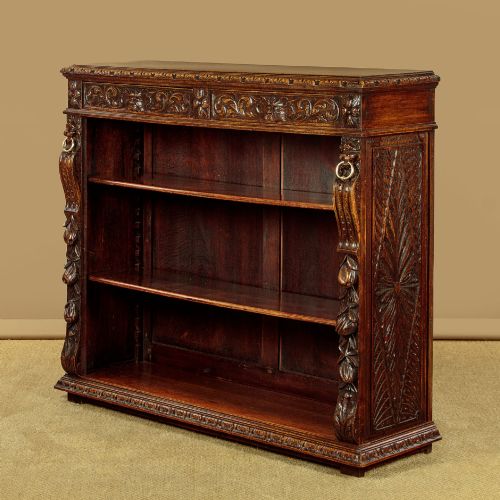
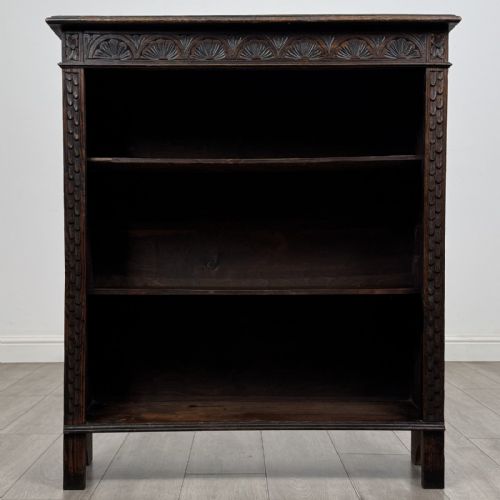
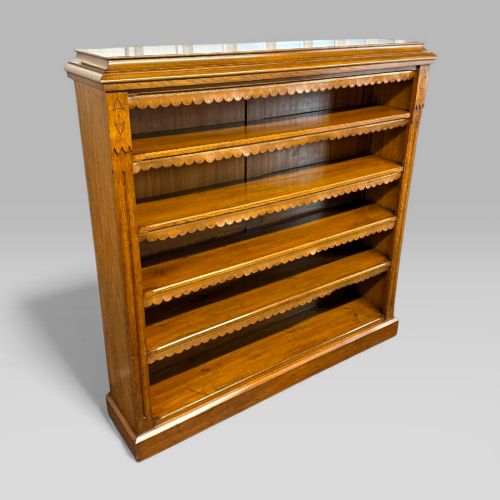
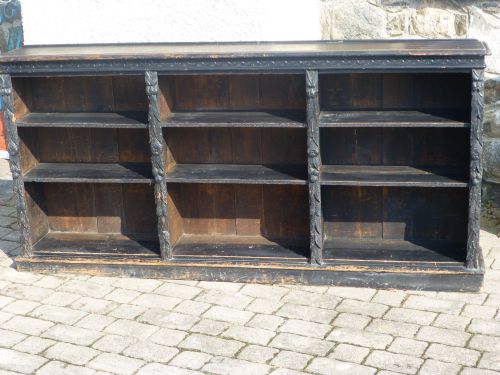
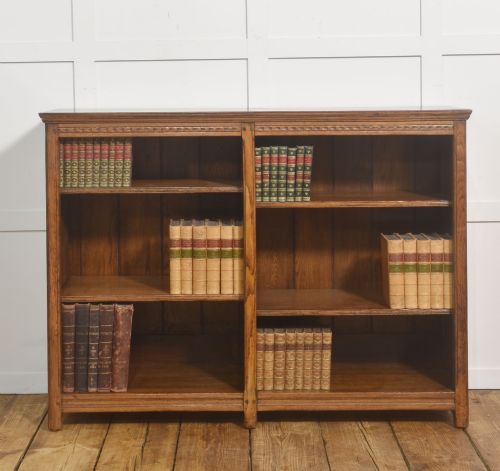
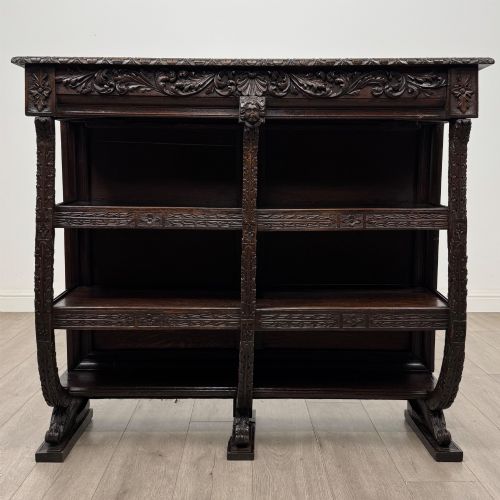
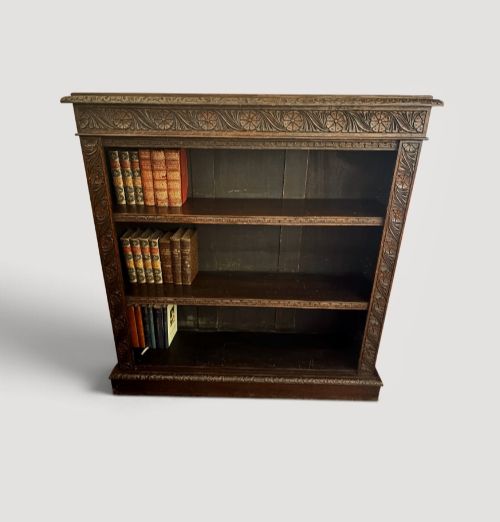
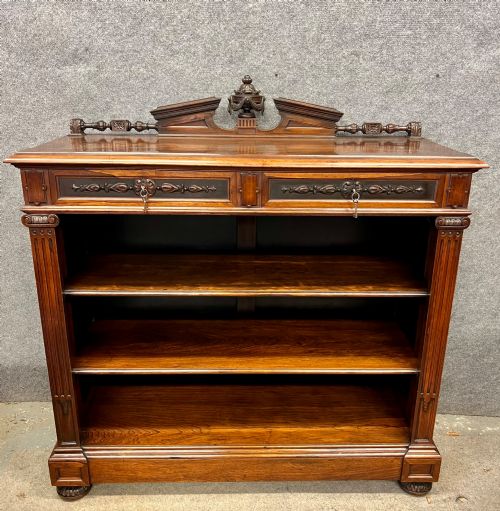
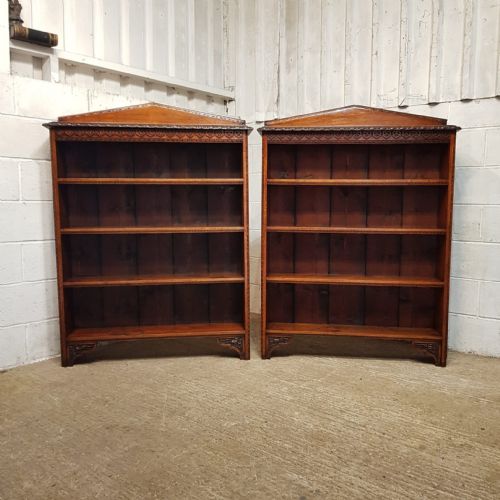


Victorian Carved Oak Bookshelf
A victorian carved oak bookshelf brings robust timber and deep ornamentation into a room, offering sturdy utility for your volumes.
Victorian Carved Oak Bookshelf
The aesthetic vocabulary stretches across several revivals, linking standard Victorian output with Gothic, Jacobean, and Renaissance Revival expressions. Pieces often incorporate architectural mouldings and figural carvings that reflect the nineteenth-century interest in historicist design.
Materials and construction methods
Makers utilised solid oak alongside ebonised oak variants, frequently pairing the heavy timber with brass hardware or ceramic elements. Beech sometimes served for secondary framing components within the structures.
Joinery methods relied on sturdy tongue-and-groove or mortise-and-tenon techniques to support heavy book collections, complemented by hand-chiselled surface decorations and fret-cut details.
Victorian Carved Oak Bookshelf Retail Price Guide 2026
Typical asking prices for victorian carved oak bookshelf among the pieces listed under this phrase on Sellingantiques today, from the lower quarter to the upper quarter. They describe what is for sale here now, not the wider market.
Keep an eye out for hidden woodland spirits peering from the grain, as green man carvings frequently hide amongst the oak foliage.
Factors separating examples
The depth and crispness of the hand-carved details separate standard production from superior pieces, particularly in figural work like green man motifs or elaborate foliage. Better examples display careful selection of grain and uniform colour across the panels.
Practical adjustments such as functional shelf-regulation mechanisms and solid backboards indicate higher workshop standards, whereas basic forms rely on fixed internal ledges.
John Moyr Smith
The Victorian Carved Oak Bookshelf Glossary
- Open Bookcase
- A shelving unit without doors, providing direct access to the interior books. This form dominates the current selection.
- Adjustable Shelves
- Shelving that can be moved to different heights using internal racks or pins. This provides flexibility for varying book sizes.
- Green Man
- A sculptural face carved from foliage or branches, frequently found on nineteenth-century furniture. It represents rebirth and forest spirits.
- Fret-Cut
- Woodwork pierced with patterns using a fine saw. This technique adds delicate geometric or organic silhouettes to panels.
- Ebonised Oak
- Timber treated with a dark chemical stain or finish to imitate ebony. This style was popular during the Aesthetic Movement.
Victorian Carved Oak Bookshelf: Frequently Asked Questions
What is a victorian carved oak bookshelf?
It is a nineteenth-century storage item built from oak featuring hand-chiselled decoration, primarily constructed to house books in libraries and studies.
Most examples take the open bookcase format, though wall-mounted versions and dwarf units also appear in the period styles.
How do I adjust the shelves?
Many pieces include adjustable internal shelving supported by wooden ratchets, brass studs, or notched vertical strips inside the side panels.
Simply lift each board to clear the support mechanism and reposition it at your preferred height.
Are these pieces made of solid oak?
The listings include solid oak construction alongside variations utilising ebonised oak and secondary woods like beech for internal framing.
Examining the grain patterns on the sides and shelves helps confirm the primary timber used by the maker.
What styles influence these bookcases?
They draw from Gothic Revival, Jacobean Revival, Renaissance Revival, and Aesthetic Movement schools of design popular during the nineteenth century.
These historicist styles dictate the type of carving, from heavy geometric panels to lighter fret-cut waterfall arrangements.