


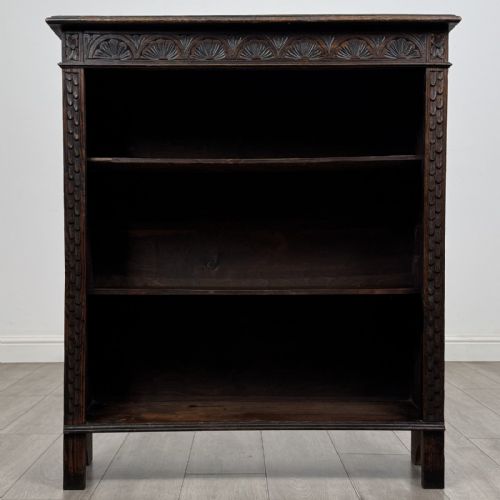
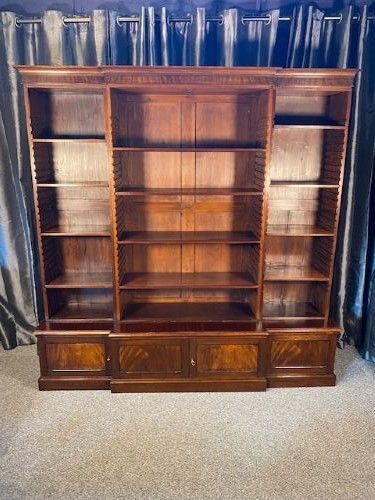
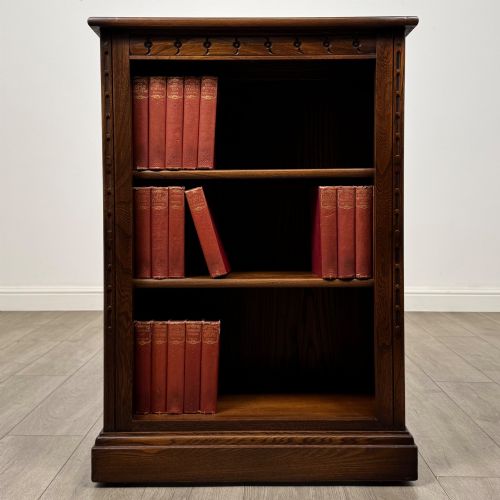

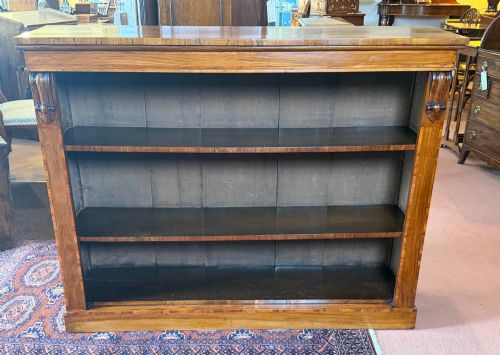
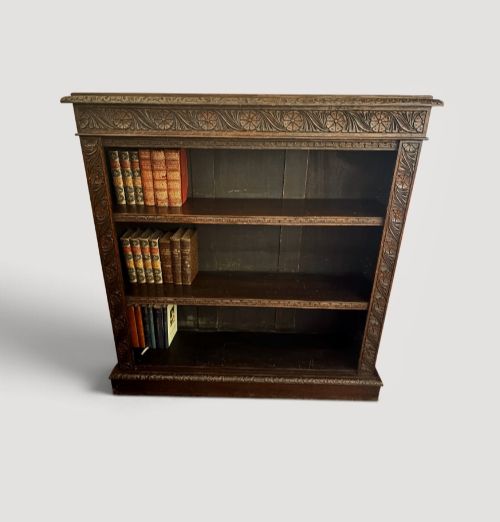
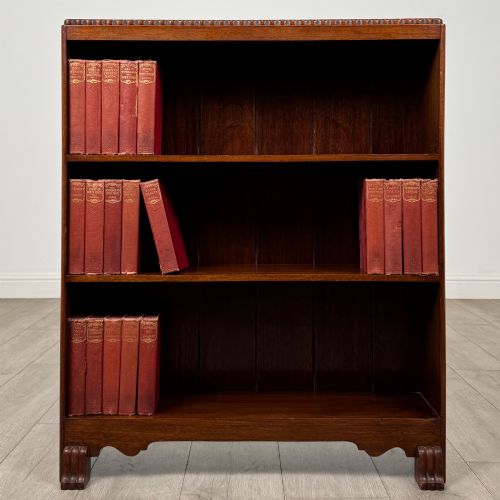
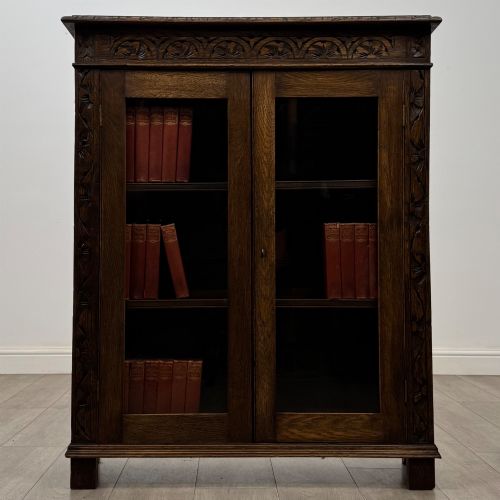
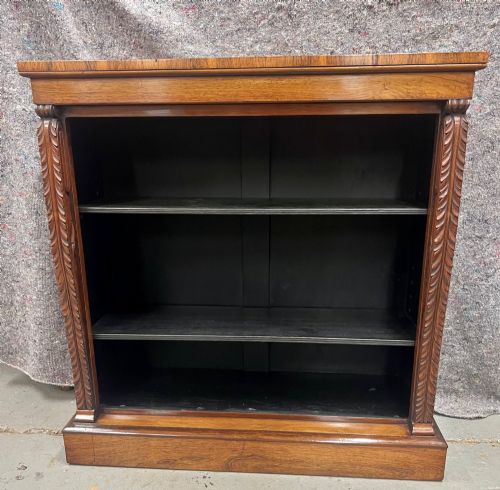


Carved Wooden Book Cabinet
A carved wooden book cabinet holds volumes securely while displaying timber grain and cabinet work from the nineteenth and early twentieth centuries.
Carved Wooden Book Cabinet
A carved wooden book cabinet serves to store volumes while displaying timber grain and period craftsmanship in domestic interiors. Buyers searching for a carved wooden book cabinet encounter formats ranging from open library shelves to glazed double doors and two-part cabinets.
The pieces listed span the nineteenth and early twentieth centuries, covering Georgian, Regency, Victorian, and Edwardian periods. Oak, mahogany, and walnut dominate the selection, accompanied by rosewood, elm, and satinwood examples.
Open bookcases and display cabinets represent the most frequent forms found within this selection. Pieces frequently incorporate adjustable shelving, carved details, and occasional glass panels or brass fittings.
Materials and construction methods
Cabinet makers utilised dense hardwoods such as mahogany, oak, and walnut to build sturdy frames capable of supporting heavy rows of books. Timbers were selected for figure and grain, then finished with hand-carved ornamentation or subtle inlay work.
Construction techniques involve traditional joinery, housing joints for shelves, and panelled backs secured within solid timber carcases. Glazed doors utilise wooden glazing bars, whilst adjustable shelf systems rely on wooden ratchets, brass studs, or metal pins.
Carved Wooden Book Cabinet Retail Price Guide 2026
Typical asking prices for carved wooden book cabinet among the pieces listed under this phrase on Sellingantiques today, from the lower quarter to the upper quarter. They describe what is for sale here now, not the wider market.
Listings feature woods including mahogany, oak, walnut, rosewood, elm, and satinwood across the Victorian, Edwardian, and Regency periods.
Quality variations in the selection
Quality rests upon timber selection, the crispness of carved details, and the integrity of the original construction. Fine examples display well-figured Spanish mahogany, quarter-sawn oak, or rich walnut with depth in the grain.
Superior pieces maintain original backs, working brass hardware, and properly functioning adjustable shelving mechanisms. Simpler vernacular examples utilise elm or pine with minimal decoration, reflecting domestic utility rather than formal cabinet work.
The Carved Wooden Book Cabinet Glossary
- Open bookcase
- A piece of furniture designed for book storage featuring unglazed shelves rather than doors. These items provide immediate access to volumes and display the interior timber lining.
- Adjustable shelves
- Shelves that can be moved to different heights using vertical rows of holes, ratchets, or racks. This mechanism allows the cabinet to accommodate books of varying sizes.
- Glazed double bookcase
- A cabinet featuring two glass-fronted doors enclosing the shelving space. This format protects books from dust while maintaining visibility of the library within.
- Two-part bookcase
- A tall library piece constructed in two separate sections stacked vertically for transport and placement. The upper cabinet typically rests upon a deeper lower base.
- Chiffonier
- A low sideboard or cabinet equipped with storage cupboards and frequently surmounted by open book shelves. These versatile pieces combine surface display with enclosed storage.
Carved Wooden Book Cabinet: Frequently Asked Questions
How do I date a wooden bookcase?
Dating relies upon timber species, construction methods, and stylistic details associated with periods like the Georgian, Victorian, or Edwardian eras. Secondary woods, drawer linings, and screw types offer further chronological clues.
Mouldings and carved ornamentation shift from classical restraint in Regency pieces to heavier geometric or naturalistic carving in Victorian oak examples.
Are the shelves adjustable on these cabinets?
Many period bookcases feature adjustable shelves supported by wooden ratchets, brass studs, or slotted vertical strips. This system allowed owners to alter shelf heights for octavos and folios alike.
Fixed shelves do appear in simpler vernacular pieces and certain antique open bookcases built for specific room layouts.
How should I care for antique mahogany and oak?
Maintenance involves keeping wooden surfaces away from direct heat sources and strong sunlight to prevent timber shrinkage and fading. Regular dusting with a dry lint-free cloth preserves the finish.
Occasional application of appropriate wax polish maintains the lustre of mahogany, walnut, and oak without building up heavy residue.